Stock Analysis · TXNM Energy Inc (TXNM)
Overview
TXNM Energy Inc is a regulated electric utility company. In practical terms, it owns and operates electricity networks and power supply businesses that deliver energy to homes, businesses, and public-sector customers. Utility companies like TXNM usually earn most of their money through state-regulated rates, which makes the business more stable than many other industries because demand for electricity tends to be steady and customer service territories are defined.
Based on the company’s recent operating structure and public filings, revenue is primarily tied to regulated electric service in New Mexico and Texas. The mix can shift from year to year because fuel and purchased power costs are often passed through to customers, but the business is still centered on traditional utility activities rather than unregulated side businesses.
The main revenue sources can be summarized as follows:
- Retail electric service in New Mexico: approximately 55% to 65% of total revenue. This includes electricity generation, transmission, and distribution service provided through the company’s regulated utility operations in the state.
- Retail electric service in Texas: approximately 25% to 35% of total revenue. This comes mainly from regulated transmission and distribution service in the Texas market.
- Other utility-related revenue: approximately 5% to 15% of total revenue. This can include wholesale activities, alternative rider mechanisms, and various regulated service items tied to grid operations and energy delivery.
One helpful feature of the business is that it is not trying to reinvent itself around unpredictable trends. It remains focused on regulated utility assets, where earnings growth usually comes from building infrastructure, winning approval for rate increases, and connecting more customers to the system.
The broad financial flow shows a familiar utility pattern: large operating costs, meaningful interest expense, and earnings that can swing when financing costs rise. Revenue has recovered from the 2023 dip, and operating income improved strongly in 2024 and stayed solid in 2025, but higher interest expense has taken a noticeable share of that progress.
Key Figures
| Metric | Value | Sector ⓘ |
|---|---|---|
| Date | Oct 17, 2026 | |
| Context | ||
| Sector | Utilities | |
| Industry | Utilities - Regulated Electric | |
| Market Cap ⓘ | $6.45B | |
| Beta ⓘ | 0.17 | |
Value (Cheapness) | ||
| P/E Ratio ⓘ | 33.64 | 17.28 |
| P/B Ratio ⓘ | 1.86 | 1.51 |
| FCF Yield ⓘ | -7.79% | 0.65% |
| Dividend Yield ⓘ | 2.87% | 3.77% |
| EBIT / EV ⓘ | 4.60% | 5.01% |
| PEG ⓘ | 2.55 | |
Growth (Business expansion) | ||
| Revenue Growth ⓘ | 9.20% | 6.10% |
| RPS Growth (5Y CAGR) ⓘ | 0.58% | 3.87% |
| EPS Growth (5Y CAGR) ⓘ | -27.81% | -11.30% |
| BVPS Growth (5Y CAGR) ⓘ | 6.71% | 4.23% |
| Margin Growth (5Y Trend) ⓘ | 4.47% | 3.57% |
| FCF Growth (5Y CAGR) ⓘ | N/A | -8.84% |
| DPS Growth (5Y CAGR) ⓘ | 5.01% | 4.84% |
Quality (Business durability) | ||
| ROIC (Latest) ⓘ | 5.44% | 6.53% |
| ROA (Latest) ⓘ | 1.60% | 3.20% |
| ROIC (5Y Median) ⓘ | N/A | 5.95% |
| ROA (5Y Median) ⓘ | 1.90% | 2.75% |
| Net Debt / EBIT (Latest) ⓘ | 1.30 | 7.13 |
| Net Debt / EBIT (5Y Median) ⓘ | 11.50 | 7.23 |
| Net Debt / EBITDA (Latest) ⓘ | 0.69 | 4.31 |
| Net Debt / Assets ⓘ | 5.90% | 38.42% |
| EBITDA / Interest ⓘ | 3.19 | 4.58 |
| Operating Margin (Latest) ⓘ | 25.44% | 20.83% |
| Operating Margin (5Y Median) ⓘ | 19.31% | 20.08% |
| Debt to Equity (Latest) ⓘ | 21.18% | 137.69% |
| Profit Margin (Latest) ⓘ | 8.77% | 11.37% |
| Free Cash Flow (Latest) ⓘ | -$501.97M | |
Momentum (Price trend) | ||
| 3Y Return ⓘ | +52.02% | +52.37% |
| 12M Return (excl. last month) ⓘ | +4.41% | +8.84% |
| 6M Return ⓘ | +0.54% | -3.95% |
| Price vs. 200-Day MA ⓘ | +1.17% | -0.79% |
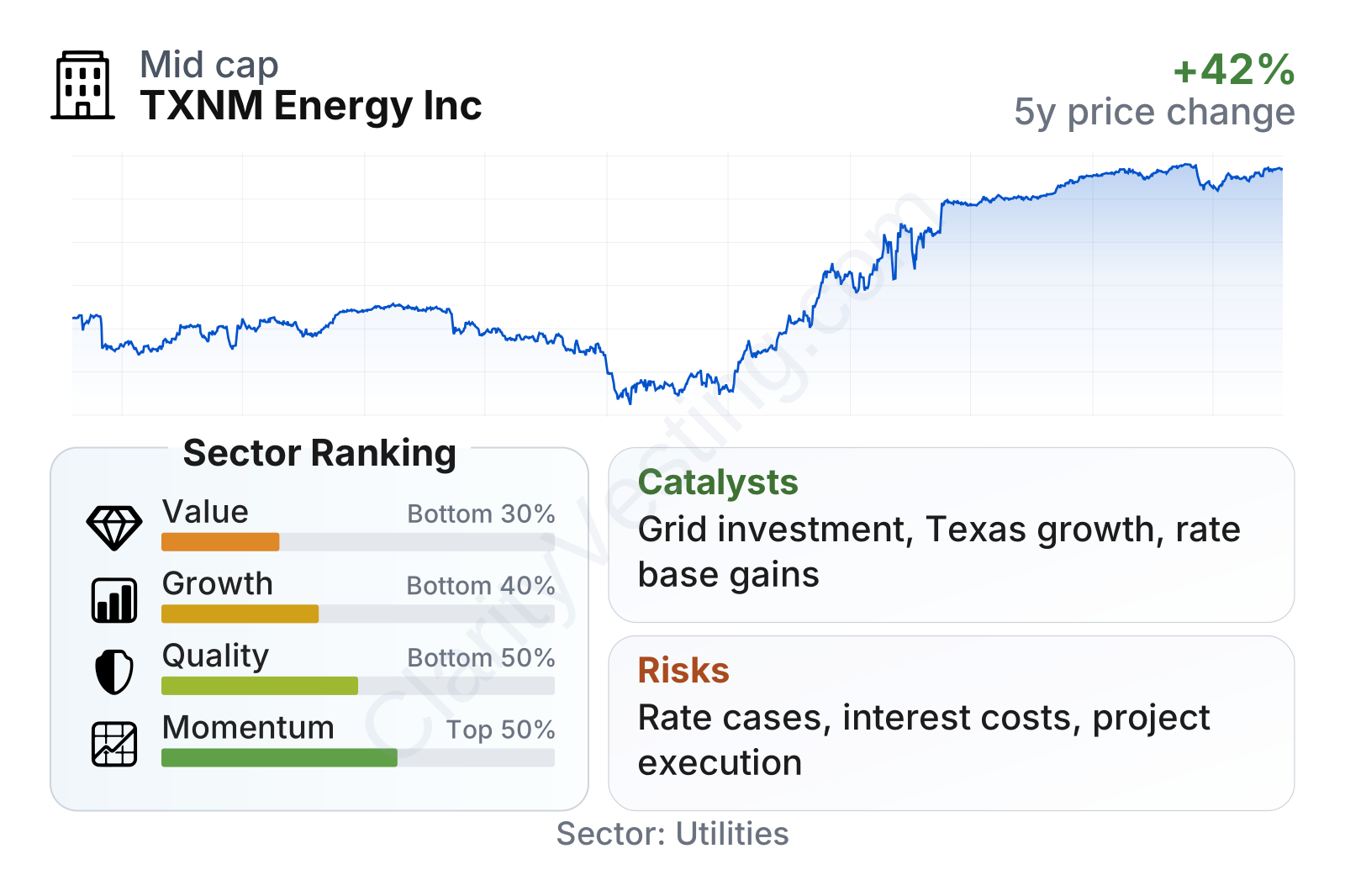
TXNM is a mid-sized regulated utility with a very low share-price volatility profile, which is common for the sector. The table points to a mixed picture: valuation looks richer than the utility median, quality is around the middle to lower half of the group, and growth ranks below average over a multi-year view even though recent revenue growth has been stronger. Momentum is not weak, but it is not the main reason the company stands out.
The stock’s longer-term price trend has been positive, with a clear recovery from the 2024 low and a much higher level by 2026. At the same time, the current dividend yield is below the sector median, which often means the market is assigning a premium to the shares rather than treating them as a high-yield utility.
Growth
TXNM operates in a sector that is still growing, even if it rarely looks fast-growing on the surface. Electric utilities are being pushed by several structural trends: grid modernization, population shifts in the Southwest, industrial power demand, renewable energy connections, and the need to replace aging infrastructure. That gives regulated utilities a long runway for capital investment, which can support future earnings if regulators allow those investments into the rate base.
For TXNM, the strategy makes sense because it fits the utility model well. The company’s future expansion depends less on dramatic sales growth and more on building and upgrading networks, improving reliability, and earning approved returns on those assets. That can be attractive when the service territory has population or economic activity tailwinds, especially in Texas and parts of the Southwest where power demand has been comparatively resilient.
Revenue per share has been relatively flat to slightly down over the last several years after a peak in 2022. That is not ideal, but it also does not automatically signal a broken business in utilities, where customer bills can move with fuel costs and regulated timing effects. The more important question is whether the company can turn infrastructure spending into a larger regulated asset base and steadier earnings over time.
Free cash flow has remained clearly negative. For utilities, negative free cash flow is not unusual during heavy investment cycles because large construction programs absorb cash before they are reflected in future earnings. The key distinction is whether the spending is productive and recoverable through rates. If the company continues to invest in transmission, distribution, and grid reliability projects with regulatory support, today’s cash outflow can be part of a normal utility growth pattern rather than a sign of operational weakness.
A meaningful catalyst is the broader need for electric grid expansion in the company’s service areas. Utilities that can add infrastructure, support renewable integration, and meet reliability standards often have clearer earnings visibility than companies that depend on discretionary consumer demand. Recent corporate developments also matter: TXNM’s updated capital structure and lower reported leverage suggest the company has been repositioning its balance sheet, which can improve financial flexibility for future investment if that trend holds.
Risks
This article is for informational purposes only and does not constitute financial advice. Some content is AI-generated. See Disclaimer


