Stock Analysis · TCL Electronics Holdings Limited (TCLHF)
Overview
TCL Electronics Holdings Limited is a consumer electronics company best known for televisions, but its business has broadened well beyond TV sets. The group designs, manufactures, and sells display products and smart devices, while also building a service layer around its installed base through internet and smart-home features. For a long-term reader, the most important point is that TCL Electronics sits at the intersection of several large markets: televisions, display technology, connected devices, and smart appliances.
The company’s business mix has shifted over time from being heavily TV-centered to becoming a broader smart-device platform. Based on recent annual reporting, revenue is led by display and TV-related products, followed by smart and internet-connected businesses, with smaller contributions from other categories and services. The broad ranking looks like this:
- Display business / large-screen products: the largest contributor, roughly around two-thirds to three-quarters of revenue, centered on TV sales and related display products.
- Innovative business and internet services: a meaningful secondary pillar, including smart connection, platform-related, and higher-value product categories.
- Smart commercial display, smart home, and other electronics: a smaller but growing portion, adding diversification beyond traditional consumer TV demand.
TCL Electronics’ scale matters because TVs are a high-volume, price-competitive business. The company’s recent revenue trend shows strong expansion, but margins remain thin, which is common in hardware. What stands out is that revenue has climbed materially over the last few years while operating income has recovered from earlier pressure, suggesting better execution and a broader product mix. Gross profit has been rising, and net income has improved significantly since 2022, even though the company is still operating in a demanding industry where pricing power is limited.
The business flow over the last several years points to a company that has been growing sales faster than operating expenses. Revenue and gross profit have both expanded, while research and development and selling expenses have risen more slowly than sales overall. That pattern helps explain why profit recovery has been stronger in recent years than it was during the earlier post-pandemic slowdown.
Key Figures
| Metric | Value | Sector ⓘ |
|---|---|---|
| Date | Sep 12, 2026 | |
| Context | ||
| Sector | Technology | |
| Industry | Consumer Electronics | |
| Market Cap ⓘ | $4.76B | |
| Beta ⓘ | 0.54 | |
Value (Cheapness) | ||
| P/E Ratio ⓘ | 12.60 | 29.51 |
| FCF Yield ⓘ | 129.75% | 4.25% |
| EBIT / EV ⓘ | N/A | 2.85% |
| PEG ⓘ | 0.46 | |
Growth (Business expansion) | ||
| Revenue Growth ⓘ | 17.40% | 15.40% |
| RPS Growth (5Y CAGR) ⓘ | 10.71% | 8.56% |
| EPS Growth (5Y CAGR) ⓘ | -34.89% | -11.88% |
| Margin Growth (5Y Trend) ⓘ | 4.41% | 0.46% |
| FCF Growth (5Y CAGR) ⓘ | N/A | 9.80% |
Quality (Business durability) | ||
| ROIC (Latest) ⓘ | N/A | 9.44% |
| ROIC (5Y Median) ⓘ | 5.45% | 8.30% |
| Net Debt / EBIT (Latest) ⓘ | -1.23 | 0.54 |
| Net Debt / EBIT (5Y Median) ⓘ | -2.34 | 0.44 |
| Operating Margin (Latest) ⓘ | 2.50% | 9.58% |
| Operating Margin (5Y Median) ⓘ | 2.57% | 8.25% |
| Debt to Equity (Latest) ⓘ | 43.54% | 33.33% |
| Profit Margin (Latest) ⓘ | 2.37% | 7.14% |
| Free Cash Flow (Latest) ⓘ | $6.18B | |
Momentum (Price trend) | ||
| 3Y Return ⓘ | +449.30% | +45.48% |
| 12M Return (excl. last month) ⓘ | +72.95% | +23.48% |
| 6M Return ⓘ | +33.90% | +20.93% |
| Price vs. 200-Day MA ⓘ | +35.16% | +7.43% |
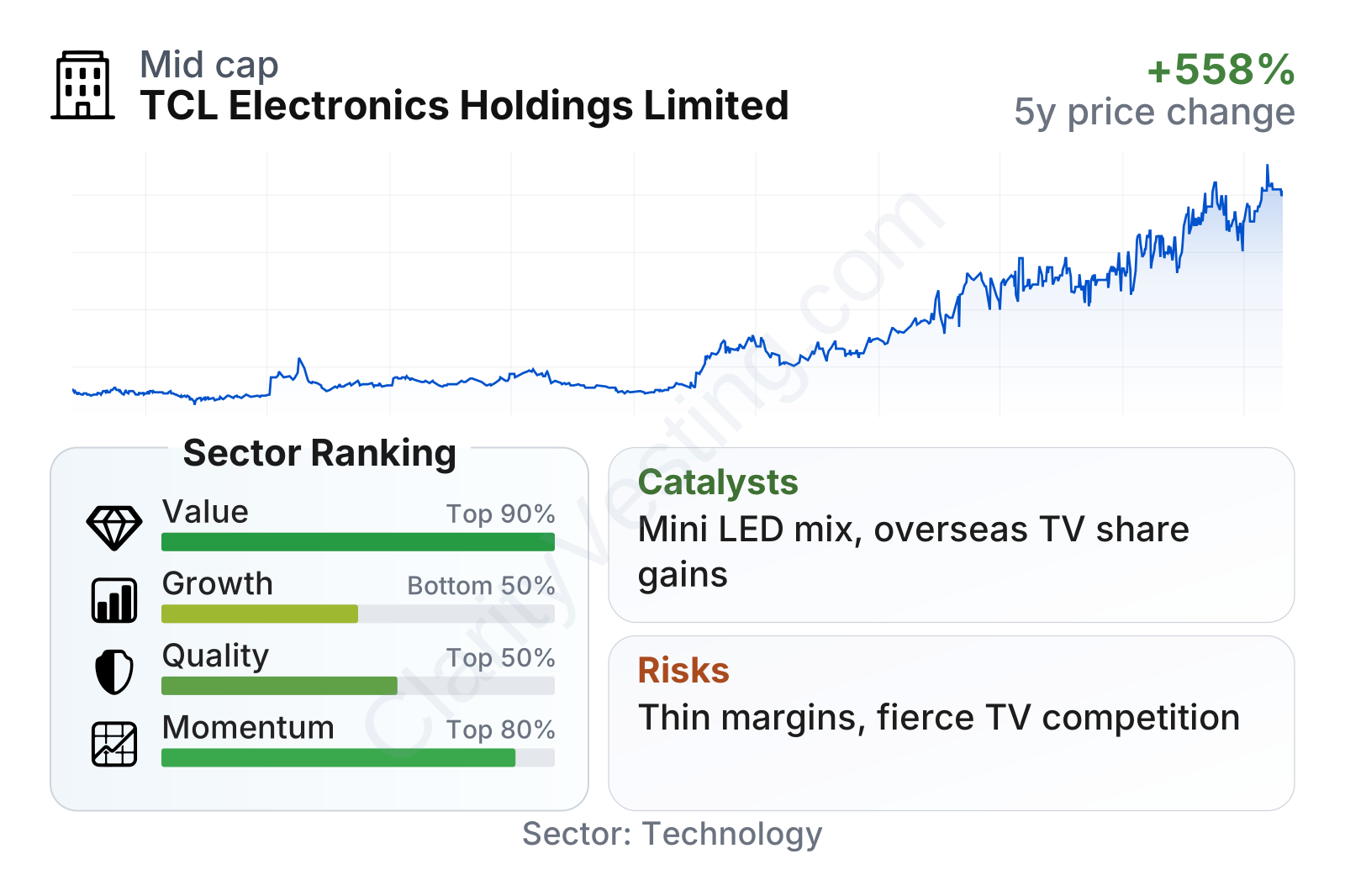
TCL Electronics is a mid-sized company by public market standards, with a market value a little above $4 billion and relatively low share-price volatility compared with many technology names. The factor breakdown points to an interesting mix: valuation looks strong versus much of the sector, growth is around the middle of the pack but supported by healthy top-line momentum, and balance-sheet quality is helped by a net cash position. The weaker area is profitability, where margins remain well below the sector median, reinforcing that this is still largely a scale-and-efficiency business rather than a high-margin technology platform.
The stock’s longer-term price trend has been strong. Over roughly three years, the share price has risen sharply from much lower levels, and shorter-term momentum has also stayed favorable. That improvement suggests the market has been re-rating the company as earnings and revenue recovered, rather than simply reacting to short-lived enthusiasm.
Growth
TCL Electronics operates in a sector that is mature in some areas and still expanding in others. Global television demand alone is not a high-growth theme, but premium displays, larger screens, Mini LED, smart home integration, and connected-device ecosystems still offer room for expansion. The company’s strategy appears built around exactly that: using scale in TVs as the base, then moving into bigger screens, premium display technologies, and related smart-device categories that can improve the overall revenue mix.
Recent growth has been solid. Year-over-year revenue growth is running slightly ahead of the sector median, and the company’s five-year revenue-per-share growth has also outpaced the middle of its peer group. That matters because it suggests the business has not only recovered from a weak patch but also expanded at a respectable pace over a longer period. In simple terms, TCL Electronics has been selling more over time, and it has done so at a rate that compares reasonably well with many technology hardware peers.
Cash generation is another constructive point. Trailing free cash flow is sizable in absolute terms, and the free-cash-flow yield screens as unusually high compared with much of the sector. That does not automatically mean the business is cheap, but it does mean the company is producing real cash relative to its market value, which is important in a low-margin industry. Strong cash generation also gives management more flexibility to fund product development, support international expansion, and absorb swings in component costs.
One of the clearest catalysts is the company’s push into premium TV technologies and larger-screen categories, where pricing and mix can be better than in entry-level products. Another is overseas expansion: TCL has built meaningful brand recognition outside China, especially in televisions, and international market share gains can matter more than industry growth alone. A third potential catalyst is the gradual shift from pure hardware sales toward a broader connected-device and smart-living ecosystem, which can deepen customer engagement and make revenue less dependent on one product category.
Recent company communications have also emphasized continued global brand building, product upgrades, and higher-end display offerings. Those developments are significant because they support the idea that future growth is not just about selling more units, but about improving product mix and monetizing a broader installed base.
Risks
This article is for informational purposes only and does not constitute financial advice. Some content is AI-generated. See Disclaimer


