Stock Analysis · STMicroelectronics N.V (STMEF)
Overview
STMicroelectronics N.V. is a large European semiconductor company that designs, manufactures, and sells chips used in industrial equipment, cars, power systems, personal electronics, and connected devices. Its products are not the flashy consumer brands people see on store shelves; they are the components inside machines and devices that help control power, process data, sense motion, manage batteries, and connect products to networks.
The company’s business is relatively diversified across end markets, but it has become especially important in automotive and industrial applications. That matters because these areas are driven by long product cycles, stricter reliability requirements, and structural trends such as vehicle electrification, advanced driver assistance, factory automation, and energy efficiency.
Based on the company’s recent annual reporting, its revenue mix can be summarized approximately as follows:
- Automotive and Discrete Group: about 46% of revenue. This includes automotive chips, power semiconductors, silicon carbide devices, and discrete components used in electric vehicles, charging systems, motor control, and industrial power applications.
- Analog, MEMS and Sensors Group: about 28% of revenue. This includes analog chips, micro-electromechanical systems, imaging sensors, and other sensing products used in industrial equipment, consumer devices, and automotive systems.
- Microcontrollers and Digital ICs Group: about 26% of revenue. This includes microcontrollers, digital chips, and related products used in embedded systems for industrial, consumer, and automotive customers.
Geographically, STMicroelectronics sells globally, with Asia-Pacific representing the largest region, followed by Europe and the Americas. Its model combines internal manufacturing with advanced packaging and technology development, which is important in areas like power semiconductors and silicon carbide where process know-how can be a real differentiator.
A key feature of the business is its heavy spending on research, development, and manufacturing capacity. Over the last few years, revenue rose strongly into the 2023 peak, but profits then compressed sharply as the semiconductor cycle turned down and utilization weakened. Even so, the company kept investing heavily in technology and production capabilities, especially in automotive and power electronics, which shows management is positioning the business for the next upcycle rather than managing only for near-term earnings.
The long-term pattern is clear: revenue and gross profit expanded substantially between 2021 and 2023, but profitability dropped hard in 2024 and especially 2025 as expenses stayed elevated while sales softened. Research and development remained above $2 billion, which underlines both the strategic importance of innovation and the pressure this model creates when demand slows.
Key Figures
| Metric | Value | Sector ⓘ |
|---|---|---|
| Date | Sep 12, 2026 | |
| Context | ||
| Sector | Technology | |
| Industry | Semiconductors | |
| Market Cap ⓘ | $45.99B | |
| Beta ⓘ | 1.51 | |
Value (Cheapness) | ||
| P/E Ratio ⓘ | N/A | 29.51 |
| FCF Yield ⓘ | 1.21% | 4.25% |
| EBIT / EV ⓘ | 1.81% | 2.85% |
| PEG ⓘ | 0.19 | |
Growth (Business expansion) | ||
| Revenue Growth ⓘ | 26.10% | 15.40% |
| RPS Growth (5Y CAGR) ⓘ | -0.94% | 8.56% |
| EPS Growth (5Y CAGR) ⓘ | -53.89% | -11.88% |
| Margin Growth (5Y Trend) ⓘ | -13.66% | 0.46% |
| FCF Growth (5Y CAGR) ⓘ | -56.47% | 9.80% |
Quality (Business durability) | ||
| ROIC (Latest) ⓘ | 2.55% | 9.44% |
| ROIC (5Y Median) ⓘ | 16.17% | 8.30% |
| Net Debt / EBIT (Latest) ⓘ | 1.20 | 0.54 |
| Net Debt / EBIT (5Y Median) ⓘ | -0.14 | 0.44 |
| Operating Margin (Latest) ⓘ | 5.72% | 9.58% |
| Operating Margin (5Y Median) ⓘ | 17.05% | 8.25% |
| Debt to Equity (Latest) ⓘ | 22.81% | 33.33% |
| Profit Margin (Latest) ⓘ | 3.56% | 7.14% |
| Free Cash Flow (Latest) ⓘ | $555.08M | |
Momentum (Price trend) | ||
| 3Y Return ⓘ | +20.42% | +45.48% |
| 12M Return (excl. last month) ⓘ | +113.95% | +23.48% |
| 6M Return ⓘ | +56.45% | +20.93% |
| Price vs. 200-Day MA ⓘ | +19.27% | +7.43% |
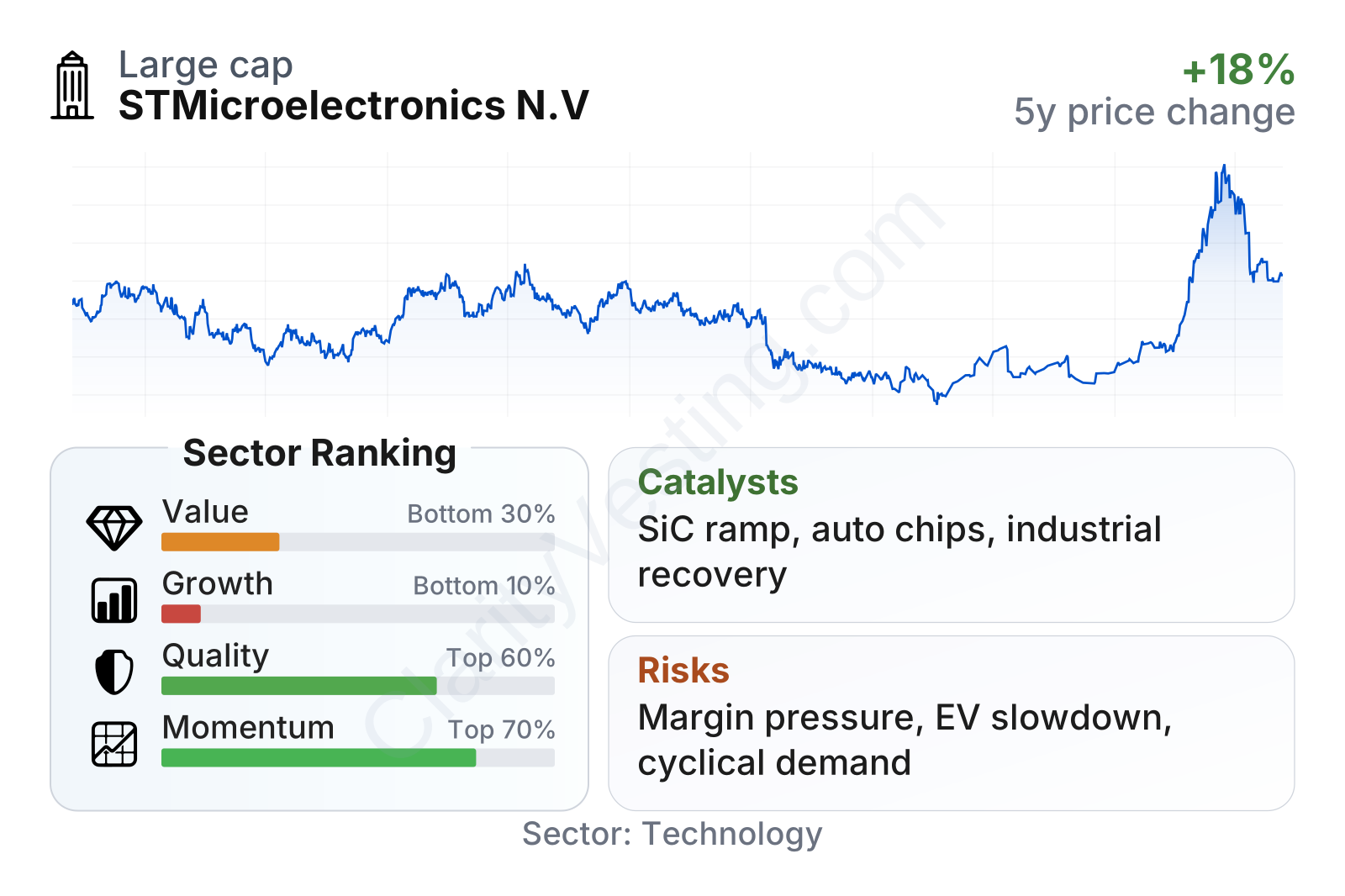
STMicroelectronics is a large semiconductor company with above-average share price volatility, which is common in cyclical chip businesses. The broad picture from the latest metrics is mixed: balance-sheet leverage remains conservative, long-term historical returns on invested capital were solid, and recent market momentum has been very strong. On the other hand, current profitability, cash generation, and headline valuation metrics look weak because earnings are still recovering from a sharp downturn. The gap between strong recent share performance and still-depressed operating results is one of the central points to watch.
Growth
Semiconductors remain a growing sector over the long run, but not all chip categories grow at the same speed. STMicroelectronics is concentrated in areas that have strong structural demand drivers: electric vehicles, onboard power management, industrial automation, factory digitalization, smart energy systems, and connected embedded devices. These are attractive niches because they often require specialized chips rather than commodity processors.
The company’s strategy broadly makes sense for future growth. It has been investing in power semiconductors, especially silicon carbide, along with automotive microcontrollers and industrial analog products. Silicon carbide is particularly important because it improves efficiency in electric drivetrains, charging systems, renewable energy installations, and industrial power conversion. These are all markets where efficiency, heat management, and reliability directly affect customer performance.
Another strategic strength is manufacturing involvement. Many chip companies are fabless and rely mainly on outside foundries, but STMicroelectronics retains significant in-house production. That can be an advantage in specialized technologies where process control, yield, and supply assurance matter. It also helps the company work more closely with automotive and industrial customers that prefer long-term supply commitments.
Recent growth has been highly cyclical rather than smooth. Revenue growth was very strong through 2022 and parts of 2023, then turned sharply negative during 2024 and much of 2025 before returning to positive territory in late 2025 and early 2026. The rebound to year-over-year growth above 20% in the latest period suggests the downturn may be easing, but the five-year record still reflects how severe the correction was.
Cash generation also shows that same pattern. Free cash flow moved from strong positive levels to a large negative swing during the investment cycle, then recovered but remains well below earlier peaks. That is consistent with a company still carrying the weight of high capital spending and weaker margins while waiting for volume recovery to improve operating leverage.
Recent company communications have emphasized capacity build-out in advanced power technologies and continued progress in automotive programs. One meaningful opportunity is the rising semiconductor content per vehicle, especially in electric and hybrid platforms. Another is the broader push for electrification in industrial systems and energy infrastructure, where STMicroelectronics already has relevant product families. If those demand trends continue while factory utilization improves, earnings recovery could be stronger than revenue growth alone suggests.
Risks
This article is for informational purposes only and does not constitute financial advice. Some content is AI-generated. See Disclaimer


