Stock Analysis · Penguin Solutions Inc (PENG)
Overview
Penguin Solutions Inc is a technology infrastructure company focused on high-performance computing, artificial intelligence infrastructure, advanced memory products, and enterprise IT services. The business combines hardware, software, and support services for customers that need computing power, data storage, and system integration. In practical terms, it helps organizations build and run complex computing environments, from data center equipment to AI clusters and managed services.
The company operates through a mix of product sales and services. Based on its recent filings and business description, revenue is primarily tied to three broad areas:
- Integrated memory and storage products: a large share of revenue, historically the biggest contributor. This includes specialty DRAM, flash storage, and related components sold under established brands and through OEM and channel relationships.
- Advanced computing and AI infrastructure: a meaningful and growing portion of revenue. This includes high-performance servers, accelerated computing systems, cluster solutions, and related integration work for AI and technical computing workloads.
- Services and support: a smaller but strategically important stream. This includes managed services, professional services, and lifecycle support tied to enterprise and data center deployments.
Precise percentages by current operating line are not always disclosed in a simple public split, especially after portfolio changes and strategic repositioning. Still, the broad picture is clear: Penguin Solutions is no longer just a component supplier. It is increasingly trying to capture more value by selling complete computing platforms and services around AI and data-intensive workloads.
The profit structure has also improved from a difficult 2023-2024 period. Revenue recovered strongly in the latest annual period, gross profit rebounded, operating income turned positive again, and interest expense fell sharply, all of which point to a healthier operating base than the company had during its restructuring phase.
Over the last five annual periods, the business shows a clear cycle: expansion into 2022, a profitability reset in 2023 and 2024, then a return to positive operating and net income in 2025. The most encouraging change is that operating profit recovered while financing costs moved lower, suggesting recent growth is translating into cleaner earnings than before.
Key Figures
| Metric | Value | Sector ⓘ |
|---|---|---|
| Date | Sep 12, 2026 | |
| Context | ||
| Sector | Technology | |
| Industry | Information Technology Services | |
| Market Cap ⓘ | $2.62B | |
| Beta ⓘ | 2.85 | |
Value (Cheapness) | ||
| P/E Ratio ⓘ | 35.04 | 29.51 |
| FCF Yield ⓘ | -2.53% | 4.25% |
| EBIT / EV ⓘ | 4.55% | 2.85% |
| PEG ⓘ | N/A | |
Growth (Business expansion) | ||
| Revenue Growth ⓘ | 47.60% | 15.40% |
| RPS Growth (5Y CAGR) ⓘ | 5.32% | 8.56% |
| EPS Growth (5Y CAGR) ⓘ | -16.98% | -11.88% |
| Margin Growth (5Y Trend) ⓘ | N/A | 0.46% |
| FCF Growth (5Y CAGR) ⓘ | -7.50% | 9.80% |
Quality (Business durability) | ||
| ROIC (Latest) ⓘ | 11.97% | 9.44% |
| ROIC (5Y Median) ⓘ | N/A | 8.30% |
| Net Debt / EBIT (Latest) ⓘ | 0.50 | 0.54 |
| Net Debt / EBIT (5Y Median) ⓘ | N/A | 0.44 |
| Operating Margin (Latest) ⓘ | 8.35% | 9.58% |
| Operating Margin (5Y Median) ⓘ | -0.21% | 8.25% |
| Debt to Equity (Latest) ⓘ | 114.45% | 33.33% |
| Profit Margin (Latest) ⓘ | 6.45% | 7.14% |
| Free Cash Flow (Latest) ⓘ | -$66.38M | |
Momentum (Price trend) | ||
| 3Y Return ⓘ | +115.50% | +45.48% |
| 12M Return (excl. last month) ⓘ | +142.29% | +23.48% |
| 6M Return ⓘ | +187.90% | +20.93% |
| Price vs. 200-Day MA ⓘ | +37.28% | +7.43% |
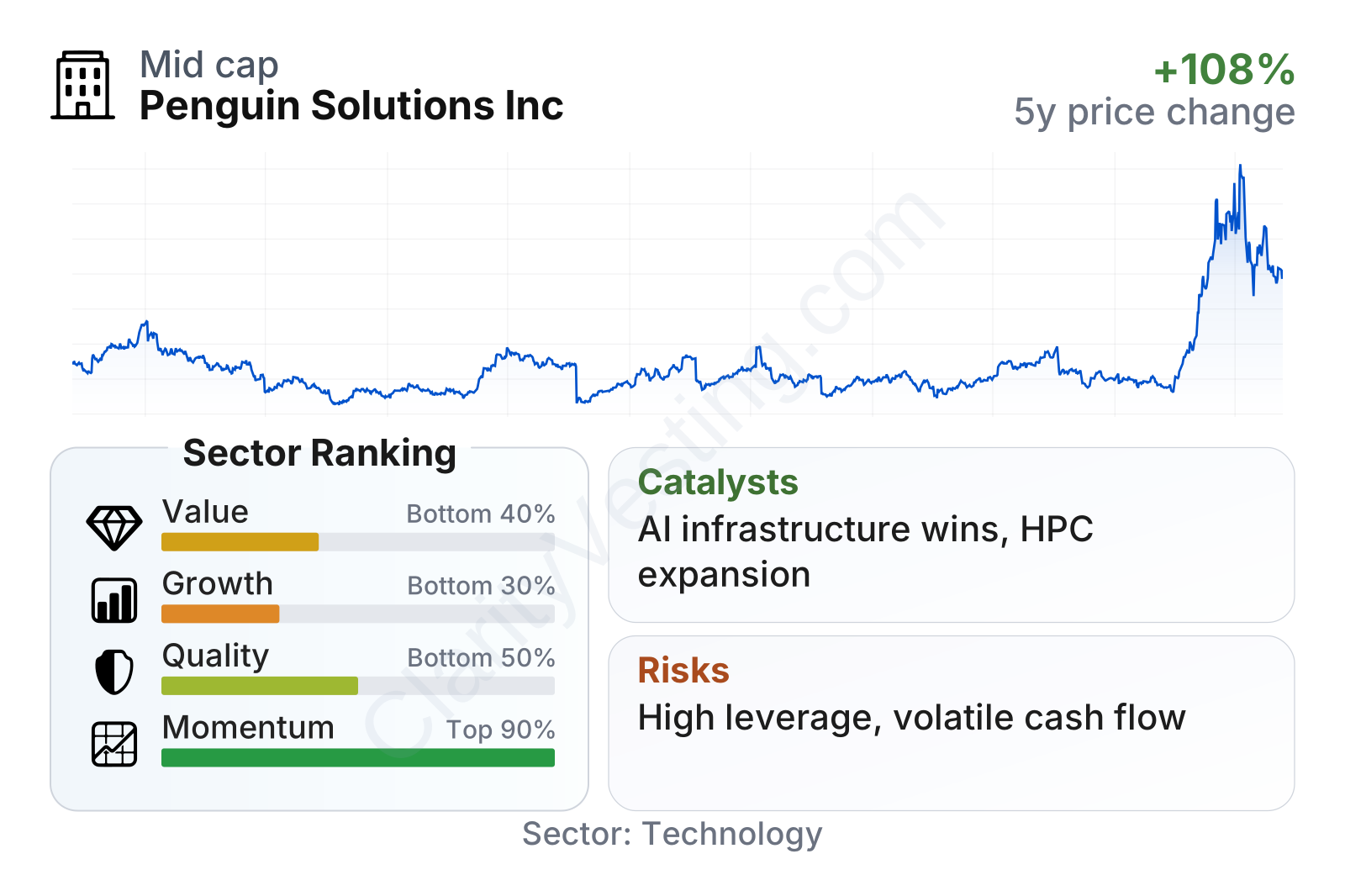
Penguin Solutions sits in the mid-cap range, and its share price has been unusually volatile, with a beta above 2.8. In the factor breakdown, momentum is exceptionally strong, but value, quality, and growth rank in the weaker half of the sector overall. That combination usually means the market has become much more optimistic recently, while the company still has work to do on consistency, cash generation, and balance-sheet strength.
The recent market performance has been far stronger than the broader technology sector, but the operating profile is more mixed. Revenue growth has accelerated sharply, return on invested capital is above the sector median, and profitability has recovered. At the same time, free cash flow is negative on the latest reading and leverage remains elevated relative to peers.
Growth
Penguin Solutions operates in parts of the technology market that have favorable long-term demand drivers. AI infrastructure, high-performance computing, memory-intensive workloads, edge-to-core data movement, and enterprise modernization all support demand for more powerful systems and supporting services. These are not niche themes anymore. They are becoming part of how cloud providers, research institutions, industrial companies, and enterprises build computing capacity.
The company’s strategy makes sense if management can keep executing. Selling integrated AI and high-performance systems can offer better economics than competing only in lower-margin component categories. It also creates cross-selling opportunities: a customer that first buys hardware may later need software support, system tuning, deployment services, and long-term maintenance. That can make revenue more durable over time.
Recent revenue trends show why the market has paid attention. After a long stretch of declines and uneven demand, growth turned positive again and the latest year-over-year increase surged to roughly 48%, far above the sector median near 13%. That does not erase prior volatility, but it does show that the company has regained momentum in a meaningful way.
Cash generation has been less steady than revenue growth. Free cash flow was positive for several periods and reached a strong level in 2025 before easing again. The latest factor reading shows trailing free cash flow has turned negative, which suggests working capital, investment needs, or project timing can materially affect near-term cash conversion. For a company tied to large infrastructure deployments, that is important because reported growth does not always flow smoothly into cash.
One important catalyst is the continued enterprise buildout of AI infrastructure. Penguin Solutions has positioned itself where customers need assembled systems rather than isolated parts. Another catalyst is the broader shift toward specialized, high-density computing environments, which can raise demand for integration expertise and support services, not just equipment. If the company continues converting this demand into repeat business, growth could become more balanced across products and services.
Recent company communications have also highlighted progress around AI factory-type deployments, accelerated computing platforms, and a stronger operating setup following strategic changes. For a business of this size, even a handful of sizable infrastructure wins can have a visible effect on growth.
Risks
This article is for informational purposes only and does not constitute financial advice. Some content is AI-generated. See Disclaimer


