Stock Analysis · Meridian Energy Limited (MDDNF)
Overview
Meridian Energy Limited is a New Zealand-based electricity company focused mainly on renewable power generation and electricity retailing. Its generation fleet is largely hydro and wind, which makes it one of the more renewable-heavy utilities in its market. In practical terms, the company produces electricity, sells it to homes and businesses, and also participates in wholesale electricity markets. Meridian also has customer-facing retail brands in New Zealand and energy-related activities in Australia.
For long-term analysis, the most important point is that Meridian sits in a utility segment where demand is usually steady, but earnings can still move around because electricity prices, hydrology, wind conditions, and accounting changes can all affect reported results.
The main sources of revenue are spread across electricity generation, electricity retailing, and related market activities. Based on company reporting and business structure, the mix is best understood this way:
- Wholesale electricity and generation-related sales: likely the largest contributor. This includes electricity generated from Meridian’s hydro and wind assets and sold into the market, plus related contracts and hedging activity.
- Retail electricity sales in New Zealand: a major source of recurring revenue through residential and business customer accounts, mainly under the Meridian and Powershop brands.
- Australia retail operations: a smaller but meaningful contributor, primarily through Powershop Australia.
- Other energy and related services: a relatively small share, including energy solutions and other ancillary activities.
Because utilities often report revenue in ways that can be distorted by wholesale market pass-through effects, profit and cash generation usually matter more than headline sales alone when assessing Meridian.
The business has shown that revenue can swing sharply from year to year, while profitability can also move from strong earnings to losses and then recover again. That pattern reinforces the idea that Meridian is operationally resilient, but reported numbers are not always smooth.
Key Figures
| Metric | Value | Sector ⓘ |
|---|---|---|
| Date | Oct 17, 2026 | |
| Context | ||
| Sector | Utilities | |
| Industry | Utilities - Renewable | |
| Market Cap ⓘ | $8.04B | |
| Beta ⓘ | 0.44 | |
Value (Cheapness) | ||
| P/E Ratio ⓘ | 100.83 | 17.28 |
| P/B Ratio ⓘ | 0.81 | 1.51 |
| FCF Yield ⓘ | 9.17% | 0.65% |
| Dividend Yield ⓘ | 7.44% | 3.77% |
| EBIT / EV ⓘ | N/A | 5.01% |
| PEG ⓘ | 0.76 | |
Growth (Business expansion) | ||
| Revenue Growth ⓘ | -27.30% | 6.10% |
| RPS Growth (5Y CAGR) ⓘ | -0.24% | 3.87% |
| EPS Growth (5Y CAGR) ⓘ | 13.85% | -11.30% |
| BVPS Growth (5Y CAGR) ⓘ | 15.02% | 4.23% |
| Margin Growth (5Y Trend) ⓘ | 2.44% | 3.57% |
| FCF Growth (5Y CAGR) ⓘ | 18.04% | -8.84% |
| DPS Growth (5Y CAGR) ⓘ | 0.35% | 4.84% |
Quality (Business durability) | ||
| ROIC (Latest) ⓘ | N/A | 6.53% |
| ROA (Latest) ⓘ | -2.14% | 3.20% |
| ROIC (5Y Median) ⓘ | 3.87% | 5.95% |
| ROA (5Y Median) ⓘ | 0.98% | 2.75% |
| Net Debt / EBIT (Latest) ⓘ | 4.95 | 7.13 |
| Net Debt / EBIT (5Y Median) ⓘ | 1.89 | 7.23 |
| Net Debt / EBITDA (Latest) ⓘ | 1.20 | 4.31 |
| Net Debt / Assets ⓘ | 8.89% | 38.42% |
| EBITDA / Interest ⓘ | 6.81 | 4.58 |
| Operating Margin (Latest) ⓘ | 3.52% | 20.83% |
| Operating Margin (5Y Median) ⓘ | 13.61% | 20.08% |
| Debt to Equity (Latest) ⓘ | 20.44% | 137.69% |
| Profit Margin (Latest) ⓘ | 3.35% | 11.37% |
| Free Cash Flow (Latest) ⓘ | $737.35M | |
Momentum (Price trend) | ||
| 3Y Return ⓘ | +18.93% | +52.37% |
| 12M Return (excl. last month) ⓘ | -4.73% | +8.84% |
| 6M Return ⓘ | +6.51% | -3.95% |
| Price vs. 200-Day MA ⓘ | N/A | -0.79% |
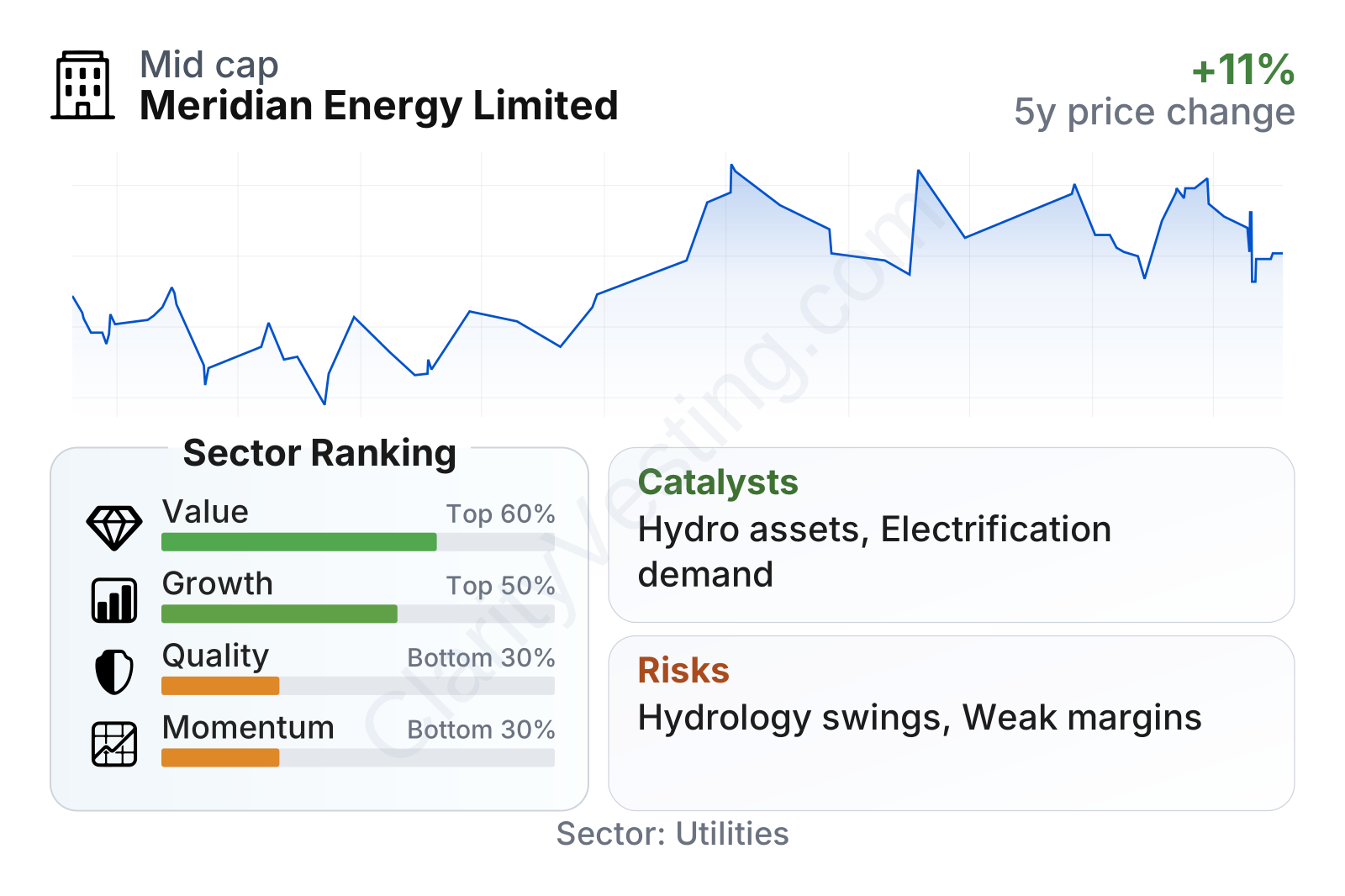
Meridian is a large utility by market value, and its shares have historically moved less than the broader market, reflected in a low beta. The overall profile is mixed: valuation indicators look uneven because the trailing P/E is very high, while the price-to-book ratio is below the sector median and free cash flow yield is notably stronger than many peers. Growth metrics are in the middle of the pack, helped by solid long-term expansion in earnings, book value, and free cash flow, even though recent revenue growth has been weak. Quality measures are less impressive on profitability, with margins and returns on assets below sector norms, but balance-sheet leverage looks conservative for a utility, which is a meaningful offset.
The stock price has risen over the past several years, but not as strongly as the broader renewable utility group. More recently, shorter-term trading has improved somewhat, although longer-term share momentum still looks modest relative to peers.
Growth
Meridian operates in a sector with durable long-term support. Electricity demand tends to be defensive, and the broader shift toward cleaner power generation remains a structural tailwind. Companies with established renewable assets are generally well placed as governments, businesses, and consumers continue to favor low-emission electricity systems.
Meridian’s strategy makes sense in that context. The company already owns a largely renewable generation portfolio, so it does not need to reinvent its business model to fit the energy transition. Instead, the long-term opportunity comes from using existing scale in hydro and wind, adding selected new generation projects, deepening customer relationships, and benefiting from electrification trends in transport and industry.
Revenue per share has not followed a straight upward path over the last five years. It has moved with market conditions rather than showing a steady compounding pattern. That matters because it suggests Meridian’s growth case is tied more to disciplined capital allocation, asset quality, and future demand for renewable electricity than to smooth annual revenue expansion.
A strong catalyst is the value of firm renewable generation in New Zealand’s power market. Hydro assets can be especially important because they provide renewable output with a degree of flexibility that intermittent generation alone cannot match. Meridian’s position in this area gives it strategic relevance as the electricity system evolves.
Another important catalyst is continued electrification. If more energy use shifts from fossil fuels to electricity, companies already supplying large renewable volumes may benefit from rising demand without needing an entirely new customer base. Recent company updates and operating disclosures have also pointed to continued focus on development options and portfolio management, which supports the medium-term growth narrative even if yearly results remain uneven.
Risks
This article is for informational purposes only and does not constitute financial advice. Some content is AI-generated. See Disclaimer


