Stock Analysis · Zoom Video Communications Inc (ZM)
Overview
Zoom Video Communications is a cloud software company best known for video meetings, but its business is now broader than the name suggests. It provides a communications platform used for meetings, team chat, phone systems, contact center operations, webinars, events, scheduling, digital customer service, and conference-room hardware software integration. Its customers range from individual users and small businesses to large enterprises and public-sector organizations.
The company mainly makes money from subscription fees for its communications software. In its fiscal year ended January 31, 2026, Zoom reported about $4.87 billion in revenue. Based on company disclosures, the revenue mix is best understood through customer type rather than individual product lines, because Zoom does not regularly break out every product in a precise way.
- Enterprise customers: approximately 60% of revenue. This includes larger organizations buying paid seats and broader platform products such as Zoom Meetings, Zoom Phone, Zoom Contact Center, Zoom Team Chat, Zoom Rooms, Webinars, and related enterprise services.
- Online customers: approximately 40% of revenue. This group mainly includes self-serve subscriptions purchased directly online by individuals and smaller businesses, typically centered on Meetings and related add-ons.
Within that mix, Zoom Phone and contact-center products appear to be among the company’s most important expansion areas, while Meetings remains the core product anchoring the ecosystem. The business model is attractive when retention is solid: once a company standardizes communications workflows on a single platform, adding more seats or adjacent products can be easier than winning a completely new customer.
The financial flow also shows a business with very high gross profitability and improving operating discipline. Revenue has continued to rise gradually since the post-pandemic slowdown, while operating expenses have become a smaller share of sales, helping profitability recover strongly.
Key Figures
| Metric | Value | Sector ⓘ |
|---|---|---|
| Date | Sep 12, 2026 | |
| Context | ||
| Sector | Technology | |
| Industry | Software - Application | |
| Market Cap ⓘ | $27.89B | |
| Beta ⓘ | 1.04 | |
Value (Cheapness) | ||
| P/E Ratio ⓘ | 8.87 | 29.51 |
| FCF Yield ⓘ | 6.91% | 4.25% |
| EBIT / EV ⓘ | 20.25% | 2.85% |
| PEG ⓘ | 2.71 | |
Growth (Business expansion) | ||
| Revenue Growth ⓘ | 4.90% | 15.40% |
| RPS Growth (5Y CAGR) ⓘ | 4.26% | 8.56% |
| EPS Growth (5Y CAGR) ⓘ | -14.96% | -11.88% |
| Margin Growth (5Y Trend) ⓘ | 22.88% | 0.46% |
| FCF Growth (5Y CAGR) ⓘ | 7.15% | 9.80% |
Quality (Business durability) | ||
| ROIC (Latest) ⓘ | 32.25% | 9.44% |
| ROIC (5Y Median) ⓘ | 11.92% | 8.30% |
| Net Debt / EBIT (Latest) ⓘ | -0.21 | 0.54 |
| Net Debt / EBIT (5Y Median) ⓘ | -0.98 | 0.44 |
| Operating Margin (Latest) ⓘ | 83.82% | 9.58% |
| Operating Margin (5Y Median) ⓘ | 26.87% | 8.25% |
| Debt to Equity (Latest) ⓘ | 0.53% | 33.33% |
| Profit Margin (Latest) ⓘ | 65.19% | 7.14% |
| Free Cash Flow (Latest) ⓘ | $1.93B | |
Momentum (Price trend) | ||
| 3Y Return ⓘ | +36.00% | +45.48% |
| 12M Return (excl. last month) ⓘ | +50.27% | +23.48% |
| 6M Return ⓘ | +27.53% | +20.93% |
| Price vs. 200-Day MA ⓘ | +5.31% | +7.43% |
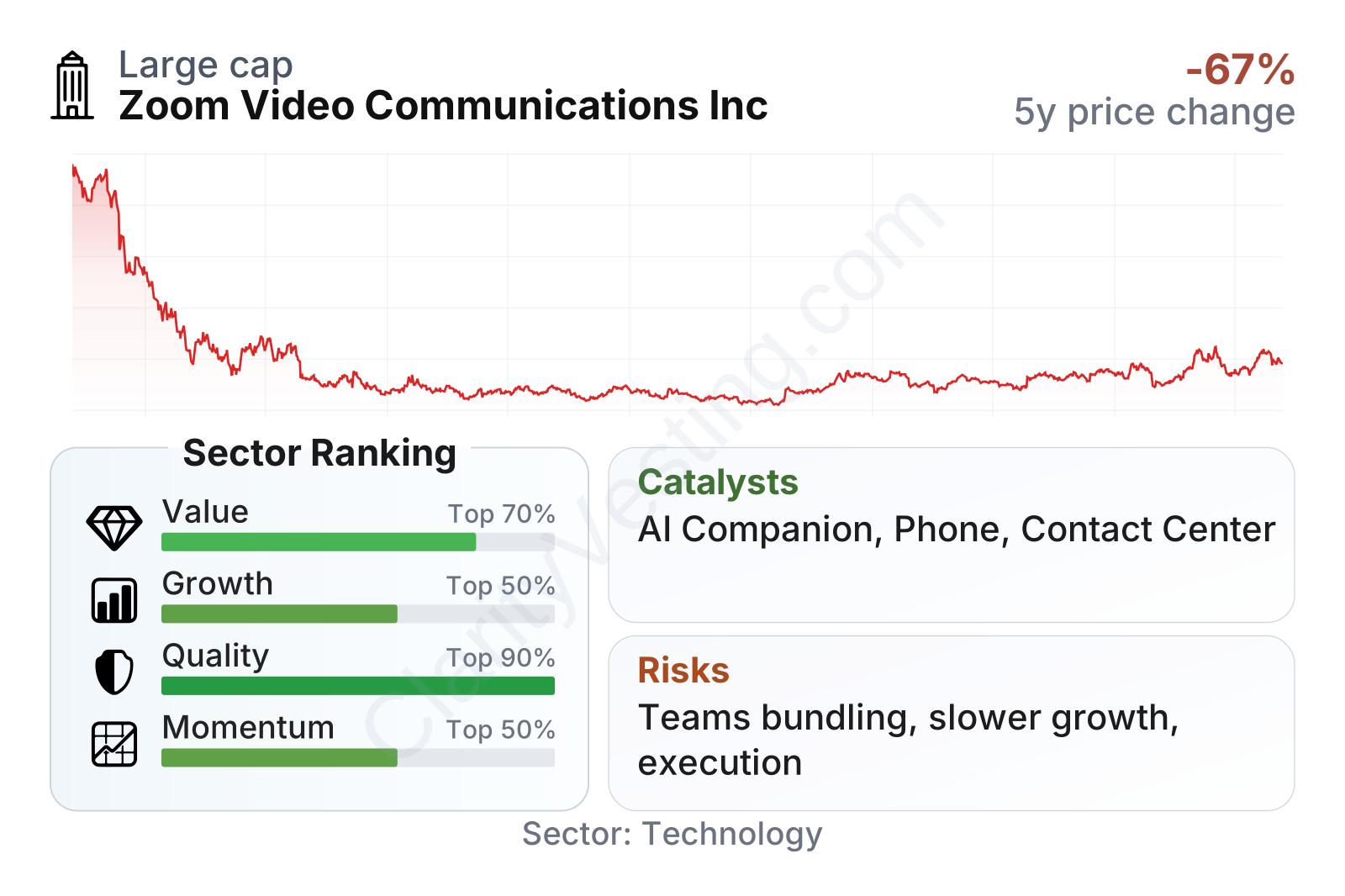
Zoom is now a large software company with stock-market volatility close to the broader market rather than extreme high-growth behavior. The most notable feature in the latest metrics is the combination of strong quality and modest growth. Profitability, returns on invested capital, cash generation, and balance-sheet strength rank well against much of the software sector, while revenue growth is positive but clearly below the sector median. Momentum has improved recently, reflecting better confidence after a long reset from the pandemic-era valuation peak.
The stock-price history captures that reset clearly: Zoom moved from very elevated pandemic expectations to a much lower, more mature valuation range. That does not say whether the business weakened structurally; it mainly shows that the market no longer treats Zoom as a hypergrowth company.
Growth
Zoom operates in a sector that should continue expanding over the long run. Unified communications, cloud telephony, hybrid work software, and AI-enabled customer interaction tools remain active areas of enterprise spending. Companies still need video, chat, calling, and customer-service systems that work across offices, homes, mobile devices, and global teams. That creates a durable market backdrop even if the explosive demand seen during 2020 and 2021 is long gone.
What matters now is not whether video meetings keep booming, but whether Zoom can deepen its role inside business communications. Its strategy points in that direction. Management has been pushing beyond meetings into Zoom Phone, Zoom Contact Center, Workvivo, employee engagement, and AI Companion. This makes strategic sense because meetings alone are more mature and more exposed to competition, while telephony, customer experience software, and workflow tools can expand account value.
Revenue growth has settled into a mid-single-digit range, far below the company’s pandemic surge but still showing that the business is not shrinking. That is an important distinction. Zoom has transitioned from exceptional expansion to steadier enterprise software growth, with recent trends suggesting stabilization rather than deterioration.
Cash generation is another positive signal. Free cash flow has climbed meaningfully over the last several years and is now close to $2 billion on a trailing basis. For a company growing at only around 5%, that level of cash production matters because it gives Zoom flexibility to invest in product development, acquisitions, and infrastructure without relying on debt.
A meaningful catalyst is the company’s push into AI. Zoom has been embedding AI Companion across its platform for meeting summaries, task extraction, writing support, and customer-service use cases. The opportunity is not only feature differentiation; it is also the chance to make Zoom more central to daily work. If AI tools increase user engagement and help the company sell broader packages, they could support both retention and pricing power.
Another recent opportunity comes from contact center and enterprise telephony adoption. These categories are large, recurring, and often more deeply embedded than video meetings alone. Zoom has highlighted continued growth in Zoom Phone seats and increasing traction in Zoom Contact Center and AI-first customer experience products. If that mix shift continues, Zoom could gradually look less like a single-product video company and more like a broader communications platform.
Risks
This article is for informational purposes only and does not constitute financial advice. Some content is AI-generated. See Disclaimer


