Stock Analysis · Ziff Davis Inc (ZD)
Overview
Ziff Davis is a digital media and internet services company. It owns a collection of online brands that attract audiences around technology, shopping, gaming, connectivity, health, and cybersecurity, and it also operates subscription-based software and services businesses. In practice, the company makes money from both advertising tied to its media properties and recurring fees from internet services, security products, and industry-specific software platforms.
Based on the company’s recent annual reporting structure, revenue is spread across several operating segments rather than one single business line. The mix below is approximate and designed to show where the business is most exposed.
- Technology & Shopping: about 30% to 35% of revenue. This includes major digital media brands such as CNET, PCMag, IGN’s commerce-related activity, retail and product review content, and performance marketing tied to consumer purchasing decisions.
- Gaming & Entertainment: about 20% to 25%. This segment includes IGN and Humble, combining advertising, subscriptions, digital content, and game-related commerce.
- Connectivity: about 15% to 20%. This business focuses on broadband and telecom lead generation, comparison tools, and related performance marketing.
- Health & Wellness: about 10% to 15%. This includes everyday health-oriented websites and digital content supported mainly by advertising and lead generation.
- Cybersecurity & Martech: about 10% to 15%. This comes from subscription and software-style offerings, including privacy, security, and marketing technology tools.
- Venture / Other: usually less than 10%. This includes narrower software and services activities, such as industry-specific cloud and communications products.
This structure matters for long-term analysis because Ziff Davis is not a pure advertising company. It has a mix of cyclical ad revenue and steadier subscription or service revenue, which can soften downturns in one area. At the same time, the business has become more complex through acquisitions, making segment execution and integration important to watch.
The company’s economics also show a business with historically high gross profit and relatively modest direct costs, which is typical for digital publishing and software-like services. More recently, revenue has been fairly stable on a multiyear basis, but profitability has been uneven, reflecting portfolio changes, impairment charges, and weaker growth in some categories.
Over the last several years, total revenue has stayed around the same broad range, while operating and net income have been much more volatile. That pattern suggests the main question is not whether Ziff Davis can produce revenue, but whether it can convert that revenue into durable earnings growth.
Key Figures
| Metric | Value | Sector ⓘ |
|---|---|---|
| Date | Sep 12, 2026 | |
| Context | ||
| Sector | Communication Services | |
| Industry | Advertising Agencies | |
| Market Cap ⓘ | $1.93B | |
| Beta ⓘ | 1.02 | |
Value (Cheapness) | ||
| P/E Ratio ⓘ | 46.04 | 18.61 |
| FCF Yield ⓘ | 16.43% | 13.68% |
| EBIT / EV ⓘ | 0.98% | 4.54% |
| PEG ⓘ | 1.52 | |
Growth (Business expansion) | ||
| Revenue Growth ⓘ | -2.70% | 5.40% |
| RPS Growth (5Y CAGR) ⓘ | 4.51% | 4.62% |
| EPS Growth (5Y CAGR) ⓘ | -34.56% | -18.01% |
| Margin Growth (5Y Trend) ⓘ | -23.08% | 1.10% |
| FCF Growth (5Y CAGR) ⓘ | -8.00% | 5.88% |
Quality (Business durability) | ||
| ROIC (Latest) ⓘ | -1.44% | 8.38% |
| ROIC (5Y Median) ⓘ | 2.43% | 8.32% |
| Net Debt / EBIT (Latest) ⓘ | -65.01 | 1.99 |
| Net Debt / EBIT (5Y Median) ⓘ | 2.78 | 2.94 |
| Operating Margin (Latest) ⓘ | 0.86% | 14.89% |
| Operating Margin (5Y Median) ⓘ | 7.65% | 12.96% |
| Debt to Equity (Latest) ⓘ | 38.78% | 59.59% |
| Profit Margin (Latest) ⓘ | 44.75% | 8.77% |
| Free Cash Flow (Latest) ⓘ | $316.73M | |
Momentum (Price trend) | ||
| 3Y Return ⓘ | -13.27% | +46.64% |
| 12M Return (excl. last month) ⓘ | +58.47% | +2.16% |
| 6M Return ⓘ | +42.44% | +5.05% |
| Price vs. 200-Day MA ⓘ | +29.03% | +2.88% |
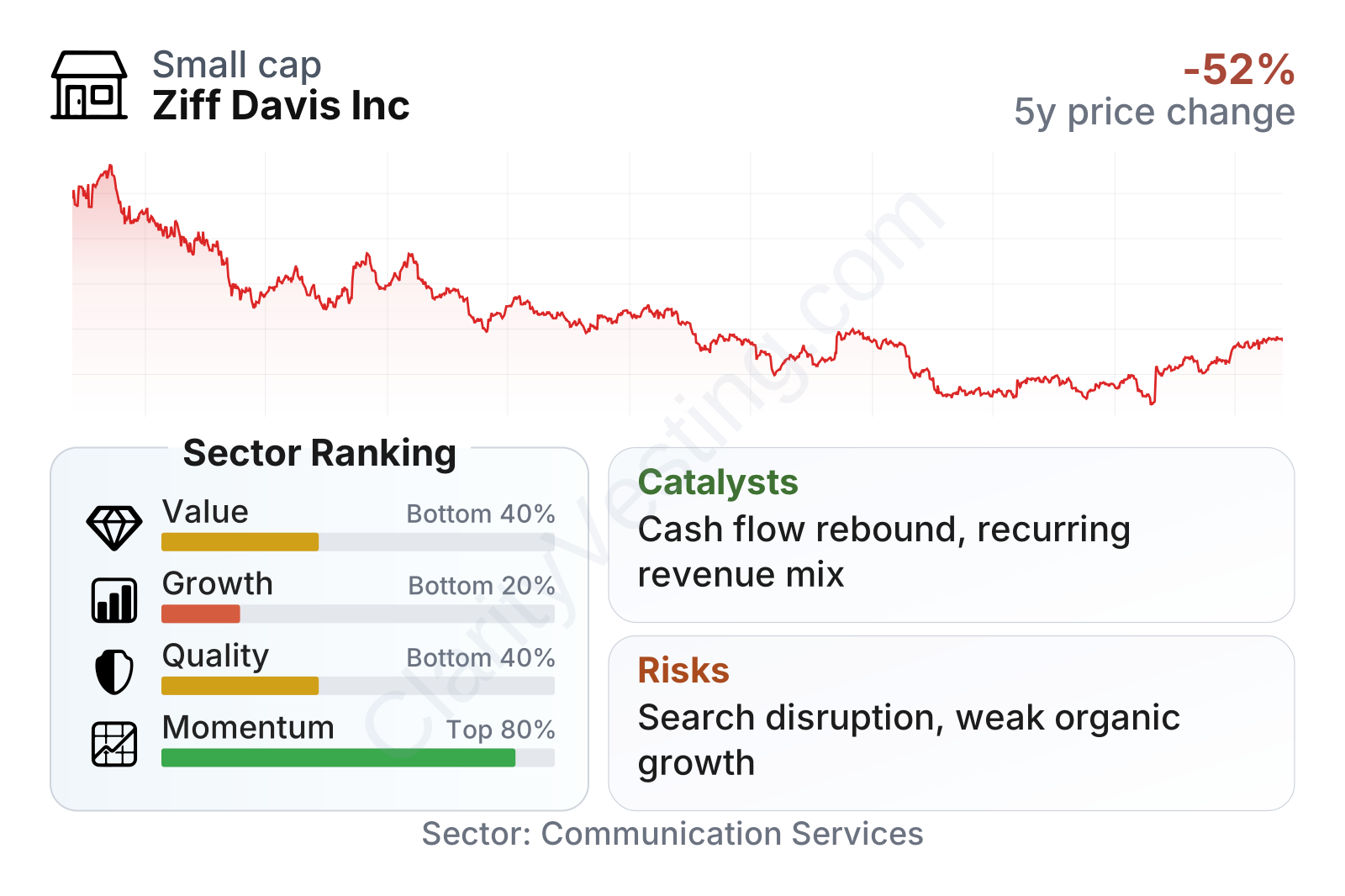
Ziff Davis is a mid-sized company with market value around $2 billion and share-price volatility close to the broader market. The most striking feature in the current profile is the contrast between weak growth rankings and stronger cash-generation and margin readings. Relative to its sector, value metrics are mixed: the earnings multiple is elevated, but cash flow yield and operating earnings relative to enterprise value look stronger. Quality is also mixed, with low returns on invested capital but a healthier balance sheet than many peers. Momentum has improved sharply in the last year after a long period of stock-price weakness.
Growth
Ziff Davis operates in sectors that still have long-term relevance: digital advertising, product discovery, gaming media, cybersecurity, internet tools, and consumer health information. Those are not disappearing markets, and some, especially cybersecurity and subscription-based software, still have attractive structural demand. The challenge is that these markets are also mature and highly competitive, so growth depends more on execution, audience retention, monetization, and acquisitions than on simple industry tailwinds.
The company’s strategy has generally been to use cash flow from established media assets to build a broader portfolio of digital properties and recurring-revenue businesses. That logic makes sense for future growth because it reduces dependence on ad cycles alone. If management can continue shifting the mix toward subscriptions, security, and software-enabled services while stabilizing legacy media traffic, the business could become more resilient over time.
Near-term growth, however, looks weak. Recent year-over-year revenue has turned sharply negative, which places Ziff Davis well below the sector median. That decline is a clear reminder that the current business mix is still exposed to softer demand, portfolio adjustments, and pressure in digital publishing. Over a five-year period, revenue per share growth has been roughly in line with the sector, but recent operating trends have not matched that longer-term picture.
Free cash flow is a more encouraging point. After declining from earlier highs, it has recovered meaningfully over the last two years and now sits back near the upper end of its recent range. That recovery matters because it gives the company room to reduce debt, repurchase shares, or fund acquisitions without relying heavily on outside capital. For a business like Ziff Davis, cash generation is one of the most important signs that the portfolio still has economic value even when accounting earnings are noisy.
One meaningful catalyst is the company’s exposure to commerce-oriented content and high-intent audiences. Brands that help users compare products, internet providers, software tools, or gaming purchases can benefit when advertisers focus spending on measurable return rather than broad awareness campaigns. Another catalyst is any improvement in search visibility, direct traffic, or monetization of owned audiences across properties such as IGN, CNET, and PCMag. If those brands can maintain relevance in an AI-shaped internet environment, the payoff could be significant because the underlying cost base is already built.
A further growth opportunity comes from capital allocation. Ziff Davis has a history of acquiring digital brands and software assets. In fragmented niches like cybersecurity tools, enthusiast media, and vertical software, disciplined acquisitions can still expand the portfolio. The key is whether those deals add genuine recurring revenue and pricing power instead of just more traffic-dependent media exposure.
Risks
This article is for informational purposes only and does not constitute financial advice. Some content is AI-generated. See Disclaimer