Stock Analysis · Wolverine World Wide Inc (WWW)
Overview
Wolverine World Wide is a branded footwear company that designs, sources, markets, and sells shoes, boots, apparel, and accessories through wholesale partners, company-owned websites, and some retail locations. Its best-known brands include Merrell, Saucony, Sweaty Betty, Hush Puppies, Wolverine, and Chaco. The group has spent the last few years simplifying its portfolio, exiting or selling some non-core assets, and focusing more heavily on the brands it sees as its long-term engines.
Revenue is mainly generated by a mix of outdoor footwear, athletic footwear, work footwear, and direct-to-consumer sales. Based on recent company reporting, the brand mix is concentrated in a few names, with the largest contributors appearing to be the following:
- Merrell: about 35% to 40% of revenue. This brand is centered on hiking, trail, and outdoor footwear and is the company’s largest business.
- Saucony: about 20% to 25% of revenue. This includes running and performance-inspired footwear and apparel, an area where management has been investing for growth.
- Sweaty Betty: about 10% to 15% of revenue. This is an activewear brand with a stronger women’s focus and a larger direct-to-consumer component.
- Work Group brands, including Wolverine and Cat licensed footwear: about 10% to 15% of revenue. This category serves work, industrial, and occupational needs.
- Hush Puppies: about 5% to 10% of revenue. This is a casual and comfort-oriented footwear brand that has been under strategic review and repositioning.
- Other brands, including Chaco and smaller labels: less than 10% combined.
The company also earns revenue across channels rather than only by brand. Wholesale remains the largest route to market, while direct-to-consumer is strategically important because it can improve margin, strengthen customer data, and increase control over brand presentation.
One notable shift in the business is that total revenue is well below the peak reached earlier in the decade, but profitability has recovered from the restructuring period. Recent years show a smaller company with better cost control, lower interest burden, and improved earnings quality compared with the loss-making phase of 2022 and 2023.
The long-term picture shows a business that became leaner after a sharp revenue reset. Sales dropped meaningfully from 2022 to 2024, but operating income and net income turned positive again in 2024 and improved further in 2025, suggesting that brand focus and expense discipline are having an effect.
Key Figures
| Metric | Value | Sector ⓘ |
|---|---|---|
| Date | Sep 12, 2026 | |
| Context | ||
| Sector | Consumer Cyclical | |
| Industry | Footwear & Accessories | |
| Market Cap ⓘ | $1.64B | |
| Beta ⓘ | 1.73 | |
Value (Cheapness) | ||
| P/E Ratio ⓘ | 15.10 | 17.10 |
| FCF Yield ⓘ | 10.70% | 8.53% |
| EBIT / EV ⓘ | 7.37% | 6.46% |
| PEG ⓘ | 2.36 | |
Growth (Business expansion) | ||
| Revenue Growth ⓘ | 6.80% | 5.75% |
| RPS Growth (5Y CAGR) ⓘ | -5.68% | 9.14% |
| EPS Growth (5Y CAGR) ⓘ | -19.70% | -18.21% |
| Margin Growth (5Y Trend) ⓘ | 3.36% | -0.23% |
| FCF Growth (5Y CAGR) ⓘ | 15.13% | 4.91% |
Quality (Business durability) | ||
| ROIC (Latest) ⓘ | 12.97% | 12.61% |
| ROIC (5Y Median) ⓘ | 8.09% | 10.72% |
| Net Debt / EBIT (Latest) ⓘ | 4.01 | 2.10 |
| Net Debt / EBIT (5Y Median) ⓘ | 6.19 | 2.32 |
| Operating Margin (Latest) ⓘ | 8.64% | 9.25% |
| Operating Margin (5Y Median) ⓘ | 4.87% | 9.64% |
| Debt to Equity (Latest) ⓘ | 165.94% | 75.78% |
| Profit Margin (Latest) ⓘ | 5.55% | 5.33% |
| Free Cash Flow (Latest) ⓘ | $175.00M | |
Momentum (Price trend) | ||
| 3Y Return ⓘ | +160.78% | +14.53% |
| 12M Return (excl. last month) ⓘ | -33.37% | +3.08% |
| 6M Return ⓘ | +25.15% | +0.55% |
| Price vs. 200-Day MA ⓘ | +12.86% | -0.54% |
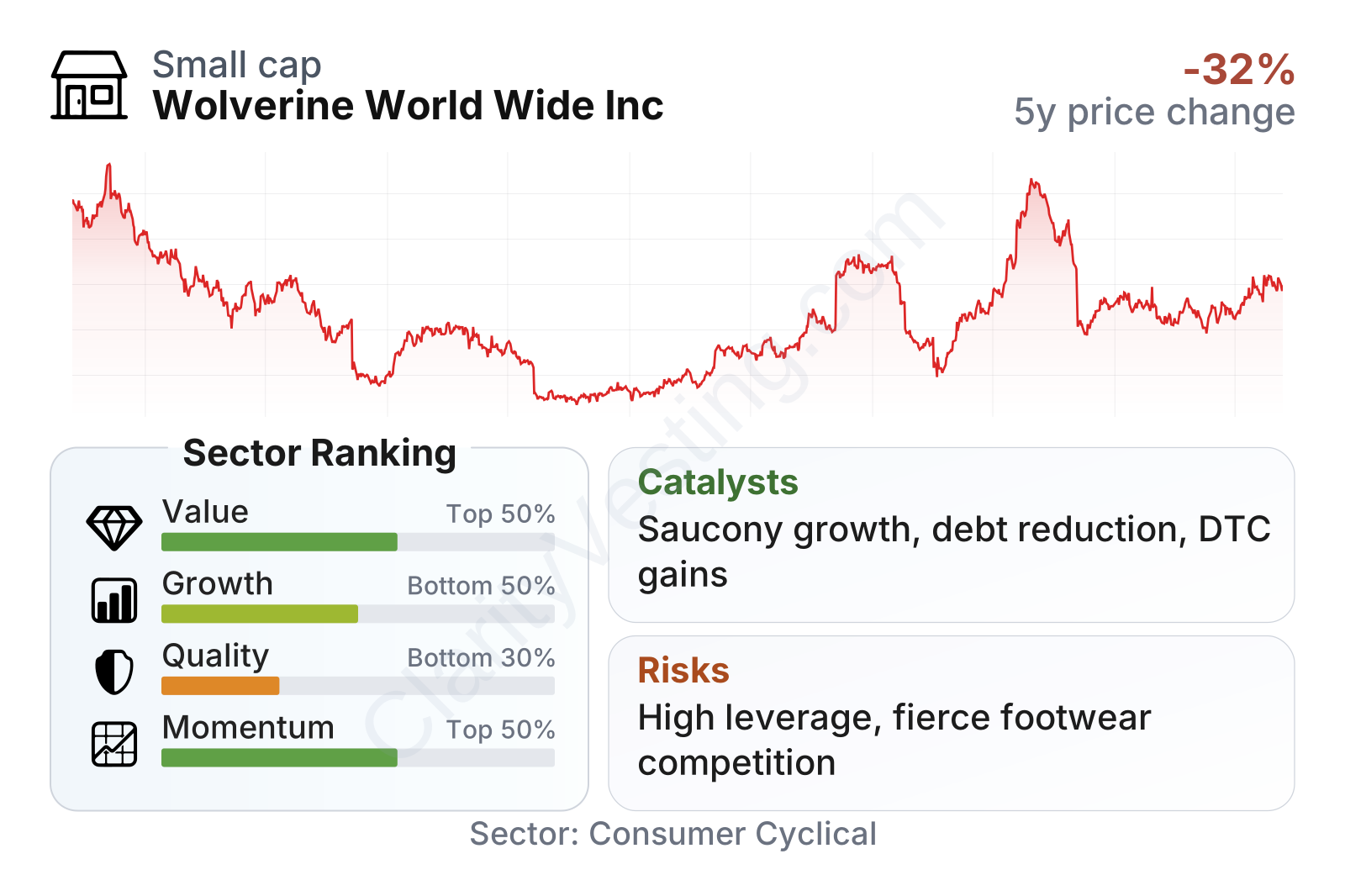
Wolverine World Wide is a mid-sized consumer brand company with a stock that has been much more volatile than the broader market, as reflected by a beta well above 1. On valuation, it screens around the middle of its sector, with an earnings multiple below the sector median and an enterprise-value-based earnings measure slightly better than the median. Growth metrics are mixed: recent year-over-year sales have improved, but the five-year record remains weak because of the deep downturn and restructuring period. Quality is still held back by leverage, even though profitability and returns on invested capital have recently improved. Price momentum has strengthened again after a difficult multiyear stretch, which indicates the market has become more constructive on the turnaround.
Growth
Wolverine operates in categories that can support long-term demand, especially outdoor activity, running, casual comfort, and performance apparel. These are not high-tech markets, but they are durable global categories where strong brands, product refreshes, and distribution reach can create growth over time. The company is not in the fastest-growing part of consumer discretionary, yet its exposure to outdoor and performance footwear gives it access to healthier niches than traditional basic fashion footwear alone.
The current strategy is centered on simplifying the portfolio, rebuilding the biggest brands, improving product innovation, and expanding direct customer relationships. That logic makes sense for a company of this size. Rather than trying to win everywhere, management has been concentrating resources on Merrell and Saucony, which appear to have the clearest global potential and the strongest relevance with consumers.
Recent sales trends point to a real recovery from the contraction phase. Revenue growth turned positive again in 2025 and has remained positive into 2026, which matters because it suggests the turnaround is no longer based only on cost cutting. Even so, the five-year record still shows that the company has ground to recover before it can claim durable compounding.
Cash generation has improved materially. Free cash flow moved from deeply negative levels in 2022 and 2023 to solidly positive territory in 2024, and it has remained positive since then. That is important because it gives the company more flexibility to reduce debt, support brand investment, and absorb the normal swings of a seasonal footwear business.
As for catalysts, the most important ones are brand revitalization at Saucony and Merrell, additional debt reduction, and continued improvement in direct-to-consumer execution. Recent company communications have emphasized new product launches, stronger wholesale order trends in selected categories, and ongoing cost discipline. If those trends continue together, the company could show a more balanced profile of sales growth plus margin recovery rather than relying on restructuring alone.
Risks
This article is for informational purposes only and does not constitute financial advice. Some content is AI-generated. See Disclaimer


