Stock Analysis · Wolfspeed Inc (WOLF)
Overview
Wolfspeed is a semiconductor company focused on silicon carbide, often shortened to SiC. This material is used to make power chips and wafers that can handle higher voltages, higher temperatures, and better efficiency than traditional silicon in many applications. The company is mainly tied to electric vehicles, industrial power systems, energy infrastructure, and some specialty uses where power efficiency matters.
Its business has historically been built around two main product groups.
- Power Products: roughly the majority of revenue in recent years, generally around 60% to 70%. This includes silicon carbide power devices and modules used in electric vehicles, charging systems, renewable energy equipment, industrial drives, and power conversion.
- Materials Products: generally around 30% to 40% of revenue. This includes silicon carbide wafers and related materials sold to chip manufacturers, including customers that make their own devices.
That revenue mix can move from year to year depending on customer demand, pricing, and factory loading. The company’s strategic idea is straightforward: control both the raw wafer side and the device side, so it can participate across more of the silicon carbide value chain.
What makes Wolfspeed unusual is that it is one of the few Western companies with large-scale dedicated silicon carbide operations. That matters because silicon carbide is viewed as an important technology for efficient power electronics, especially in electric vehicles and energy systems. The challenge is that being early and specialized has also required very heavy spending on factories, equipment, and ramp-up costs.
The long-term financial picture shows a business that increased revenue meaningfully from 2022 to 2024, then moved into a much tougher phase. Sales have fallen again, cost of revenue has remained very high, and profitability has been under pressure. Operating expenses have come down recently, but the core issue is still that production economics have not yet fully caught up with the scale of the investment.
Key Figures
| Metric | Value | Sector ⓘ |
|---|---|---|
| Date | Sep 12, 2026 | |
| Context | ||
| Sector | Technology | |
| Industry | Semiconductors | |
| Market Cap ⓘ | $1.35B | |
| Beta ⓘ | N/A | |
Value (Cheapness) | ||
| P/E Ratio ⓘ | N/A | 29.51 |
| FCF Yield ⓘ | -26.28% | 4.25% |
| EBIT / EV ⓘ | -44.86% | 2.85% |
| PEG ⓘ | 2.55 | |
Growth (Business expansion) | ||
| Revenue Growth ⓘ | -24.10% | 15.40% |
| RPS Growth (5Y CAGR) ⓘ | -2.59% | 8.56% |
| EPS Growth (5Y CAGR) ⓘ | N/A | -11.88% |
| Margin Growth (5Y Trend) ⓘ | N/A | 0.46% |
| FCF Growth (5Y CAGR) ⓘ | -16.87% | 9.80% |
Quality (Business durability) | ||
| ROIC (Latest) ⓘ | -42.13% | 9.44% |
| ROIC (5Y Median) ⓘ | N/A | 8.30% |
| Net Debt / EBIT (Latest) ⓘ | N/A | 0.54 |
| Net Debt / EBIT (5Y Median) ⓘ | N/A | 0.44 |
| Operating Margin (Latest) ⓘ | -135.96% | 9.58% |
| Operating Margin (5Y Median) ⓘ | -40.41% | 8.25% |
| Debt to Equity (Latest) ⓘ | 181.62% | 33.33% |
| Profit Margin (Latest) ⓘ | 0.66% | 7.14% |
| Free Cash Flow (Latest) ⓘ | -$354.00M | |
Momentum (Price trend) | ||
| 3Y Return ⓘ | N/A | +45.48% |
| 12M Return (excl. last month) ⓘ | N/A | +23.48% |
| 6M Return ⓘ | +52.74% | +20.93% |
| Price vs. 200-Day MA ⓘ | -10.68% | +7.43% |
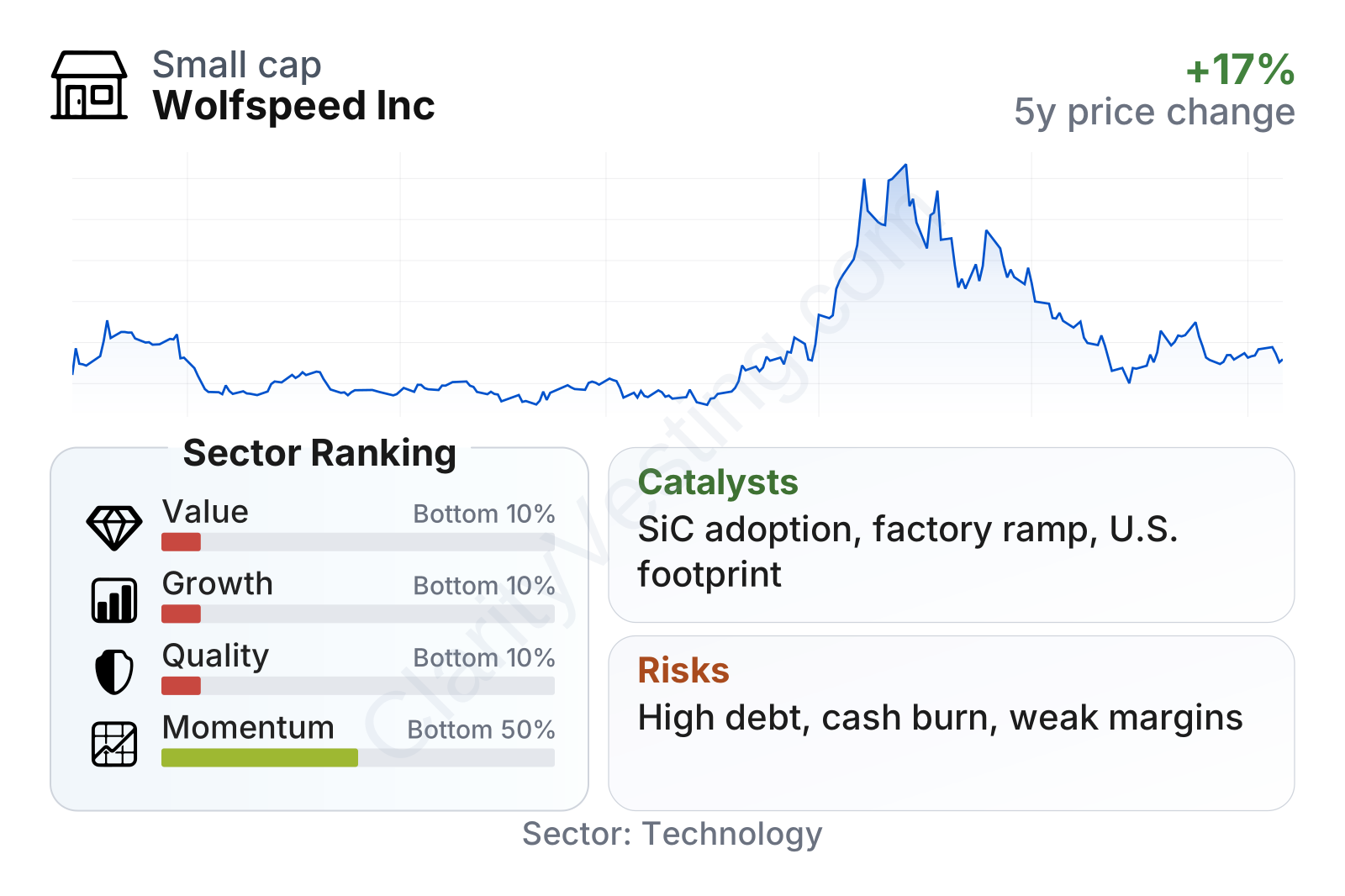
Wolfspeed is currently a small-cap semiconductor company with very weak value, growth, and quality rankings relative to the broader technology sector. Revenue has been declining, free cash flow remains deeply negative, returns on invested capital are far below sector norms, and leverage is much higher than typical semiconductor peers. There has been a strong rebound in the share price over the last six months, but that recovery has come from a very depressed level and does not yet line up with strong operating fundamentals.
Growth
Wolfspeed operates in a market that still has an attractive long-term industrial logic. Silicon carbide remains relevant for electric drivetrains, fast charging, solar inverters, energy storage, industrial motor drives, and grid applications because it can improve efficiency and reduce heat losses. Even if near-term demand moves in cycles, the broader shift toward electrification still supports the category over time.
The company’s strategy also makes sense in principle. It has spent years building an integrated silicon carbide platform, from materials to devices, and has invested heavily in larger manufacturing capacity. If utilization improves and end-market demand recovers, that setup could give Wolfspeed more control over supply, better cost positioning, and a stronger role with large customers that want dependable long-term sourcing.
The near-term problem is that current growth is going in the wrong direction. Year-over-year revenue moved from slight growth to increasingly steep declines, reaching roughly a 24% drop most recently. That suggests the company is not just dealing with normal volatility; it is also facing slower customer orders, delayed adoption, or competitive and inventory pressures at the same time it is trying to absorb major manufacturing investments.
Cash generation is also a key part of the growth debate. Free cash flow has remained heavily negative, although the outflow has improved from much worse levels seen earlier. That pattern is important: it shows the business may be moving away from peak cash burn, but it is still not producing the kind of self-funding economics that would make its expansion model comfortable.
One recent and potentially significant opportunity is Wolfspeed’s effort to reposition its balance sheet and manufacturing base after a difficult period. Company filings and investor communications in 2026 point to continued restructuring, cost reduction, and a focus on ramping more efficient production. If those actions lead to better yields, lower unit costs, and stronger factory loading, the operating leverage could be meaningful because silicon carbide manufacturing economics improve sharply when fixed costs are spread over more volume.
Another catalyst is geopolitical and supply-chain positioning. Many customers and governments want alternatives to concentrated Asian semiconductor supply chains, especially in strategic power electronics. Wolfspeed’s U.S.-based manufacturing footprint and domestic technology base may remain commercially relevant if industrial policy and customer sourcing preferences continue to favor regional supply security.
Risks
This article is for informational purposes only and does not constitute financial advice. Some content is AI-generated. See Disclaimer


