Stock Analysis · Warner Music Group (WMG)
Overview
Warner Music Group is one of the world’s largest music companies. It owns and develops recorded music catalogs, signs and promotes artists, and manages music publishing rights. In simple terms, the business makes money when songs are streamed, sold, licensed for films or advertising, played on radio, used on social platforms, or performed live. Its catalog includes both new releases and older songs that continue generating royalties for many years.
The company operates through two main divisions: Recorded Music and Music Publishing. Recorded Music is the larger business and includes artist services, distribution, and rights to sound recordings. Music Publishing is smaller but strategically important because it controls songwriting copyrights and earns royalties when compositions are used anywhere, even when Warner does not own the recording.
Based on recent annual filings, Warner Music Group’s revenue mix is approximately:
- Recorded Music: about 82% of revenue. This includes subscription streaming, ad-supported streaming, physical sales, digital downloads, licensing, and artist services.
- Music Publishing: about 18% of revenue. This includes performance royalties, digital royalties, synchronization income, mechanical royalties, and other publishing-related revenue.
Inside Recorded Music, streaming is the clear engine of the business. Subscription streaming is the largest single source, while ad-supported streaming, physical music, and licensing are smaller but still meaningful. This matters for long-term analysis because streaming tends to be recurring, global, and scalable, although growth rates can vary by region and pricing environment.
Over the last several years, revenue has continued to climb, but profit conversion has been less smooth. Sales rose from roughly $5.3 billion in fiscal 2021 to about $6.7 billion in fiscal 2025, showing that the catalog and artist roster are still producing demand. At the same time, operating income and net income have been more uneven, suggesting that cost discipline and deal economics remain important parts of the investment case.
The broad pattern is encouraging on the top line: revenue and gross profit have expanded over time. However, costs tied to operations and interest expense have also stayed significant, which helps explain why earnings have not grown as steadily as revenue.
Key Figures
| Metric | Value | Sector ⓘ |
|---|---|---|
| Date | Sep 12, 2026 | |
| Context | ||
| Sector | Communication Services | |
| Industry | Entertainment | |
| Market Cap ⓘ | $14.82B | |
| Beta ⓘ | 1.30 | |
Value (Cheapness) | ||
| P/E Ratio ⓘ | 22.66 | 18.61 |
| FCF Yield ⓘ | 5.49% | 13.68% |
| EBIT / EV ⓘ | 5.45% | 4.54% |
| PEG ⓘ | 0.50 | |
Growth (Business expansion) | ||
| Revenue Growth ⓘ | 10.40% | 5.40% |
| RPS Growth (5Y CAGR) ⓘ | 5.98% | 4.62% |
| EPS Growth (5Y CAGR) ⓘ | 2.48% | -18.01% |
| Margin Growth (5Y Trend) ⓘ | -1.18% | 1.10% |
| FCF Growth (5Y CAGR) ⓘ | 70.35% | 5.88% |
Quality (Business durability) | ||
| ROIC (Latest) ⓘ | 14.97% | 8.38% |
| ROIC (5Y Median) ⓘ | 13.26% | 8.32% |
| Net Debt / EBIT (Latest) ⓘ | 4.18 | 1.99 |
| Net Debt / EBIT (5Y Median) ⓘ | 4.83 | 2.94 |
| Operating Margin (Latest) ⓘ | 14.09% | 14.89% |
| Operating Margin (5Y Median) ⓘ | 11.86% | 12.96% |
| Debt to Equity (Latest) ⓘ | 576.00% | 59.59% |
| Profit Margin (Latest) ⓘ | 9.20% | 8.77% |
| Free Cash Flow (Latest) ⓘ | $814.00M | |
Momentum (Price trend) | ||
| 3Y Return ⓘ | -7.10% | +46.64% |
| 12M Return (excl. last month) ⓘ | -19.50% | +2.16% |
| 6M Return ⓘ | +6.80% | +5.05% |
| Price vs. 200-Day MA ⓘ | +0.20% | +2.88% |
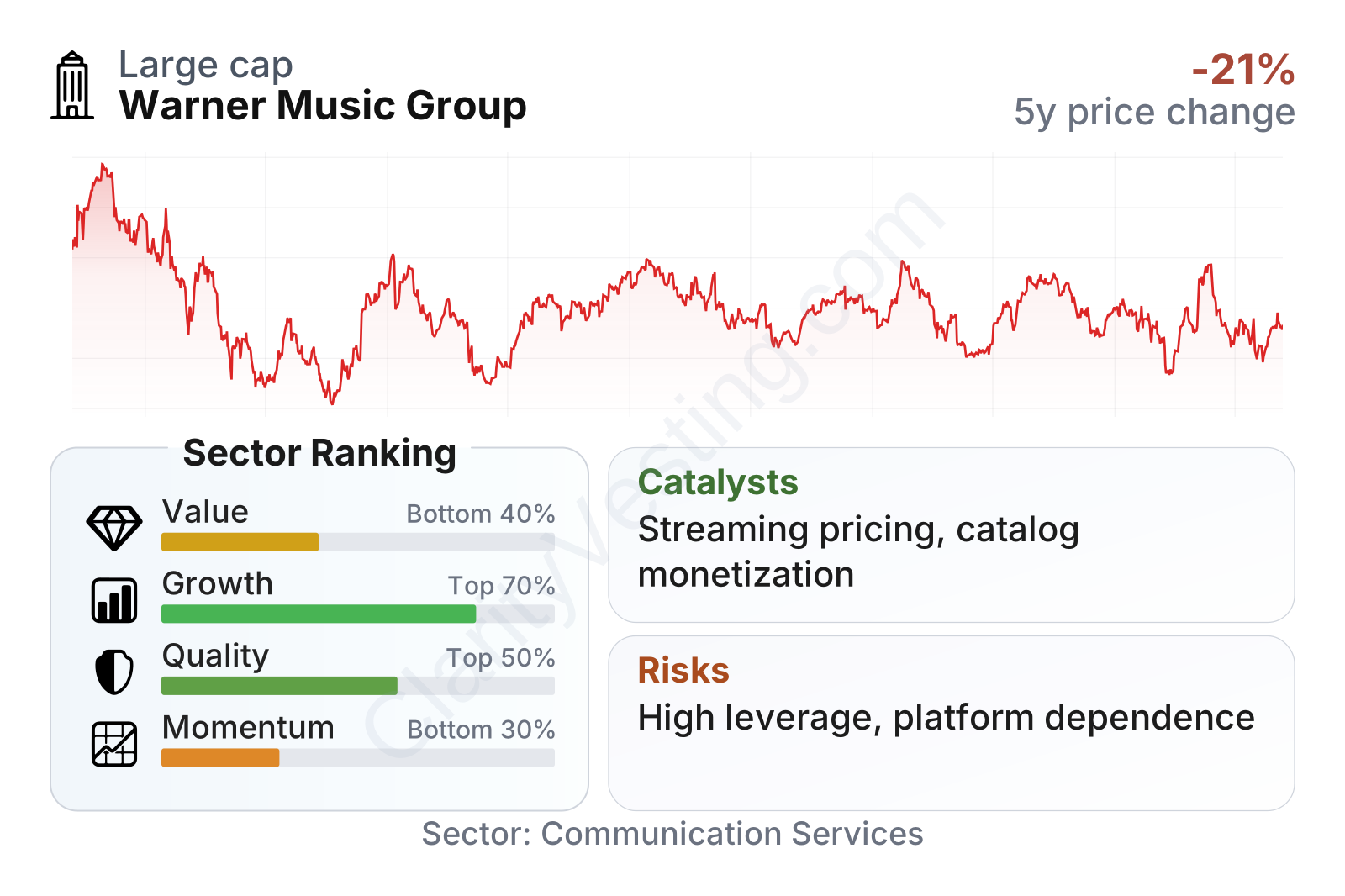
Warner Music Group looks like a mid-sized public company within the broader communication services sector. The profile is mixed: growth and return on capital are relatively solid, while leverage is high and recent share price momentum has been weak. On valuation, the stock is not in the cheapest part of the sector, but it also does not screen like an extreme outlier when viewed against its growth rate and cash generation. The main tension in the figures is simple: a business with durable assets and decent profitability, but with a balance sheet that leaves less room for operational mistakes.
Growth
The music industry is in a structurally healthier place than it was a decade ago because streaming turned music consumption into a subscription-based product. That shift has made revenue more recurring and global. Warner Music Group is directly exposed to this trend, especially through paid streaming and its large library of songs. A strong catalog matters because older music can keep earning money for many years with limited additional investment.
Warner’s strategy also makes sense for long-term expansion. The company continues investing in artists, catalog acquisitions, publishing rights, and global reach. Publishing is particularly valuable because it participates in many revenue streams across platforms and formats. The company has also emphasized developing direct relationships with digital platforms, expanding in emerging markets, and improving monetization of its catalog across short-form video, gaming, fitness, and other digital use cases.
Revenue growth has not been perfectly smooth quarter to quarter, which is normal in music because release schedules, licensing timing, and foreign exchange can all affect reported numbers. Still, the recent trend has improved, with year-over-year revenue growth back into the low-double-digit range and above the sector median. That suggests Warner is participating in the industry’s ongoing streaming expansion rather than merely relying on cost cutting.
Cash generation is another encouraging point. Free cash flow has moved up meaningfully over the last several years, reaching roughly $700 million on a trailing basis in the latest period shown. For a catalog-driven business, this is important because it shows the company can convert music rights and distribution scale into real cash, not just accounting profit.
A relevant catalyst for the next phase is continued price increases by major streaming services, along with growing monetization of music on social and digital platforms. Warner also benefits when new licensing frameworks improve compensation for rightsholders. In addition, industry interest in AI tools may create operational efficiencies in marketing and discovery, while also increasing the importance of owning trusted music rights and well-known catalogs. Recent company updates have also pointed to ongoing restructuring and efficiency efforts, which could support margins if execution improves.
Risks
This article is for informational purposes only and does not constitute financial advice. Some content is AI-generated. See Disclaimer


