Stock Analysis · Woolworths Holdings Ltd PK (WLWHY)
Overview
Woolworths Holdings is a South Africa-based retail group focused on apparel, beauty, home products, and food. For U.S. investors, WLWHY is the pink-sheet listing of the company. Its business is built around two main retail platforms: Woolworths in South Africa and nearby African markets, and Country Road Group in Australia and New Zealand. The company operates stores, online channels, and integrated fulfillment networks, which means it is both a traditional retailer and an increasingly digital one.
The largest source of revenue is the Fashion, Beauty and Home segment in Southern Africa, followed by the Food business, while Country Road Group adds a smaller but still meaningful international contribution. Based on the latest annual reporting structure, the revenue mix is approximately:
- Fashion, Beauty and Home: about 50% to 55% of group sales. This includes clothing, footwear, accessories, beauty, and home merchandise sold mainly under the Woolworths brand.
- Food: about 30% to 35% of group sales. This is the premium grocery and convenience offering in Southern Africa.
- Country Road Group: about 15% to 20% of group sales. This includes brands such as Country Road, Trenery, Witchery, Politix, and Mimco in Australia and New Zealand.
This mix matters because it gives Woolworths Holdings exposure to both discretionary spending, such as apparel and home products, and more recurring spending through food. That combination can soften some cyclical swings, although it does not remove them. Over the last several years, group revenue has generally held up better than profits, showing that customer demand remains present, but cost pressure and margin pressure have become central issues.
Financial flow perspective: sales have recovered from the 2023 dip and reached a new high in the latest fiscal year, but a larger share of that revenue has been absorbed by merchandise costs, operating expenses, and finance costs. Gross profit has been relatively stable, while net income has moved lower, showing that the key debate is no longer revenue resilience alone, but how much of each sales dollar reaches the bottom line.
Key Figures
| Metric | Value | Sector ⓘ |
|---|---|---|
| Date | Sep 12, 2026 | |
| Context | ||
| Sector | Consumer Cyclical | |
| Industry | Department Stores | |
| Market Cap ⓘ | $2.20B | |
| Beta ⓘ | 0.17 | |
Value (Cheapness) | ||
| P/E Ratio ⓘ | 15.62 | 17.10 |
| FCF Yield ⓘ | 288.34% | 8.53% |
| EBIT / EV ⓘ | N/A | 6.46% |
| PEG ⓘ | N/A | |
Growth (Business expansion) | ||
| Revenue Growth ⓘ | 3.10% | 5.75% |
| RPS Growth (5Y CAGR) ⓘ | 3.08% | 9.14% |
| EPS Growth (5Y CAGR) ⓘ | 51.36% | -18.21% |
| Margin Growth (5Y Trend) ⓘ | -1.46% | -0.23% |
| FCF Growth (5Y CAGR) ⓘ | -13.51% | 4.91% |
Quality (Business durability) | ||
| ROIC (Latest) ⓘ | N/A | 12.61% |
| ROIC (5Y Median) ⓘ | 22.72% | 10.72% |
| Net Debt / EBIT (Latest) ⓘ | N/A | 2.10 |
| Net Debt / EBIT (5Y Median) ⓘ | 3.20 | 2.32 |
| Operating Margin (Latest) ⓘ | N/A | 9.25% |
| Operating Margin (5Y Median) ⓘ | 7.03% | 9.64% |
| Debt to Equity (Latest) ⓘ | 181.87% | 75.78% |
| Profit Margin (Latest) ⓘ | 2.80% | 5.33% |
| Free Cash Flow (Latest) ⓘ | $6.34B | |
Momentum (Price trend) | ||
| 3Y Return ⓘ | -27.70% | +14.53% |
| 12M Return (excl. last month) ⓘ | +6.62% | +3.08% |
| 6M Return ⓘ | -19.82% | +0.55% |
| Price vs. 200-Day MA ⓘ | -23.21% | -0.54% |
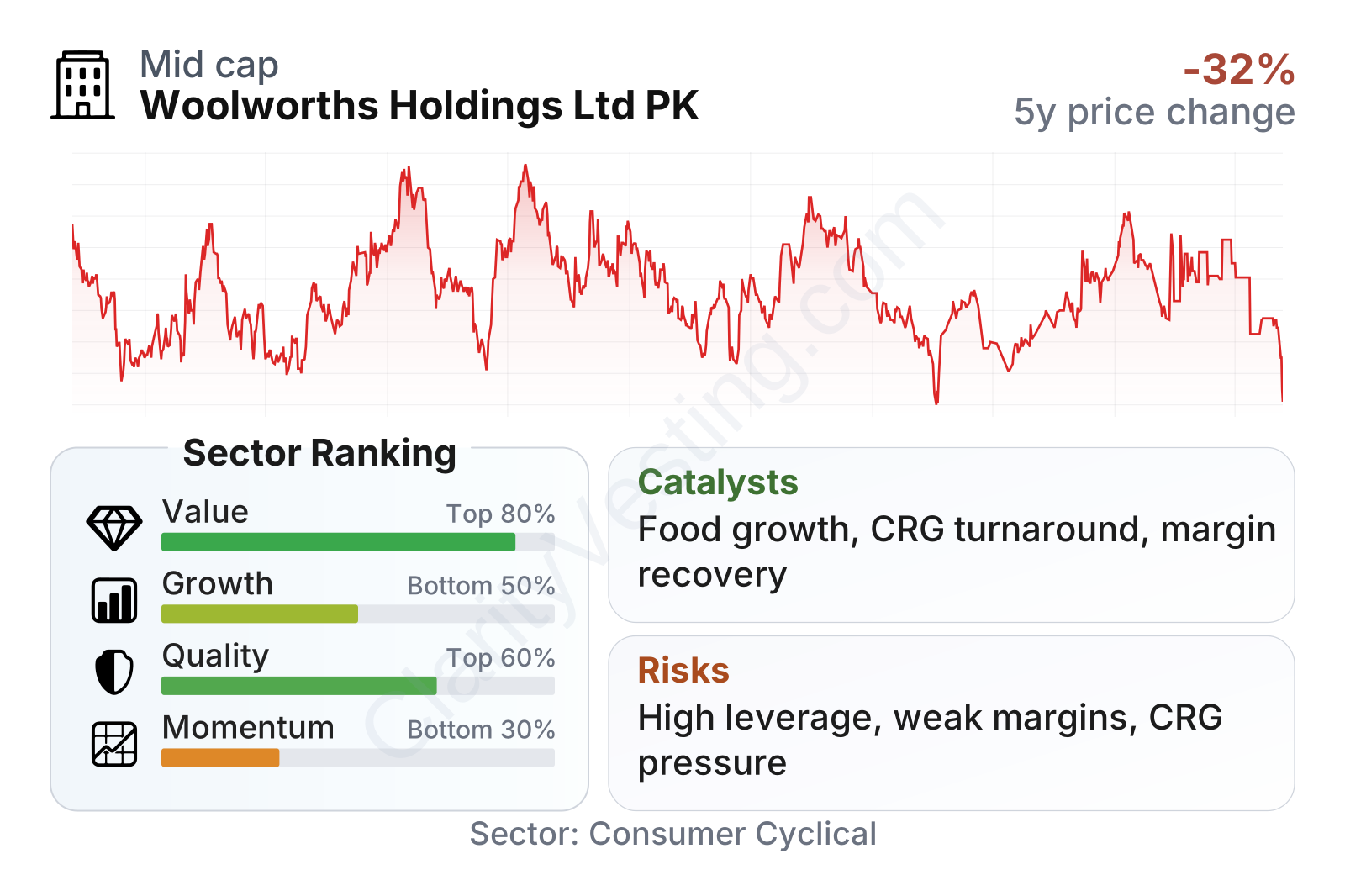
Woolworths Holdings is a mid-sized retailer by market value, and its shares have shown relatively low volatility, with a beta far below 1. That can make the stock price appear steadier than many consumer discretionary peers, but the operating picture is more mixed than the low beta might suggest.
The quality profile is respectable overall. Long-term return on invested capital has been stronger than the sector median, which suggests the company has historically allocated capital with discipline. At the same time, leverage is clearly above sector norms, and profitability sits below the median for department store peers. On valuation measures, the shares trade near the sector median on earnings, while free cash flow yield screens favorably. Growth indicators are weaker: recent revenue growth has been modest, and free cash flow has not trended smoothly over the last five years. Market momentum has also been soft, with the stock trailing much of the sector over both medium- and longer-term periods.
Growth
Woolworths Holdings operates in parts of retail that are still relevant but not structurally easy. Food retail tends to be defensive and supported by population growth, urbanization, and convenience-led shopping habits. Apparel, beauty, and home are larger opportunity categories over time, but they are more sensitive to household budgets, fashion execution, and inventory discipline. In other words, the company has exposure to both a relatively steady segment and a more cyclical one.
The company’s strategy for future growth is sensible on paper. Management has continued to emphasize brand strength, digital sales, supply-chain execution, and improving the customer offer across Woolworths Food and Fashion, Beauty and Home. In Southern Africa, premium food and private-label positioning can support customer loyalty and pricing power if execution remains strong. In apparel and home, growth depends more on product appeal, stock availability, and avoiding excessive markdowns. In Australia and New Zealand, the long-term opportunity is tied to improving Country Road Group’s operating performance after a difficult period.
Recent performance points to a business that is growing, but not quickly. Revenue has increased by roughly low-single-digit percentages recently, and the latest fiscal year reached a new high in absolute sales. That is encouraging because it shows demand has not collapsed. However, compared with the broader consumer cyclical sector, top-line growth has been below average, which means the group still needs better execution to convert sales momentum into stronger earnings growth.
Cash generation remains an important part of the case. Free cash flow is still positive and meaningful in absolute terms, but it has come down from the stronger level seen earlier. That decline matters because retailers need cash to fund store investments, logistics, technology, and working capital. A stabilizing or improving cash trend would be one of the clearest signs that the recent operating pressure is easing.
One catalyst is the company’s ability to lift margins without relying only on aggressive sales growth. If merchandising, inventory control, sourcing, and online fulfillment improve, even modest revenue growth could produce a better earnings outcome. Another possible catalyst is recovery at Country Road Group: because that business has weighed on sentiment, a clearer turnaround there could have an outsized effect on how the market views the whole company. Continued expansion of online sales and convenience-led food retail also offers a realistic, though not dramatic, growth path.
Recent company updates have largely reinforced this split picture: the core South African operations have remained comparatively resilient, while the Australian division has been more challenging. That creates a practical near-term opportunity if management can narrow the performance gap between the stronger and weaker parts of the portfolio.
Risks
This article is for informational purposes only and does not constitute financial advice. Some content is AI-generated. See Disclaimer


