Stock Analysis · Varonis Systems (VRNS)
Overview
Varonis Systems is a cybersecurity software company focused on one specific problem: helping organizations know where their sensitive data is, who can access it, how it is being used, and whether something risky or unusual is happening. Its products are used to protect files, email, cloud applications, and internal collaboration platforms such as Microsoft 365, SharePoint, OneDrive, Teams, Salesforce, and other enterprise systems. In simple terms, Varonis is trying to secure the data itself rather than only the network around it.
The company’s business has increasingly shifted toward a subscription model delivered through its cloud-based platform. That matters because subscription software usually creates more recurring revenue and can make future sales easier to predict. Varonis also emphasizes automation, using software to classify sensitive information, remove unnecessary access, detect suspicious behavior, and support incident response.
Based on recent company disclosures, revenue is primarily generated from software subscriptions and related support and services, with subscriptions now representing the dominant part of the business after the company’s transition away from more traditional term and perpetual arrangements. Exact percentages can move during that transition, but the mix is now heavily skewed toward recurring software revenue.
- Subscription revenue: the largest source, estimated at well over 80% of total revenue. This includes recurring access to the Varonis platform and cloud-delivered security capabilities.
- Maintenance and services: a smaller source, likely in the low-to-mid teens as a share of revenue. This includes customer support, implementation, training, and other professional services.
- Other legacy software arrangements: now a very small share after the company’s shift toward SaaS-style subscriptions.
One notable financial pattern is that revenue has kept expanding while gross profit has remained high, which is typical for software businesses. At the same time, operating expenses have also risen materially, especially in research and development and customer-facing functions, which explains why accounting profits remain negative despite solid gross margins.
The business model is attractive on paper: high-margin software, recurring contracts, and a mission tied to a critical enterprise need. The open question is whether Varonis can convert that structure into durable operating profits at scale.
Key Figures
| Metric | Value | Sector ⓘ |
|---|---|---|
| Date | Sep 12, 2026 | |
| Context | ||
| Sector | Technology | |
| Industry | Software - Infrastructure | |
| Market Cap ⓘ | $5.18B | |
| Beta ⓘ | 0.82 | |
Value (Cheapness) | ||
| P/E Ratio ⓘ | N/A | 29.51 |
| FCF Yield ⓘ | 2.35% | 4.25% |
| EBIT / EV ⓘ | -2.65% | 2.85% |
| PEG ⓘ | 7.38 | |
Growth (Business expansion) | ||
| Revenue Growth ⓘ | 18.30% | 15.40% |
| RPS Growth (5Y CAGR) ⓘ | 6.84% | 8.56% |
| EPS Growth (5Y CAGR) ⓘ | -25.75% | -11.88% |
| Margin Growth (5Y Trend) ⓘ | N/A | 0.46% |
| FCF Growth (5Y CAGR) ⓘ | N/A | 9.80% |
Quality (Business durability) | ||
| ROIC (Latest) ⓘ | -10.66% | 9.44% |
| ROIC (5Y Median) ⓘ | -12.02% | 8.30% |
| Net Debt / EBIT (Latest) ⓘ | N/A | 0.54 |
| Net Debt / EBIT (5Y Median) ⓘ | N/A | 0.44 |
| Operating Margin (Latest) ⓘ | -19.41% | 9.58% |
| Operating Margin (5Y Median) ⓘ | -23.48% | 8.25% |
| Debt to Equity (Latest) ⓘ | 116.12% | 33.33% |
| Profit Margin (Latest) ⓘ | -20.55% | 7.14% |
| Free Cash Flow (Latest) ⓘ | $121.94M | |
Momentum (Price trend) | ||
| 3Y Return ⓘ | +45.17% | +45.48% |
| 12M Return (excl. last month) ⓘ | -26.23% | +23.48% |
| 6M Return ⓘ | +86.60% | +20.93% |
| Price vs. 200-Day MA ⓘ | +37.32% | +7.43% |
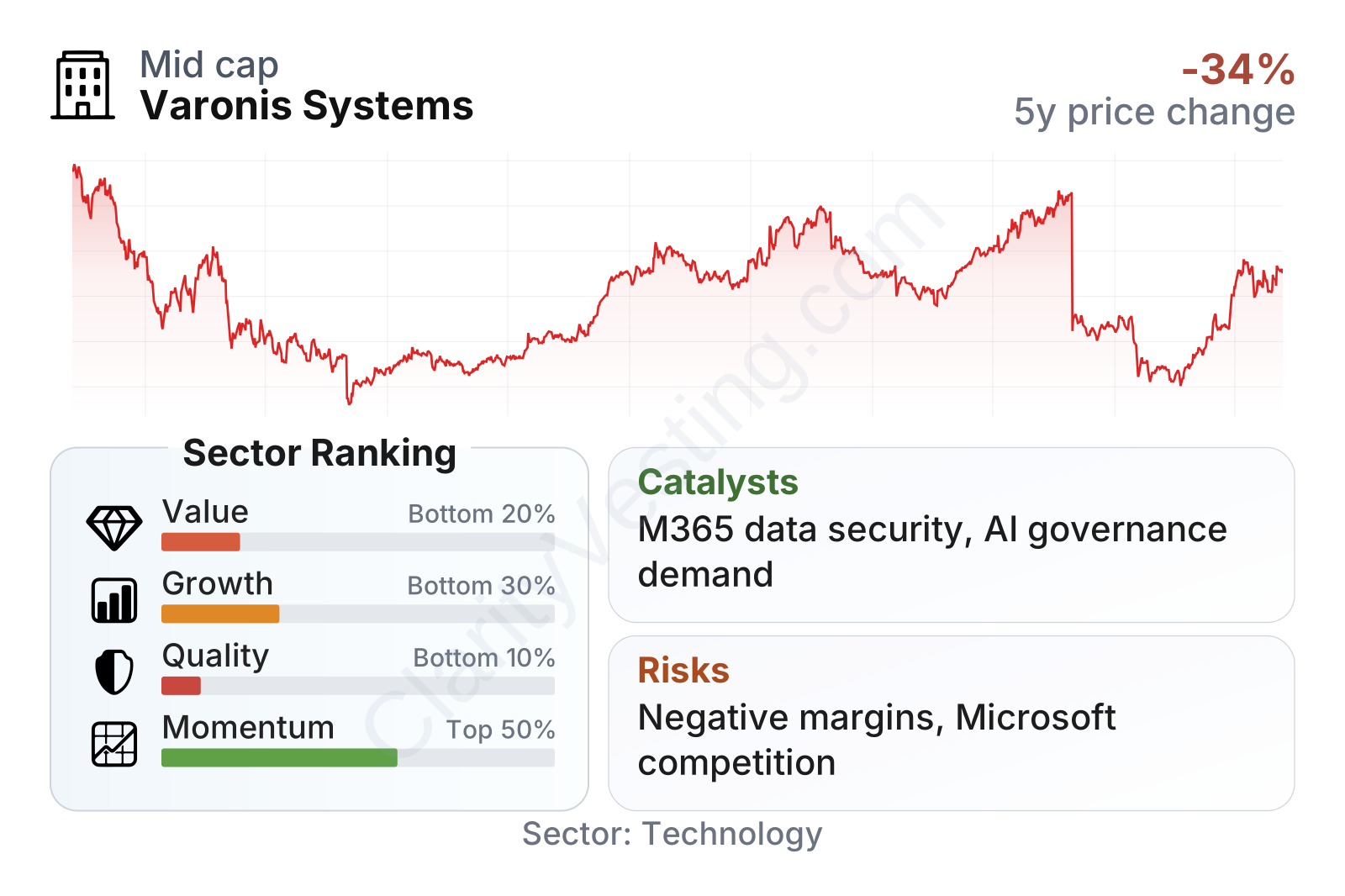
Varonis is a mid-sized software company with lower stock volatility than many technology peers, but its operating profile remains weaker than much of the sector. Growth is still respectable, with recent year-over-year revenue expansion ahead of the sector median, yet profitability, returns on capital, and valuation support are less favorable. Free cash flow is positive, which is important, but the overall picture is that of a company still in the middle of a transition rather than one that has already reached mature software economics.
Growth
Varonis operates in a sector with long-term tailwinds. Data security, identity control, insider risk monitoring, regulatory compliance, and cloud migration are all durable enterprise priorities. As companies move more information into Microsoft 365, cloud storage, collaboration suites, and AI-enabled workflows, the amount of sensitive data that needs to be classified and controlled keeps rising. That broad backdrop supports continued demand for Varonis’s offerings.
The company’s strategy also makes sense. Varonis has been repositioning itself around a cloud-native subscription platform, with more automation and managed outcomes. That can strengthen customer retention and deepen usage because clients are not just buying a tool, but an ongoing service that scans, labels, monitors, and helps remediate exposure across large data estates. The more data a customer stores and the more systems it connects, the more relevant that platform can become.
Revenue growth has not been perfectly smooth, but the recent trend shows a meaningful rebound from the slowdown seen during the transition period. The latest annual growth rate is in the high teens, ahead of the sector median, which suggests the company is regaining traction after reshaping its revenue model. That is encouraging because subscription transitions often depress near-term reported results before becoming more stable later on.
Cash generation is another positive point. Free cash flow has improved sharply from near break-even or negative territory a few years ago to clearly positive levels today. That does not erase the lack of accounting profits, but it does show the business is capable of producing cash while investing for growth. For long-term analysis, that is an important distinction: a company can be unprofitable under accounting rules yet still show improving financial resilience if cash flow trends are strengthening.
Several catalysts could matter over the next few years. First, the continued expansion of Microsoft 365 and other cloud collaboration ecosystems plays directly into Varonis’s monitoring and data-governance use cases. Second, the rising focus on AI can increase the urgency around cleaning up data permissions, because companies do not want AI systems gaining broad access to poorly controlled files. Third, stricter privacy and cybersecurity requirements can encourage spending on software that helps document and reduce data exposure. Recent company communications have also highlighted managed data security and SaaS adoption as strategic priorities, which fits these broader trends well.
Risks
This article is for informational purposes only and does not constitute financial advice. Some content is AI-generated. See Disclaimer


