Stock Analysis · CommScope Holding Company Inc (VISN)
Overview
CommScope Holding Company is a communications infrastructure company. In simple terms, it makes the physical equipment that helps internet, wireless, and video networks work. Its products are used inside buildings, across campuses, in data centers, and by telecom operators. The company has historically served cable operators, mobile carriers, enterprises, and public-sector customers.
CommScope’s business has changed meaningfully over the last few years. The biggest recent shift was the planned separation of its Connectivity and Cable Solutions business under the name Amphenol Communications Solutions, which has made the remaining company more focused on broadband access, home networks, and venue and campus networking. That makes the investment case easier to understand, but it also leaves the company more exposed to a narrower set of markets than it had when its portfolio was broader.
Based on recent company reporting, revenue is mainly coming from a few operating segments. The mix can move materially because CommScope has been restructuring and divesting assets, so these percentages should be read as approximate rather than fixed.
- Connectivity and Cable Solutions: approximately 35% to 45% of recent revenue before separation-related changes. This unit includes fiber and copper connectivity, cable assemblies, and related infrastructure used by telecom operators, enterprises, and data centers.
- Broadband: approximately 25% to 35%. This business sells equipment for cable and fiber broadband networks, including access technologies used by service providers to deliver internet service.
- Access Network Solutions: approximately 15% to 25%. This includes outdoor wireless and network infrastructure products such as antennas, base station connectivity, and related equipment for mobile networks.
- Home Networks: approximately 10% to 20%. This segment provides in-home connectivity gear such as gateways, Wi‑Fi devices, and video-related customer premises equipment.
- Venue and Campus Networks / RUCKUS-related enterprise networking: generally a smaller but still relevant share, often within the 10% to 15% range depending on the period and reporting structure. This includes enterprise Wi‑Fi, switching, and software used in offices, schools, hospitality, and large venues.
One broad financial pattern stands out: revenue has fallen sharply from the levels seen earlier in the decade, while gross profit has held up better than sales. That suggests the company has been shrinking and simplifying, but also defending margins through cost cuts, portfolio moves, and a greater focus on more profitable lines.
Key Figures
| Metric | Value | Sector ⓘ |
|---|---|---|
| Date | Sep 12, 2026 | |
| Context | ||
| Sector | Technology | |
| Industry | Communication Equipment | |
| Market Cap ⓘ | $1.48B | |
| Beta ⓘ | 1.92 | |
Value (Cheapness) | ||
| P/E Ratio ⓘ | 18.04 | 29.51 |
| FCF Yield ⓘ | 5.89% | 4.25% |
| EBIT / EV ⓘ | 25.50% | 2.85% |
| PEG ⓘ | 2.94 | |
Growth (Business expansion) | ||
| Revenue Growth ⓘ | -1.40% | 15.40% |
| RPS Growth (5Y CAGR) ⓘ | -33.20% | 8.56% |
| EPS Growth (5Y CAGR) ⓘ | N/A | -11.88% |
| Margin Growth (5Y Trend) ⓘ | 2.53% | 0.46% |
| FCF Growth (5Y CAGR) ⓘ | N/A | 9.80% |
Quality (Business durability) | ||
| ROIC (Latest) ⓘ | 8.70% | 9.44% |
| ROIC (5Y Median) ⓘ | N/A | 8.30% |
| Net Debt / EBIT (Latest) ⓘ | -0.21 | 0.54 |
| Net Debt / EBIT (5Y Median) ⓘ | 119.77 | 0.44 |
| Operating Margin (Latest) ⓘ | 11.92% | 9.58% |
| Operating Margin (5Y Median) ⓘ | 0.31% | 8.25% |
| Debt to Equity (Latest) ⓘ | 1.57% | 33.33% |
| Profit Margin (Latest) ⓘ | 365.40% | 7.14% |
| Free Cash Flow (Latest) ⓘ | $86.90M | |
Momentum (Price trend) | ||
| 3Y Return ⓘ | +527.91% | +45.48% |
| 12M Return (excl. last month) ⓘ | +55.62% | +23.48% |
| 6M Return ⓘ | +31.01% | +20.93% |
| Price vs. 200-Day MA ⓘ | +9.41% | +7.43% |
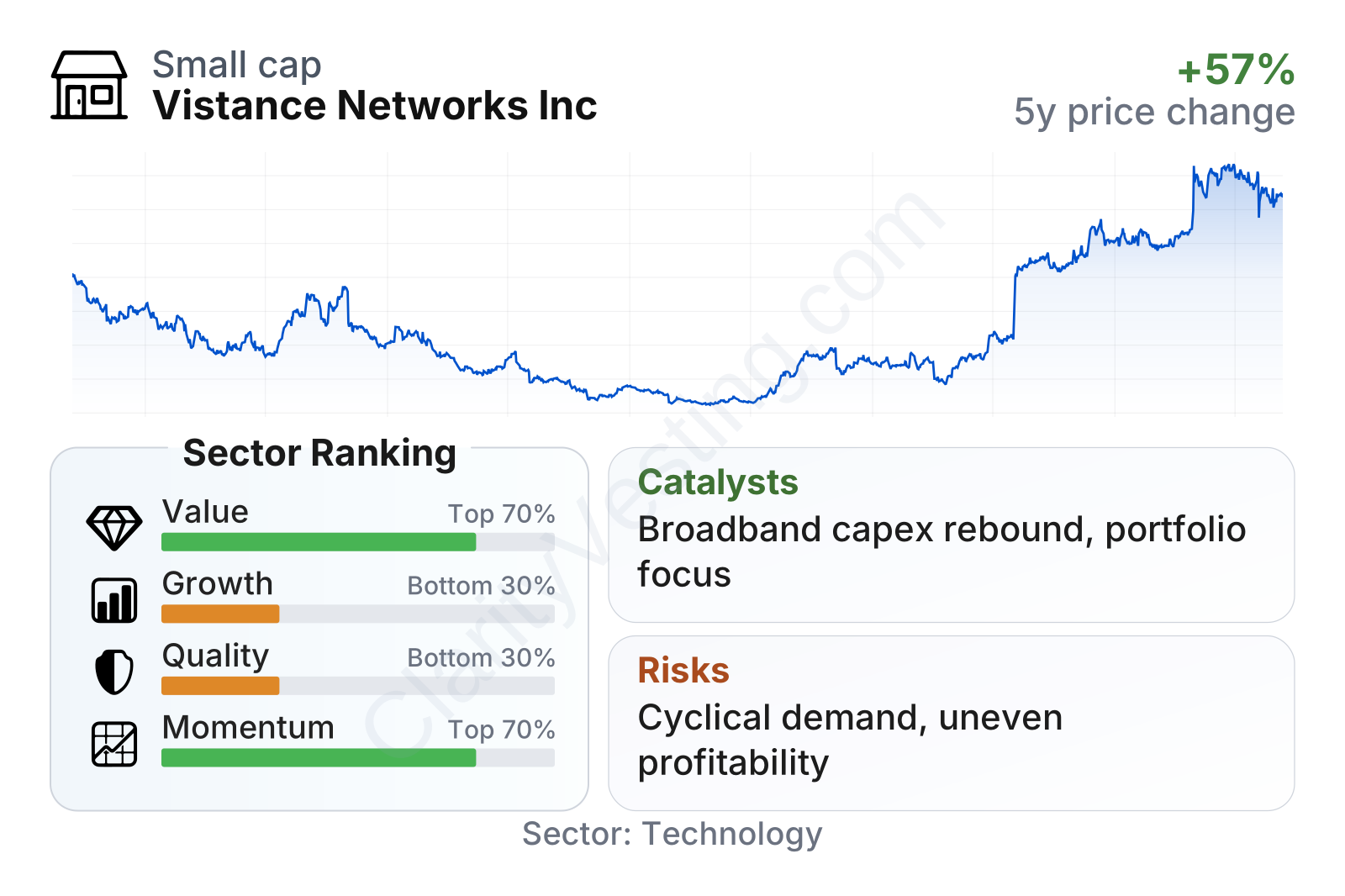
CommScope is now a mid-sized communications equipment company with a stock that has been extremely volatile. The share price has rebounded strongly from distressed levels, which explains why momentum ranks high versus much of the technology sector. At the same time, the fundamental profile is mixed: value metrics look better than the sector average, but growth ranks weakly, and quality remains uneven because profitability has only recently stabilized after a long period of pressure.
The table also points to an unusual balance-sheet picture. On the surface, debt-to-equity now looks very low, but that should be interpreted carefully because CommScope has gone through major capital structure changes. A cleaner reading is that the company has improved its financial footing, yet it is still carrying the legacy of a highly leveraged period.
Growth
CommScope operates in markets that should have durable long-term demand. Broadband networks need upgrades as data consumption rises, Wi‑Fi standards continue to improve, fiber deployment remains a strategic priority, and mobile networks still require densification and modernization. These are attractive structural themes even if customer spending is very cyclical from one year to the next.
The issue is that being present in a growing sector is not the same as growing consistently. CommScope’s own revenue trend has been weak over the last several years, with steep declines during parts of 2023 and 2024 and renewed pressure more recently. That means the company has not been capturing the sector’s tailwinds in a smooth way. Some of this reflects operator spending pauses, inventory corrections, portfolio reshaping, and the timing of large programs rather than pure share loss, but the result is still a business that has been shrinking more than expanding.
Its strategy for future growth is more coherent than it was a few years ago. Management has been simplifying the portfolio, reducing costs, and focusing the company on areas where network demand should remain necessary rather than discretionary. In practical terms, that means more attention on broadband access, home connectivity, enterprise wireless, and software-linked network platforms. If telecom and cable customers return to normal spending patterns, CommScope could benefit from operating leverage because it has already taken substantial costs out of the business.
Cash generation is another encouraging sign. Free cash flow improved materially from the low levels of earlier years and has remained positive. That does not by itself prove durable growth, but it does show that the company has become more capable of funding operations and balance-sheet repair internally.
A meaningful catalyst is the company’s restructuring and asset-portfolio actions. By exiting or separating noncore pieces, CommScope has been trying to sharpen its identity and make the remaining business easier to run. Another potential driver is a recovery in broadband capital expenditures by service providers, especially if fiber buildouts, DOCSIS upgrades, and home-network refresh cycles accelerate. Recent corporate updates have also emphasized progress on debt reduction and strategic simplification, both of which can expand flexibility if end markets improve.
Risks
This article is for informational purposes only and does not constitute financial advice. Some content is AI-generated. See Disclaimer


