Stock Analysis · Viavi Solutions Inc (VIAV)
Overview
Viavi Solutions is a communications and network test company. In simple terms, it sells instruments, software, and services that help telecom operators, equipment makers, cloud providers, governments, and industrial customers build, monitor, and troubleshoot networks and optical systems. It also has a smaller but important business making optical filtering and anti-counterfeiting technologies used in areas such as 3D sensing and product authentication.
For long-term analysis, the business is easiest to understand in two main segments disclosed by the company:
- Network and Service Enablement (NSE): about 85% to 90% of revenue in recent fiscal years. This is the larger segment and includes network testing, assurance, fiber and lab validation tools, and field instruments used by telecom, cable, cloud, and network equipment customers.
- Optical Security and Performance Products (OSP): about 10% to 15% of revenue. This segment includes precision optical components, thin-film filters, and security features used for anti-counterfeiting, industrial applications, and certain consumer and sensing markets.
Within the larger NSE segment, revenue is influenced by carrier spending cycles, fiber deployment, mobile network upgrades, and lab and production testing needs. OSP is more specialized and can be lumpy, but it gives Viavi exposure beyond traditional telecom infrastructure.
Viavi is not a household technology brand, but it occupies a useful position deeper in the communications supply chain. Customers often need its tools regardless of which telecom equipment brand wins a deployment, because all networks need to be tested, certified, and maintained.
The business mix also shows why profitability can move around: gross margin is generally solid for a hardware-and-software test company, but operating costs remain meaningful because the company spends heavily on research, engineering, and sales support. The recent financial flow suggests revenue recovered from the 2024 trough, while gross profit remained strong enough to restore positive net income, though not yet at a level that clearly places it among the stronger operators in its sector.
Key Figures
| Metric | Value | Sector ⓘ |
|---|---|---|
| Date | Sep 12, 2026 | |
| Context | ||
| Sector | Technology | |
| Industry | Communication Equipment | |
| Market Cap ⓘ | $9.23B | |
| Beta ⓘ | 1.23 | |
Value (Cheapness) | ||
| P/E Ratio ⓘ | N/A | 29.51 |
| FCF Yield ⓘ | 0.90% | 4.25% |
| EBIT / EV ⓘ | 0.62% | 2.85% |
| PEG ⓘ | 1.34 | |
Growth (Business expansion) | ||
| Revenue Growth ⓘ | 52.50% | 15.40% |
| RPS Growth (5Y CAGR) ⓘ | 5.08% | 8.56% |
| EPS Growth (5Y CAGR) ⓘ | -0.27% | -11.88% |
| Margin Growth (5Y Trend) ⓘ | -2.32% | 0.46% |
| FCF Growth (5Y CAGR) ⓘ | -5.90% | 9.80% |
Quality (Business durability) | ||
| ROIC (Latest) ⓘ | 1.95% | 9.44% |
| ROIC (5Y Median) ⓘ | 3.11% | 8.30% |
| Net Debt / EBIT (Latest) ⓘ | 0.84 | 0.54 |
| Net Debt / EBIT (5Y Median) ⓘ | 3.13 | 0.44 |
| Operating Margin (Latest) ⓘ | 3.99% | 9.58% |
| Operating Margin (5Y Median) ⓘ | 6.38% | 8.25% |
| Debt to Equity (Latest) ⓘ | 48.24% | 33.33% |
| Profit Margin (Latest) ⓘ | -2.00% | 7.14% |
| Free Cash Flow (Latest) ⓘ | $82.80M | |
Momentum (Price trend) | ||
| 3Y Return ⓘ | +299.07% | +45.48% |
| 12M Return (excl. last month) ⓘ | +293.34% | +23.48% |
| 6M Return ⓘ | +30.21% | +20.93% |
| Price vs. 200-Day MA ⓘ | +9.90% | +7.43% |
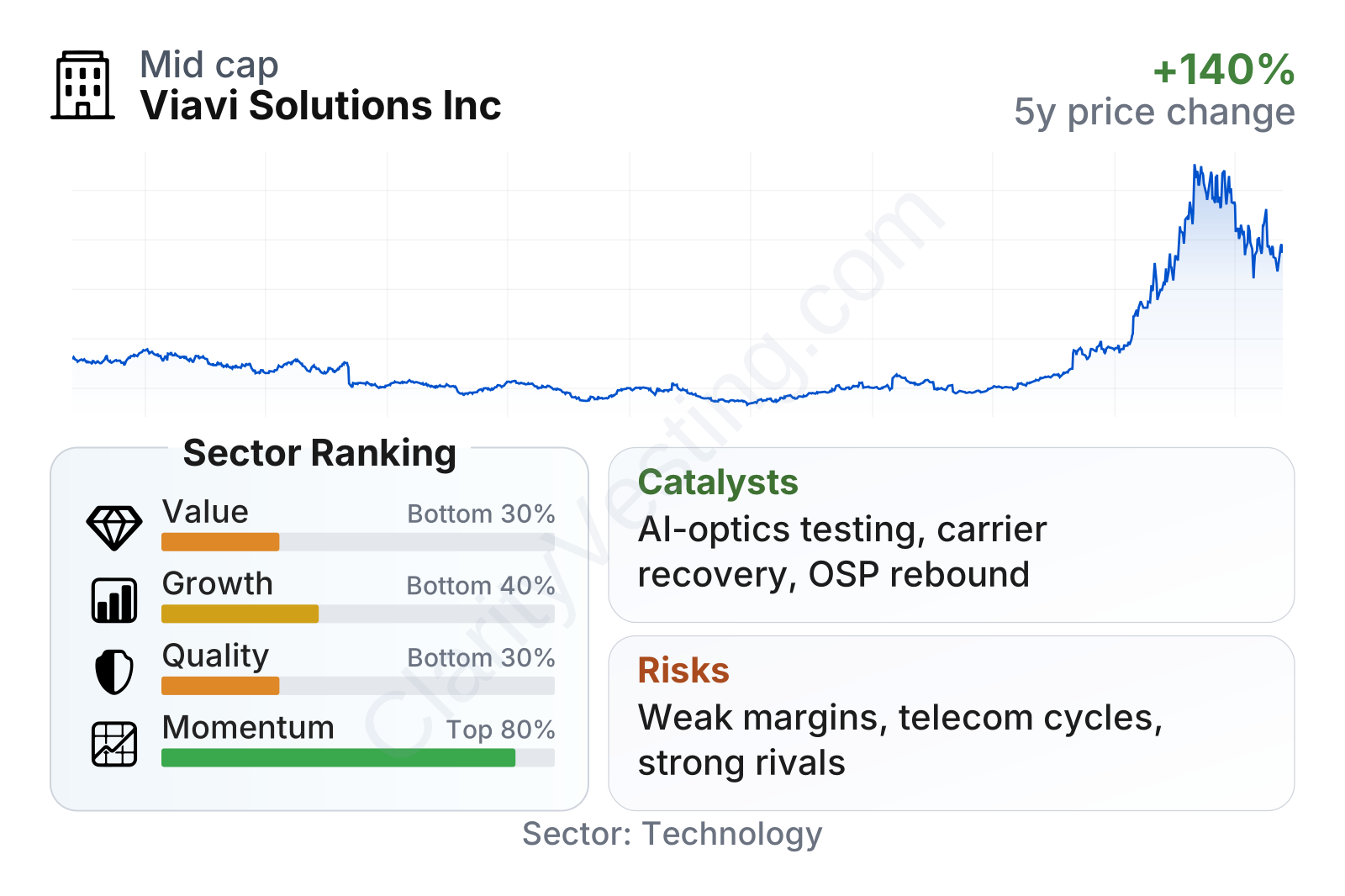
Viavi is a mid-sized technology company with a stock that has shown very strong momentum over the last year and a major rebound from 2024 levels. That market move stands out much more than its current profitability. The table points to weak value and quality positioning versus the broader technology sector, with modest returns on capital, slim cash flow yield, and margins that still trail many peers. Growth looks mixed: recent year-over-year revenue acceleration is strong, but the longer five-year revenue and free cash flow records remain weak. In short, the market is currently rewarding a turnaround and growth re-acceleration rather than a fully established high-quality financial profile.
Growth
Viavi operates in markets that should remain relevant for years: fiber deployment, cloud connectivity, network virtualization, AI-related infrastructure scaling, defense-oriented communications testing, and higher-speed optical transport. These are not niche themes likely to disappear. As networks become more complex, the need to test, certify, and monitor them generally increases rather than declines.
The strategy also makes industrial sense. Viavi does not need to dominate end-user telecom spending directly; it benefits from the complexity behind the scenes. Whether the industry is moving to 5G, fiber deeper into the network, 800G optics, private networks, or more automated network operations, test and assurance tools remain necessary. That gives the company recurring relevance even when carrier capital spending is uneven.
The revenue trend is the clearest sign of improvement. After a prolonged period of declines through 2023 and much of 2024, year-over-year growth turned positive and then accelerated sharply into 2026, reaching well above the sector median. That suggests the business is coming out of a cyclical slump with much better demand conditions, mix, or both. For a company like Viavi, this matters because even modest fixed-cost leverage can lift earnings meaningfully once revenue starts growing again.
Free cash flow adds an important layer of caution. Cash generation remains positive, but the trailing twelve-month level has moved down over the last several years. That means the current recovery is more visible in revenue than in cash conversion. Long-term growth becomes more compelling if higher sales are matched by sustained cash improvement, especially since test-equipment businesses can face uneven order timing.
A meaningful catalyst is the company’s exposure to faster optical and AI-linked infrastructure buildouts. As data centers, transport networks, and cloud backbones require more bandwidth, testing complexity rises as well. Another catalyst is the company’s position in military and government-related network and spectrum applications, where demand can be less correlated with consumer electronics cycles. The OSP segment also provides optionality if demand improves in advanced optical filtering and authentication uses.
Recent company communications and filings also point to ongoing efforts to sharpen the portfolio and align resources around higher-priority growth areas. For a company of Viavi’s size, disciplined focus matters because it can improve both competitiveness and operating leverage without requiring massive revenue expansion.
Risks
This article is for informational purposes only and does not constitute financial advice. Some content is AI-generated. See Disclaimer


