Stock Analysis · Vodacom Group Ltd PK (VDMCY)
Overview
Vodacom Group is a telecom operator focused mainly on Africa, with South Africa as its largest market. The company provides mobile voice, mobile data, fixed connectivity, enterprise services, digital financial services, and infrastructure-related services. It is majority owned by Vodafone, which gives it access to technology, procurement scale, brand support, and product development capabilities that smaller regional operators may struggle to match.
Its business has gradually moved beyond traditional phone services. Vodacom now positions itself as a broader connectivity and digital platform company, combining network access with mobile money, cloud, cybersecurity, Internet of Things, device financing, and fiber-related offerings. That matters because telecom markets tend to mature over time, and higher-growth services often come from digital payments, data consumption, and enterprise solutions rather than basic voice plans.
Based on recent annual disclosures, revenue is primarily generated from the following areas:
- South Africa service revenue: approximately 55% to 60% of group service revenue. This includes mobile voice, mobile data, messaging, fixed services, enterprise connectivity, and digital services in the domestic market.
- International service revenue: approximately 30% to 35%. This comes from operations in countries such as Tanzania, the Democratic Republic of the Congo, Mozambique, Lesotho, and others, including consumer mobile and business services.
- Financial services: approximately 10% to 15% of group revenue on a direct basis, depending on classification and period. This includes mobile money, payments, merchant services, remittances, savings and lending-related products where applicable.
- Handsets, equipment, and other revenue: approximately 5% to 10%. This includes device sales and other non-service activities.
These percentages can vary by reporting basis, especially because the company highlights service revenue separately from total revenue. The main takeaway is clear: South African telecom services still anchor the business, while international operations and financial services are the main diversification engines.
The latest annual flow also points to a business with solid gross profit, improving operating income, and a stronger bottom line in the most recent year. Revenue increased meaningfully, while net income improved faster than revenue, suggesting that scale and operating discipline are still important drivers.
Key Figures
| Metric | Value | Sector ⓘ |
|---|---|---|
| Date | Sep 12, 2026 | |
| Context | ||
| Sector | Communication Services | |
| Industry | Telecom Services | |
| Market Cap ⓘ | $18.14B | |
| Beta ⓘ | 0.35 | |
Value (Cheapness) | ||
| P/E Ratio ⓘ | 14.45 | 18.61 |
| FCF Yield ⓘ | 324.74% | 13.68% |
| EBIT / EV ⓘ | N/A | 4.54% |
| PEG ⓘ | N/A | |
Growth (Business expansion) | ||
| Revenue Growth ⓘ | 9.40% | 5.40% |
| RPS Growth (5Y CAGR) ⓘ | 115.00% | 4.62% |
| EPS Growth (5Y CAGR) ⓘ | 35.76% | -18.01% |
| Margin Growth (5Y Trend) ⓘ | -394.45% | 1.10% |
| FCF Growth (5Y CAGR) ⓘ | 10.03% | 5.88% |
Quality (Business durability) | ||
| ROIC (Latest) ⓘ | 56.06% | 8.38% |
| ROIC (5Y Median) ⓘ | 20.99% | 8.32% |
| Net Debt / EBIT (Latest) ⓘ | 0.87 | 1.99 |
| Net Debt / EBIT (5Y Median) ⓘ | 0.10 | 2.94 |
| Operating Margin (Latest) ⓘ | 22.99% | 14.89% |
| Operating Margin (5Y Median) ⓘ | 24.22% | 12.96% |
| Debt to Equity (Latest) ⓘ | 102.72% | 59.59% |
| Profit Margin (Latest) ⓘ | 12.32% | 8.77% |
| Free Cash Flow (Latest) ⓘ | $58.91B | |
Momentum (Price trend) | ||
| 3Y Return ⓘ | +95.50% | +46.64% |
| 12M Return (excl. last month) ⓘ | +25.91% | +2.16% |
| 6M Return ⓘ | +11.45% | +5.05% |
| Price vs. 200-Day MA ⓘ | +7.45% | +2.88% |
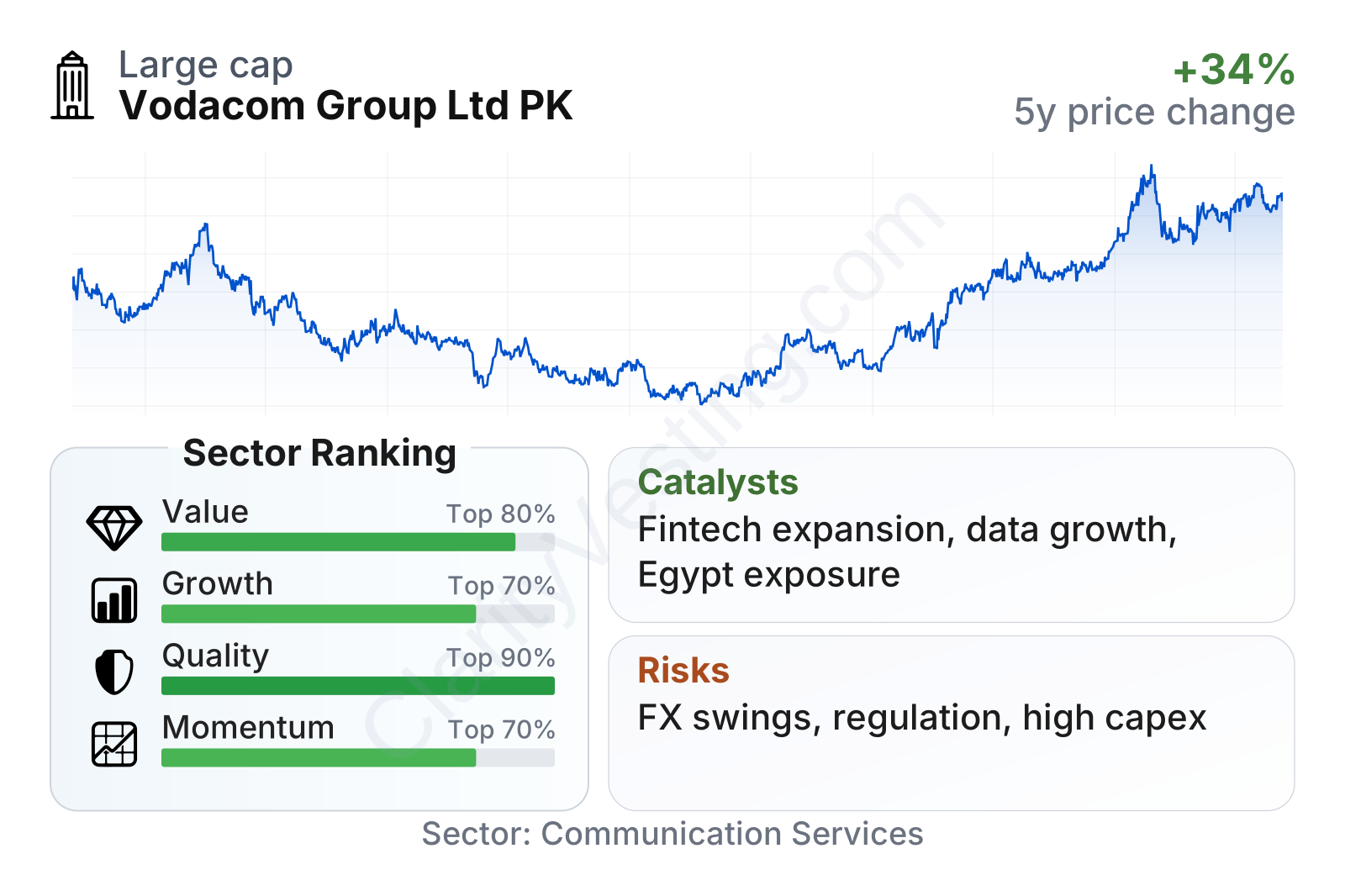
Vodacom stands out as a large telecom operator with relatively low share-price volatility, reflected by a beta well below 1. In the broader communication services universe, the company screens well on business quality and reasonably well on growth and momentum. Value metrics also look supportive rather than stretched, with a price-to-earnings ratio below the sector median and a free cash flow yield that appears comfortably above many peers. The more mixed point is leverage: net debt relative to earnings looks manageable, but debt to equity is higher than the sector median, so balance sheet strength depends partly on how that debt is serviced through stable cash generation.
Growth
Vodacom operates in a sector that still has room to expand in many African markets. Mobile data usage continues to rise, smartphone adoption is increasing, and digital payments are gaining wider everyday use. In developed telecom markets, growth often slows sharply once mobile penetration is saturated. Vodacom’s footprint is different because several of its markets still have structural growth drivers: more users coming online, higher data consumption per user, and a growing need for low-cost digital financial services.
The company’s strategy broadly fits that environment. It is not relying only on selling more voice minutes. Instead, it is building around data, financial services, enterprise products, fiber, and digital platforms. This is a more logical direction for long-term growth because these segments can deepen customer relationships and support higher spending per user over time.
Recent growth metrics suggest the business is still expanding at a healthy pace. Year-over-year revenue growth has been above the sector median, and the longer-term record for revenue per share, earnings per share, and free cash flow compares favorably with much of the telecom field. That combination is important because some telecom groups can grow sales without converting that growth into stronger earnings or cash generation.
Cash generation has also moved up meaningfully over the last reported periods. For a telecom company, that matters a lot because the business requires ongoing investment in spectrum, towers, network modernization, and customer acquisition. Rising free cash flow gives Vodacom more flexibility to fund expansion, manage debt, support distributions, and invest in newer services such as fintech and enterprise digital solutions.
A notable catalyst is the company’s push in financial services. Across African markets, mobile money and adjacent products can scale faster than core telecom services because they tap into underbanked populations and small-business payment needs. Another catalyst is data demand, especially from 4G and 5G usage, home connectivity, and enterprise cloud and security services. The company has also expanded its platform reach through partnerships and infrastructure investments, which can strengthen its position in converged services rather than pure mobile access.
Recent corporate updates have also highlighted continued progress in Egypt through Vodafone Egypt exposure and ongoing development of fintech and digital ecosystems across the group. These areas are strategically important because they broaden Vodacom’s addressable market beyond traditional subscriber revenue.
Risks
This article is for informational purposes only and does not constitute financial advice. Some content is AI-generated. See Disclaimer


