Stock Analysis · Light & Wonder Inc (LNW)
Overview
Light & Wonder Inc. (LNW) is a global gambling-focused entertainment company. It creates and sells casino slot machines and related hardware, develops the software that runs casino games, and also provides digital gambling content and systems that help casinos operate (for example, casino management and analytics tools). In simple terms, the company earns money both when it sells gaming equipment and when its games and platforms keep running over time under recurring or usage-based arrangements.
In its SEC filings, Light & Wonder describes its business through three main operating segments:
- Gaming: casino gaming machines, game content, and related services
- iGaming: online casino content and platforms
- SciPlay: social casino-style games (free-to-play/mobile), monetized mainly through in-app purchases
For a long-term view, an important point is that this mix combines more cyclical spending (casinos buying new machines) with more recurring/ongoing activity (digital and game/content revenues). The company’s filings are the authoritative place to find the exact revenue split by segment for a given year, because percentages can shift as the mix of machine sales, participation/lease arrangements, and digital activity changes.
The company has expanded its total revenue over recent years, from about $2.153B (2021) to about $3.188B (2024), reflecting growth across its portfolio of casino and digital offerings.
From 2021 to 2024, total revenue rises steadily (about $2.153B to $3.188B). Over the same period, operating income increases materially (about $184M to $714M), while interest expense remains sizable (roughly $478M in 2021 down to ~$293M in 2024), highlighting that financing costs have been an important claim on profits even as operations improved.
Key Figures
| Metric | Value | Industry ⓘ |
|---|---|---|
| Date | Apr 06, 2026 | |
| Context | ||
| Sector | Consumer Cyclical | |
| Industry | Gambling | |
| Market Cap ⓘ | $7.03B | |
| Beta ⓘ | 1.41 | |
| Fundamental | ||
| P/E Ratio ⓘ | N/A | 35.90 |
| Profit Margin ⓘ | 12.39% | 6.80% |
| Revenue Growth ⓘ | 2.90% | 12.25% |
| Debt to Equity ⓘ | 33.47% | 147.69% |
| PEG ⓘ | 0.53 | |
| Free Cash Flow ⓘ | $483.00M | |
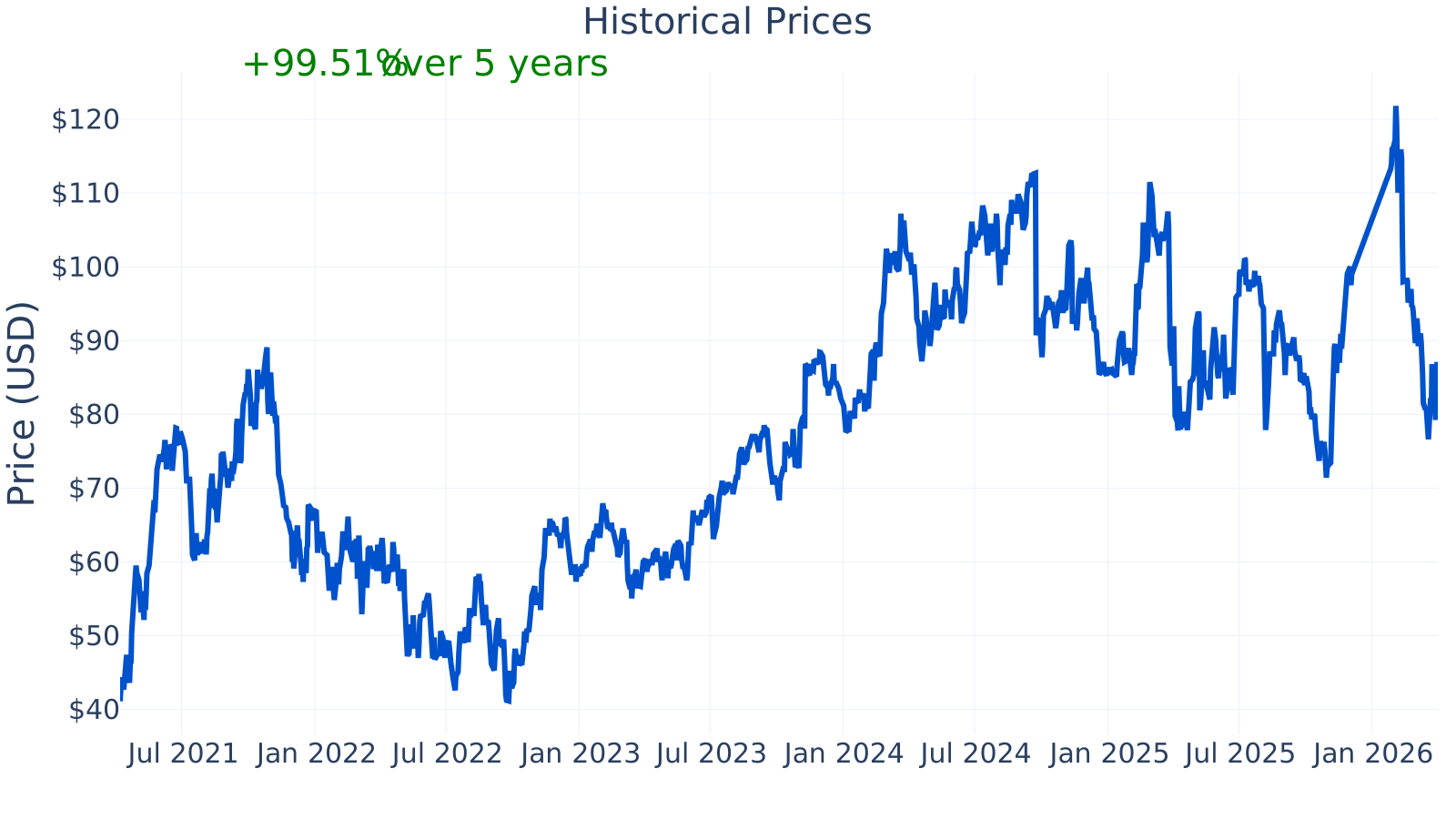
Light & Wonder’s market capitalization is about $7.0B, and its beta (~1.41) suggests the stock has tended to move more than the broader market. Profitability looks stronger than the industry median in the provided peer set: the company’s profit margin is ~12.4% versus an industry median of ~6.8%. Revenue growth year-over-year is currently modest at ~2.9% versus an industry median of ~12.3%, which indicates growth has recently been slower than the median peer. Leverage, as measured by debt-to-equity (~33%), is below the industry median shown (~148%), although this metric can fluctuate with changes in equity and accounting effects. Free cash flow over the trailing twelve months is about $483M, which is a key support for debt service and reinvestment.
Growth (medium)
Light & Wonder operates in the gambling ecosystem, where demand is driven by consumer entertainment spending and by casino operators’ ongoing need to refresh game content and upgrade floors. Within that broader market, the company also has exposure to faster-growing categories such as online casino content (iGaming) and mobile/social casino games (SciPlay). These digital segments can scale without the physical manufacturing footprint of casino hardware and may benefit from continued product iteration and content updates.
Strategically, the company’s mix can support growth in two ways. First, casino gaming benefits when operators invest in new machines and when game libraries perform well, which can drive repeat orders and recurring-style participation revenue. Second, digital products (iGaming and social games) can diversify revenue sources and reduce reliance on any single physical replacement cycle.
Revenue growth was strong through much of 2022–2024 (often in the low-to-high teens year-over-year), then slowed significantly by late 2024 and into 2025 (around low single digits and even a small decline in mid-2025). That pattern can be consistent with a business that experienced a strong post-period ramp and then normalized to a slower growth rate, making future performance more dependent on product cycles and execution rather than broad catch-up demand.
Free cash flow has been volatile over time, including a notably negative period in 2023 (about -$516M), followed by a return to positive territory in 2024 and 2025 (about $321M and $357M, respectively). This type of swing can happen when working capital, investment spending, or one-time items change from year to year. For long-term analysis, sustained positive free cash flow matters because it provides flexibility to invest in content and platforms while also supporting debt obligations.
Risks (high)
The company’s end markets are sensitive to regulation and consumer spending. Gambling is highly regulated, and changes in rules, licensing, taxes, or enforcement priorities can affect casino operators and online gaming partners, which can flow through to suppliers like Light & Wonder. In addition, casino capital spending can be cyclical: when operators tighten budgets, purchases of new machines or systems can slow.
Competition is another major factor. Light & Wonder competes with large, established gaming suppliers that offer casino machines, game content, and systems, as well as digital-focused competitors in online casino content and game studios. Key competitors commonly cited in the industry include companies such as Aristocrat, IGT, and Konami Gaming on the land-based side, and a wide range of platform providers and content studios in iGaming. The competitive edge in this business often comes from the strength of a game library, the ability to consistently produce titles that perform well on casino floors and digital channels, and the breadth of distribution relationships.
Leverage and financing costs can also matter, especially when interest rates and refinancing conditions change. Even when operating performance improves, higher interest expense can reduce net income and limit strategic flexibility.
This chart shows that debt-to-equity has been elevated for much of 2022–2025 (often several times equity), even though the latest snapshot metric indicates a lower level (~33%). Large swings in this ratio can occur when equity changes materially due to accounting impacts, profitability, or balance-sheet movements. In practical terms, it highlights that balance-sheet structure is an area to monitor in filings, including total debt, maturities, and interest costs.
Profit margin has improved and stabilized in more recent periods, rising into the low-double-digit range (about 12.4% most recently) and exceeding the industry median shown (about 7.5%). That suggests better recent profitability versus the median peer in the provided set, though margins can still move with product mix (hardware vs. digital), development spending, and financing/tax effects.
Valuation
The P/E ratio displayed has generally been below the industry median in recent points shown (for example, around 19.8 vs. an industry median of 21.6 at the latest date), after being higher earlier in 2023–2024. Interpreting P/E requires context: it can change quickly when earnings swing due to one-time items, interest costs, tax effects, or changes in operating results.
Another way to frame valuation is to compare it with growth and risk. Light & Wonder’s recent revenue growth is modest (low single digits lately), while margins are comparatively stronger than the industry median and free cash flow is positive in the most recent period shown. At the same time, the business operates in a regulated, competitive environment and carries meaningful financing considerations (as seen in interest expense levels in the income flow summary). In practice, whether the current price looks “expensive” or “cheap” often depends on whether future growth re-accelerates, margins remain resilient, and cash generation remains durable through cycles.
Conclusion
Light & Wonder is a diversified gambling entertainment supplier spanning casino equipment and systems alongside digital and social gaming. Operationally, it has grown revenue over the last several years and has recently shown stronger profitability than the median of the peer group provided. The mix of land-based and digital segments can provide multiple avenues for expansion, but recent revenue growth has cooled compared with earlier periods, meaning future results may rely more heavily on successful game releases, platform adoption, and disciplined execution.
The main long-term uncertainties center on regulation, competitive intensity, cyclicality in casino operator spending, and the company’s financing profile (including the ongoing impact of interest expense and balance-sheet structure). Valuation signals such as the P/E ratio appear near-to-below the peer median in recent periods shown, but the usefulness of that comparison depends on how stable earnings and cash flows remain over time.
Sources:
- SEC EDGAR — Light & Wonder Inc. Form 10-K (Annual Report)
- SEC EDGAR — Light & Wonder Inc. Form 10-Q (Quarterly Reports)
- Light & Wonder Investor Relations — SEC Filings & Earnings Materials (company-hosted)
- Wikipedia — “Light & Wonder” (basic company background)
This article is for informational purposes only and does not constitute financial advice. Some content is AI-generated. See Disclaimer