Stock Analysis · LightPath Technologies Inc (LPTH)
Overview
LightPath Technologies Inc (LPTH) designs and manufactures optical components—especially precision lenses and assemblies that help direct, shape, and focus light. These parts are used inside larger systems such as industrial sensors, defense and aerospace equipment, and other photonics-enabled products. In simple terms, LightPath sells “the optics inside the machine” to customers that need dependable performance in demanding environments.
Its business model is primarily product-based: it develops optical designs and produces them at scale, selling either standard catalog items or custom solutions made for a specific customer’s application. The company’s filings typically describe revenue as coming mainly from sales of optical components and assemblies, but the exact split by end-market can vary over time and may not always be provided as a clean percentage breakdown in every period.
Main revenue sources (typical structure described in filings):
- Sales of optical components and assemblies (including molded glass optics and engineered optics)
- Custom optical solutions for specific customer programs (often tied to longer qualification cycles)
Over recent fiscal years shown, total revenue moved from about $38.5M (FY2021) down to about $31.7M (FY2024), then back up to about $37.2M (FY2025). At the same time, operating expenses rose meaningfully (notably selling, general, and administrative costs), and operating income stayed negative, which helps explain why net losses persisted even when revenue improved.
Key Figures
| Metric | Value | Industry ⓘ |
|---|---|---|
| Date | Jun 01, 2026 | |
| Context | ||
| Sector | Technology | |
| Industry | Electronic Components | |
| Market Cap ⓘ | $1.07B | |
| Beta ⓘ | 1.26 | |
| Fundamental | ||
| P/E Ratio ⓘ | N/A | 51.74 |
| Profit Margin ⓘ | -37.38% | 5.00% |
| Revenue Growth ⓘ | 108.90% | 18.50% |
| Debt to Equity ⓘ | 10.03% | 17.45% |
| PEG ⓘ | 1.54 | |
| Free Cash Flow ⓘ | -$1.84T | |
The company’s market capitalization is about $1.07B, and its beta is ~1.27, which indicates the stock has tended to move more than the overall market. The latest profit margin is about -37.4% versus an industry median near +5.1%, highlighting that the company has recently been unprofitable relative to many peers. On growth, the latest year-over-year revenue growth is about +108.9% versus an industry median near +18.5%, indicating an unusually strong recent growth rate (which may reflect a step-up from a lower base). Leverage appears comparatively modest in the latest period with debt-to-equity ~10.0% versus an industry median around 17.4%. The PEG ratio ~1.54 is provided, but it should be interpreted carefully when profitability is negative and earnings are volatile. Free cash flow (TTM) is shown as a large negative figure; that specific value is not consistent with the multi-year pattern shown in the cash-flow series below, so it may reflect a one-time classification effect, a data mapping issue, or an extraordinary item that would need confirmation against the cash flow statement in the company’s SEC filings.
Growth (Medium)
LightPath operates in photonics and optical components, an area supported by long-term trends such as industrial automation, advanced sensing, and higher performance requirements in defense/aerospace systems. Demand in these markets is often driven by multi-year product cycles, qualification requirements, and program wins, which can create uneven quarterly results but potentially durable relationships once a part is designed into a customer’s system.
The company’s strategy—combining optical design capability with manufacturing (including molded glass optics) and selling both standard and custom components—fits an industry where customers value reliability, repeatability, and the ability to scale production after a design is finalized. Potential catalysts in this type of business commonly include design wins moving into volume production, expansion of manufacturing capacity, and new products that broaden the catalog or improve margins. Whether these catalysts translate into sustained profitability depends heavily on execution, pricing, and cost control.
The year-over-year revenue growth line shows a long stretch of mixed or negative growth from 2021 through much of 2024, followed by a sharp acceleration in 2025 and into early 2026 (reaching roughly +109% most recently). This pattern can happen when shipments ramp for specific programs or when the comparison period was unusually weak, so it is important to view it alongside profitability and cash generation.
Free cash flow has generally been negative in the periods shown (roughly from slightly positive in 2022 to around -$6.5M by 2025). Negative free cash flow can be manageable for a period if it is tied to investment and leads to higher future earnings, but it can also increase financing needs if losses persist. The most recent TTM free cash flow value displayed is extremely negative relative to prior years, which warrants reconciliation with the company’s statement of cash flows in SEC filings to understand whether it reflects a one-time event or a measurement issue.
Risks (High)
The most important risk visible from the financial profile is ongoing unprofitability. Profit margins have been consistently negative across multiple years, and the latest margin (about -37%) is far below the industry median (about +5%). If the company cannot improve gross margin, scale revenue, and manage operating expenses, it may continue to report losses even during periods of higher sales.
Another key risk is business concentration and timing that often comes with supplying components into customer programs: orders can be lumpy, qualification cycles can delay revenue, and program schedules can shift. For manufacturers of specialized optical components, execution risk also includes yield, scrap, and meeting performance specifications—issues that can pressure margins and customer relationships.
Debt-to-equity has fluctuated significantly over time—rising to relatively high levels around 2025 (near or above 90%) before falling sharply to about 10% most recently, below the industry median (about 17%). The recent improvement suggests lower balance-sheet leverage in the latest period, but the earlier spike indicates that capital structure can change meaningfully, which can affect risk if losses continue.
The profit margin trend shows persistent losses from 2021 through 2026, with the margin generally worsening into 2025 before improving slightly in the most recent period—yet still deeply negative. This pattern points to a central question for long-term outcomes: whether revenue growth can translate into sustainable profitability.
Competitive positioning is another risk area. The optical components space includes many specialized manufacturers and larger photonics suppliers. Competition can come from companies offering precision optics, optical assemblies, and infrared/industrial optics, as well as vertically integrated system manufacturers that bring optics production in-house. In many cases, competitive advantages tend to be application know-how, manufacturing process capability, quality systems, and customer qualification history rather than consumer-facing brand leadership. Based on the financial profile alone, the company does not appear to be operating with the margin structure typical of leading, highly scaled peers, which may indicate it is still working toward more efficient scale or a more favorable product mix.
Valuation
Price-to-earnings (P/E) ratios are most informative when a company has stable, positive earnings. In the periods shown, LightPath’s P/E is displayed as 0 for most dates, which commonly occurs when earnings are negative (making the P/E not meaningful), while the industry median P/E remains positive and generally ranges from the high teens to the mid‑40s over time. In that context, valuation discussions often shift toward factors like revenue growth durability, progress toward profitability, cash burn, and balance-sheet strength rather than relying on earnings-based multiples.
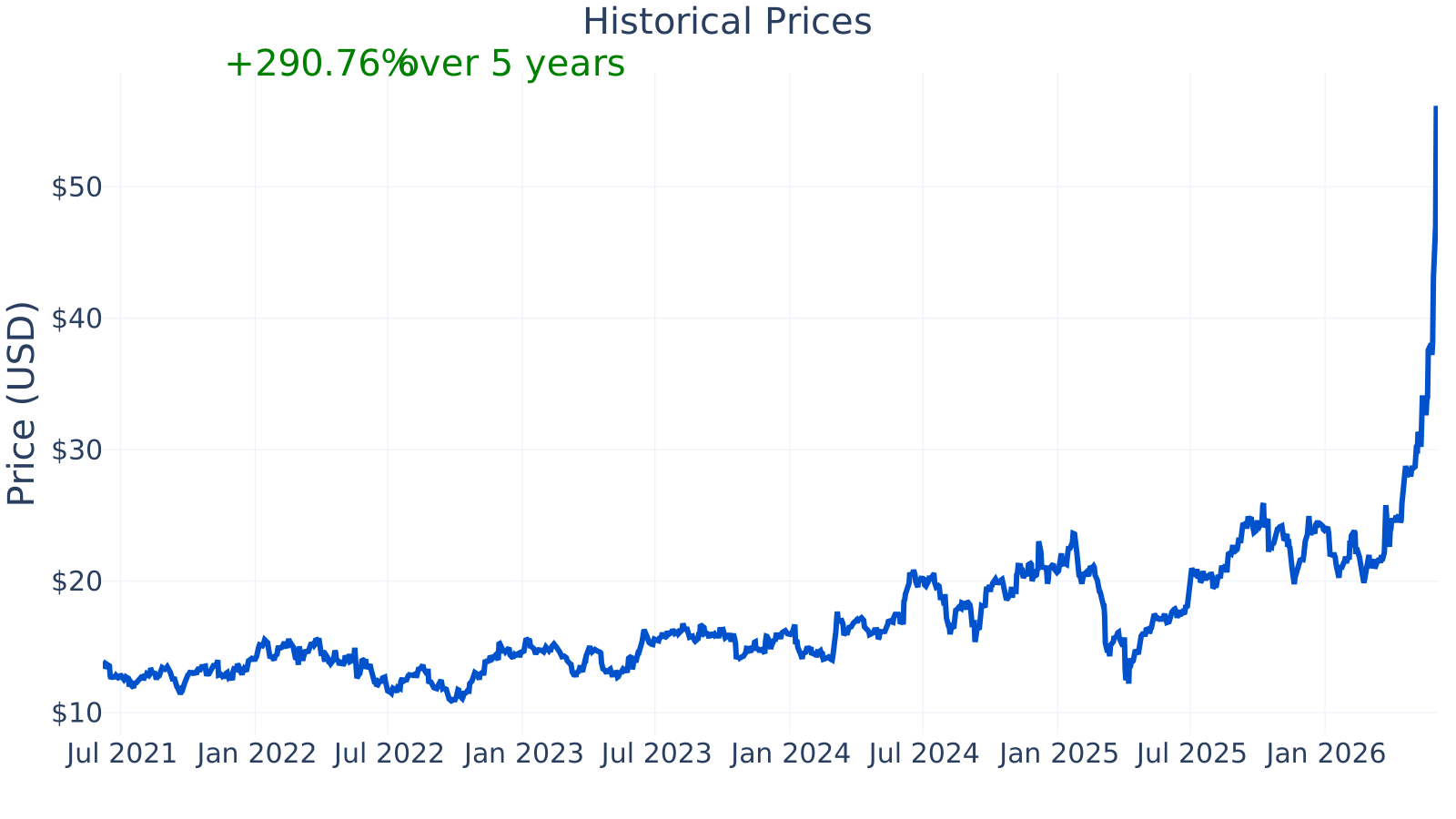
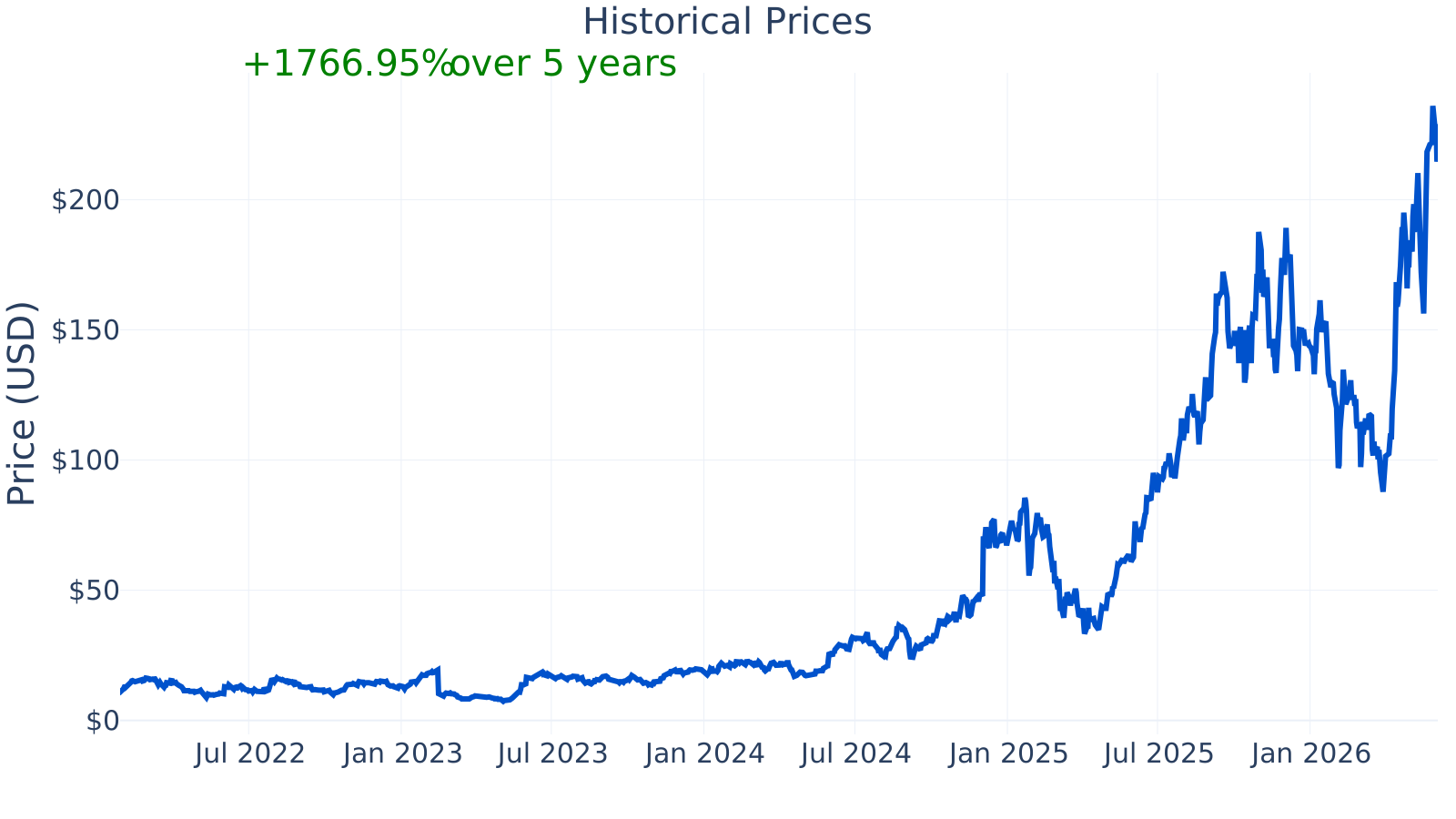
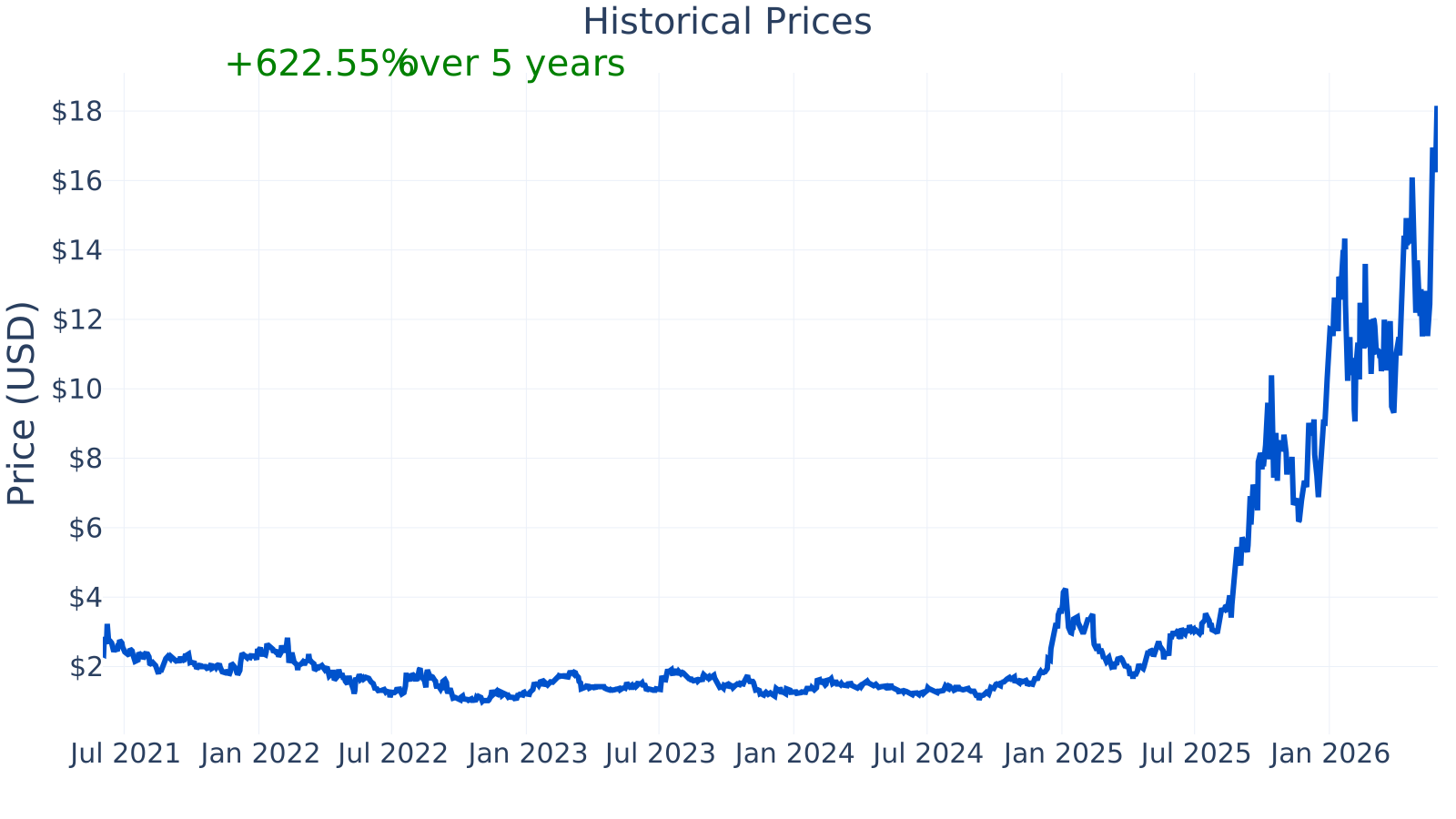
The historical stock price line shows a long period of lower prices from 2021 through much of 2024, followed by a sharp increase during 2025 into early 2026. When price moves faster than fundamentals, valuation can become more sensitive to execution outcomes (for example, whether higher revenue translates into improved margins and cash flow).
Conclusion
LightPath Technologies is an optical components manufacturer positioned in photonics-driven end markets that can benefit from long-term trends in sensing, industrial applications, and defense/aerospace needs. Recent results show a notable acceleration in year-over-year revenue growth, but profitability remains materially negative compared with industry norms, and free cash flow has been negative in the historical series shown.
From a long-term fundamental perspective, the key items that would typically determine whether the business strengthens over time are (1) sustained revenue that is not solely tied to short-lived ramps, (2) a clearer path to positive margins through scale and product mix, and (3) consistent cash generation or, at minimum, a manageable funding profile during investment phases. The latest low debt-to-equity level is a constructive sign for balance-sheet risk in the most recent period, while the multi-year loss pattern keeps overall business risk elevated until profitability improves.
Sources:
- SEC EDGAR — LightPath Technologies, Inc. filings (Form 10-K, Form 10-Q, Form 8-K)
- LightPath Technologies, Inc. — Investor Relations materials and press releases (company-hosted)
- Wikipedia — “LightPath Technologies” (basic company background)
This article is for informational purposes only and does not constitute financial advice. Some content is AI-generated. See Disclaimer