Stock Analysis · Hewlett Packard Enterprise Co (HPE)
Overview
Hewlett Packard Enterprise Co (HPE) is an enterprise technology company. In simple terms, it helps organizations run and connect their IT systems. Its offerings include servers, storage, networking equipment, and software and services that help manage data centers and cloud-style computing environments. HPE also provides financing options that can help customers purchase technology through structured payments.
HPE’s business is organized around a few major segments commonly described in its SEC filings. The largest revenue sources are generally:
- Server (computer servers used in data centers)
- Hybrid Cloud (storage, software, and services designed for mixed on-premises + cloud environments)
- Intelligent Edge (networking products and services, including campus and branch networking)
- Financial Services (leasing/financing and asset management related to IT purchases)
The exact mix can shift over time depending on enterprise spending cycles and product demand, and it is best confirmed in the most recent Form 10-K segment reporting.
Looking across recent years, total revenue has risen overall (from about $27.9B in fiscal 2021 to about $34.3B in fiscal 2025). Over the same period, costs and operating expenses also increased, and operating income shows a sharp dip in fiscal 2025 in this view—an important reminder that revenue growth does not automatically translate into stable profits.
Key Figures
| Metric | Value | Industry ⓘ |
|---|---|---|
| Date | Mar 13, 2026 | |
| Context | ||
| Sector | Technology | |
| Industry | Communication Equipment | |
| Market Cap ⓘ | $28.80B | |
| Beta ⓘ | 1.31 | |
| Fundamental | ||
| P/E Ratio ⓘ | N/A | 46.86 |
| Profit Margin ⓘ | -0.33% | 3.87% |
| Revenue Growth ⓘ | 18.40% | 15.20% |
| Debt to Equity ⓘ | 87.23% | 70.76% |
| PEG ⓘ | 0.85 | |
| Free Cash Flow ⓘ | $4.37B | |
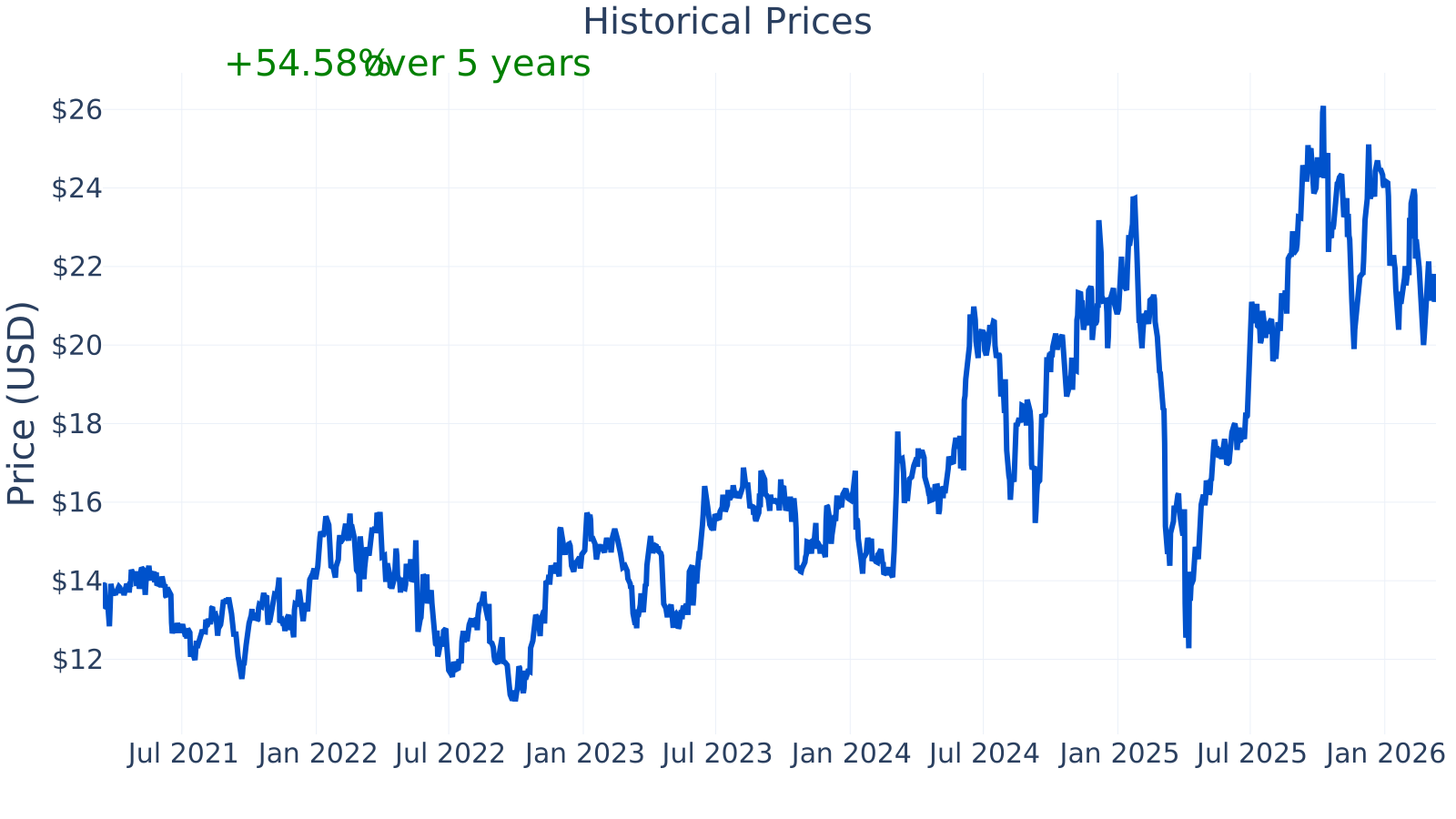
At a market capitalization of about $28.8B, HPE sits in the large-cap range but is smaller than the biggest “mega-cap” technology peers. The stock’s beta of ~1.31 suggests it has tended to move more than the broader market (higher price swings up and down). The company shows TTM free cash flow of about $4.37B, which can matter for debt service, reinvestment, and shareholder returns. The latest profit margin is slightly negative (about -0.4%), below the industry median shown here (about 4.5%), indicating recent profitability has been pressured.
Growth (Medium)
HPE operates in long-running, structurally important areas of enterprise IT: data centers, networking, and “hybrid” computing (where companies combine their own infrastructure with public cloud services). These markets are supported by trends such as rising data volumes, cybersecurity needs, and continued modernization of corporate systems. At the same time, demand can be cyclical because many customers are businesses that may delay large projects during uncertain economic periods.
A core part of HPE’s strategy has been to position its offerings for hybrid environments and to grow more recurring, service-like revenue (for example, through consumption-style offerings described in company materials). If executed well, a greater share of contract-like and subscription-style revenue can reduce dependence on one-time hardware refresh cycles. Another potential catalyst is increased enterprise investment tied to AI and high-performance workloads, which can drive demand for modern servers, networking, and data infrastructure—categories where HPE participates.
Year-over-year revenue growth has been uneven, including periods of decline, followed by a strong acceleration more recently. The latest point shown is about 19.1% YoY, which is above the industry median displayed in the table (about 15.2%). This pattern suggests momentum improved, but the variability also indicates sensitivity to product cycles and customer spending timing.
Free cash flow over the trailing twelve months shows noticeable swings across the last several years (for example, around $0.55B at one point and about $4.37B most recently). That rebound can be meaningful because cash generation often provides flexibility; however, the volatility means it is important to understand what drove the changes (working capital movement, profitability shifts, and investment levels), which is typically discussed in the cash flow section of SEC filings.
Risks (High)
HPE’s main risks center on competition, shifting technology preferences, and profit stability. Enterprise infrastructure is crowded with capable vendors, and customers frequently compare suppliers on performance, reliability, support quality, and total cost of ownership. Pricing pressure can be significant, especially in hardware categories where differentiation may narrow over time.
Profitability has also shown recent pressure. Even with revenue growth, margins can be affected by product mix (more lower-margin hardware vs. higher-margin software/services), input costs, supply chain conditions, and the cost to develop and sell complex enterprise systems. In addition, customer purchasing decisions can be lumpy—large deals may close in one quarter and slip in another—creating volatility in results.
Debt-to-equity is about 87% at the latest point shown, compared with an industry median around 71% in the table. The series also shows that leverage has moved around over time, including a rise in more recent periods. Higher leverage can increase sensitivity to interest rates and reduce financial flexibility during downturns, even if the business continues to generate cash.
Profit margin has fluctuated materially over the period shown, and the latest value is slightly negative (about -0.4%), below the industry median (about 4.5%). This gap matters because long-term business quality is often reflected in the ability to sustain positive margins through different demand cycles.
In competitive positioning, HPE participates in segments where several firms are strong. Competitors vary by category: large enterprise infrastructure vendors, networking-focused providers, and cloud service providers that can substitute for on-premises purchases in some use cases. HPE’s potential advantages often relate to established enterprise relationships, breadth across servers/storage/networking, services capabilities, and financing options—while the key challenge is maintaining differentiation and profitability as customer architectures evolve.
Valuation
Valuation is often discussed using multiples like the price-to-earnings (P/E) ratio, but this metric can be harder to interpret when earnings are volatile. Still, the historical pattern and the comparison to the industry median can provide context on how the market has priced HPE relative to peers over time.
Across the period displayed, HPE’s P/E ratio is frequently below the industry median, sometimes by a wide margin. That relative discount can reflect differences in growth expectations, business mix, or perceived risk. It can also occur when profits are under pressure or unstable, which makes a single-period P/E less reliable as a standalone signal. For a fuller view, long-term readers commonly pair P/E with profitability trends, leverage, and cash flow durability (especially given the swings shown in margins and free cash flow).
Conclusion
HPE is a long-established enterprise technology provider with meaningful scale in servers, networking, and hybrid IT solutions, supported by overall revenue expansion in recent years. The business operates in important markets that are likely to remain relevant as organizations modernize infrastructure and expand data-intensive workloads.
At the same time, the company’s recent results shown here highlight key points a long-term reader may want to weigh carefully: profitability has been volatile and recently dipped slightly negative, leverage is somewhat higher than the industry median, and cash generation has swung materially over time even though the latest trailing free cash flow is strong. The valuation history suggests the market has often priced HPE at lower earnings multiples than the industry median, which can be consistent with a more cyclical, competitive profile and the need for sustained margin stability.
Sources:
- SEC EDGAR — Hewlett Packard Enterprise Co filings (Form 10-K, Form 10-Q)
- Hewlett Packard Enterprise Investor Relations — Annual Report and earnings materials (company-hosted)
- Wikipedia — “Hewlett Packard Enterprise” (basic company background)
This article is for informational purposes only and does not constitute financial advice. Some content is AI-generated. See Disclaimer


