Stock Analysis · SolarEdge Technologies Inc (SEDG)
Overview
SolarEdge Technologies Inc. designs and sells equipment that helps solar panels produce usable electricity and integrates that power into homes, businesses, and the electric grid. In simple terms, its products sit “between” solar panels and the place where electricity is used, helping convert, optimize, monitor, and manage solar energy production. The company also sells complementary energy products such as inverters (power conversion), power optimizers (panel-level optimization), monitoring software, and solutions that can be paired with batteries and EV charging in certain configurations.
From the company’s SEC filings, SolarEdge reports revenue primarily from selling solar-related hardware and related services (such as monitoring). The business is largely tied to demand for solar installations (especially residential and commercial), distributor and installer purchasing cycles, and inventory conditions across the solar supply chain.
Main sources of revenue (broadly described in company reporting, with exact mix varying by period):
- Solar products and solutions (inverters, optimizers, monitoring, and related components) — typically the largest share
- Other energy-related products (which may include items such as storage-related offerings and other adjacent solutions, depending on the period)
Recent profitability context: Over the last few years shown below, total revenue rose into 2022–2023 and then dropped sharply in 2024–2025. Profitability also deteriorated significantly in 2024 and remained negative in 2025, based on the company’s income statement line items.
The operating picture in these statements shows a major shift from positive operating income in 2021–2023 to a large operating loss in 2024, alongside much lower revenue. R&D spending remained substantial across the period (hundreds of millions of dollars annually), highlighting an ongoing emphasis on product development even during a downturn.
Key Figures
| Metric | Value | Industry ⓘ |
|---|---|---|
| Date | May 08, 2026 | |
| Context | ||
| Sector | Technology | |
| Industry | Solar | |
| Market Cap ⓘ | $2.35B | |
| Beta ⓘ | 1.18 | |
| Fundamental | ||
| P/E Ratio ⓘ | N/A | 30.59 |
| Profit Margin ⓘ | -28.56% | 7.06% |
| Revenue Growth ⓘ | 41.50% | 23.60% |
| Debt to Equity ⓘ | 94.85% | 94.85% |
| PEG ⓘ | 4.61 | |
| Free Cash Flow ⓘ | $77.81M | |
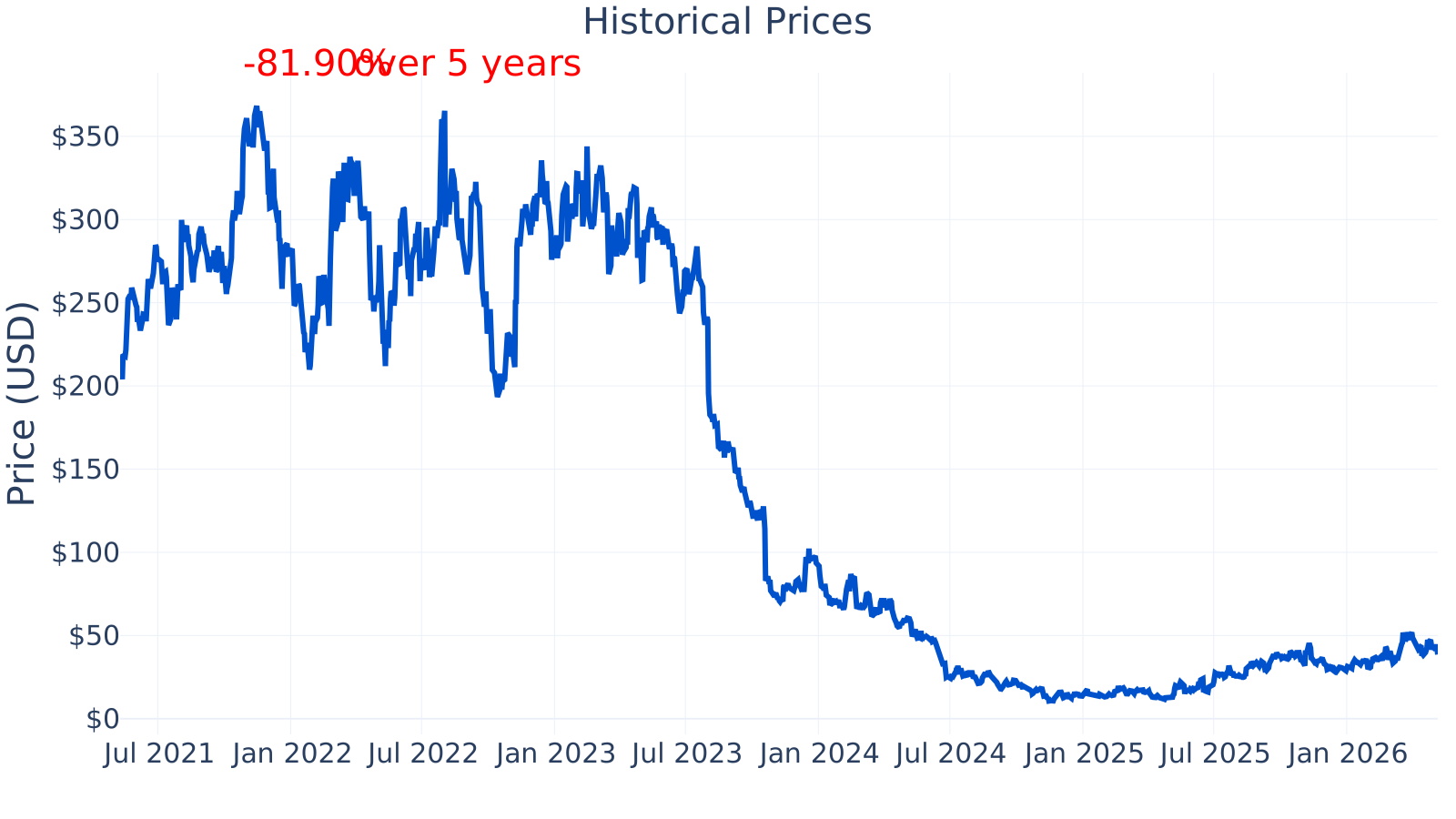
SolarEdge’s market capitalization is about $2.35B, and the stock’s beta of ~1.18 suggests it has historically moved somewhat more than the broader market. The latest figures show a negative profit margin of about -28.6% versus an industry median near +7.1%, indicating the company is currently less profitable than typical peers. At the same time, the latest year-over-year revenue growth is about +41.5% (industry median ~+23.6%), which signals a rebound from depressed levels. Debt-to-equity is about 94.9%, roughly in line with the industry median in the table, while trailing twelve-month free cash flow is +$77.8M, which can matter because cash generation helps fund operations without relying solely on new financing.
Growth (Medium)
SolarEdge operates in solar energy, an industry supported over the long run by factors such as electrification, ongoing solar cost reductions at the system level, and policy support in various regions. That said, solar hardware businesses can be cyclical in the short-to-medium term: demand can swing with interest rates, consumer financing conditions, utility rates, and installer/distributor inventory levels.
A key question for long-term growth is whether SolarEdge can translate solar adoption into sustained demand for its platform (power electronics, monitoring, and adjacent energy products). The company’s strategy—selling integrated hardware plus software/monitoring—aims to embed SolarEdge into installers’ workflows and customers’ systems over time, which can help retention if performance and reliability remain competitive.
The revenue growth pattern has been highly volatile: strong positive growth through 2022, then steep declines in 2023–2024, and a return to positive growth in 2025–2026 periods shown. This type of swing often reflects industry inventory corrections and uneven end-market demand, not just “normal” expansion, so the durability of the rebound becomes important to track in future filings.
Free cash flow also swung sharply: negative in 2022, positive in 2023, deeply negative in 2024, still negative in 2025, and positive again most recently (about +$77.8M). If positive cash generation persists, it can reduce financial pressure during down cycles; if it reverses again, the company may need to rely more on its balance sheet or external financing.
Risks (High)
The biggest risk is that SolarEdge’s results can be strongly affected by industry cycles. When installers and distributors reduce purchasing to work through excess inventory, shipments and revenue can drop quickly. For a company with meaningful operating expenses (including R&D and support), a sudden revenue decline can push margins negative, as has occurred recently.
Leverage has increased from lower levels earlier in the timeline to around 94.9% debt-to-equity most recently. The chart shows periods where this ratio rose notably (especially around 2024–2025) before settling near the latest level. Higher leverage can increase sensitivity to downturns because interest costs and required payments may limit flexibility when demand weakens.
Margins have deteriorated significantly from positive levels earlier in the period to deeply negative levels during 2024–2025, and they remain negative (about -28.6%) most recently, while the industry median remains positive. Sustained negative margins can indicate pricing pressure, elevated costs (including warranty, inventory, or manufacturing-related impacts), and/or under-absorption of fixed costs during weak volume periods.
Competition is another major factor. SolarEdge competes with other inverter and solar power electronics providers, including large global players and specialized solar firms. Competitive dynamics can show up through product pricing, installer preferences, reliability track records, and pace of innovation. In addition, some solar panel manufacturers and other ecosystem participants may offer alternative system architectures, which can shift demand away from SolarEdge’s approach in certain segments.
SolarEdge does have potential competitive strengths commonly associated with established solar electronics firms: installed base, installer relationships, product ecosystem breadth (hardware plus monitoring), and ongoing investment in R&D. However, the recent profitability decline suggests that competitive advantages—if present—have not been sufficient to prevent significant earnings and margin pressure during the downturn, making execution and cost control key areas to watch.
Valuation
For many companies, the price-to-earnings (P/E) ratio is a quick way to compare valuation, but it becomes less informative when earnings are depressed or negative. In the P/E history shown, SolarEdge’s P/E was measurable in 2021–early 2024 at times, then the chart shows 0 for later periods because meaningful P/E values are not available when earnings are negative (or when the ratio becomes extreme). By comparison, the industry median P/E shown in the series generally sits in a much more stable range (often in the tens).
In practice, valuation discussion for SolarEdge currently depends heavily on whether profitability normalizes. If margins recover, P/E and other earnings-based measures may become relevant again. If weak margins persist, investors and analysts often rely more on balance-sheet strength, cash flow trends, and revenue stability than on near-term earnings multiples.
Conclusion
SolarEdge is a solar power electronics company whose results are closely tied to solar installation demand and channel inventory cycles. The recent period shows a sharp downturn in revenue followed by a rebound in year-over-year growth, alongside profitability that remains meaningfully negative versus the industry median. Cash generation has also been volatile, though it is positive on the latest trailing basis.
From a long-term perspective, the company operates in a sector with structural drivers, but the historical swings in revenue, margins, and leverage highlight that outcomes can vary widely across the cycle. Future SEC filings that clarify the durability of the revenue recovery, the path back to positive margins, and the stability of free cash flow are central to judging whether the business is returning to a more consistent operating profile.
Sources:
- SEC EDGAR — SolarEdge Technologies Inc. Forms 10-K, 10-Q, and 8-K (company financial statements and risk disclosures)
- SolarEdge Technologies Inc. Investor Relations — Annual Report materials and shareholder communications (company-hosted)
- Wikipedia — “SolarEdge” (basic company background)
This article is for informational purposes only and does not constitute financial advice. Some content is AI-generated. See Disclaimer