Stock Analysis · Newsmax Inc (NMAX)
Overview
Newsmax Inc (NMAX) is a media company in the Communication Services sector, operating in broadcasting. It is best known for distributing news and opinion programming through cable/satellite carriage and digital platforms, alongside related media products and services. For long-term context, this is a business model that typically depends on a mix of audience reach, distribution agreements, and the ability to monetize attention through advertising and other revenue streams.
In broad terms, media companies like Newsmax generally generate revenue from a combination of advertising and distribution-related income (for example, fees paid by distributors to carry a channel), with possible additional revenue from digital activities and other media offerings. In Newsmax’s public filings, revenue is reported at the company level; a detailed public breakdown by revenue line and percentage is not included in the metrics shown here.
Recent profitability context from reported financials: Total revenue increased from about $135.3M (2023) to $171.0M (2024) and $189.3M (2025), while net income remained negative and losses expanded over the same period. This combination suggests that costs (especially operating expenses) have been rising faster than revenue.
Across 2023–2025, revenue rose meaningfully, but operating expenses increased even faster (notably selling, general and administrative costs), resulting in widening operating losses and net losses in the most recent year shown.
Key Figures
| Metric | Value | Industry ⓘ |
|---|---|---|
| Date | Jun 02, 2026 | |
| Context | ||
| Sector | Communication Services | |
| Industry | Broadcasting | |
| Market Cap ⓘ | $1.12B | |
| Beta ⓘ | N/A | |
| Fundamental | ||
| P/E Ratio ⓘ | N/A | |
| Profit Margin ⓘ | -43.17% | 2.00% |
| Revenue Growth ⓘ | 14.00% | 4.00% |
| Debt to Equity ⓘ | 7.78% | 210.39% |
| PEG ⓘ | N/A | |
| Free Cash Flow ⓘ | -$74.19M | |
At the latest point shown, Newsmax has a market capitalization of about $1.12B. The company’s profit margin is -43.17% versus an industry median near 2%, indicating the business is currently far from profitability. Revenue growth is shown at about 14.0% year over year, above the displayed industry median of roughly 4%. Debt relative to equity is low at about 7.78% versus a much higher industry median (over 200%), but free cash flow over the trailing twelve months remains negative (~-$74.2M), meaning the company has been consuming cash rather than generating it.
Growth (Medium)
Broadcasting and news media are mature industries, but individual companies can still grow by expanding distribution, increasing viewership, improving ad yield, and scaling digital products. For Newsmax specifically, the available financial history points to revenue growth continuing recently, which can be a supportive sign in a sector that often faces intense competition for attention and advertising dollars.
Year-over-year revenue growth is shown around 14–15% in the most recent quarters displayed, which is higher than the industry median in the table. The key question for long-term durability is whether this growth can continue while operating costs rise more slowly than revenue.
Free cash flow remains negative over the trailing twelve months (improving from roughly -$96.9M to -$74.2M in the periods shown). If this trend continues (toward less cash burn), it can reduce reliance on external funding, but negative free cash flow also means the company may need additional capital if losses persist.
Potential catalysts for future growth in a media business typically include improved distribution terms, higher audience reach, better ad monetization, and operating leverage (keeping costs controlled as revenue rises). Whether those develop into durable results is usually reflected over time through narrowing losses, improving margins, and a shift to positive free cash flow.
Risks (High)
The primary long-term risk visible in the financial profile is persistent unprofitability. The company’s profit margin is materially negative and has been improving but remains far below typical sustainable levels. In addition, media revenues can be cyclical and sensitive to advertiser demand and broader economic conditions.
Profit margin is shown improving from about -57.42% to -43.17% across the periods displayed, but it remains well below the industry median (around 2%). This indicates the company is still spending substantially more than it earns after expenses, even with recent improvement.
Another key risk is competitive pressure. News and opinion broadcasting is crowded, and attention is fragmented across traditional TV networks, digital-first publishers, and social video platforms. In that landscape, competitive advantages often come from brand loyalty, distribution breadth, and cost discipline. Based on the financial results shown (rising revenue alongside large and rising operating expenses), it is not yet evident that the company has reached a cost structure that consistently converts growth into profits.
Debt to equity is relatively low (about 4%–9% across the periods shown, ending near 7.78%) compared with a much higher industry median (around 197%–229% in the same periods). Lower leverage can reduce financial stress, but it does not remove the central business risk of operating losses and cash burn.
Competitors typically include other U.S. cable news networks and digital news brands competing for similar audiences and advertising budgets. Relative positioning among peers is often reflected in distribution reach, audience scale, and profitability; the data shown here highlights that profitability is currently a major challenge for Newsmax.
Valuation
A traditional price-to-earnings (P/E) approach is not currently informative here because earnings are negative (which often results in a non-meaningful P/E). In such cases, valuation discussions typically rely more on revenue scale, gross profit trends, cash burn, and the pathway to profitability rather than earnings multiples.
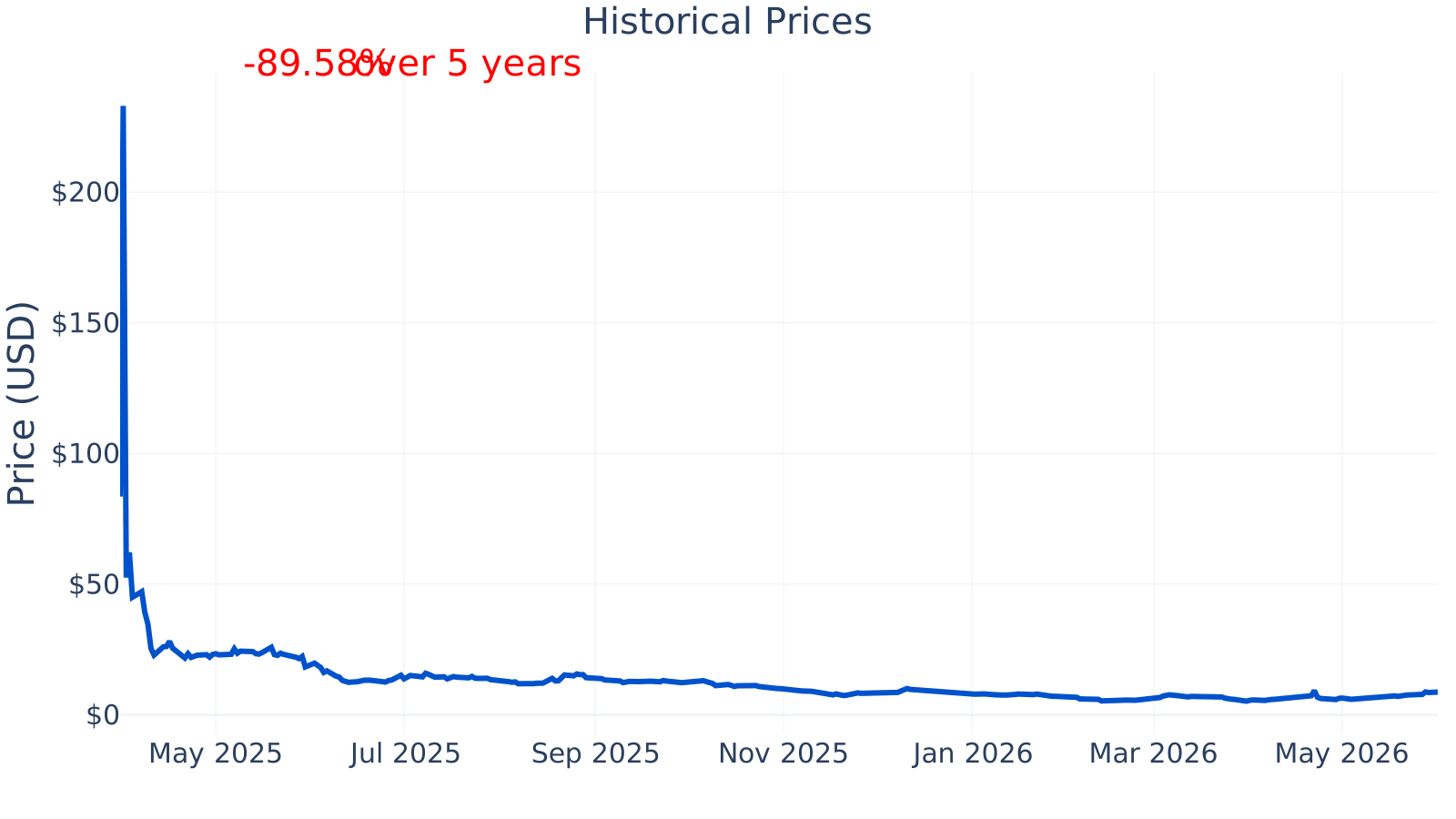
The historical price series shown indicates substantial volatility over the past year. When a stock’s price moves sharply while profitability remains negative, valuation can become more sensitive to expectations about future growth, margin improvement, and financing needs. With continuing net losses and negative free cash flow, the market value is often tied to whether the company can eventually demonstrate sustained operating leverage (costs growing more slowly than revenue) and reach consistent profitability.
Conclusion
Newsmax shows meaningful revenue growth in the most recent periods displayed and a low debt-to-equity level relative to the industry median, which can be helpful for financial flexibility. However, the company also shows large ongoing losses, a deeply negative profit margin (despite recent improvement), and negative free cash flow, which are central factors for long-term business durability.
Based on the information shown, the long-term narrative is largely about execution: whether revenue growth can persist while operating expenses stabilize enough to materially improve margins and turn cash flow positive. Until that transition becomes visible in sustained results, the company’s long-term profile remains dominated by profitability and cash-flow risks alongside its growth trajectory.
Sources:
- U.S. Securities and Exchange Commission (SEC) EDGAR — Newsmax Inc filings (Form 10-K, 10-Q, 8-K)
- Newsmax Inc — Investor Relations materials and press releases (as published by the company)
- Wikipedia — “Newsmax” (basic company background; non-financial encyclopedic context)
This article is for informational purposes only and does not constitute financial advice. Some content is AI-generated. See Disclaimer