Stock Analysis · Lennar Corporation (LEN-B)
Overview
Lennar Corporation is a U.S. homebuilder. Its core business is developing residential communities, constructing single-family homes, and selling those homes to buyers. Like many large builders, Lennar also operates complementary activities tied to the home purchase process, such as mortgage services and title/closing services, and it has historically managed investment activities through financial services and other segments described in its filings.
In practical terms, the company’s results are driven primarily by housing demand, home prices, construction costs (materials and labor), the availability and cost of mortgages, and the pace at which it can acquire and develop lots (land prepared for homebuilding).
Based on typical segment reporting in Lennar’s annual filings, the main revenue streams generally include:
- Home sales (homebuilding): the largest source, driven by deliveries and average selling prices
- Financial services: primarily mortgage origination/sale and related services tied to Lennar’s homebuyers
- Other/ancillary activities: items such as title/closing services and other smaller lines depending on the reporting period
Exact percentages by segment can change from year to year and are detailed in the company’s latest annual report segment footnotes.
Across the period shown, total revenue is broadly stable-to-up overall (from about $27.1B in 2021 to about $34.2B in 2025), while profitability appears more variable: net income declines meaningfully by 2025 (about $2.1B) versus earlier years (roughly $3.9B–$4.6B). That pattern is consistent with a housing cycle where costs, incentives, and financing conditions can shift faster than revenue.
Key Figures
| Metric | Value | Industry ⓘ |
|---|---|---|
| Date | Feb 07, 2026 | |
| Context | ||
| Sector | Consumer Cyclical | |
| Industry | Residential Construction | |
| Market Cap ⓘ | $28.20B | |
| Beta ⓘ | 1.46 | |
| Fundamental | ||
| P/E Ratio ⓘ | 13.37 | 12.00 |
| Profit Margin ⓘ | 6.08% | 8.48% |
| Revenue Growth ⓘ | -5.80% | -4.90% |
| Debt to Equity ⓘ | 28.76% | 34.53% |
| PEG ⓘ | 2.26 | |
| Free Cash Flow ⓘ | $28.18M | |
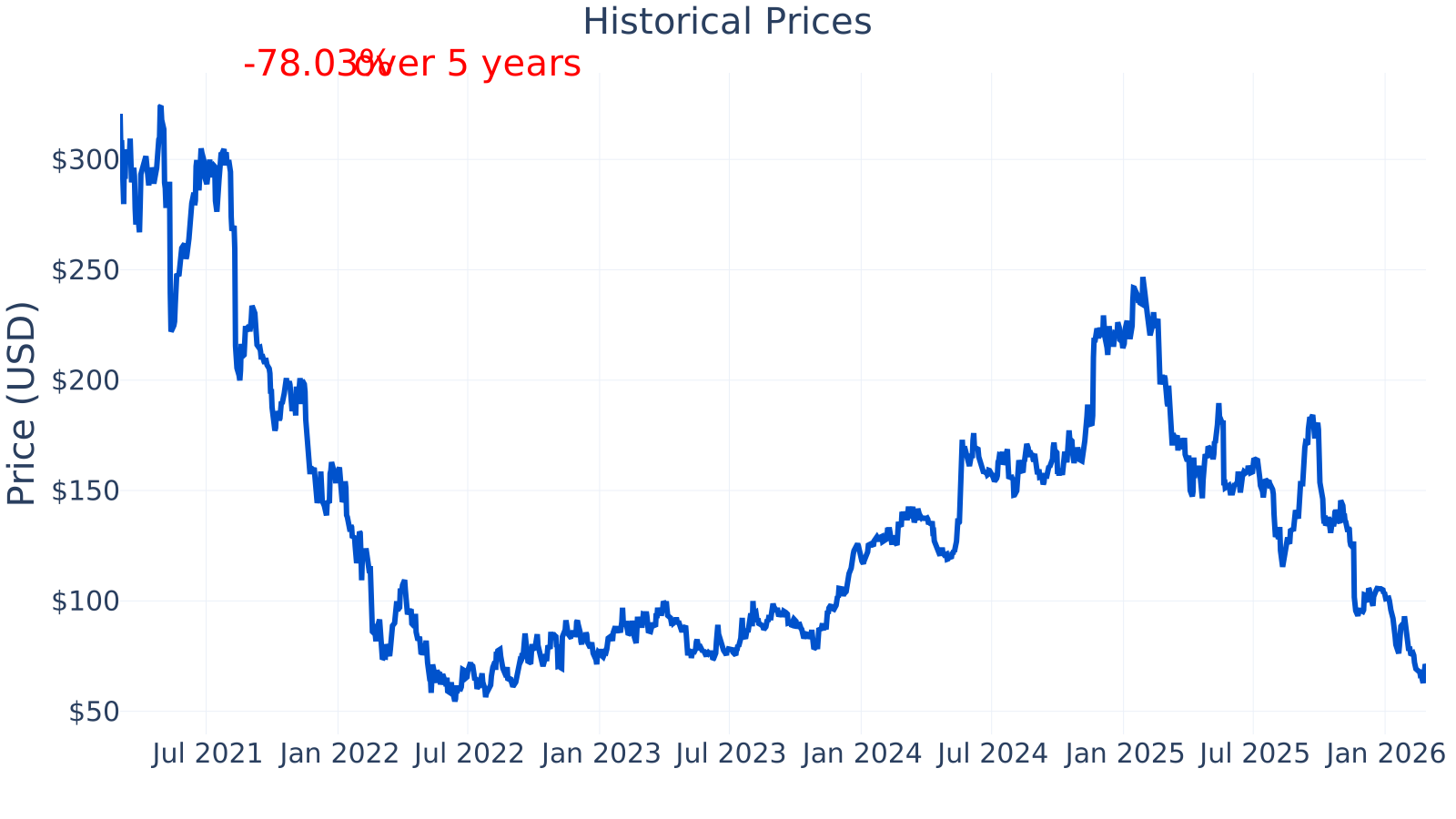
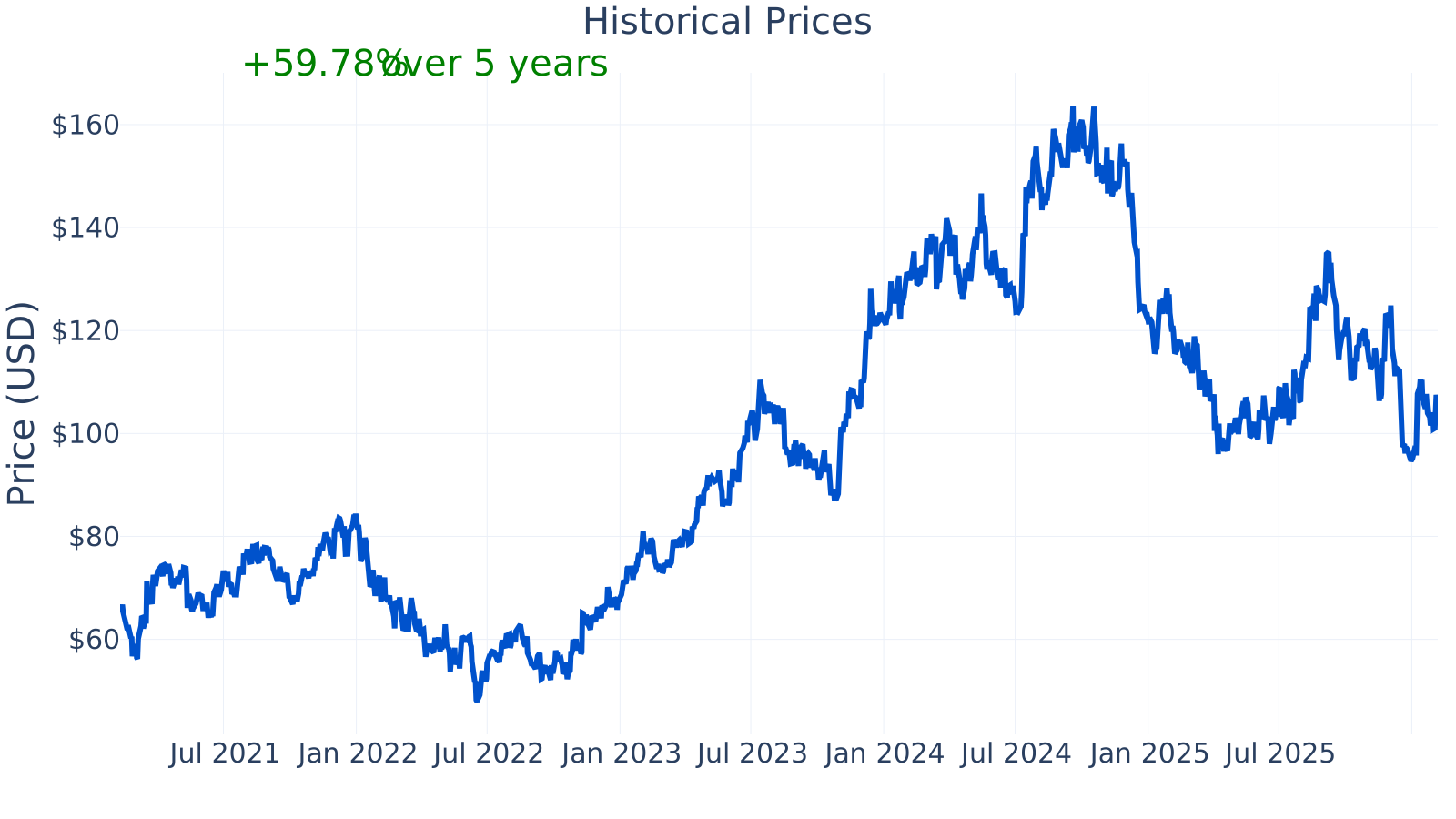
Lennar’s market capitalization is about $28.2B, and the stock’s beta of ~1.46 suggests it has tended to move more than the broader market (up and down). The current P/E ratio is ~13.37, slightly above the residential construction industry median of ~12.00 in the peer set shown.
Recent operating metrics shown here lean softer versus prior periods: profit margin is ~6.1% versus an industry median of ~8.5%, and year-over-year revenue growth is about -5.8% (industry median about -4.9%), indicating a modest contraction in the most recent snapshot. Balance-sheet leverage appears comparatively moderate: debt-to-equity is ~28.8% versus an industry median around 34.5%. Free cash flow over the trailing twelve months is shown as roughly $28.2M, which is low relative to the company’s size and highlights how working capital swings (notably land and inventory) can heavily influence cash generation in homebuilding.
Growth (Medium)
Homebuilding is a large, long-lived industry tied to household formation, employment, wages, and the availability of credit. Over long periods, demand is supported by demographics and the need to replace or add housing supply, but year-to-year results can be volatile because affordability is strongly influenced by mortgage rates and home prices.
Lennar’s strategy—focused on scale in building and land development, and on capturing additional economics through related services around the home transaction—can support growth when housing demand is healthy. Scale can matter in purchasing, standardizing plans, and managing large community pipelines, while in-house or affiliated mortgage/title services can improve the customer experience and help manage conversion from order to closing (though these areas are still cyclical and rate-sensitive).
The growth profile shown swings from strong expansion in 2021–2022 (often above +15% and at times near +30%) to a more uneven and recently negative pattern through 2025 (roughly -5% to -6% in the latest points). This kind of shift is typical for a cyclical business exposed to affordability and financing conditions.
Free cash flow is positive in each period shown, but it declines sharply by 2025 (about $1.6B in early 2025 and down to roughly $28M on the most recent trailing figure in the table). For homebuilders, cash flow can drop when the company invests more in land and inventory or when closing volumes and margins soften, so it is often best interpreted alongside inventory/land investment and profitability trends described in the annual report.
Risks (High)
This article is for informational purposes only and does not constitute financial advice. Some content is AI-generated. See Disclaimer