Stock Analysis · Zeta Global Holdings Corp (ZETA)
Overview
Zeta Global Holdings Corp is a marketing technology company. In simple terms, it sells software and services that help businesses find customers, personalize messages, and measure results across channels such as email, web, and other digital touchpoints. The company positions its offering around using large amounts of consumer and business signals to help clients make marketing decisions and run campaigns more efficiently.
Based on the company’s public filings, revenue is primarily generated from providing marketing-related software capabilities and services to business customers (often described in filings as platform-driven revenue and marketing services). Exact revenue mix percentages can vary by period and are typically detailed in the segment/disaggregation notes of the company’s annual report.
From a high level, the main revenue drivers commonly described in filings include:
- Platform / software subscription-type revenue (recurring usage and access to the company’s marketing platform)
- Marketing services / managed campaigns (execution of campaigns and related services for clients)
- Data-driven products and identity/activation capabilities (monetization of audience insights and targeting-related capabilities, as described in company disclosures)
The income statement pattern over the last few years shows a business that has been expanding revenue and gross profit while still reporting net losses, which is common among growth-oriented software and marketing technology firms that spend heavily on product development and go-to-market capabilities.
Across the years shown, total revenue rises substantially (about $458M in 2021 to about $1.305B in 2025). Gross profit also expands (about $238M to about $791M). Over the same period, operating losses narrow meaningfully (from roughly -$243M in 2021 to roughly -$33M in 2025), suggesting improving operating leverage even though profitability remains negative.
Key Figures
| Metric | Value | Industry ⓘ |
|---|---|---|
| Date | Mar 02, 2026 | |
| Context | ||
| Sector | Technology | |
| Industry | Software - Infrastructure | |
| Market Cap ⓘ | $4.17B | |
| Beta ⓘ | 1.26 | |
| Fundamental | ||
| P/E Ratio ⓘ | N/A | 24.58 |
| Profit Margin ⓘ | -2.41% | 6.79% |
| Revenue Growth ⓘ | 25.40% | 16.35% |
| Debt to Equity ⓘ | 24.49% | 26.59% |
| PEG ⓘ | 0.77 | |
| Free Cash Flow ⓘ | $185.09M | |
Zeta Global’s market capitalization is about $4.17B. The stock’s beta of 1.26 indicates it has tended to move more than the broader market (higher ups and downs). The company’s profit margin is about -2.41%, below the industry median of about 6.79%, meaning it is still slightly unprofitable on a net basis. On growth, year-over-year revenue growth is about 25.4%, above the industry median of about 16.35%. Leverage looks moderate: debt-to-equity is about 24.5%, close to the industry median (about 26.6%). The business is generating cash: trailing twelve-month free cash flow is about $185.1M. The PEG ratio of ~0.77 is a growth-adjusted valuation indicator, but it should be interpreted carefully because it depends on assumptions about future growth and earnings.
Growth (Medium)
Zeta Global operates in the broader marketing technology and customer data ecosystem, which is shaped by long-term trends such as the shift of advertising and customer engagement toward digital channels, increased focus on measurable outcomes (performance marketing), and the use of automation and analytics to personalize customer experiences at scale. These themes generally support continued demand for software that helps companies manage first-party customer relationships and run targeted campaigns.
A key question for long-term growth is whether Zeta can keep expanding revenue while improving profitability. The company’s recent trajectory shows fast top-line growth relative to its software infrastructure peer median and a large improvement in operating losses over time (as seen in the income statement flow above). If operating expenses grow more slowly than gross profit over time, profitability can move closer to break-even.
The year-over-year revenue growth trend remains positive across the periods shown, with growth rates often in the mid-20% to higher ranges, and the latest reading around 25.4%. This is higher than the industry median shown in the table (about 16.35%), indicating Zeta has recently been expanding faster than many peers in its classification.
Free cash flow improves strongly over the time shown, rising from about $16.2M (2021) to about $121.1M (2025) on a trailing twelve-month basis in the series provided, with the latest metric table showing $185.1M. Positive and growing free cash flow can matter for long-term resilience because it may help fund product investment and reduce reliance on external financing, even while net income remains negative.
Risks (High)
The biggest fundamental risk is that Zeta is not yet consistently profitable on a net income basis. Even though losses have narrowed significantly over recent years, a return to wider losses could happen if growth slows, customer acquisition becomes more expensive, or operating costs rise faster than revenue. Profitability also depends on how efficiently the company can scale sales and marketing efforts relative to gross profit.
The profit margin trend shows substantial improvement from very negative levels earlier in the series toward a much smaller loss recently (around -2.41% at the latest). However, the industry median is positive (about 6.79%), so Zeta still has a gap to close to reach typical peer profitability.
Another major risk comes from the nature of the market: marketing technology is highly competitive, and customers can be sensitive to budget cycles. If advertisers and brands reduce spending during weaker economic periods, growth can slow. Additionally, this space often requires continuous product improvement—falling behind in features, integrations, and measurement capabilities can reduce customer retention.
There are also important data and privacy considerations. Marketing platforms depend on using customer information and identity signals in compliant ways. Regulatory changes, platform policy changes, or limitations on tracking and identifiers can affect how well targeting and measurement tools perform, which can impact demand and pricing.
Financial leverage has come down dramatically over time. The debt-to-equity ratio declines from very high levels in 2021 to about 24.5% in the latest period shown, roughly in line with the industry median. Lower leverage generally reduces financial risk, but it does not eliminate operating risk tied to profitability and customer demand.
On competitive positioning, Zeta competes with a mix of large marketing clouds and specialized vendors. In broad terms, competitors can include major enterprise marketing suites and customer data platform providers, as well as other firms offering campaign execution, analytics, and audience activation. Larger competitors may have advantages in distribution, bundled offerings, and R&D scale, while smaller specialists may compete aggressively on specific features or price. Any durable advantage for Zeta would need to show up in measurable outcomes for customers (better performance, easier activation, stronger integrations) and in financial indicators such as retention, expanding gross profit dollars, and improving margins.
Valuation
For many companies, the price-to-earnings (P/E) ratio is a common valuation tool, but Zeta’s P/E is not meaningfully shown in the series provided (displayed as 0), which typically happens when earnings are negative or otherwise not comparable. In those situations, comparing P/E to the industry median (around 24.6 in the latest table) is not very informative for Zeta because the company has not produced consistent positive net earnings.
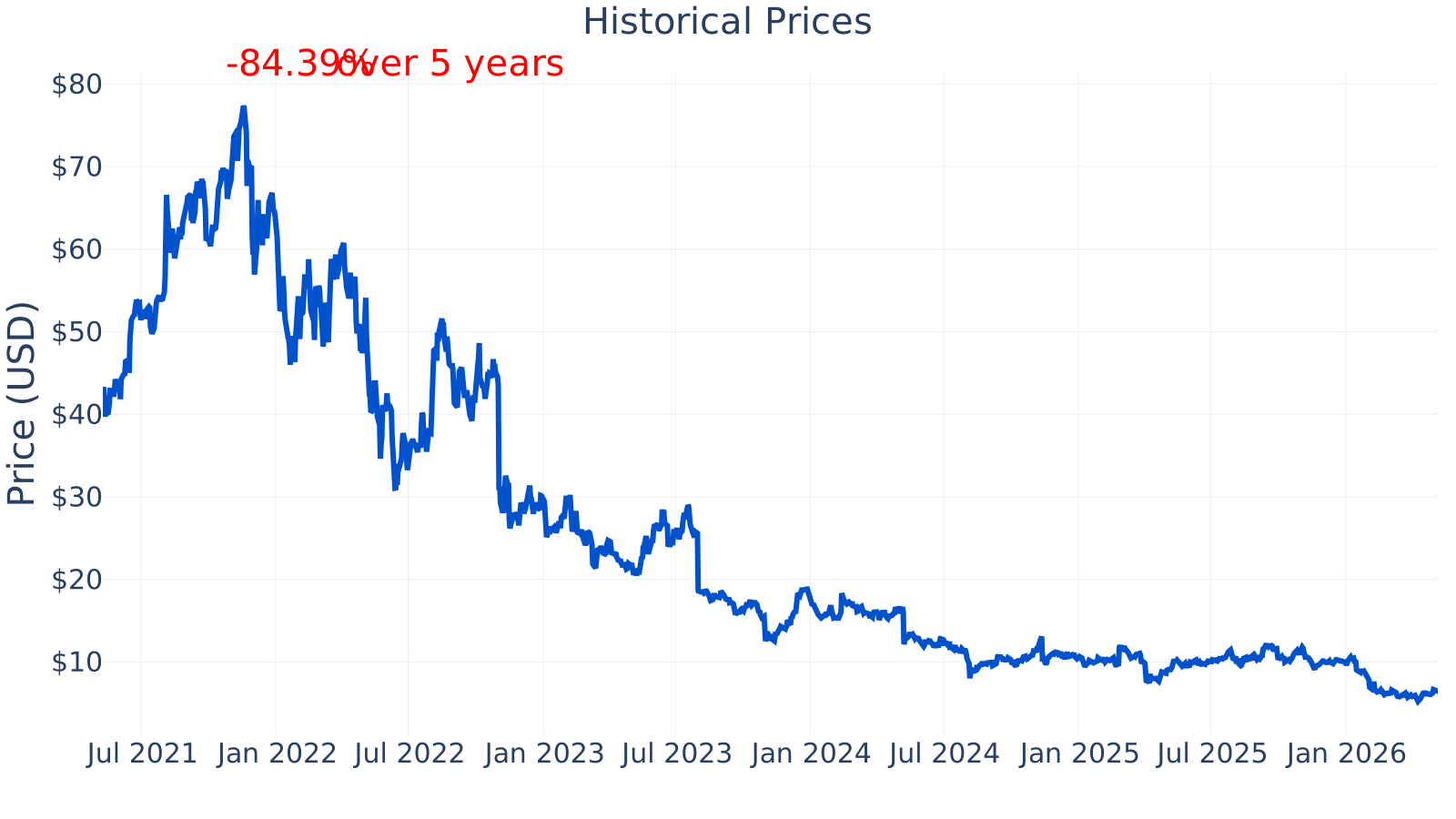
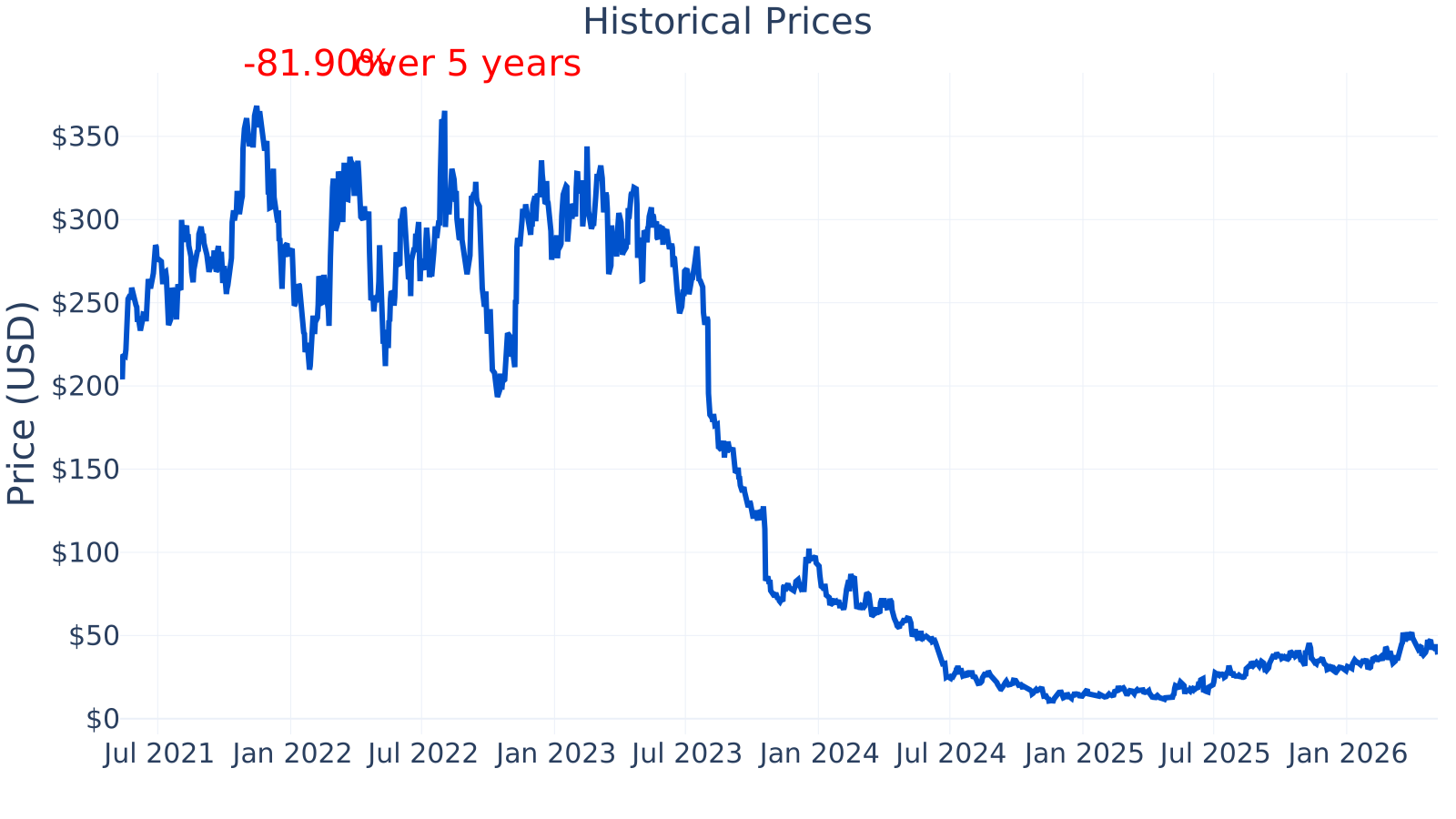
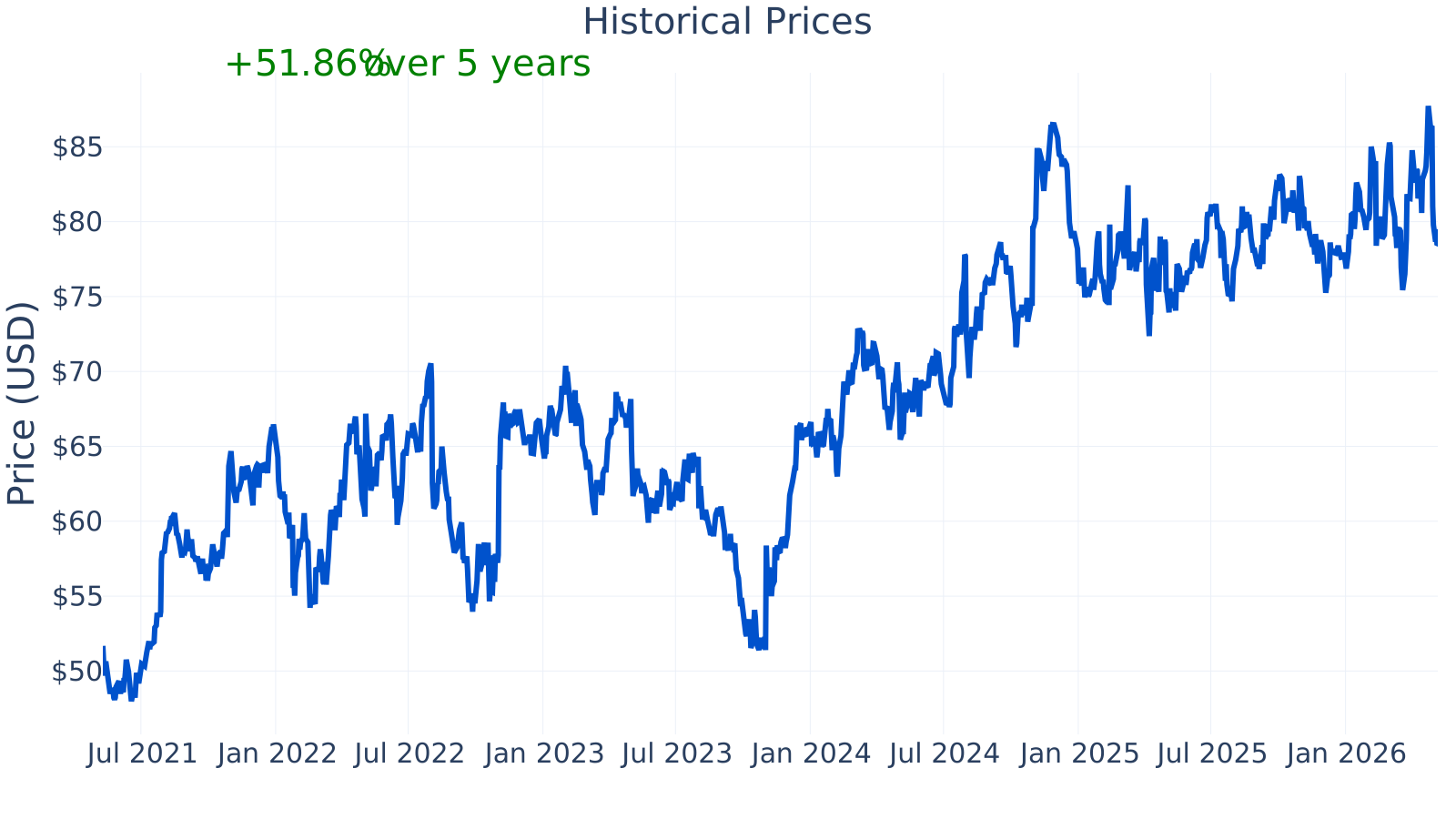
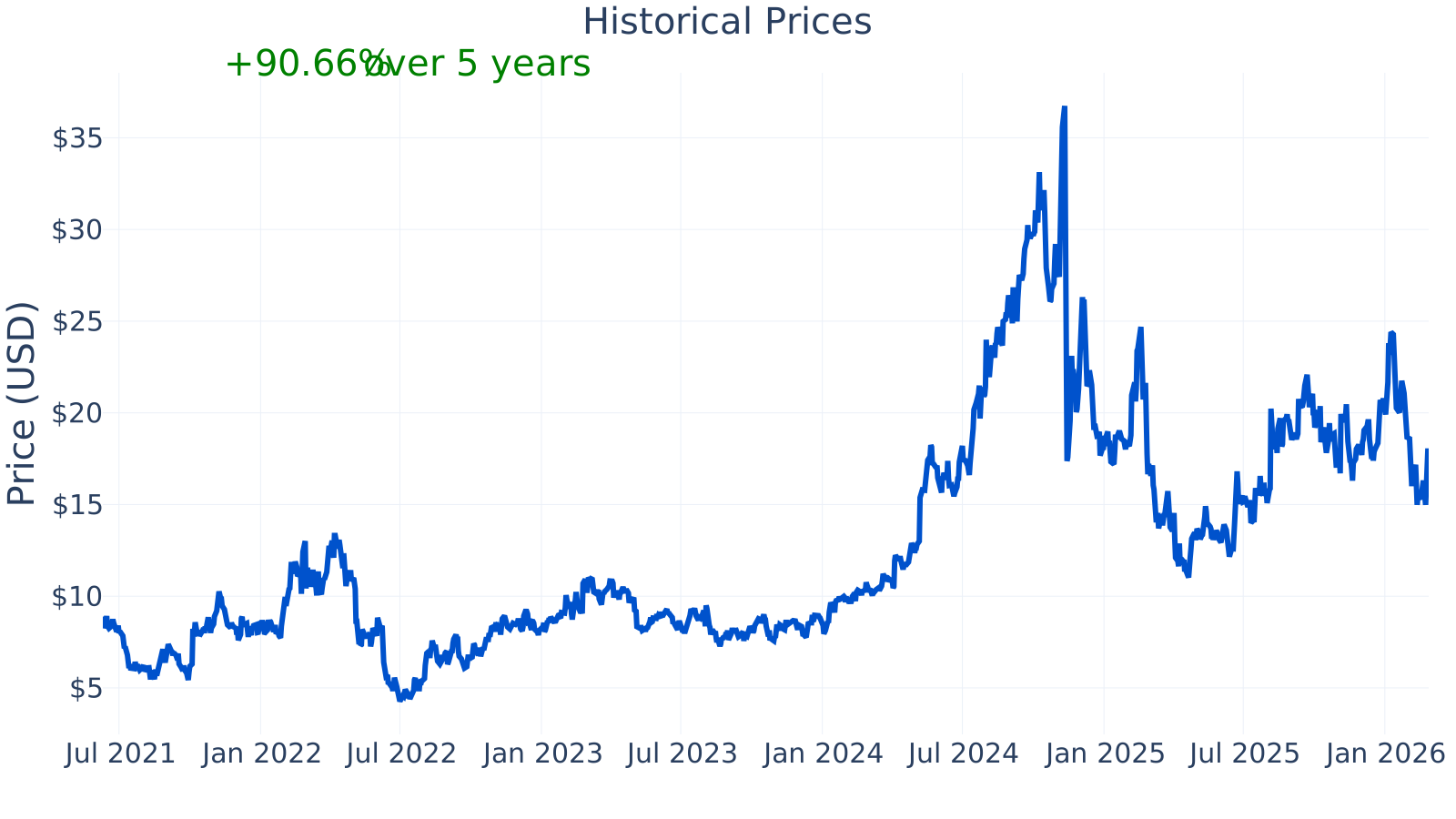
When a company is near break-even but still reporting a net loss, valuation discussions often rely more on business trajectory: revenue growth rate, gross profit expansion, cash generation, and the path of operating losses. Here, the context is mixed: revenue growth is higher than the industry median and free cash flow is positive, while net profitability remains slightly negative. The stock price history shown also indicates meaningful volatility over time, which can be consistent with a company where the market is frequently reassessing the pace of growth and the timeline to durable profitability.
Conclusion
Zeta Global is a marketing technology company that has grown revenue substantially over the past several years and has shown a clear improvement in operating results, alongside rising gross profit and positive free cash flow. At the same time, it remains modestly unprofitable on a net margin basis compared with a profitable peer median, and it operates in a competitive, fast-changing area where marketing budgets, customer retention, and data/privacy constraints can materially influence outcomes.
From a long-term perspective, the main points to monitor in future filings are whether revenue growth remains durable, whether operating losses continue to narrow into sustained profitability, and whether cash generation stays strong enough to fund ongoing product and sales investment without increasing financial strain.
Sources:
- SEC EDGAR — Zeta Global Holdings Corp Forms 10-K and 10-Q (annual and quarterly reports)
- Zeta Global Investor Relations — Earnings releases and shareholder materials (press releases)
- Wikipedia — “Zeta Global” (basic company background)
This article is for informational purposes only and does not constitute financial advice. Some content is AI-generated. See Disclaimer