Stock Analysis · indie Semiconductor Inc (INDI)
Overview
indie Semiconductor Inc (INDI) is a semiconductor company focused on the automotive market. In simple terms, it designs chips and software that help cars “see,” “sense,” and “connect.” Its products are generally aimed at advanced driver assistance systems (ADAS) and in-vehicle user experiences such as infotainment, connectivity, and sensor-based features. The company positions itself around long vehicle development cycles (design wins that can last for years) and the broader trend of vehicles using more electronics per car.
Revenue is generated primarily from selling semiconductor products into automotive programs through vehicle makers and their component suppliers (often called “tier-one” suppliers). In its filings, the company discusses multiple product categories (for example, sensing and connectivity), but a clean, stable percentage breakdown by category is not always presented in a simple, consistent way each period. For a beginner-friendly view, the practical revenue “buckets” are:
- Automotive semiconductor product sales (core revenue driver)
- Related software/engineering and other revenue (typically smaller and more variable)
The high-level takeaway is that the business is concentrated in automotive semiconductors rather than consumer devices or PCs, which means its demand drivers tend to be vehicle production, feature adoption (more chips per car), and long-term platform ramps rather than short consumer upgrade cycles.
Across recent years, revenue has increased significantly from earlier levels (for example, about $48.4M in 2021 to about $217.4M in 2025), but operating costs remain large—especially research & development—which helps explain why net income has stayed negative over the period shown.
Key Figures
| Metric | Value | Industry ⓘ |
|---|---|---|
| Date | Jun 01, 2026 | |
| Context | ||
| Sector | Technology | |
| Industry | Semiconductors | |
| Market Cap ⓘ | $1.05B | |
| Beta ⓘ | 2.73 | |
| Fundamental | ||
| P/E Ratio ⓘ | N/A | 69.27 |
| Profit Margin ⓘ | -69.35% | 7.99% |
| Revenue Growth ⓘ | 2.60% | 21.10% |
| Debt to Equity ⓘ | 131.72% | 19.33% |
| PEG ⓘ | N/A | |
| Free Cash Flow ⓘ | -$65.33M | |
The company’s market capitalization is about $1.05B. The stock’s beta of ~2.73 suggests it has historically moved much more than the broader market (higher volatility).
Profitability is currently a major gap versus many semiconductor peers: the latest profit margin shown is about -69.35% compared with an industry median around +7.99%. Growth has also slowed recently: the latest year-over-year revenue growth shown is about +2.6% versus an industry median near +21.1%. Leverage is elevated: debt-to-equity is about 131.7% compared with an industry median around 19.3%. Free cash flow (trailing twelve months) is negative at about -$65.3M, meaning the business has been using cash rather than generating it over that period.
Growth (Medium)
The company operates in an area that has strong long-term demand drivers: modern vehicles are adding more electronics for safety (driver assistance), convenience (connectivity and infotainment), and electrification (more sensors and control). This environment can support long product lifecycles and recurring production revenue once a chip is designed into a vehicle platform.
Strategically, indie’s emphasis on automotive-focused chips and long-term customer programs can make sense for building multi-year revenue streams. A key concept for this industry is that winning a place in a vehicle platform often leads to shipments over several model years—however, the timing can be uneven because car programs ramp gradually and are influenced by the overall auto production cycle.
Revenue growth was extremely high in earlier periods (often well above 50% year-over-year), then decelerated sharply and hovered around flat to slightly positive in the most recent quarters shown (about +2.6% most recently). This pattern can occur when a company moves from a small base into a larger base, when customer ramps take longer than expected, or when the broader automotive supply chain slows.
Free cash flow has remained negative across the full period shown (roughly -$65M to -$104M trailing twelve months). The most recent figure (about -$65.3M) is less negative than some earlier periods, but the overall message is that scaling has not yet translated into sustained cash generation.
Risks (High)
The most important risk is that the company is still in a phase where it spends heavily to develop products and win long-duration automotive programs, but it has not yet produced consistent profits. The profit margin trend has improved from extremely negative levels earlier on, but it remains materially below the semiconductor industry’s median.
The margin series shows losses throughout the period, and the most recent profit margin (about -69.8%) remains far from the industry median (about +5.5%). This typically means the company is still absorbing high operating costs relative to its current revenue base (including R&D and operating expenses), and it may be sensitive to delays in customer ramps or pricing pressure.
Balance sheet risk is also notable. Automotive chip design cycles can be long, so higher leverage can become a constraint if the path to cash generation takes longer than expected.
Debt-to-equity rose markedly over time and is now about 131.7%, far above the industry median near 14.9% at the latest point shown. Higher leverage can amplify outcomes (positive or negative) and may reduce flexibility during slower demand periods or if additional investment is required.
Competitive pressure is another core risk. Automotive semiconductors are contested by much larger, well-established companies with deep customer relationships, broad product portfolios, and scale advantages in manufacturing and R&D. In general terms, indie competes against major automotive-focused chip suppliers (for example, companies known for automotive microcontrollers, analog/power, connectivity, and sensor solutions) as well as specialized chip designers. Relative to those large incumbents, indie is typically a smaller player, which can be an advantage in focus and speed but a disadvantage in pricing power, diversification, and resilience during downturns.
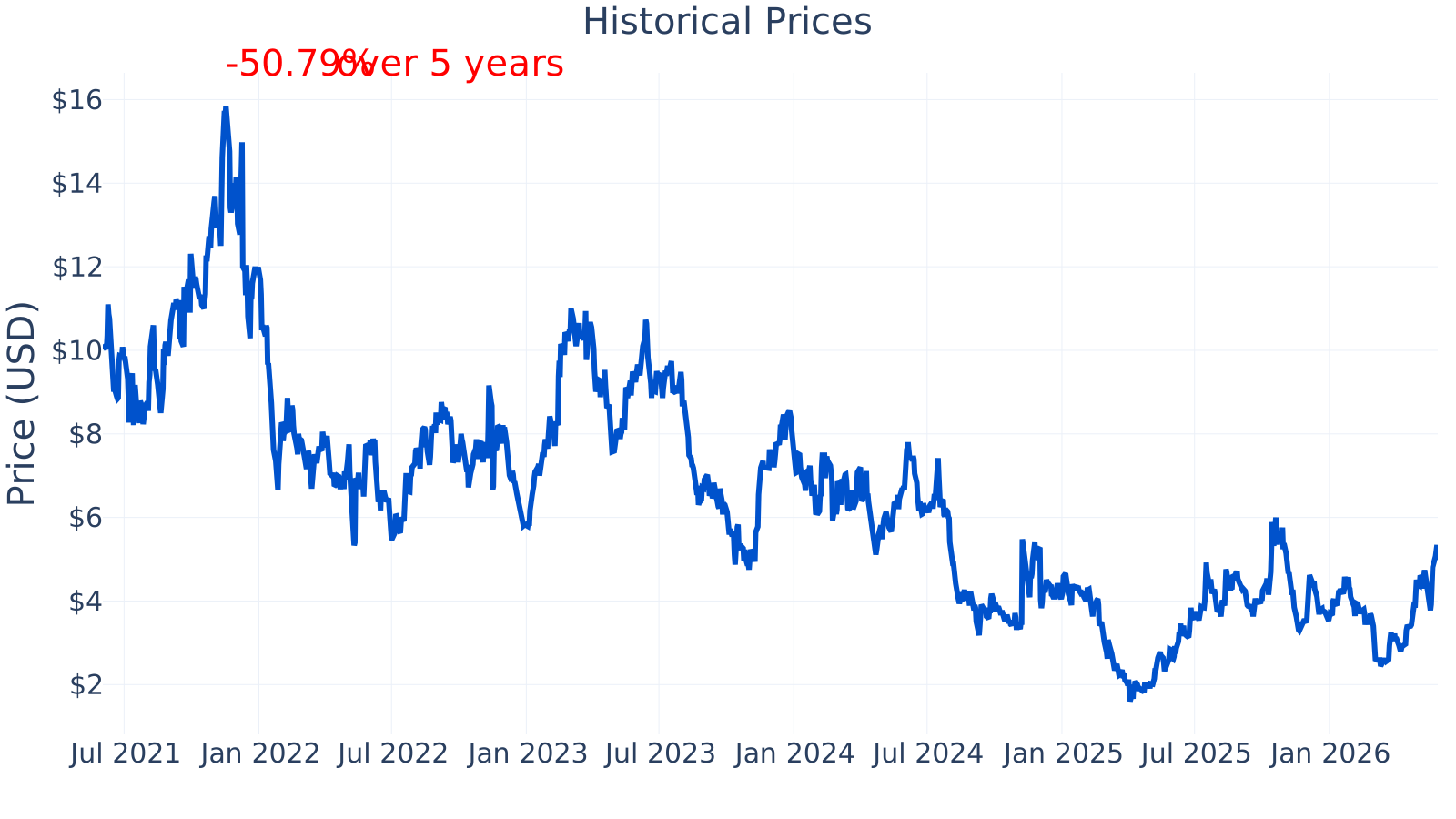
Finally, the stock has historically shown significant price volatility (consistent with the high beta). That can matter for long-term holders because large drawdowns may occur even when company progress is gradual and measured over multi-year automotive cycles.
Valuation
A traditional price-to-earnings (P/E) approach is difficult to apply here because the company has had negative earnings, which often makes P/E not meaningful or not shown. In contrast, many profitable semiconductor peers do have usable P/E ratios (the industry median values shown on the chart are generally in the tens, and the latest industry median listed is about 69.27).
In practice, when a company is not profitable and has negative free cash flow, the market price tends to be influenced more by expectations about future revenue scale, future margins, and the timing of turning cash-flow positive, rather than by current earnings. That makes valuation more sensitive to changes in growth outlook and to execution milestones (such as customer program ramps and cost control).
Conclusion
indie Semiconductor operates in an automotive semiconductor segment supported by long-term trends such as increased vehicle electronics content, connectivity, and driver-assistance features. The company has expanded revenue materially versus earlier years, but the most recent period shows much slower growth and continuing losses, alongside negative free cash flow.
The main factual tension is clear: the business is aligned with structural automotive technology growth, yet current financial metrics show it has not reached self-funding profitability, and leverage has increased to a level well above the industry median. As a result, the long-term outcome depends heavily on whether future automotive program ramps and operating discipline can meaningfully improve margins and cash generation while navigating strong competition from larger semiconductor suppliers.
Sources:
- SEC EDGAR — indie Semiconductor Inc filings (Form 10-K, Form 10-Q)
- indie Semiconductor Investor Relations — SEC filings and shareholder materials (company-hosted)
- Wikipedia — “indie Semiconductor” (basic company background)
This article is for informational purposes only and does not constitute financial advice. Some content is AI-generated. See Disclaimer