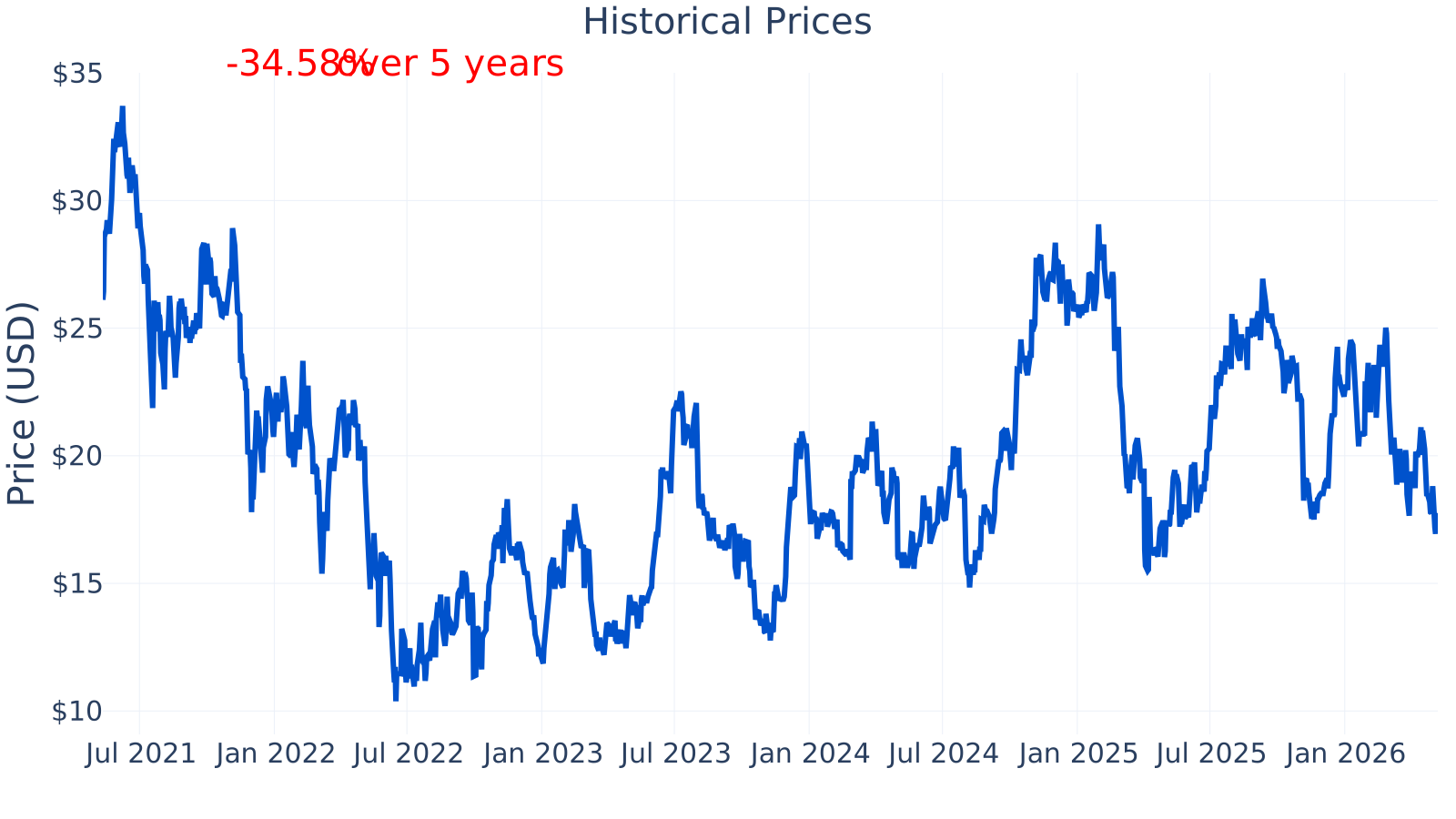
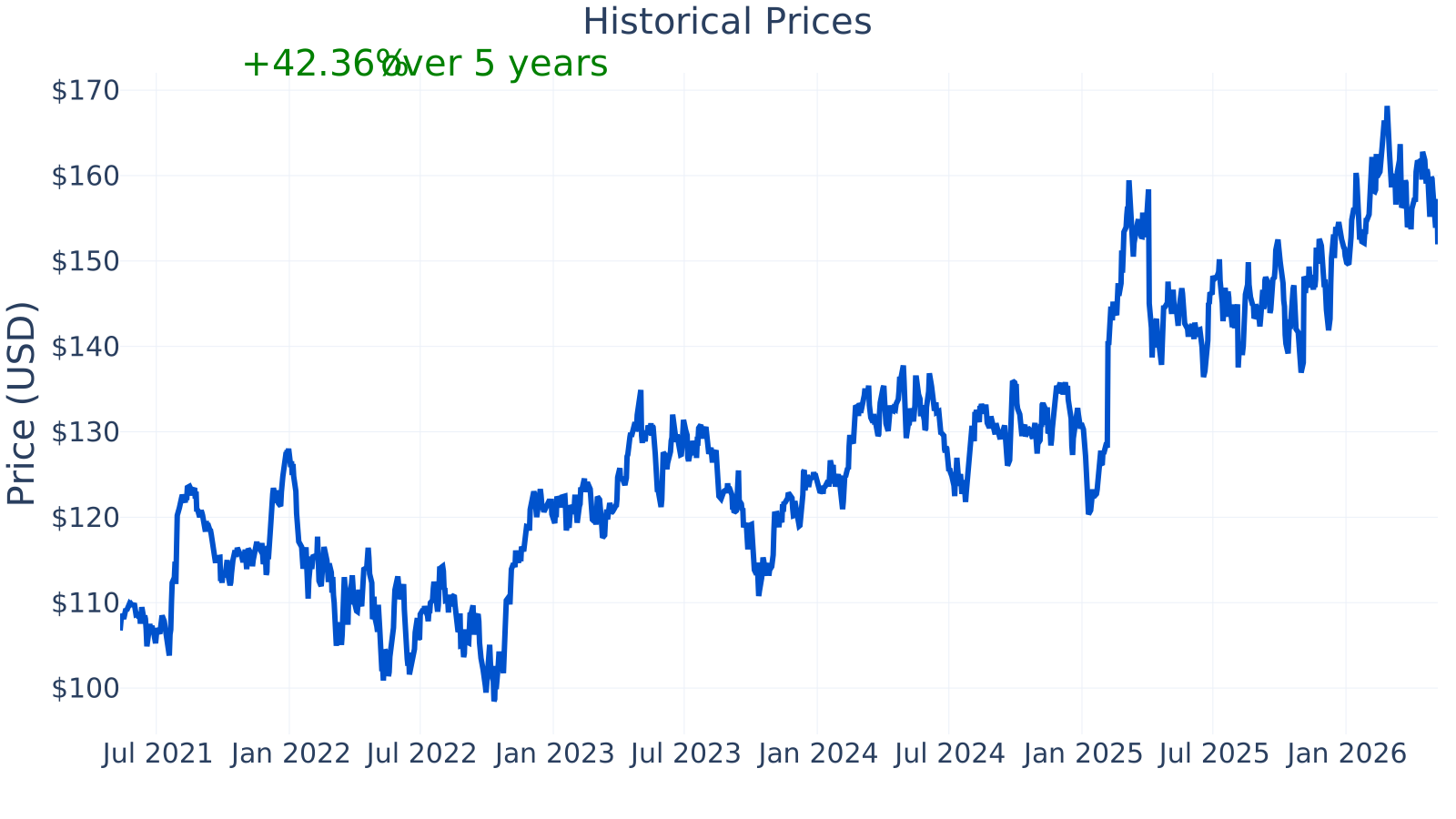
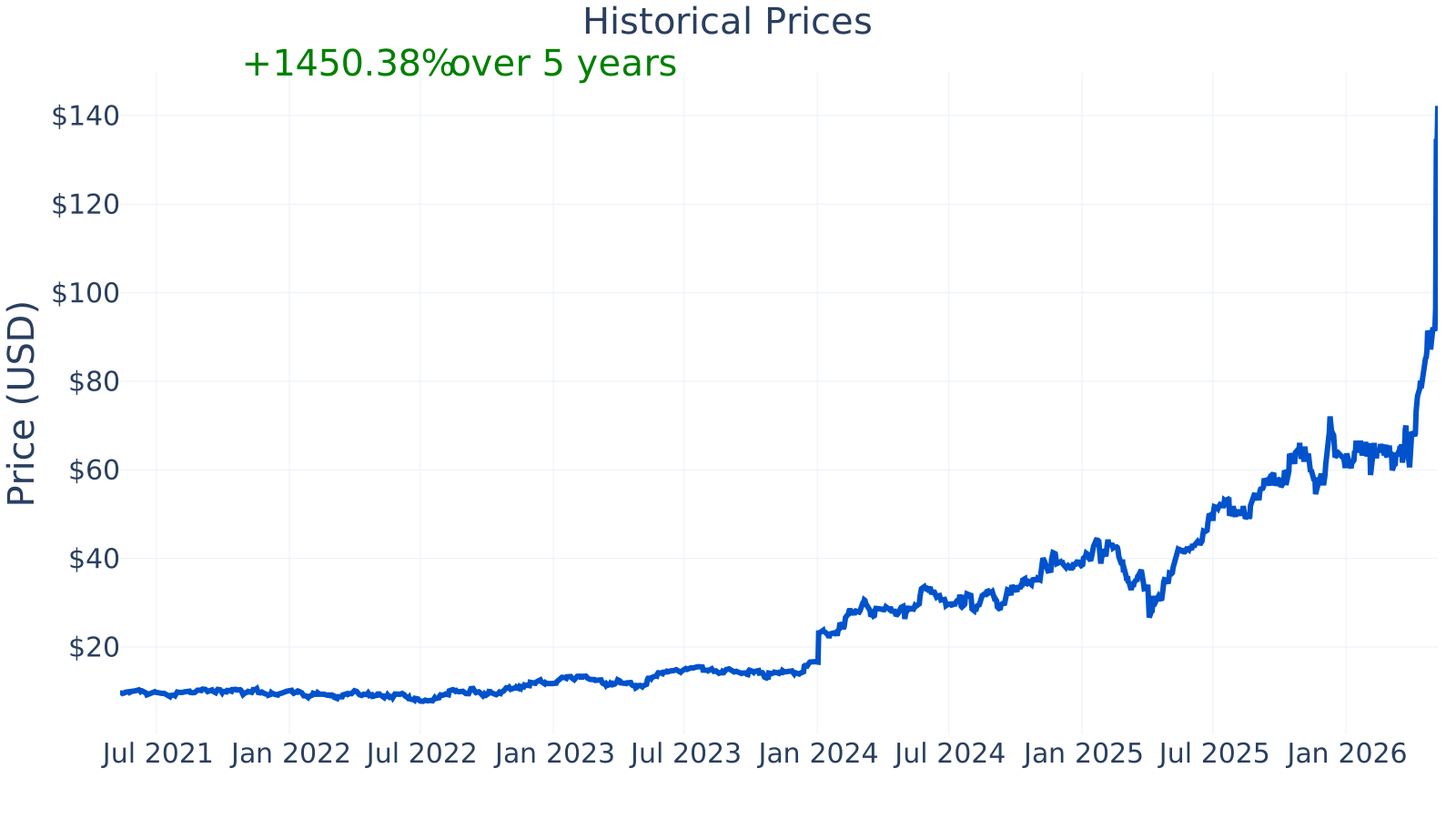
Stock Analysis · CEVA Inc (CEVA)
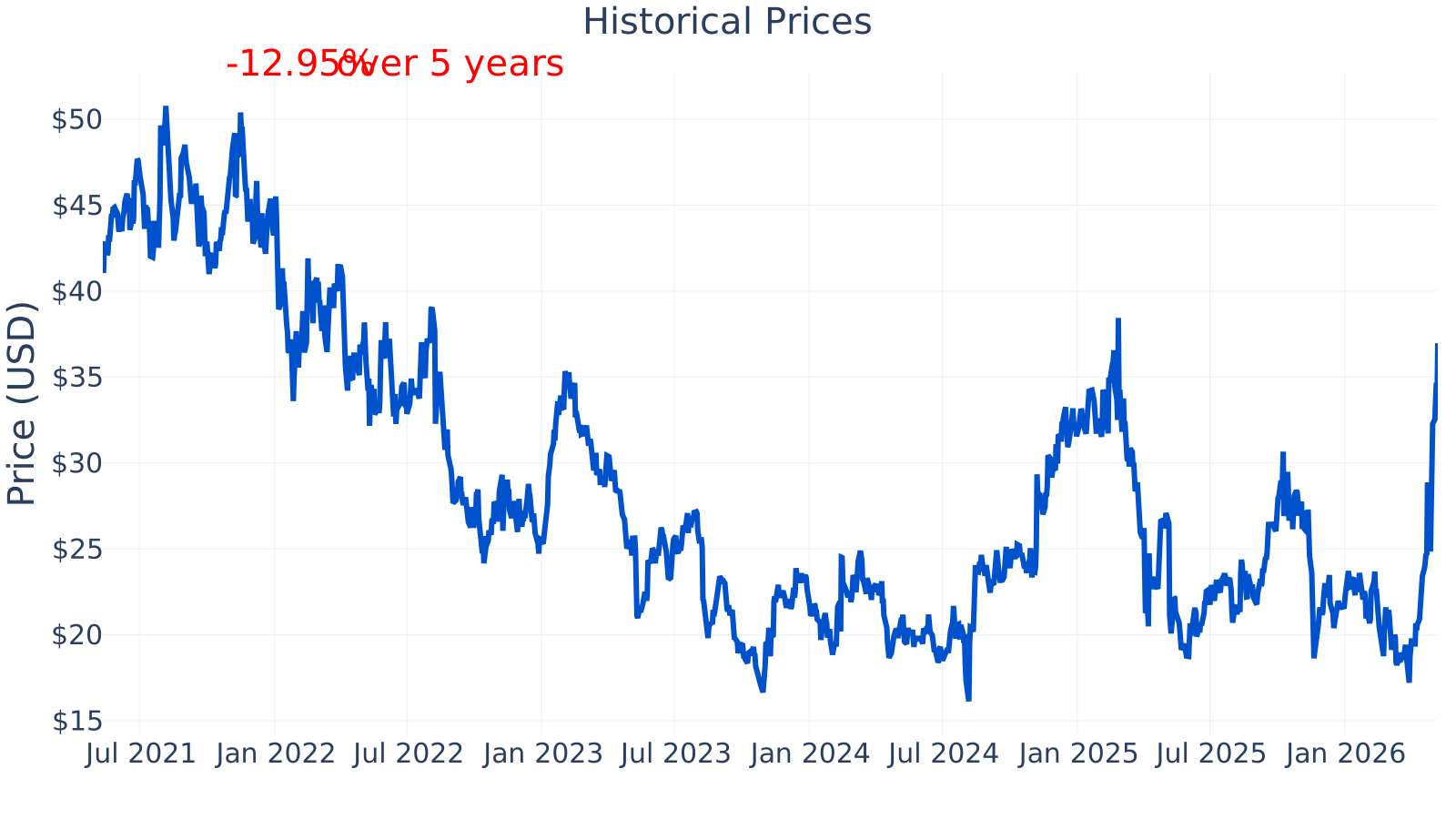
Overview
CEVA Inc. is a technology company that develops and licenses intellectual property (often called “IP”) used inside chips. Instead of manufacturing semiconductors, CEVA provides reusable building blocks and software that chipmakers can integrate into their own designs. This model is commonly described as “fabless” and “licensing-based”: customers pay to use CEVA’s technology and, in many cases, pay additional fees as chips ship to end markets.
CEVA’s IP is mainly focused on making devices communicate and process signals efficiently, which is especially relevant for smartphones, connected devices (IoT), automotive systems, and other embedded applications. In practice, its solutions can support areas such as wireless connectivity (for example, cellular and short-range radio) and signal processing workloads (for example, audio/voice, computer vision, or sensor data processing) depending on the specific product family and customer implementation described in the company’s filings.
In a licensing business like CEVA’s, revenue is typically tied to (1) up-front customer agreements and (2) ongoing payments that depend on how many chips ship using CEVA’s IP. Based on how the company describes its business in filings, the main sources of revenue are generally:
- Royalty revenue (recurring, driven by customers’ chip shipment volumes)
- License and related revenue (often up-front and/or milestone-based)
- Services and other revenue (typically smaller; may include support or customization depending on contract terms)
Percentages by category can vary meaningfully by year and are typically provided in the company’s annual report and footnotes; when reviewing CEVA, those splits help explain whether results are being driven by new design activity (licenses) or by end-market demand (royalties).
Over the last several years, revenue has fluctuated within a relatively narrow band (about $97M–$121M from 2021–2025), while operating expenses remained high and heavily weighted to research and development. This mix helps explain why net income has been negative in recent years despite consistently positive gross profit.
Key Figures
| Metric | Value | Industry ⓘ |
|---|---|---|
| Date | May 11, 2026 | |
| Context | ||
| Sector | Technology | |
| Industry | Semiconductors | |
| Market Cap ⓘ | $1.03B | |
| Beta ⓘ | 1.94 | |
| Fundamental | ||
| P/E Ratio ⓘ | N/A | 61.55 |
| Profit Margin ⓘ | -9.71% | 8.93% |
| Revenue Growth ⓘ | 7.10% | 20.10% |
| Debt to Equity ⓘ | 9.07% | 17.27% |
| PEG ⓘ | 3.70 | |
| Free Cash Flow ⓘ | -$6.28M | |
CEVA’s market capitalization is about $1.03B. The stock’s beta of 1.94 indicates it has historically moved more than the broader market (higher volatility). Profitability is currently negative, with a net profit margin of about -9.7% versus an industry median near +8.9%. Year-over-year revenue growth is positive at about +7.1%, but below the industry median of roughly +20.1%. Leverage looks modest: debt-to-equity is ~9.1% versus an industry median around 17.3%. Free cash flow over the trailing twelve months is negative (~-$6.3M), which matters because it indicates the business did not generate cash after operating needs and capital spending over that period.
Growth (Medium)
CEVA operates in the semiconductor IP ecosystem, which is connected to long-run trends such as more connected devices, increasing compute needs at the edge (devices doing more processing locally), and expanding electronics content in vehicles and industrial systems. These trends can support demand for communication and signal-processing building blocks—areas where CEVA positions its portfolio in its SEC filings.
The company’s strategy—investing heavily in engineering and then licensing the resulting technology—can scale well if adopted broadly by customers. If more chip programs include CEVA IP and those chips ship in high volume, royalty revenue can become a meaningful recurring stream. However, the timing is often uneven because chip design cycles are long, and customer product success ultimately drives shipment volumes.
Revenue growth has been volatile over the past several years, including periods of contraction followed by recovery. The most recent reading shows a return to positive growth (about +7.1% year over year), but it remains below the broader industry median in the table. For a licensing model, this pattern can reflect changes in customer licensing activity, end-market demand affecting royalties, and the normal lumpiness of semiconductor design wins and product ramps.
Free cash flow has also swung between positive and negative in recent periods, with the latest trailing twelve months at roughly -$6.3M. This matters for long-term business compounding because sustained negative free cash flow can reduce flexibility over time (for example, limiting investment capacity or requiring tighter expense control), while sustained positive free cash flow can support reinvestment without external financing.
Potential catalysts discussed in company materials for businesses like CEVA typically include new customer license agreements, new chip “design wins” that later convert into royalties when products launch, and broader recovery in relevant end markets. The key point is that the path from signing to high-volume royalties can take time, so reported results may lag underlying design activity.
Risks (High)
CEVA’s main risks include the challenge of maintaining profitability while funding large ongoing research and development. The company has reported negative net margins in recent years, which increases dependence on execution: management needs either higher revenue (especially higher-margin royalties) and/or improved operating efficiency to move toward sustained profitability.
The profit margin trend has been mostly negative for an extended period, and the latest value (about -9.7%) is below the industry median (about +5.3% at the most recent point shown in the margin series). This gap highlights a key business risk: even with solid gross profit, operating expenses—particularly engineering—have been large relative to revenue.
Financial leverage appears relatively low compared with the industry, with debt-to-equity around 9.1% most recently (industry median around 16.0%–17.3% depending on the reference point). Lower leverage can reduce financial risk, but it does not remove the core operating risk tied to profitability and cash generation.
Competition is another important consideration. Semiconductor IP and digital signal processing are crowded fields that can include large IP vendors, specialized DSP and connectivity providers, and in-house design teams at major chip companies. Competitors may bundle IP, offer broad platforms, or leverage scale and customer relationships. CEVA’s competitive positioning generally depends on the performance, power efficiency, software ecosystem, and time-to-market benefits of its IP, as well as its ability to keep pace with evolving standards and customer requirements.
Customer concentration and end-market exposure can also affect results. With royalties tied to shipment volumes, a slowdown or lost socket in a large customer program can impact revenue. Additionally, changes in wireless standards, shifts in device architecture, or customers choosing alternative solutions can reduce future royalty streams. These risks are typically discussed in the “Risk Factors” section of the company’s annual report.
Valuation
A price-to-earnings (P/E) ratio is often used as a quick valuation tool, but it becomes less informative when earnings are very small, volatile, or negative. In the P/E history shown, CEVA’s P/E is often not meaningfully displayed (frequently near zero on the chart due to how extreme or negative values are handled), which is consistent with a period where net income has been negative or not stable enough for a conventional P/E comparison.
In that context, valuation discussions often shift toward other reference points such as revenue scale, the trajectory of operating margins, and whether free cash flow is improving. The table also shows a PEG ratio of ~3.7, which is a growth-adjusted metric that can be difficult to interpret when earnings are not stable. Overall, the most important valuation question for a licensing business like CEVA tends to be whether the company can convert R&D investment into higher recurring royalties and sustainably improved profitability over time.
Conclusion
CEVA is a semiconductor IP licensing company whose business model can benefit from long-run demand for connectivity and on-device processing. Its revenue base has shown periods of recovery after downturns, but growth has been uneven and has recently trailed the industry median. At the same time, profitability has remained negative, and free cash flow has been slightly negative over the trailing twelve months, indicating that the current scale of revenue has not consistently covered operating costs and investment needs.
The company’s balance-sheet leverage appears modest relative to the industry, which can help reduce financial strain, but the central long-term factors to monitor remain operational: revenue momentum (especially royalties), the ability to control costs while continuing to innovate, and evidence that new customer adoption is translating into sustained cash generation.
Sources:
- SEC EDGAR — CEVA Inc. Form 10-K (Annual Report) (Business description, revenue model, risk factors)
- SEC EDGAR — CEVA Inc. Form 10-Q (Quarterly Reports) (Updates on operations and financial statements)
- CEVA Inc. Investor Relations — SEC filings and shareholder materials (company-hosted)
- Wikipedia — “CEVA, Inc.” (basic company background)
This article is for informational purposes only and does not constitute financial advice. Some content is AI-generated. See Disclaimer