Stock Analysis · Norwegian Cruise Line Holdings Ltd (NCLH)
Overview
Norwegian Cruise Line Holdings Ltd (NCLH) is a global cruise company. It operates three main cruise brands—Norwegian Cruise Line, Oceania Cruises, and Regent Seven Seas Cruises—covering contemporary, premium, and luxury offerings. The company earns money by selling cruise vacations and then generating additional spending onboard (for example, beverages, specialty dining, excursions, spa services, and other onboard activities).
In its reporting, NCLH typically groups revenue into two broad categories:
- Passenger ticket revenue (the base cruise fare)
- Onboard and other revenue (spending during the cruise and certain other items)
Exact percentages can change by period depending on itinerary mix, occupancy, and onboard spending patterns, but these two categories are the core drivers described in company filings.
Over recent years, the company’s revenue rebounded sharply from pandemic-era lows, and operating income turned positive again. A notable ongoing drag is interest expense, which remains meaningful and reflects the company’s high debt load.
Key Figures
| Metric | Value | Industry ⓘ |
|---|---|---|
| Date | Mar 09, 2026 | |
| Context | ||
| Sector | Consumer Cyclical | |
| Industry | Travel Services | |
| Market Cap ⓘ | $9.13B | |
| Beta ⓘ | 2.04 | |
| Fundamental | ||
| P/E Ratio ⓘ | 14.42 | 25.63 |
| Profit Margin ⓘ | 4.31% | 8.78% |
| Revenue Growth ⓘ | 6.40% | 12.00% |
| Debt to Equity ⓘ | 660.95% | 96.47% |
| PEG ⓘ | 0.48 | |
| Free Cash Flow ⓘ | -$1.17B | |
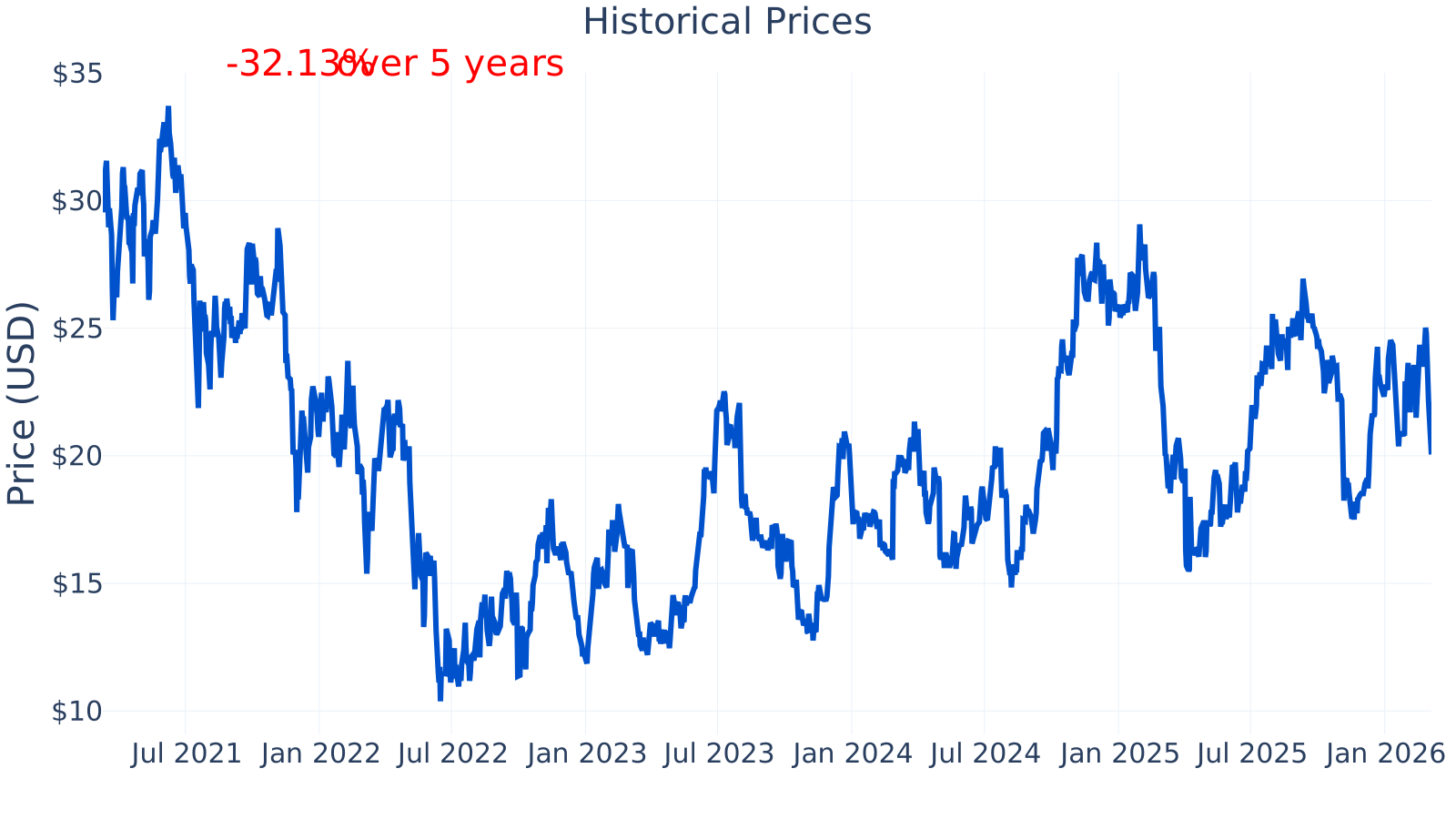
NCLH’s market capitalization is about $9.1B. The stock’s beta (~2.04) indicates it has tended to move more than the broader market, which often happens with economically sensitive travel companies.
Profitability and growth are positive but not standout versus industry medians in the table: profit margin ~4.3% versus an industry median near 8.8%, and year-over-year revenue growth ~6.4% versus an industry median near 12%. The most visible balance-sheet difference is leverage: debt-to-equity ~661% compared with an industry median near 96%, highlighting a substantially higher reliance on debt than many peers.
Free cash flow over the trailing twelve months is negative (about -$1.17B), meaning that after operating cash flows and capital spending, cash generation has not yet consistently covered outflows. For a cruise operator, this is often influenced by ship-related spending cycles and debt costs, but it still matters because it affects deleveraging capacity.
Growth (Medium)
The cruise business is generally tied to long-term travel demand and consumer discretionary spending. Over time, the industry benefits when households have confidence and income to spend on vacations, and when travel infrastructure and destination offerings expand. At the same time, cruises are cyclical: demand can soften quickly in recessions or periods of high travel costs.
NCLH’s strategy centers on operating multiple brands that target different customer segments (mainstream through luxury), working to improve onboard revenue, and using capacity and itinerary planning to optimize pricing. The company also continues managing its fleet and deployment, which can influence both demand and cost efficiency.
The year-over-year revenue growth pattern reflects a sharp rebound from pandemic-disrupted periods, followed by normalization to more modest growth rates. The latest figure shown is about 6.4%, which suggests the business has moved past the “reopening surge” phase and is now more dependent on typical pricing, occupancy, and onboard spending improvements.
Free cash flow has improved markedly compared with earlier periods (less negative than the steep cash burn seen in 2021–2022), but it remains below zero in the most recent trailing period. A key long-term growth support would be sustained positive free cash flow, because it can enable debt reduction and more financial flexibility across travel cycles.
Risks (High)
Cruise operators face a mix of demand, cost, and financial risks. Demand is sensitive to the economy and consumer sentiment, and it can be affected by geopolitical events, health-related disruptions, or changes in travel preferences. On the cost side, fuel and labor are major inputs, and itinerary changes or port-related disruptions can pressure margins.
The most prominent company-specific risk is leverage. NCLH’s debt-to-equity is shown around 661%, far above the industry median near 96%. While the metric can be influenced by accounting equity levels, the overall message is the same: the capital structure is heavily debt-oriented. Higher leverage can amplify outcomes—helpful in strong demand periods, but more difficult when demand softens or refinancing becomes more expensive.
Margins have recovered from deeply negative levels earlier in the decade to positive territory, but the latest profit margin shown is about 4.3%, below the industry median near 8.8%. This suggests that while profitability has improved, there may still be structural headwinds such as interest expense, operating costs, and the competitive pricing environment.
Competitive positioning is shaped by brand strength, onboard experience, itinerary breadth, distribution, and cost efficiency. NCLH is a major global player, but it is not the largest cruise operator. The competitive set commonly includes:
- Carnival Corporation
- Royal Caribbean Group
- MSC Cruises (privately held)
NCLH’s differentiation is often discussed in terms of its multi-brand approach (including premium and luxury brands) and its onboard product positioning. However, scale advantages in cruising can matter (purchasing, marketing reach, and fleet deployment flexibility), and larger competitors may have advantages in certain routes, ship pipeline options, or cost absorption during downturns.
Valuation
Based on the latest metric shown, NCLH’s P/E ratio is about 14.4, which is below the industry median near 25.6. Historically in the chart, the P/E ratio varies widely across periods, which can happen when earnings are recovering, when profitability is volatile, or when investors are trying to price in uncertain forward conditions.
Interpreting valuation for a cruise operator benefits from pairing the P/E ratio with financial risk and cash generation. NCLH’s lower P/E than the industry median may reflect factors such as higher leverage and still-developing free cash flow. In other words, a lower earnings multiple can coexist with higher balance-sheet risk if the market is discounting that risk.
The PEG ratio (~0.48) shown in the table is a growth-adjusted metric that can look low when earnings growth is expected or when the current P/E is compressed. However, PEG ratios can be less reliable when earnings are still normalizing and when leverage and interest costs play a large role in net income.
Conclusion
Norwegian Cruise Line Holdings is a large, well-known cruise operator with a multi-brand portfolio that spans mainstream to luxury cruising. The company’s results show a clear operational recovery from pandemic-era disruption, with revenue and profitability returning to positive levels and margins improving substantially from prior losses.
The central long-term trade-offs visible in the fundamentals are financial: leverage remains high relative to industry norms, interest expense is a meaningful ongoing cost, and free cash flow in the latest trailing period is still negative. In practical terms, long-term outcomes depend heavily on sustained travel demand, disciplined pricing and cost control, and the company’s ability to convert the recovery into durable cash generation that can reduce balance-sheet pressure over time.
Sources:
- U.S. Securities and Exchange Commission (SEC EDGAR) — Norwegian Cruise Line Holdings Ltd filings (Form 10-K, Form 10-Q)
- Norwegian Cruise Line Holdings Ltd — Investor Relations materials and press releases (business description and reporting categories)
- Wikipedia — “Norwegian Cruise Line Holdings” (basic company background and brand overview)
This article is for informational purposes only and does not constitute financial advice. Some content is AI-generated. See Disclaimer


