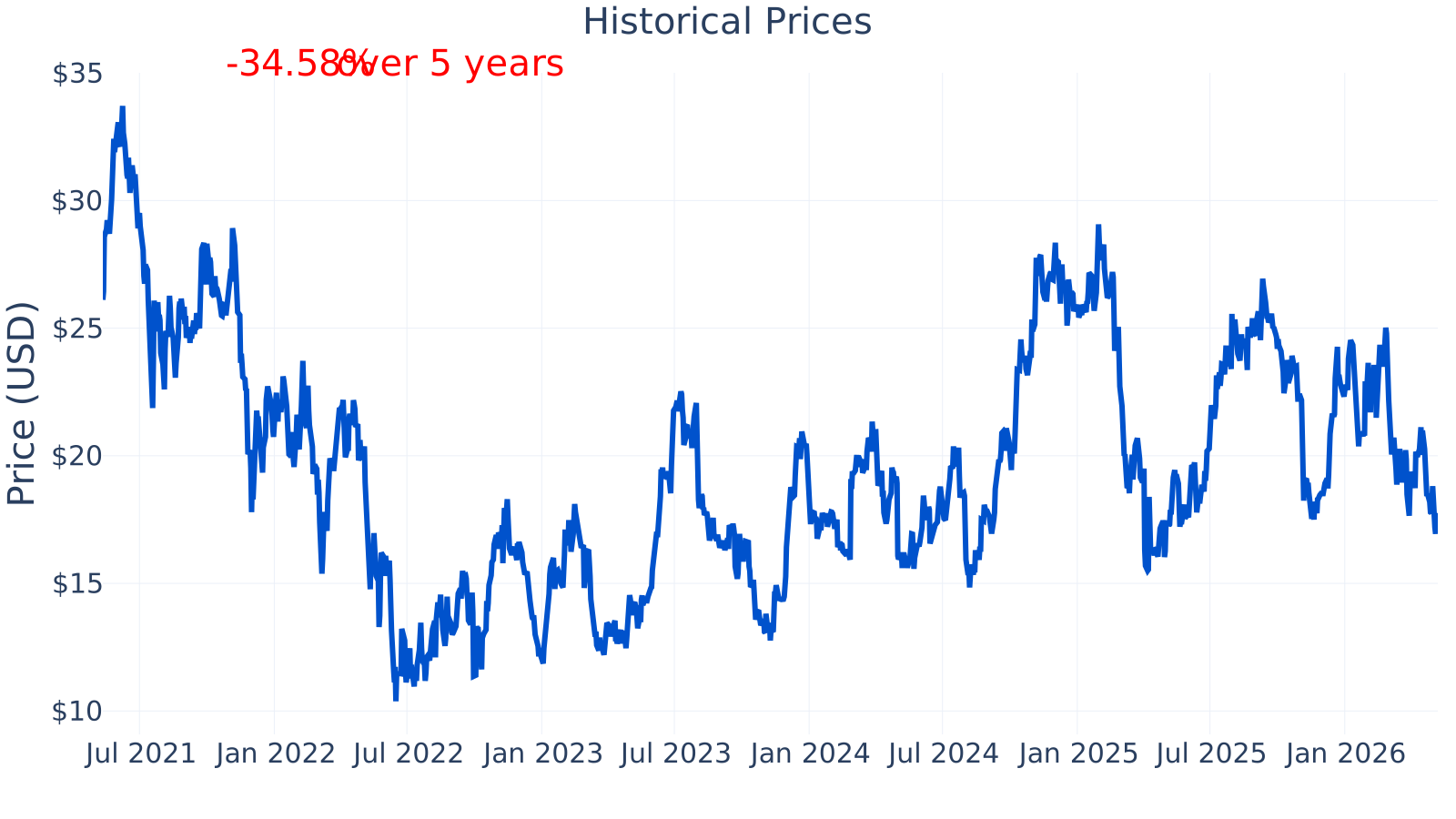
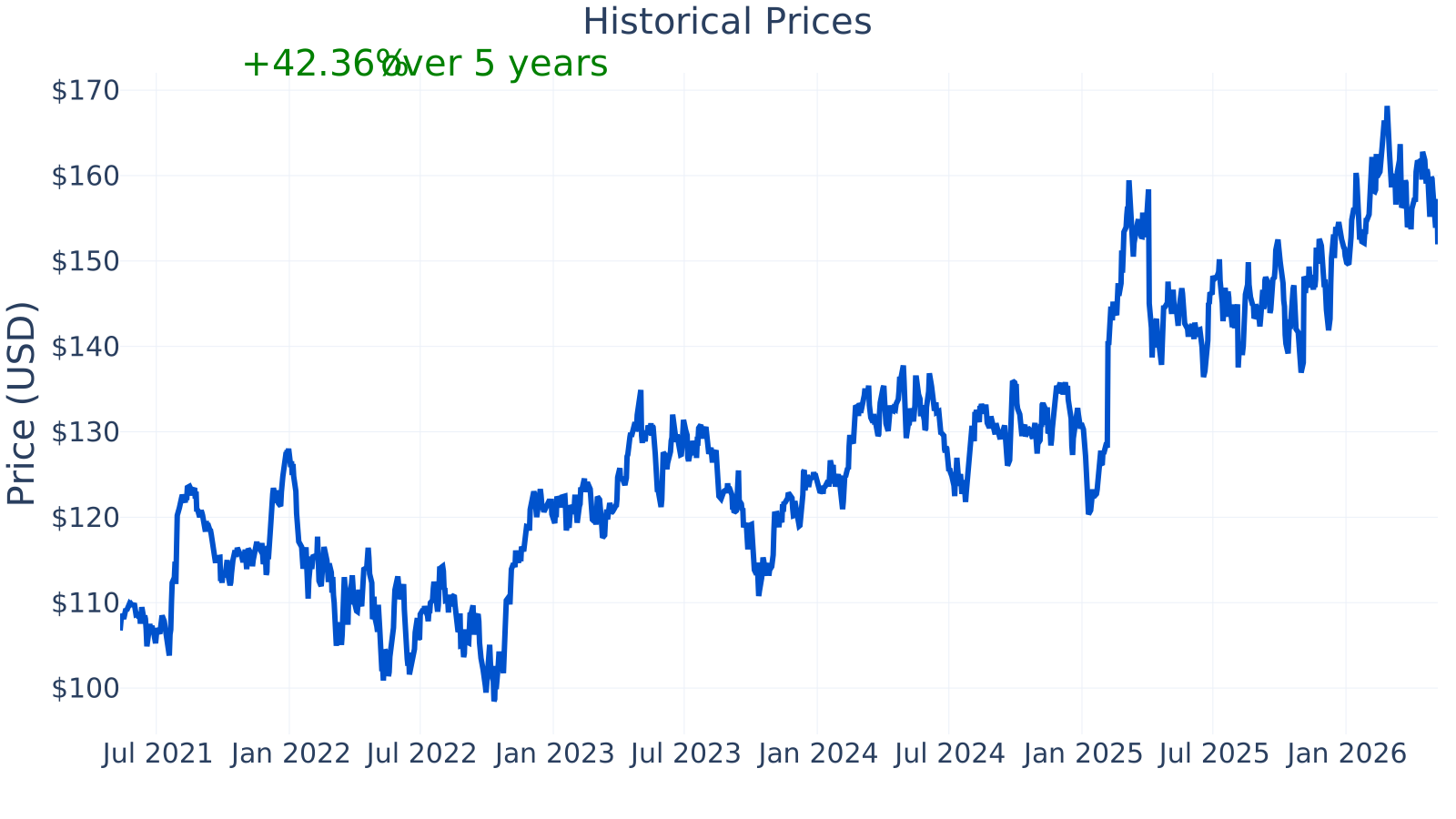
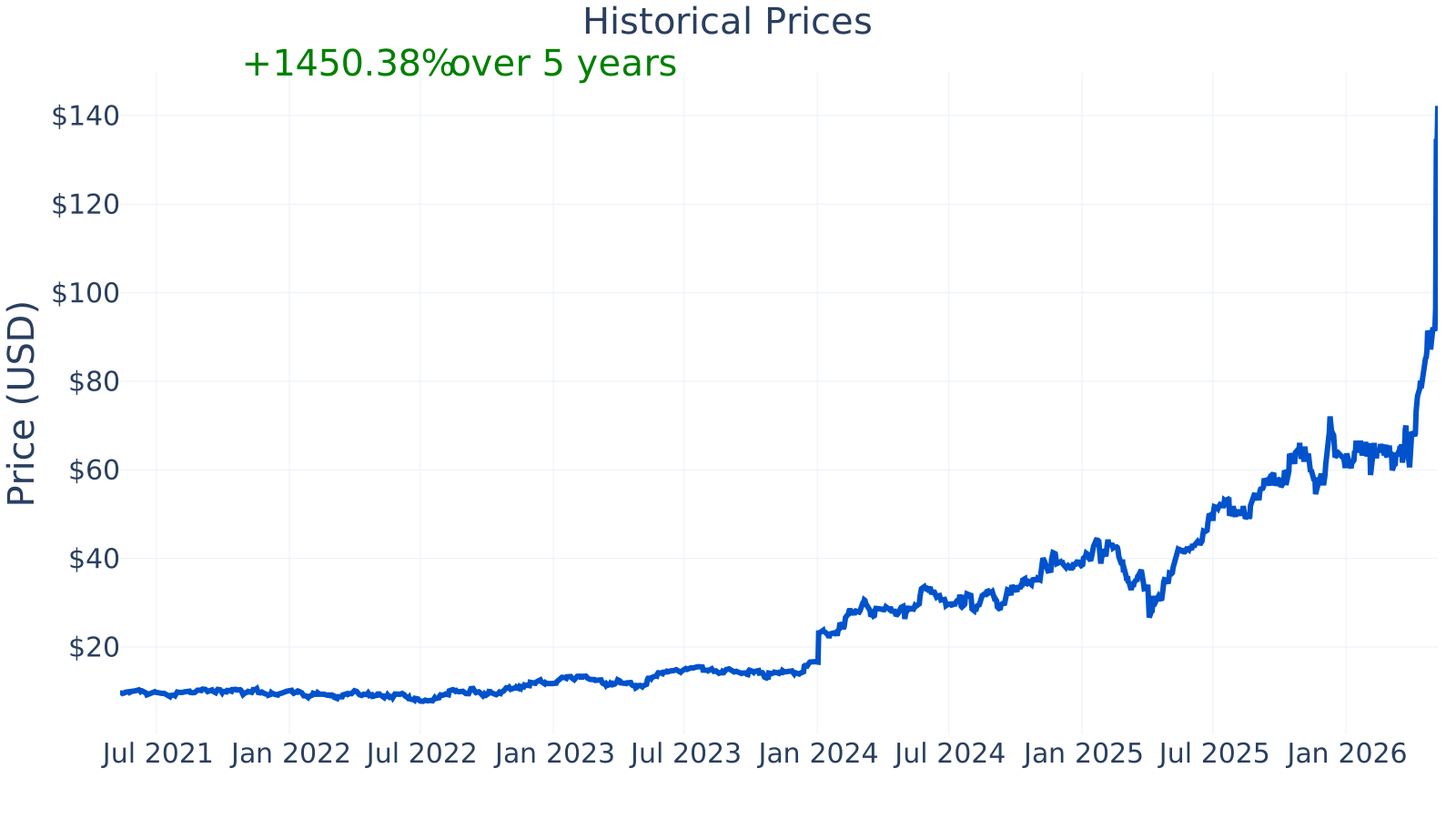
Stock Analysis · Anterix Inc (ATEX)
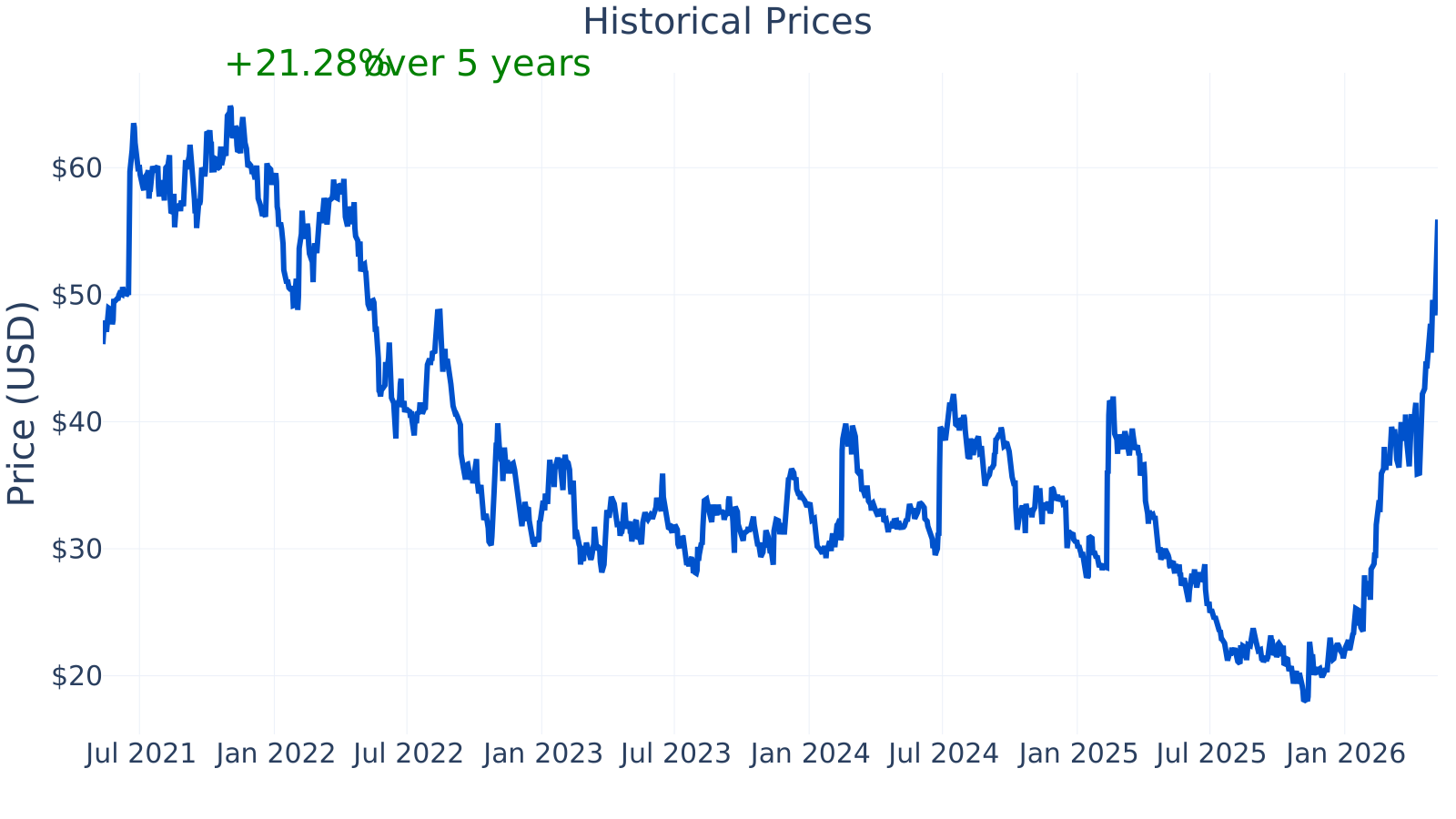
Overview
Anterix Inc. (ATEX) is a communications company focused on enabling private wireless broadband networks for critical infrastructure in the United States. In simple terms, it controls licensed wireless spectrum (airwaves) and works to make that spectrum usable for organizations—such as electric utilities—that want secure, dedicated connectivity for operations like grid monitoring, field workforce communications, and automation.
The business model is centered on making spectrum available through long-term arrangements (for example, leases) and related services that support customers as they plan, deploy, and operate private LTE/5G-type networks using that spectrum. Because the company’s approach is specialized and aimed at “industrial” connectivity, revenue can be lumpy: it may depend on the timing of a small number of large customer agreements and the pace at which those customers move from planning to deployment.
Main sources of revenue are generally described in company filings as coming from spectrum-related commercial arrangements and related services. Based on typical disclosure for the company, revenue can be thought of as:
- Spectrum / licensing (long-term commercial agreements) (typically the largest driver when new agreements are signed)
- Hosted/managed or support services tied to helping customers deploy and operate private networks
- Other / miscellaneous (smaller items that may vary by period)
The financial profile shown later in this article reflects a company that is still investing ahead of broad commercialization, with relatively modest revenue compared with operating costs, and with financial results that can change significantly from period to period.
The most visible pattern is that operating expenses remain much larger than total revenue in the periods shown, which helps explain why operating income is negative even as gross profit rises with higher revenue.
Key Figures
| Metric | Value | Industry ⓘ |
|---|---|---|
| Date | May 11, 2026 | |
| Context | ||
| Sector | Communication Services | |
| Industry | Telecom Services | |
| Market Cap ⓘ | $1.05B | |
| Beta ⓘ | 0.86 | |
| Fundamental | ||
| P/E Ratio ⓘ | 12.86 | 13.48 |
| Profit Margin ⓘ | 1370.92% | 8.16% |
| Revenue Growth ⓘ | 0.40% | 4.05% |
| Debt to Equity ⓘ | 3.34% | 97.31% |
| PEG ⓘ | N/A | |
| Free Cash Flow ⓘ | -$45.26M | |
Anterix’s market capitalization is about $1.05B and its beta is about 0.86 (a measure of how much the stock has tended to move versus the overall market). The latest profit margin shown is about 13.7% versus an industry median near 9.2%, but it is important to read that alongside the company’s history of volatile margins over recent quarters. Revenue growth year-over-year is shown at roughly 0.4% versus an industry median near 4.1%, indicating recent growth has been muted compared with peers. Debt-to-equity is very low at about 3.3% versus an industry median around 105.6%, suggesting the balance sheet is not heavily debt-funded relative to many telecom-related businesses. Trailing twelve-month free cash flow is negative (~$45.3M), which highlights continued cash usage despite periods of improved profitability metrics.
Growth (Medium)
Anterix operates at the intersection of telecommunications and critical infrastructure modernization. Many utilities and industrial operators are upgrading communications to support automation, reliability, and resilience—needs that tend to increase as grids incorporate more distributed energy resources and as monitoring becomes more data-driven. In that sense, the long-term industry direction (secure, reliable connectivity for operational systems) is a constructive backdrop.
The company’s strategy—providing licensed spectrum tailored to private broadband networks—aims to address a specific need: organizations that prefer dedicated capacity and control rather than relying only on public carrier networks. If adoption broadens, growth may come from signing additional long-term spectrum agreements and expanding deployments with existing customers over time. A practical catalyst for progress is the conversion of pilots and planning work into larger, long-duration commercial contracts, because revenue recognition can step up when more customers commit.
The year-over-year revenue growth trend shows very large increases in earlier periods (from a small base) but cools materially over time, ending near flat (~0.4%). This pattern is consistent with a company where quarterly results may depend heavily on the timing of contract milestones rather than a smooth, recurring growth curve.
Free cash flow has swung meaningfully, including a positive period (about $24.7M) followed by a return to negative territory (about -$34.8M, then -$45.3M). For long-term business compounding, investors often look for a path toward consistently positive free cash flow; here, the pattern suggests the company is still in an investment and commercialization phase.
Risks (High)
A central risk is execution and timing. If customers take longer than expected to approve budgets, finalize network designs, or move from early-stage work into full deployment, revenue may arrive later than planned. Because the addressable customer set is specialized (critical infrastructure operators) and contract sizes can be large, the business can be sensitive to a small number of decisions in any given year.
Another key risk is operating leverage. The expense base (including selling, general and administrative costs and research and development) has historically been large compared with revenue. If revenue does not scale, profitability can remain inconsistent even if gross profit improves.
Debt-to-equity remains very low (roughly 3%–5% across the periods shown and about 3.3% most recently), far below the industry median (often around or above 100%). Low leverage can reduce financial risk, but it does not eliminate the core business risk of building a larger, recurring revenue base.
Profit margins have been volatile, moving from deeply negative levels in earlier periods to positive levels more recently (about 13.7% at the latest point shown). The variability matters: it suggests results can be influenced by one-time items, contract timing, and the relationship between a relatively fixed cost structure and fluctuating revenue.
On competitive positioning, Anterix’s potential advantage is its focus on licensed spectrum for private broadband use cases in critical infrastructure—something not every competitor can replicate in the same way. However, it is not competing in a vacuum. Alternatives include:
- Large wireless carriers that can offer public-network connectivity and, in some cases, private network solutions
- Network equipment vendors and systems integrators that build private LTE/5G solutions (often working with various spectrum options)
- Other spectrum holders and approaches using different frequency bands (licensed or shared-spectrum models)
The company’s positioning depends on whether customers prefer its spectrum-based model versus other ways to secure reliable connectivity (including carrier-provided private offerings or shared-spectrum approaches). Regulatory and policy factors can also matter, since spectrum value and permitted uses are shaped by government rules.
Valuation
The latest P/E ratio shown is about 12.9, slightly below the industry median near 13.5. However, P/E can be a challenging metric for a company with uneven earnings, margin volatility, and periods of negative cash flow. In the historical view provided, the P/E has also moved sharply (including periods where it was not meaningful and therefore not shown), which is another sign that earnings have not been stable over time.
In context, whether the current price level is “expensive” or “cheap” cannot be inferred from P/E alone. A more complete view typically hinges on (1) confidence that revenue scales meaningfully from today’s level, (2) the pace at which operating costs become efficient relative to that revenue, and (3) whether free cash flow can become consistently positive. With revenue growth recently close to flat and free cash flow negative, valuation tends to be more dependent on future execution outcomes than on mature, steady-state financials.
Conclusion
Anterix is a specialized communications company aiming to enable private wireless broadband networks for critical infrastructure using its licensed spectrum. The long-term theme—modernizing utility and industrial communications—can support growth, but the company’s recent financial signals show uneven revenue growth, negative free cash flow, and a cost structure that has been large relative to current revenue.
At the same time, the balance sheet leverage shown is low compared with the industry, and profitability metrics have improved from deeply negative levels in prior periods to positive territory more recently—though with meaningful volatility. Overall, the long-term outlook depends heavily on how consistently the company can convert customer interest into signed, long-duration agreements and scaled deployments that produce durable cash generation.
Sources:
- SEC EDGAR — Anterix Inc. annual and quarterly filings (Form 10-K, Form 10-Q) describing business model, risk factors, and financial statements
- Anterix Inc. Investor Relations — Company presentations and press releases (public, company-hosted) describing strategy and customer use cases
- Wikipedia — “Anterix” (basic company background and history)
This article is for informational purposes only and does not constitute financial advice. Some content is AI-generated. See Disclaimer