Stock Analysis · Upbound Group Inc (UPBD)
Overview
Upbound Group Inc operates in consumer finance and lease-to-own services rather than traditional software. Through brands such as Rent-A-Center, Acima, and the recently acquired Brigit, the company helps customers obtain furniture, appliances, electronics, tires, and other everyday goods or access short-term financial tools when they may not qualify for mainstream credit. Its model is built around flexible payment options, including in-store lease-to-own agreements, virtual lease-to-own at third-party merchants, and digital financial wellness services.
The company’s revenue base is centered on lease payments and retail-related activity, with a smaller but growing contribution from financial technology services. Based on recent company reporting, the business mix is approximately:
- Acima lease-to-own: about 50% to 55% of revenue. This segment provides virtual lease-to-own solutions through retail partners and e-commerce merchants, mainly for durable goods such as furniture, appliances, electronics, and auto-related products.
- Rent-A-Center stores and franchise operations: about 40% to 45% of revenue. This includes lease-to-own arrangements through company-operated stores and franchise-related activity, primarily in furniture, appliances, computers, smartphones, and home electronics.
- Other businesses, including fintech services such as Brigit: under 10% of revenue. This area includes subscription and digital consumer finance services aimed at budgeting support, cash-flow management, and related tools.
The business is relatively easy to understand: Upbound serves customers looking for payment flexibility, while merchants use its platform to lift approval rates and close more sales. That creates a two-sided model where the company earns from both consumer payment streams and merchant relationships.
The longer-term picture shows a company that has kept gross profit substantial even as revenue moved around. However, interest expense has remained meaningful, and earnings have been more volatile than revenue, which is important for anyone assessing durability over a full business cycle.
Key Figures
| Metric | Value | Sector ⓘ |
|---|---|---|
| Date | Sep 12, 2026 | |
| Context | ||
| Sector | Technology | |
| Industry | Software - Application | |
| Market Cap ⓘ | $1.07B | |
| Beta ⓘ | 1.77 | |
Value (Cheapness) | ||
| P/E Ratio ⓘ | 11.89 | 29.51 |
| FCF Yield ⓘ | 33.35% | 4.25% |
| EBIT / EV ⓘ | 8.99% | 2.85% |
| PEG ⓘ | 1.39 | |
Growth (Business expansion) | ||
| Revenue Growth ⓘ | 0.50% | 15.40% |
| RPS Growth (5Y CAGR) ⓘ | 3.96% | 8.56% |
| EPS Growth (5Y CAGR) ⓘ | -14.32% | -11.88% |
| Margin Growth (5Y Trend) ⓘ | -1.08% | 0.46% |
| FCF Growth (5Y CAGR) ⓘ | -7.77% | 9.80% |
Quality (Business durability) | ||
| ROIC (Latest) ⓘ | 7.51% | 9.44% |
| ROIC (5Y Median) ⓘ | 4.32% | 8.30% |
| Net Debt / EBIT (Latest) ⓘ | 6.70 | 0.54 |
| Net Debt / EBIT (5Y Median) ⓘ | 5.28 | 0.44 |
| Operating Margin (Latest) ⓘ | 5.04% | 9.58% |
| Operating Margin (5Y Median) ⓘ | 4.71% | 8.25% |
| Debt to Equity (Latest) ⓘ | 232.93% | 33.33% |
| Profit Margin (Latest) ⓘ | 1.90% | 7.14% |
| Free Cash Flow (Latest) ⓘ | $355.95M | |
Momentum (Price trend) | ||
| 3Y Return ⓘ | -27.65% | +45.48% |
| 12M Return (excl. last month) ⓘ | -8.77% | +23.48% |
| 6M Return ⓘ | +6.57% | +20.93% |
| Price vs. 200-Day MA ⓘ | -1.99% | +7.43% |
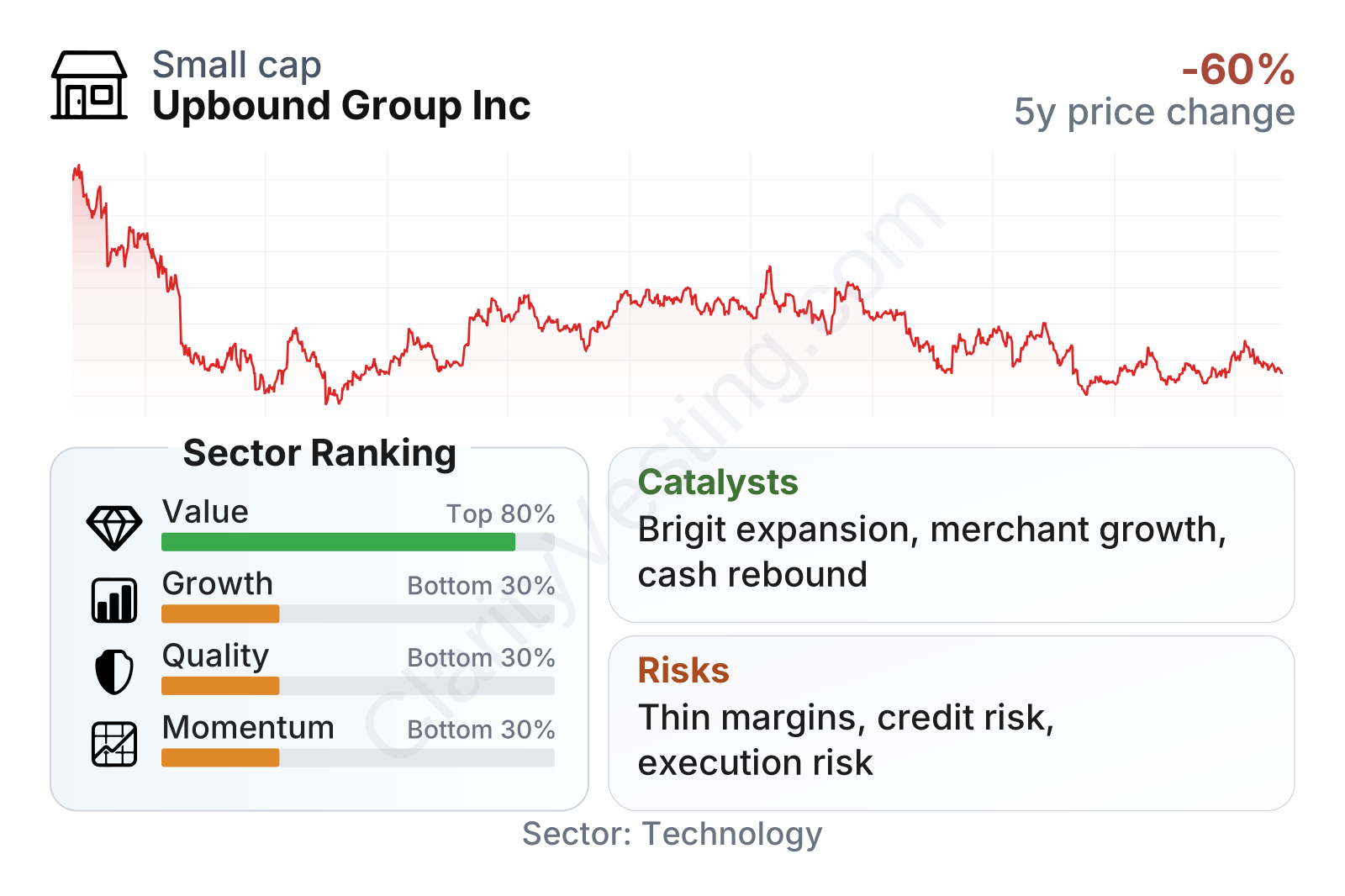
Upbound is a mid-sized company with a stock that has been notably volatile, reflected in a beta well above 1. On valuation, it screens cheaper than much of the broader technology-labeled sector, with a P/E ratio far below the sector median and an unusually high free cash flow yield. At the same time, its sector-relative ranking is weaker in growth, quality, and momentum, which helps explain why the stock does not receive a richer multiple.
The share price history shows a sharp reset from 2021 into 2022, followed by a partial recovery and then renewed weakness. That pattern usually signals a business the market sees as operationally improving, but still carrying execution and macro sensitivity.
Growth
Upbound operates in a part of the market that can grow over time because many households remain underserved by traditional credit providers. Lease-to-own and alternative consumer finance can benefit from large addressable demand, especially when merchants want more approval options at checkout. The Brigit acquisition also adds exposure to digital financial wellness tools, broadening the company beyond physical goods leasing.
The strategy has a clear logic. Acima expands merchant partnerships and online reach, Rent-A-Center provides brand recognition and a store footprint, and Brigit offers a digital entry point into recurring consumer engagement. If management executes well, these pieces can reinforce each other: customer acquisition can become more diversified, and the company can rely less on any single channel.
Revenue growth has improved markedly from the contraction seen in 2022 and 2023, but the most recent pace has slowed to around flat year over year. That matters because it suggests the rebound phase has matured, and the next leg of growth likely depends more on new products, more merchant penetration, and successful integration of newer digital offerings rather than simple cyclical recovery.
Cash generation is one of the more encouraging parts of the profile. Free cash flow weakened materially in 2024 but has recovered strongly since then, reaching a much healthier level more recently. For a company in a financing-heavy business, that recovery is important because it can support debt management, technology investment, and flexibility for acquisitions or shareholder returns.
A notable recent catalyst is the expansion of the company’s digital finance footprint through Brigit. This gives Upbound another way to serve customers beyond merchandise leasing and may create a larger recurring revenue base over time. Continued rollout of merchant integrations, especially in e-commerce and categories like tires and auto services, is another meaningful growth lever because it widens usage occasions beyond traditional home goods.
Risks
This article is for informational purposes only and does not constitute financial advice. Some content is AI-generated. See Disclaimer


