Stock Analysis · Ulta Beauty Inc (ULTA)
Overview
Ulta Beauty is a U.S. specialty beauty retailer focused on cosmetics, fragrance, skin care, hair care, bath and body products, and salon services. Its model is broader than a typical beauty store: it combines prestige brands, mass-market brands, private-label offerings, and in-store services in one place, while also selling through its website and mobile app. That mix gives the company exposure to both product sales and repeat visits tied to services and loyalty engagement.
The business is still primarily driven by merchandise sold through stores and digital channels, with services representing a much smaller share. Based on company reporting and recent annual filings, revenue is largely concentrated in products, with salon and other services contributing a modest portion.
- Cosmetics: approximately 40% of revenue. This includes makeup categories such as face, eye, lip, and nail products.
- Skin care, fragrance, and bath: approximately 30% of revenue. This is one of the company’s most important growth areas and includes prestige skin care and fragrance.
- Hair care products: approximately 20% of revenue. This covers shampoos, conditioners, styling products, and hair treatments.
- Salon services: approximately 3% to 4% of revenue. Services include hair, brow, and select beauty treatments delivered in stores.
- Other: approximately 6% to 7% of revenue. This includes accessories and other beauty-related items.
Ulta’s structure is attractive because beauty products can generate recurring demand, while the loyalty program, services, and assortment breadth help keep customers inside the Ulta ecosystem. Over the past several years, revenue expanded from about $8.6 billion to nearly $12.4 billion, showing that the company has been able to grow even as the retail environment became more competitive. At the same time, selling and administrative expenses have risen faster than net income recently, which helps explain why revenue growth has not translated into the same pace of earnings growth.
Key Figures
| Metric | Value | Sector ⓘ |
|---|---|---|
| Date | Sep 12, 2026 | |
| Context | ||
| Sector | Consumer Cyclical | |
| Industry | Specialty Retail | |
| Market Cap ⓘ | $23.38B | |
| Beta ⓘ | 0.85 | |
Value (Cheapness) | ||
| P/E Ratio ⓘ | 19.49 | 17.10 |
| FCF Yield ⓘ | 4.56% | 8.53% |
| EBIT / EV ⓘ | 6.43% | 6.46% |
| PEG ⓘ | 1.93 | |
Growth (Business expansion) | ||
| Revenue Growth ⓘ | 8.90% | 5.75% |
| RPS Growth (5Y CAGR) ⓘ | 15.02% | 9.14% |
| EPS Growth (5Y CAGR) ⓘ | -13.80% | -18.21% |
| Margin Growth (5Y Trend) ⓘ | -2.66% | -0.23% |
| FCF Growth (5Y CAGR) ⓘ | 4.75% | 4.91% |
Quality (Business durability) | ||
| ROIC (Latest) ⓘ | 41.75% | 12.61% |
| ROIC (5Y Median) ⓘ | 55.85% | 10.72% |
| Net Debt / EBIT (Latest) ⓘ | 1.46 | 2.10 |
| Net Debt / EBIT (5Y Median) ⓘ | 0.77 | 2.32 |
| Operating Margin (Latest) ⓘ | 12.51% | 9.25% |
| Operating Margin (5Y Median) ⓘ | 15.03% | 9.64% |
| Debt to Equity (Latest) ⓘ | 95.47% | 75.78% |
| Profit Margin (Latest) ⓘ | 9.34% | 5.33% |
| Free Cash Flow (Latest) ⓘ | $1.07B | |
Momentum (Price trend) | ||
| 3Y Return ⓘ | +31.94% | +14.53% |
| 12M Return (excl. last month) ⓘ | +3.08% | +3.08% |
| 6M Return ⓘ | -12.47% | +0.55% |
| Price vs. 200-Day MA ⓘ | -1.85% | -0.54% |
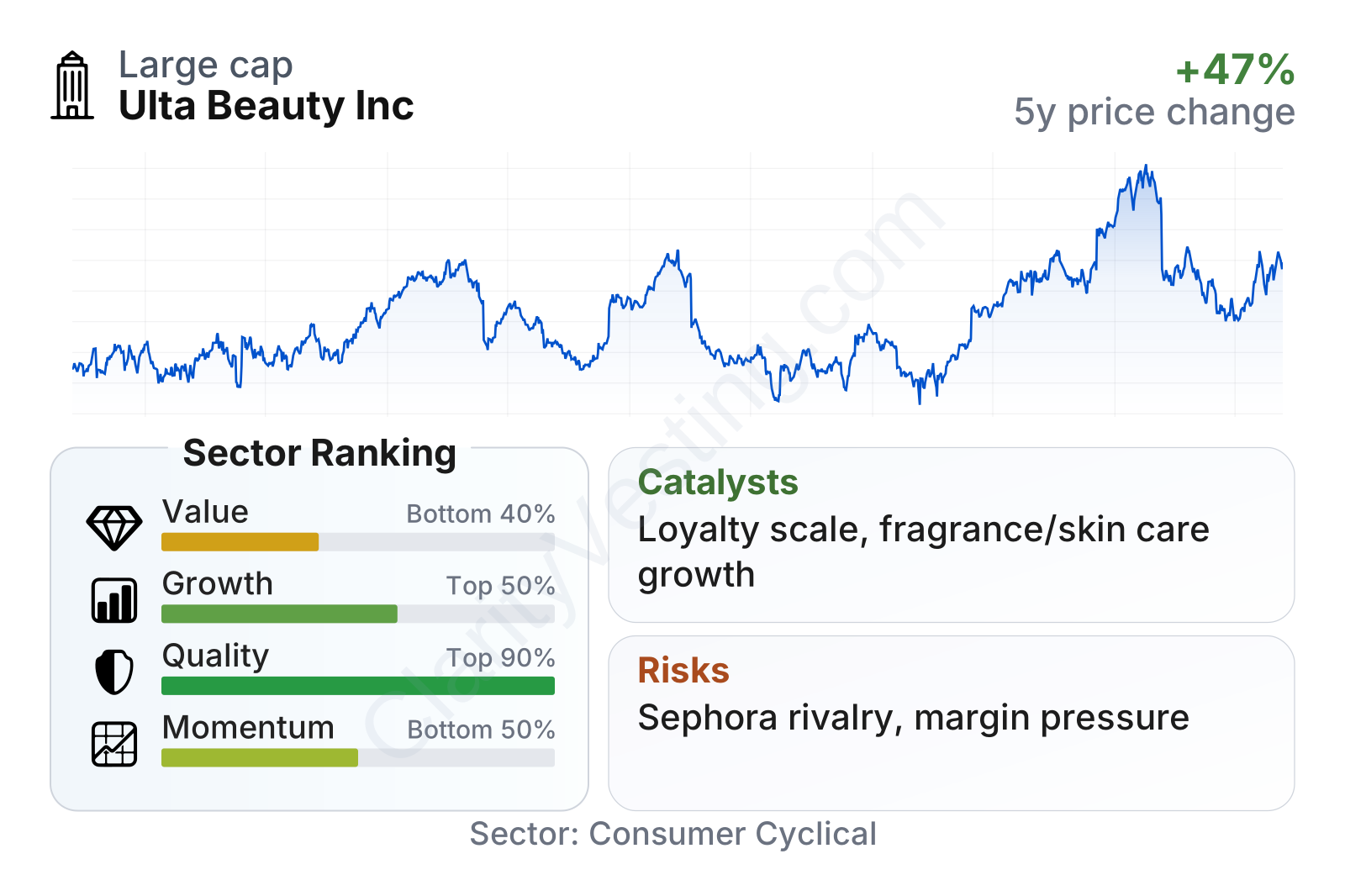
Ulta is a large specialty retailer with a market value above $20 billion and a share-price volatility that has been lower than the broader market. The quality profile stands out much more than the value or momentum profile. Returns on invested capital are exceptionally strong, operating margins remain above the sector median, and profitability is still well ahead of most peers even after some recent compression. Growth metrics are mixed but generally solid: revenue growth has been better than the sector median, while earnings growth has been held back by margin pressure. On valuation measures, the shares do not appear deeply discounted relative to the sector, and recent price momentum has been weaker than many consumer cyclical names.
Growth
The beauty category has several favorable long-term traits. It tends to benefit from repeat purchases, brand loyalty, product innovation, premiumization, and steady consumer interest in personal care. Within retail, beauty has often proven more resilient than many discretionary categories because customers replenish products regularly, even when they become more selective on bigger-ticket spending. That gives Ulta exposure to a sector with better structural support than many other specialty retail niches.
Ulta’s strategy for future expansion is also fairly coherent. The company continues to rely on a combination of store productivity, e-commerce, loyalty-driven repeat purchasing, and category mix improvement. Its large member base in the Ulta Beauty Rewards program helps the company market more efficiently, personalize promotions, and encourage cross-category spending. Partnerships with major brands and the ability to sell both prestige and mass products under one roof remain important differentiators. The Target shop-in-shop partnership also extends reach beyond the core store base and can support customer acquisition.
Recent sales growth has reaccelerated after a softer period. Year-over-year revenue growth slowed sharply in 2024 and briefly turned negative around early 2025, but it recovered into the high single digits and low double digits afterward. That rebound matters because it suggests demand did not break structurally; instead, the company appears to have moved through a temporary slowdown while keeping its customer proposition relevant.
Cash generation has stayed solid even as margins eased. Free cash flow has remained close to the $1 billion level over the last several years, which gives Ulta flexibility to invest in stores, digital capabilities, supply chain improvements, and shareholder returns without relying heavily on outside financing. A recent opportunity worth watching is the continued expansion of higher-growth categories such as skin care and fragrance, where customer demand has been strong across the industry and where basket sizes can be attractive.
Risks
This article is for informational purposes only and does not constitute financial advice. Some content is AI-generated. See Disclaimer


