Stock Analysis · Ubiquiti Networks Inc (UI)
Overview
Ubiquiti Inc. designs networking equipment and software used to connect homes, businesses, campuses, wireless internet service providers, and security systems. In simple terms, it sells the hardware and management platforms that help move internet traffic, build Wi‑Fi networks, connect buildings, and run surveillance systems. The company is known for combining relatively high-performance products with a lean operating model, relying heavily on online communities, word-of-mouth, and a broad distributor network rather than a large traditional sales force.
Its business is mainly organized around two broad product families disclosed in company filings: Enterprise Technology and Service Provider Technology. Enterprise Technology covers products for businesses, homes, and security installations, while Service Provider Technology focuses more on fixed wireless infrastructure and carrier-style networking used by internet service providers.
Based on the latest annual mix described by the company, revenue is primarily generated from the following sources:
- Enterprise Technology: about 80% to 85% of revenue. This includes UniFi-branded networking products such as wireless LAN, switching, gateways, routing, security cameras, door access, phone systems, and software platforms used to manage these systems.
- Service Provider Technology: about 15% to 20% of revenue. This includes airMAX, UISP, microwave backhaul, routing, and optical broadband products used by wireless internet service providers and network operators.
- Services and other items: a small contribution relative to hardware sales, mainly tied to subscriptions, support-related offerings, and adjacent software features where applicable.
Geographically, Ubiquiti sells globally through distributors, resellers, and direct channels, which reduces dependence on any single local market even though demand can shift by region and product cycle. The recent financial flow also shows an important characteristic of the business: revenue has risen strongly while operating costs have increased much more slowly, allowing a large share of additional sales to turn into operating profit.
The business model remains unusually efficient for a communications equipment company. Gross profit has expanded sharply over recent years, and operating expenses have stayed relatively controlled compared with sales growth. That helps explain why margins are much stronger than the typical company in this industry.
Key Figures
| Metric | Value | Sector ⓘ |
|---|---|---|
| Date | Sep 12, 2026 | |
| Context | ||
| Sector | Technology | |
| Industry | Communication Equipment | |
| Market Cap ⓘ | $34.15B | |
| Beta ⓘ | 1.32 | |
Value (Cheapness) | ||
| P/E Ratio ⓘ | 33.90 | 29.51 |
| FCF Yield ⓘ | 2.66% | 4.25% |
| EBIT / EV ⓘ | 3.70% | 2.85% |
| PEG ⓘ | 1.10 | |
Growth (Business expansion) | ||
| Revenue Growth ⓘ | 23.50% | 15.40% |
| RPS Growth (5Y CAGR) ⓘ | 18.51% | 8.56% |
| EPS Growth (5Y CAGR) ⓘ | 26.73% | -11.88% |
| Margin Growth (5Y Trend) ⓘ | 8.88% | 0.46% |
| FCF Growth (5Y CAGR) ⓘ | 26.34% | 9.80% |
Quality (Business durability) | ||
| ROIC (Latest) ⓘ | 82.29% | 9.44% |
| ROIC (5Y Median) ⓘ | 81.61% | 8.30% |
| Net Debt / EBIT (Latest) ⓘ | -0.37 | 0.54 |
| Net Debt / EBIT (5Y Median) ⓘ | 1.26 | 0.44 |
| Operating Margin (Latest) ⓘ | 36.13% | 9.58% |
| Operating Margin (5Y Median) ⓘ | 28.06% | 8.25% |
| Debt to Equity (Latest) ⓘ | 5.55% | 33.33% |
| Profit Margin (Latest) ⓘ | 29.33% | 7.14% |
| Free Cash Flow (Latest) ⓘ | $908.94M | |
Momentum (Price trend) | ||
| 3Y Return ⓘ | +258.85% | +45.48% |
| 12M Return (excl. last month) ⓘ | +22.23% | +23.48% |
| 6M Return ⓘ | -24.55% | +20.93% |
| Price vs. 200-Day MA ⓘ | -13.91% | +7.43% |
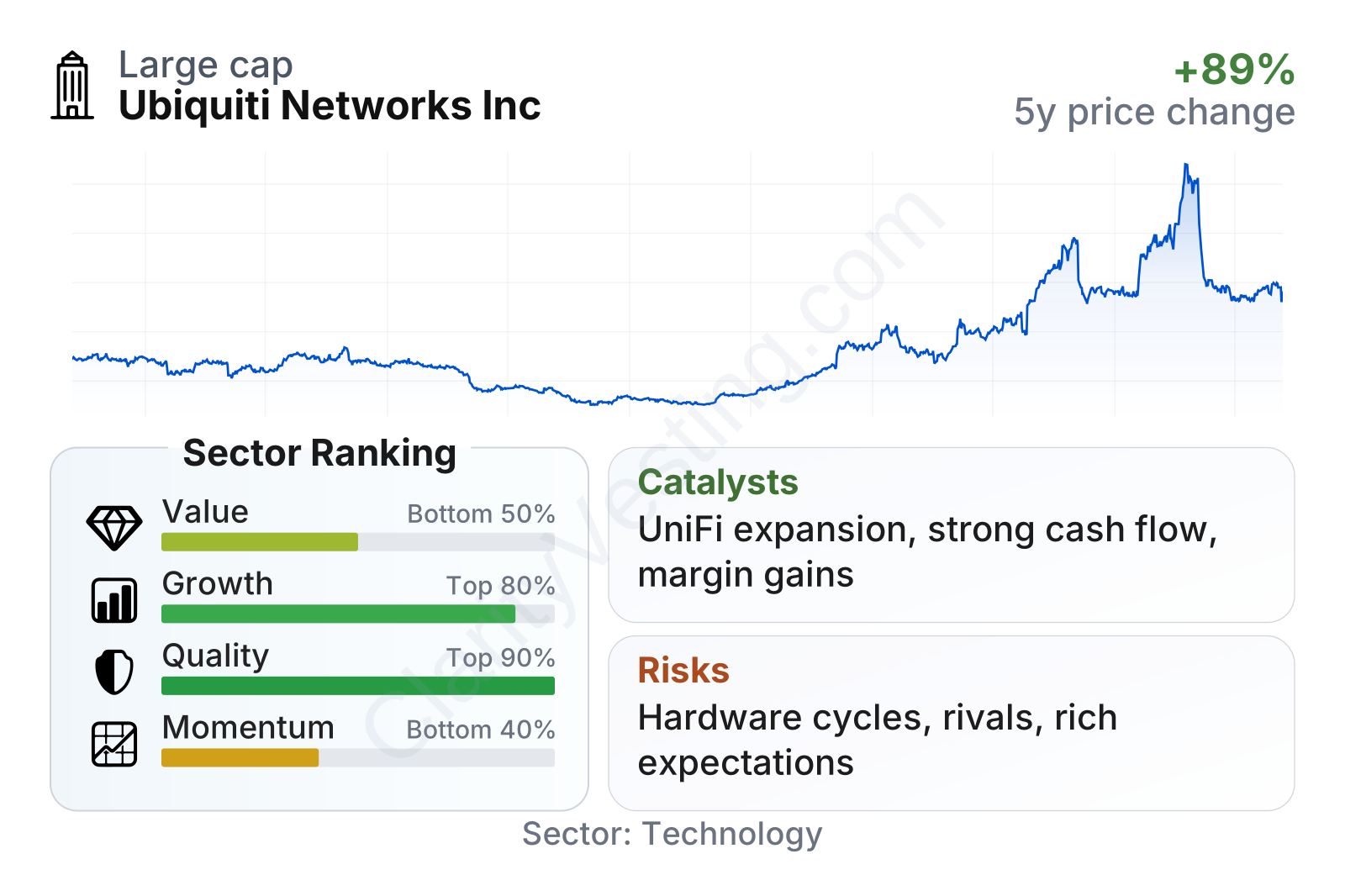
Ubiquiti is now a large communications equipment company by market value, with a share price history that has been volatile but very strong over the last three years. The latest metrics show an unusual mix: growth and profitability rank well above much of the sector, while traditional value measures look less attractive. Quality stands out the most, with very high returns on invested capital, strong operating margins, low leverage, and robust cash generation. Growth metrics are also comfortably above sector medians, especially over five years. By contrast, the valuation profile is less favorable, as the earnings multiple and free cash flow yield suggest the market is already recognizing much of that strength.
Growth
Ubiquiti operates in parts of the market that continue to benefit from long-term demand: enterprise Wi‑Fi upgrades, growing connected-device usage, network modernization, physical security, and broadband expansion. These are durable themes rather than short-lived trends. Organizations continue to need faster local networks, easier device management, and integrated security tools, while smaller service providers still need cost-efficient broadband equipment.
A key part of Ubiquiti’s growth case is that its strategy is internally consistent. The company focuses on integrated ecosystems rather than one-off devices. A customer that starts with Wi‑Fi access points can later add switches, gateways, cameras, access control, phones, and management software inside the same environment. That can increase revenue per customer and make the platform more useful over time.
Recent revenue trends show a powerful rebound and then continued expansion. Year-over-year growth moved from contraction in the weaker period of 2021 to 2023 into a much stronger phase, reaching very high rates during 2025 before moderating to a still-solid pace in 2026. The latest annual growth rate remains clearly ahead of the sector median, which suggests Ubiquiti is not just recovering from a temporary slowdown but still taking share in attractive categories.
Cash generation also supports the growth narrative. Free cash flow was volatile during the inventory and supply chain disruptions of the past few years, including a negative period, but it has since recovered strongly and is now running near record levels. That matters because it gives the company room to fund product development, manage inventory, and maintain flexibility without needing heavy external financing.
Another catalyst is product breadth inside the UniFi ecosystem. Ubiquiti has steadily expanded beyond core wireless gear into cameras, door access, cloud-managed networking, and broader IT infrastructure. This can deepen customer relationships and make the company relevant to more installation projects. On the service provider side, demand for wireless broadband and fiber-related infrastructure can also support growth where cost-sensitive operators want alternatives to larger incumbent vendors.
Recent company updates and filings also point to strong operating momentum rather than only accounting improvements. Revenue, gross profit, operating income, and net income all advanced materially in the latest fiscal year, while interest expense fell sharply. That combination suggests the company is benefiting from both stronger demand and a cleaner financial structure.
Risks
This article is for informational purposes only and does not constitute financial advice. Some content is AI-generated. See Disclaimer


