Stock Analysis · Unity Software Inc (U)
Overview
Unity Software develops tools that help creators build, run, and monetize interactive 2D and 3D content. The company is best known for the Unity game engine, which is widely used to make mobile, PC, console, and extended reality experiences. Beyond video games, Unity’s technology is also used in industries such as automotive, architecture, film, retail, and industrial simulation, where companies use real-time 3D software for design, visualization, training, and digital twins.
Unity reports its business in two main segments. Based on the latest annual reporting structure, revenue is split approximately as follows:
- Grow Solutions: about 55% to 60% of revenue. This includes advertising, user acquisition, mediation, and other services that help app developers attract players and earn money from their audiences.
- Create Solutions: about 40% to 45% of revenue. This includes subscriptions, software licenses, cloud and enterprise services, and tools used to build and operate interactive content.
This mix matters because Grow has historically been the larger business, but Create is the part most closely tied to Unity’s core engine and developer ecosystem. In recent years, Unity has also been reshaping its portfolio after product disruptions and a reset of its ad business, with more emphasis on execution, pricing discipline, and enterprise uses of real-time 3D.
The business model still shows one attractive feature: gross profit remains high because software carries relatively low direct delivery costs. The problem has been spending. Research and development has stayed very large, while selling and administrative costs have only recently come down, which helps explain why Unity can generate substantial gross profit and free cash flow while still reporting accounting losses.
Over the last several years, revenue expanded strongly through 2023, then pulled back in 2024 before stabilizing and improving again. Gross profit stayed sizable throughout, but operating expenses consistently exceeded it. The more encouraging recent shift is that selling and administrative costs have been reduced materially, narrowing operating losses even though profitability remains below the software sector norm.
Key Figures
| Metric | Value | Sector ⓘ |
|---|---|---|
| Date | Sep 12, 2026 | |
| Context | ||
| Sector | Technology | |
| Industry | Software - Application | |
| Market Cap ⓘ | $19.35B | |
| Beta ⓘ | 2.06 | |
Value (Cheapness) | ||
| P/E Ratio ⓘ | N/A | 29.51 |
| FCF Yield ⓘ | 2.78% | 4.25% |
| EBIT / EV ⓘ | -3.07% | 2.85% |
| PEG ⓘ | N/A | |
Growth (Business expansion) | ||
| Revenue Growth ⓘ | 23.90% | 15.40% |
| RPS Growth (5Y CAGR) ⓘ | 2.80% | 8.56% |
| EPS Growth (5Y CAGR) ⓘ | N/A | -11.88% |
| Margin Growth (5Y Trend) ⓘ | N/A | 0.46% |
| FCF Growth (5Y CAGR) ⓘ | N/A | 9.80% |
Quality (Business durability) | ||
| ROIC (Latest) ⓘ | -8.23% | 9.44% |
| ROIC (5Y Median) ⓘ | -9.94% | 8.30% |
| Net Debt / EBIT (Latest) ⓘ | N/A | 0.54 |
| Net Debt / EBIT (5Y Median) ⓘ | N/A | 0.44 |
| Operating Margin (Latest) ⓘ | -27.84% | 9.58% |
| Operating Margin (5Y Median) ⓘ | -35.49% | 8.25% |
| Debt to Equity (Latest) ⓘ | 76.50% | 33.33% |
| Profit Margin (Latest) ⓘ | -28.97% | 7.14% |
| Free Cash Flow (Latest) ⓘ | $538.39M | |
Momentum (Price trend) | ||
| 3Y Return ⓘ | +12.80% | +45.48% |
| 12M Return (excl. last month) ⓘ | +19.42% | +23.48% |
| 6M Return ⓘ | +126.25% | +20.93% |
| Price vs. 200-Day MA ⓘ | +36.73% | +7.43% |
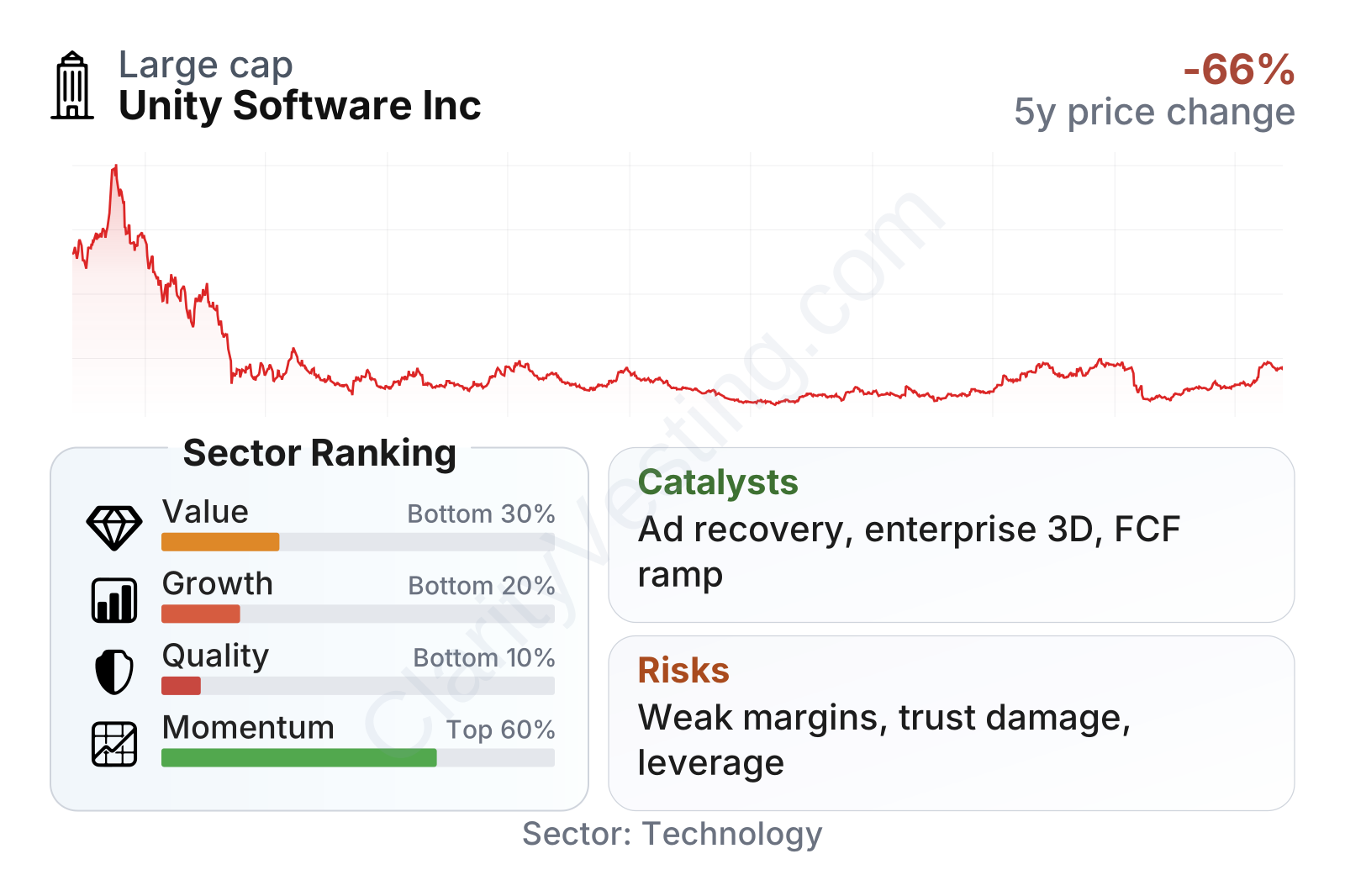
Unity is a mid-to-large software company with a stock that has been notably volatile, reflected in a beta around 2.0. The share price history shows how sharply market expectations have changed since 2021: the stock moved from very high growth expectations to a deep reset, then into a partial recovery. In the factor snapshot, momentum has improved meaningfully in the recent period, but value, growth quality, and profitability still rank weakly versus much of the software sector. Revenue growth has reaccelerated recently, yet the longer multi-year record remains less convincing because of the 2024 contraction and persistent losses.
Growth
Unity operates in a market with durable long-term demand drivers. Video games remain one of the world’s largest entertainment categories, mobile gaming is still broad and global, and real-time 3D tools are spreading into enterprise use cases such as simulation, training, commerce, and product visualization. That gives Unity exposure to more than one growth engine: game creation, app monetization, and industrial digitalization.
Its strategy also has a reasonable logic. On the Create side, Unity aims to be the software layer developers use from production to live operations. On the Grow side, it wants to help customers acquire users and monetize traffic more effectively. If those pieces work well together, Unity can benefit from ecosystem effects: developers build with Unity, publish with Unity-compatible tools, and continue using Unity services after launch.
The recent revenue trend looks better than the weak patch seen in 2024. After several quarters of declining sales, year-over-year growth turned positive again and recently moved into the low-20% range, which is ahead of the sector median. That is an encouraging sign, but it should be read carefully: the company is rebounding from a reset period rather than compounding smoothly from a stable base.
Cash generation has improved more clearly than earnings. Free cash flow moved from negative territory in 2023 to solidly positive levels and has continued climbing. That matters because it suggests Unity’s restructuring and cost discipline are producing tangible financial effects, even though accounting profitability remains negative. For a company still in transition, stronger cash flow is one of the more important signals to watch.
Several catalysts could support future expansion. Unity continues to have a large installed developer base, and improvements in ad tech performance could lift the Grow segment. The company also has room to deepen adoption outside gaming, especially in automotive and industrial applications where real-time 3D is useful for design and simulation. In addition, broader interest in spatial computing and AI-assisted development tools could make content creation faster and increase demand for engines and related services.
Recent company updates have also pointed to a simpler operating structure and greater focus on fewer core products. For a business that had been criticized for complexity and execution missteps, simplification itself can become an opportunity if it leads to better retention, more predictable monetization, and steadier customer relationships.
Risks
This article is for informational purposes only and does not constitute financial advice. Some content is AI-generated. See Disclaimer