Stock Analysis · Tyler Technologies Inc (TYL)
Overview
Tyler Technologies is a software company focused mainly on the public sector. It provides cloud-based applications and related services to local governments, schools, courts, public safety agencies, and other public institutions. In practical terms, its products help these organizations manage taxes, billing, court records, property assessment, permitting, payments, student transportation, ERP functions, and a wide range of administrative workflows.
The business model is attractive because public agencies usually run mission-critical systems for many years once they are installed. That tends to create recurring revenue, long customer relationships, and high switching costs. Tyler has also been moving more of its business toward subscription-based cloud software, which can make revenue more predictable over time.
Based on the company’s recent reporting structure, revenue comes primarily from software subscriptions and services tied to implementation, maintenance, and transactions. Approximate revenue sources are as follows:
- Software subscriptions and related arrangements: about 45% to 50% of revenue. This includes recurring SaaS fees, term-based software arrangements, and cloud access.
- Professional services: about 25% to 30%. This covers implementation, training, consulting, and project work tied to deploying Tyler’s systems.
- Transaction-based fees: about 15% to 20%. These are fees generated when citizens or agencies use payment, filing, or digital service platforms.
- Maintenance and support: about 10% to 15%. This includes ongoing support for installed solutions, especially in legacy or hybrid environments.
- Hardware and other: a small portion of revenue. This is not a major economic driver compared with software and services.
Its customer base is also a notable differentiator. Rather than competing broadly across all corporate software markets, Tyler concentrates on government software niches where specialized workflows, compliance requirements, and procurement complexity can protect incumbents.
The long-term pattern points to a business that has steadily expanded revenue while also improving operating income and net income. Gross profit has grown faster than revenue in recent years, suggesting that the mix shift toward higher-value recurring software and transaction revenue is helping profitability.
Key Figures
| Metric | Value | Sector ⓘ |
|---|---|---|
| Date | Sep 12, 2026 | |
| Context | ||
| Sector | Technology | |
| Industry | Software - Application | |
| Market Cap ⓘ | $13.74B | |
| Beta ⓘ | 0.83 | |
Value (Cheapness) | ||
| P/E Ratio ⓘ | 45.03 | 29.51 |
| FCF Yield ⓘ | 5.20% | 4.25% |
| EBIT / EV ⓘ | 2.83% | 2.85% |
| PEG ⓘ | 1.57 | |
Growth (Business expansion) | ||
| Revenue Growth ⓘ | 8.20% | 15.40% |
| RPS Growth (5Y CAGR) ⓘ | 9.01% | 8.56% |
| EPS Growth (5Y CAGR) ⓘ | -9.11% | -11.88% |
| Margin Growth (5Y Trend) ⓘ | 5.50% | 0.46% |
| FCF Growth (5Y CAGR) ⓘ | 19.17% | 9.80% |
Quality (Business durability) | ||
| ROIC (Latest) ⓘ | 7.70% | 9.44% |
| ROIC (5Y Median) ⓘ | 8.12% | 8.30% |
| Net Debt / EBIT (Latest) ⓘ | 1.36 | 0.54 |
| Net Debt / EBIT (5Y Median) ⓘ | 2.40 | 0.44 |
| Operating Margin (Latest) ⓘ | 16.91% | 9.58% |
| Operating Margin (5Y Median) ⓘ | 11.67% | 8.25% |
| Debt to Equity (Latest) ⓘ | 47.91% | 33.33% |
| Profit Margin (Latest) ⓘ | 13.36% | 7.14% |
| Free Cash Flow (Latest) ⓘ | $714.27M | |
Momentum (Price trend) | ||
| 3Y Return ⓘ | -11.94% | +45.48% |
| 12M Return (excl. last month) ⓘ | -43.67% | +23.48% |
| 6M Return ⓘ | -2.56% | +20.93% |
| Price vs. 200-Day MA ⓘ | -5.17% | +7.43% |
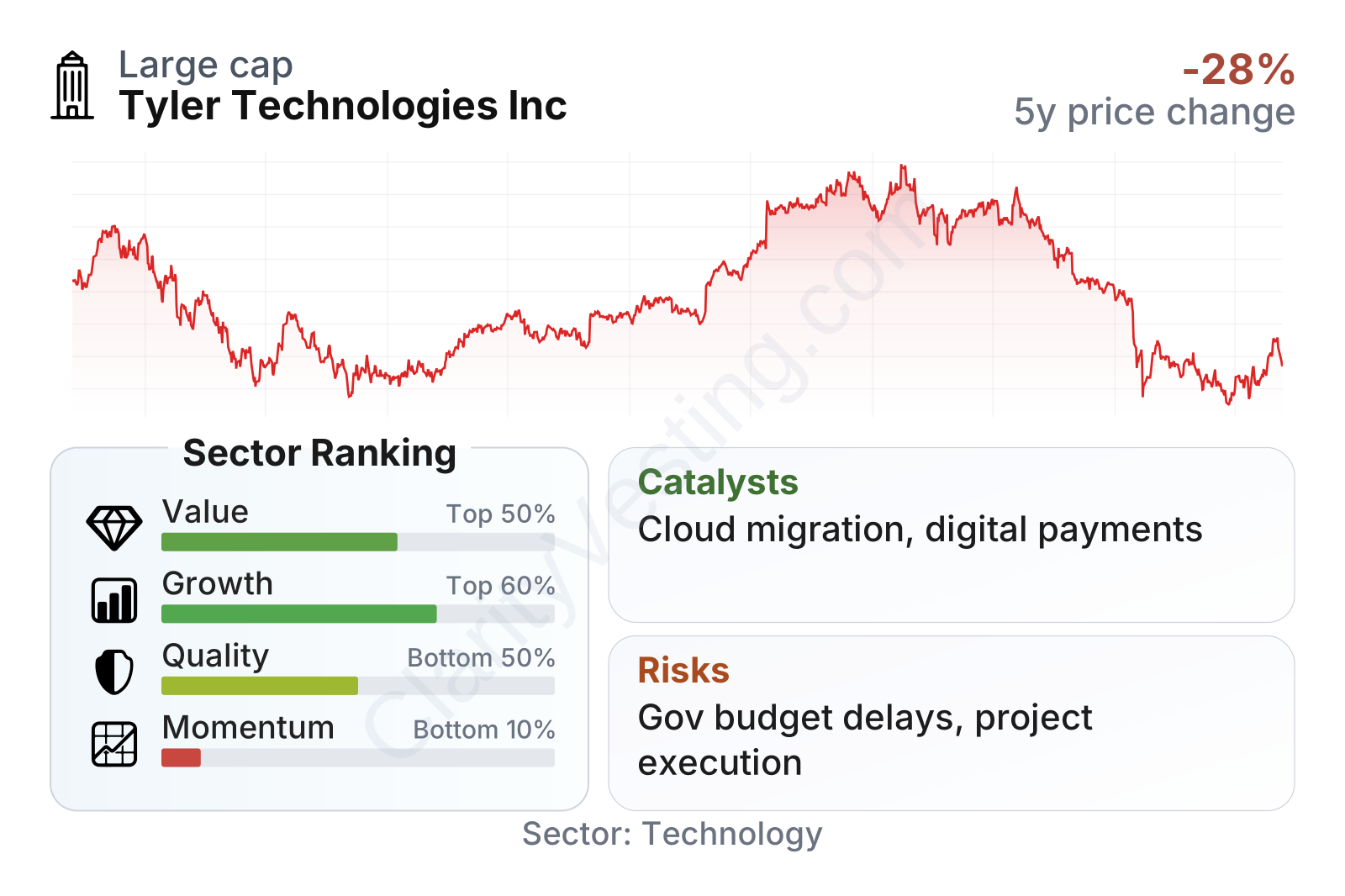
Tyler stands out as a mid-to-large software company with relatively low share-price volatility, as reflected by a beta below 1. On valuation, the stock still trades above the sector median on earnings, but the gap is much smaller than it was in prior years. Growth is moderate rather than exceptional, yet margins and cash generation are stronger than many peers. The weakest area is recent market momentum, with the stock having lagged the broader software group over multiple periods.
The broad picture is of a company with solid operating characteristics but a market rating that remains higher than average. That mix usually means future returns depend less on excitement and more on continued execution, margin discipline, and steady demand from government customers.
Growth
Tyler operates in a part of software that still has room to grow. Many state and local agencies continue to modernize old systems, move workloads to the cloud, digitize citizen services, and strengthen data management. Those trends are not as flashy as consumer technology or artificial intelligence headlines, but they are durable and often backed by long-term operational need rather than discretionary spending.
The company’s strategy broadly fits that environment. Tyler has spent years building a broad product suite for public administration and expanding cloud delivery. That matters because government clients often prefer fewer vendors, integrated systems, and proven compliance capabilities. Once Tyler wins one department, it can sometimes expand into payments, courts, ERP, tax, permitting, or public safety, creating cross-selling opportunities inside the same customer relationship.
Revenue growth has normalized after the unusually strong period that followed earlier acquisitions and post-pandemic recovery. More recently, growth has been running in the high single digits to low double digits. That is below the software sector median, but it is still healthy for a company serving government buyers, where sales cycles are slower and budget approvals can take time. The more important point is that growth has been steady rather than erratic.
Cash generation has been one of the stronger parts of the investment case. Free cash flow has risen sharply over the last several years, reaching well above earlier levels. For long-term analysis, that is meaningful because cash supports product investment, debt reduction, acquisitions, and resilience during slower procurement cycles.
Recent company updates have continued to emphasize cloud migration, digital payments, and broader adoption of platform-based offerings. These are important catalysts because they tend to increase recurring revenue and can deepen Tyler’s role in daily government operations. Another constructive factor is that public agencies are under pressure to improve service delivery without expanding headcount at the same pace, which supports demand for automation software.
Risks
This article is for informational purposes only and does not constitute financial advice. Some content is AI-generated. See Disclaimer


