Stock Analysis · Take-Two Interactive Software Inc (TTWO)
Overview
Take-Two Interactive Software is a video game publisher and developer best known for owning some of the most valuable entertainment franchises in the industry. Its main labels are Rockstar Games, 2K, and Zynga. Rockstar is behind Grand Theft Auto and Red Dead Redemption, 2K publishes series such as NBA 2K and Civilization, and Zynga focuses on mobile games. The company makes money not only when a new game launches, but also from in-game purchases, virtual currency, subscriptions, and catalog sales from older titles that continue to sell for years.
Take-Two’s revenue is mainly split by how players spend, rather than by a simple “box sale” model. In recent filings, recurring consumer spending remained the largest contributor, reflecting purchases made after the initial download or sale. Physical retail has become a smaller part of the business as digital delivery keeps expanding.
- Recurring consumer spending: about 79% of net bookings in fiscal 2026. This includes virtual currency, add-on content, in-game items, mobile purchases, and certain subscription-related spending.
- Full game sales: about 21% of net bookings in fiscal 2026. This includes new title launches and sales of the back catalog across console, PC, and mobile.
- By platform, mobile is the largest piece: about 48% of net bookings, followed by console at 40%, and PC and other at 12%.
- By geography: the United States represented about 61% of net bookings, with international markets at about 39%.
This mix matters for long-term analysis. A business supported by repeat spending and a broad game catalog can be more resilient than one relying only on occasional blockbuster launches. At the same time, Take-Two still depends heavily on a relatively small number of very large franchises to drive attention and engagement.
The business mix has become much larger over the past few years, with revenue rising from roughly $3.5 billion in fiscal 2022 to about $6.7 billion in fiscal 2026. Gross profit also expanded, but operating costs grew heavily as Take-Two invested in development, absorbed the Zynga acquisition, and carried substantial overhead before some major releases fully arrive.
Key Figures
| Metric | Value | Sector ⓘ |
|---|---|---|
| Date | Sep 12, 2026 | |
| Context | ||
| Sector | Communication Services | |
| Industry | Electronic Gaming & Multimedia | |
| Market Cap ⓘ | $40.57B | |
| Beta ⓘ | 0.97 | |
Value (Cheapness) | ||
| P/E Ratio ⓘ | N/A | 18.61 |
| FCF Yield ⓘ | 0.80% | 13.68% |
| EBIT / EV ⓘ | -0.19% | 4.54% |
| PEG ⓘ | 2.89 | |
Growth (Business expansion) | ||
| Revenue Growth ⓘ | 2.00% | 5.40% |
| RPS Growth (5Y CAGR) ⓘ | 4.60% | 4.62% |
| EPS Growth (5Y CAGR) ⓘ | -81.65% | -18.01% |
| Margin Growth (5Y Trend) ⓘ | N/A | 1.10% |
| FCF Growth (5Y CAGR) ⓘ | N/A | 5.88% |
Quality (Business durability) | ||
| ROIC (Latest) ⓘ | -0.95% | 8.38% |
| ROIC (5Y Median) ⓘ | -11.69% | 8.32% |
| Net Debt / EBIT (Latest) ⓘ | N/A | 1.99 |
| Net Debt / EBIT (5Y Median) ⓘ | N/A | 2.94 |
| Operating Margin (Latest) ⓘ | -1.15% | 14.89% |
| Operating Margin (5Y Median) ⓘ | -22.32% | 12.96% |
| Debt to Equity (Latest) ⓘ | 81.61% | 59.59% |
| Profit Margin (Latest) ⓘ | -4.79% | 8.77% |
| Free Cash Flow (Latest) ⓘ | $326.10M | |
Momentum (Price trend) | ||
| 3Y Return ⓘ | +50.48% | +46.64% |
| 12M Return (excl. last month) ⓘ | +4.49% | +2.16% |
| 6M Return ⓘ | +3.00% | +5.05% |
| Price vs. 200-Day MA ⓘ | -5.25% | +2.88% |
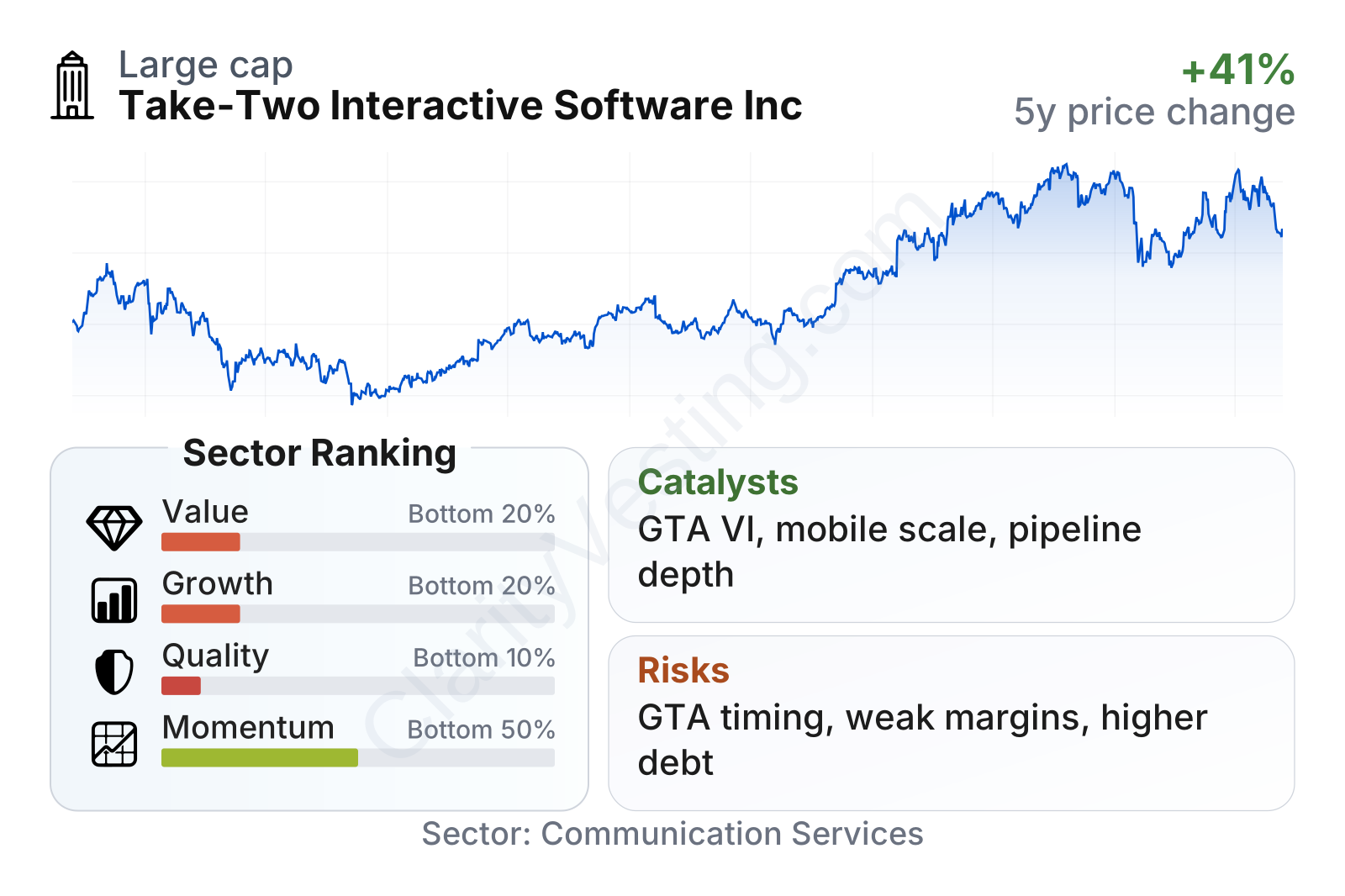
Take-Two is now a very large gaming company with a market value in the tens of billions of dollars and a stock volatility close to the broader market. The table points to a mixed profile: recent share-price momentum has been better than much of the sector, but value, quality, and growth measures remain weak relative to peers. That combination usually means the market is already looking ahead to future improvements rather than rewarding current profitability.
The stock’s multi-year performance shows how strongly sentiment in gaming can swing around release schedules, acquisition integration, and expectations for major titles. Recent strength suggests the market is assigning meaningful importance to the next cycle of releases, especially the company’s biggest franchises.
Growth
The video game industry remains a growing entertainment category over the long run, supported by digital distribution, mobile gaming, live services, and the ability to monetize successful franchises over many years. Take-Two is well positioned in that environment because it owns globally recognized intellectual property and operates across console, PC, and mobile. Few publishers have brands with the same cultural reach as Grand Theft Auto, NBA 2K, and key Zynga titles.
Its strategy also makes sense for future expansion. Management has been building around three pillars: premium console and PC releases, annualized sports and lifestyle franchises, and mobile games with recurring spending. That gives the company several revenue engines instead of only one. The model becomes especially powerful when a blockbuster launch brings in new users who later spend on digital add-ons and online content.
Recent revenue growth has moderated sharply from the post-acquisition surge and now sits below the sector median, which shows the business is in a transition period rather than a clean, steady expansion phase. However, the broader trend still points to a much bigger company than it was before Zynga, and the uneven pattern is typical for large game publishers whose results depend on release timing.
Cash generation has improved materially. Free cash flow was negative for several years and has now turned positive again, reaching the hundreds of millions of dollars on a trailing basis. That does not erase the volatility of the business, but it is an important sign that recent investments are starting to convert into cash rather than only higher expenses.
The clearest growth catalyst is the next Grand Theft Auto release. Very few entertainment launches in any medium can reshape a company’s financial profile the way a new GTA can. It has the potential to lift full-game sales, online spending, catalog demand, and consumer attention across the entire portfolio. Another relevant opportunity is Take-Two’s continued effort to bring more of its major franchises to mobile, where the audience is broader and repeat spending can be high.
Recent company communications also highlighted a sizable development pipeline planned over the coming years. If execution is strong, that pipeline could help smooth the boom-and-bust pattern that often defines publishers tied to a limited number of tentpole releases.
Risks
This article is for informational purposes only and does not constitute financial advice. Some content is AI-generated. See Disclaimer