Stock Analysis · Tower Semiconductor Ltd (TSEM)
Overview
Tower Semiconductor is a specialty chip manufacturer. Instead of focusing on the most advanced processors used in top-end AI servers or smartphones, it concentrates on manufacturing analog and mixed-signal semiconductors: chips that help electronic devices sense, convert, manage power, connect, and process real-world signals. Its technologies are used in areas such as radio frequency components for wireless communications, power management, image sensors, industrial electronics, medical devices, and automotive systems.
The company mainly operates as a foundry, which means it manufactures chips designed by other companies. This business model is different from integrated chip companies that both design and produce their own semiconductors. Tower’s appeal comes from its process know-how in niche technologies where long product life, reliability, and customization often matter more than simply shrinking transistors.
Based on the company’s recent annual disclosures, revenue is spread across end markets and process platforms rather than one single product line. Public filings do not always give a perfectly detailed split every quarter, but the business is broadly driven by the following categories:
- RF and high-performance analog chips: a major revenue source, commonly the largest category. This includes technologies used in mobile connectivity, wireless infrastructure, and signal processing.
- Power management and discrete solutions: an important contributor tied to industrial, consumer, and automotive applications, including chips that regulate voltage and energy use.
- Image sensors and imaging-related manufacturing: chips used in cameras, machine vision, automotive vision, and medical equipment.
- Silicon photonics, sensors, and other specialty processes: a smaller but strategic area serving data communications, sensing, and emerging applications.
- Geographically, revenue is diversified across Asia, the United States, and Europe, reflecting a global customer base rather than reliance on one domestic market.
Tower’s revenue base is therefore less about one blockbuster chip and more about being a manufacturing partner across several specialized semiconductor categories. That diversity can help soften swings in any single device market, although demand is still cyclical.
The business mix over recent years shows a company that kept gross profit relatively resilient even through revenue fluctuations. Net income has been more volatile than operating trends alone would suggest, which means readers should pay attention to one-time items and accounting effects when comparing years.
Key Figures
| Metric | Value | Sector ⓘ |
|---|---|---|
| Date | Sep 12, 2026 | |
| Context | ||
| Sector | Technology | |
| Industry | Semiconductors | |
| Market Cap ⓘ | $23.52B | |
| Beta ⓘ | 0.89 | |
Value (Cheapness) | ||
| P/E Ratio ⓘ | 85.63 | 29.51 |
| FCF Yield ⓘ | 1.30% | 4.25% |
| EBIT / EV ⓘ | 1.29% | 2.85% |
| PEG ⓘ | 3.51 | |
Growth (Business expansion) | ||
| Revenue Growth ⓘ | 23.70% | 15.40% |
| RPS Growth (5Y CAGR) ⓘ | 0.09% | 8.56% |
| EPS Growth (5Y CAGR) ⓘ | -16.89% | -11.88% |
| Margin Growth (5Y Trend) ⓘ | 4.58% | 0.46% |
| FCF Growth (5Y CAGR) ⓘ | N/A | 9.80% |
Quality (Business durability) | ||
| ROIC (Latest) ⓘ | 31.40% | 9.44% |
| ROIC (5Y Median) ⓘ | 14.92% | 8.30% |
| Net Debt / EBIT (Latest) ⓘ | -0.29 | 0.54 |
| Net Debt / EBIT (5Y Median) ⓘ | -0.23 | 0.44 |
| Operating Margin (Latest) ⓘ | 17.96% | 9.58% |
| Operating Margin (5Y Median) ⓘ | 15.35% | 8.25% |
| Debt to Equity (Latest) ⓘ | 4.59% | 33.33% |
| Profit Margin (Latest) ⓘ | 16.94% | 7.14% |
| Free Cash Flow (Latest) ⓘ | $304.58M | |
Momentum (Price trend) | ||
| 3Y Return ⓘ | +655.16% | +45.48% |
| 12M Return (excl. last month) ⓘ | +464.66% | +23.48% |
| 6M Return ⓘ | +78.44% | +20.93% |
| Price vs. 200-Day MA ⓘ | +12.21% | +7.43% |
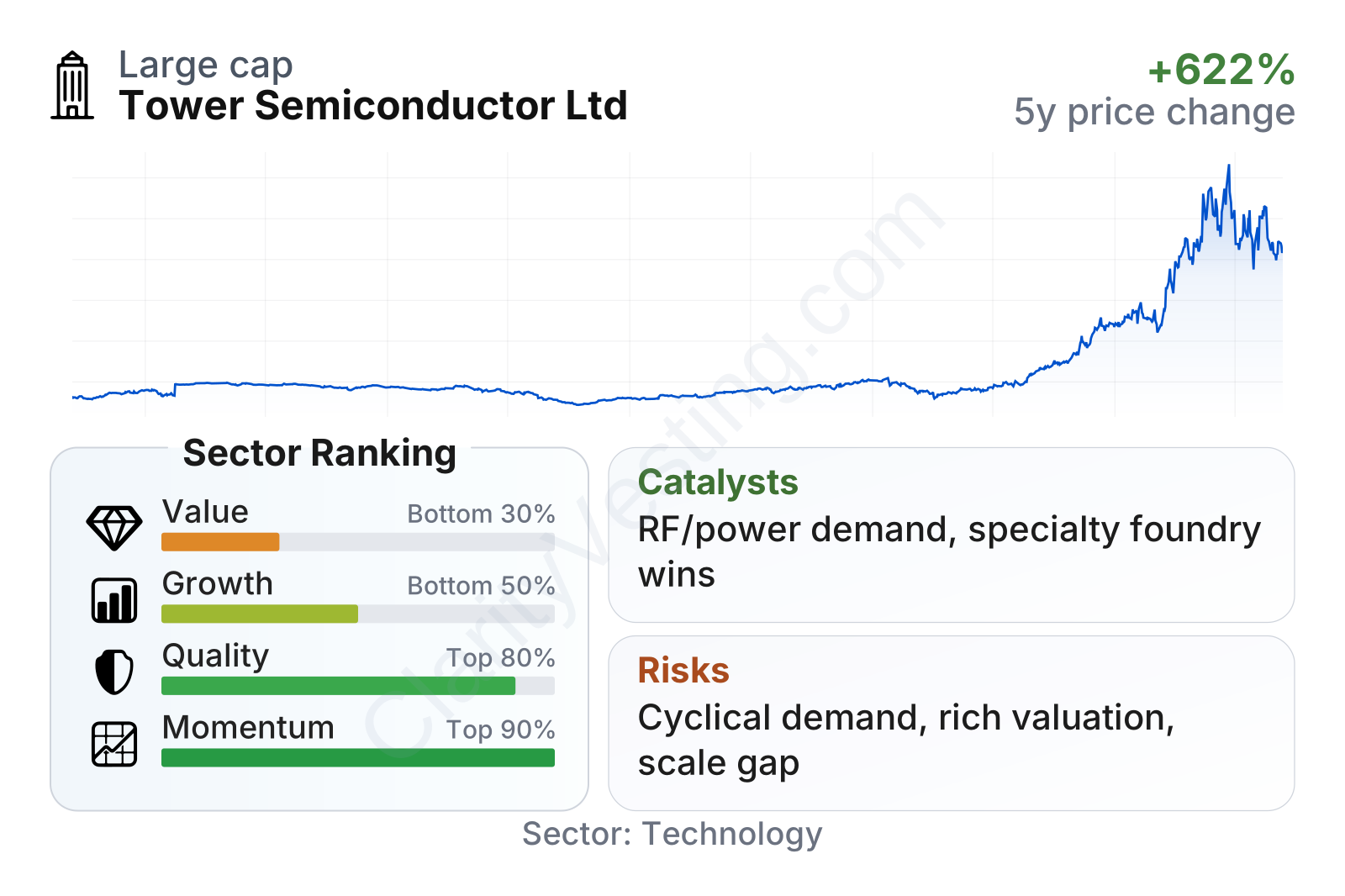
Tower currently stands out more for business quality and market momentum than for cheapness. Profitability, returns on invested capital, and balance sheet strength compare favorably with much of the semiconductor sector, while valuation metrics look demanding. Growth looks mixed: recent year-over-year revenue has improved clearly, but longer-term per-share and earnings trends are less impressive than the latest rebound might suggest.
The stock chart shows a dramatic rerating over the last year, far stronger than the typical move in the sector. That sharp climb matters because it changes the discussion from operational recovery to how much future progress is already reflected in the share price.
Growth
The semiconductor industry remains a structurally growing sector over the long run. Even outside headline themes like AI, more electronics content is being added to vehicles, industrial systems, communications equipment, medical devices, and connected products. Tower is positioned in this broader expansion through specialty manufacturing processes that are difficult to replace quickly once designed into customer products.
Tower’s strategy makes sense for future growth because it avoids going head-to-head with the biggest foundries in leading-edge digital chips. Instead, it focuses on specialty nodes where customers value process stability, engineering support, and long-term production availability. That is especially relevant in automotive, industrial, and infrastructure markets, where product cycles are longer and redesigns are costly.
Revenue growth has been cyclical, with a clear downturn during the industry slowdown and then a meaningful recovery. The latest year-over-year pace has accelerated into the low-20% range, which is ahead of the sector median and suggests demand has improved materially. That rebound is important because it indicates Tower is participating in the upcycle rather than merely defending market share.
Cash generation has also recovered after a weak patch. Free cash flow moved back into solidly positive territory after turning negative for a period, which supports the idea that recent growth is translating into healthier underlying business performance. For a foundry operator, this matters because chip manufacturing requires regular investment in equipment, process upgrades, and capacity.
A notable catalyst is the broader push for supply-chain diversification in semiconductors. Customers increasingly want manufacturing partners outside a single country or a single mega-foundry ecosystem. Tower’s specialty positioning and international manufacturing footprint can benefit from that shift. Another potential catalyst is rising demand for analog, power, sensing, and connectivity chips in automotive and industrial systems, which generally need exactly the kind of mature but specialized production that Tower offers.
Recent company communications have also emphasized expanding specialty process capabilities and deepening customer engagements in areas such as RF, power, silicon photonics, and sensor technologies. These are not overnight opportunities, but they fit a long-duration growth path if customers continue to outsource this type of production.
Risks
This article is for informational purposes only and does not constitute financial advice. Some content is AI-generated. See Disclaimer


