Stock Analysis · Tractor Supply Company (TSCO)
Overview
Tractor Supply Company is a specialty retailer focused on the rural lifestyle market in the United States. It sells products for homeowners, farmers, ranchers, pet owners, gardeners, and people who live outside dense urban areas. Its stores are designed around everyday needs rather than one-time big-ticket purchases, which gives the business a mix of recurring demand and seasonal demand. The company operates primarily under the Tractor Supply banner and also owns Petsense by Tractor Supply, a smaller pet specialty chain.
The business makes most of its money by selling merchandise through physical stores, supported by e-commerce and services such as buy online, pick up in store and same-day or neighbor delivery options in some markets. In its filings, Tractor Supply groups revenue mainly as net sales from merchandise rather than publishing a detailed segment revenue split by category every quarter, but its merchandise mix is broad enough to show where demand comes from most clearly.
Based on the company’s reported merchandise mix in recent annual filings, the main sources of revenue are approximately:
- Livestock, Equine and Agriculture: about 27%. This includes animal feed, fencing, sprayers, trailers, and other farm and ranch supplies.
- Companion Animal: about 25%. This includes pet food, treats, health products, toys, kennels, and related pet supplies.
- Seasonal and Recreation: about 22%. This includes lawn and garden products, power equipment, grilling, heating, gift items, and recreational merchandise.
- Truck, Tool and Hardware: about 16%. This includes tools, fasteners, truck accessories, power tools, and hardware items.
- Clothing, Gift and Decor: about 10%. This includes workwear, footwear, apparel, toys, gifts, and home decor.
This revenue mix matters because pet food, animal consumables, and farm maintenance products tend to be less discretionary than many other retail categories. That gives Tractor Supply a somewhat steadier demand profile than a general retailer exposed mostly to fashion or home furnishings.
Over the last several years, revenue has continued to rise, but the cost structure has also become heavier. Gross profit dollars expanded with sales, while interest expense and operating costs moved higher, which helps explain why earnings have been steadier than explosive despite ongoing top-line growth.
Key Figures
| Metric | Value | Sector ⓘ |
|---|---|---|
| Date | Sep 12, 2026 | |
| Context | ||
| Sector | Consumer Cyclical | |
| Industry | Specialty Retail | |
| Market Cap ⓘ | $17.20B | |
| Beta ⓘ | 0.47 | |
Value (Cheapness) | ||
| P/E Ratio ⓘ | 17.47 | 17.10 |
| FCF Yield ⓘ | 1.78% | 8.53% |
| EBIT / EV ⓘ | 5.90% | 6.46% |
| PEG ⓘ | 1.58 | |
Growth (Business expansion) | ||
| Revenue Growth ⓘ | 2.30% | 5.75% |
| RPS Growth (5Y CAGR) ⓘ | 7.33% | 9.14% |
| EPS Growth (5Y CAGR) ⓘ | -14.67% | -18.21% |
| Margin Growth (5Y Trend) ⓘ | -0.81% | -0.23% |
| FCF Growth (5Y CAGR) ⓘ | 9.76% | 4.91% |
Quality (Business durability) | ||
| ROIC (Latest) ⓘ | 24.67% | 12.61% |
| ROIC (5Y Median) ⓘ | 32.27% | 10.72% |
| Net Debt / EBIT (Latest) ⓘ | 4.50 | 2.10 |
| Net Debt / EBIT (5Y Median) ⓘ | 3.14 | 2.32 |
| Operating Margin (Latest) ⓘ | 8.91% | 9.25% |
| Operating Margin (5Y Median) ⓘ | 10.10% | 9.64% |
| Debt to Equity (Latest) ⓘ | 248.71% | 75.78% |
| Profit Margin (Latest) ⓘ | 6.43% | 5.33% |
| Free Cash Flow (Latest) ⓘ | $306.98M | |
Momentum (Price trend) | ||
| 3Y Return ⓘ | -19.45% | +14.53% |
| 12M Return (excl. last month) ⓘ | -37.28% | +3.08% |
| 6M Return ⓘ | -30.34% | +0.55% |
| Price vs. 200-Day MA ⓘ | -19.34% | -0.54% |
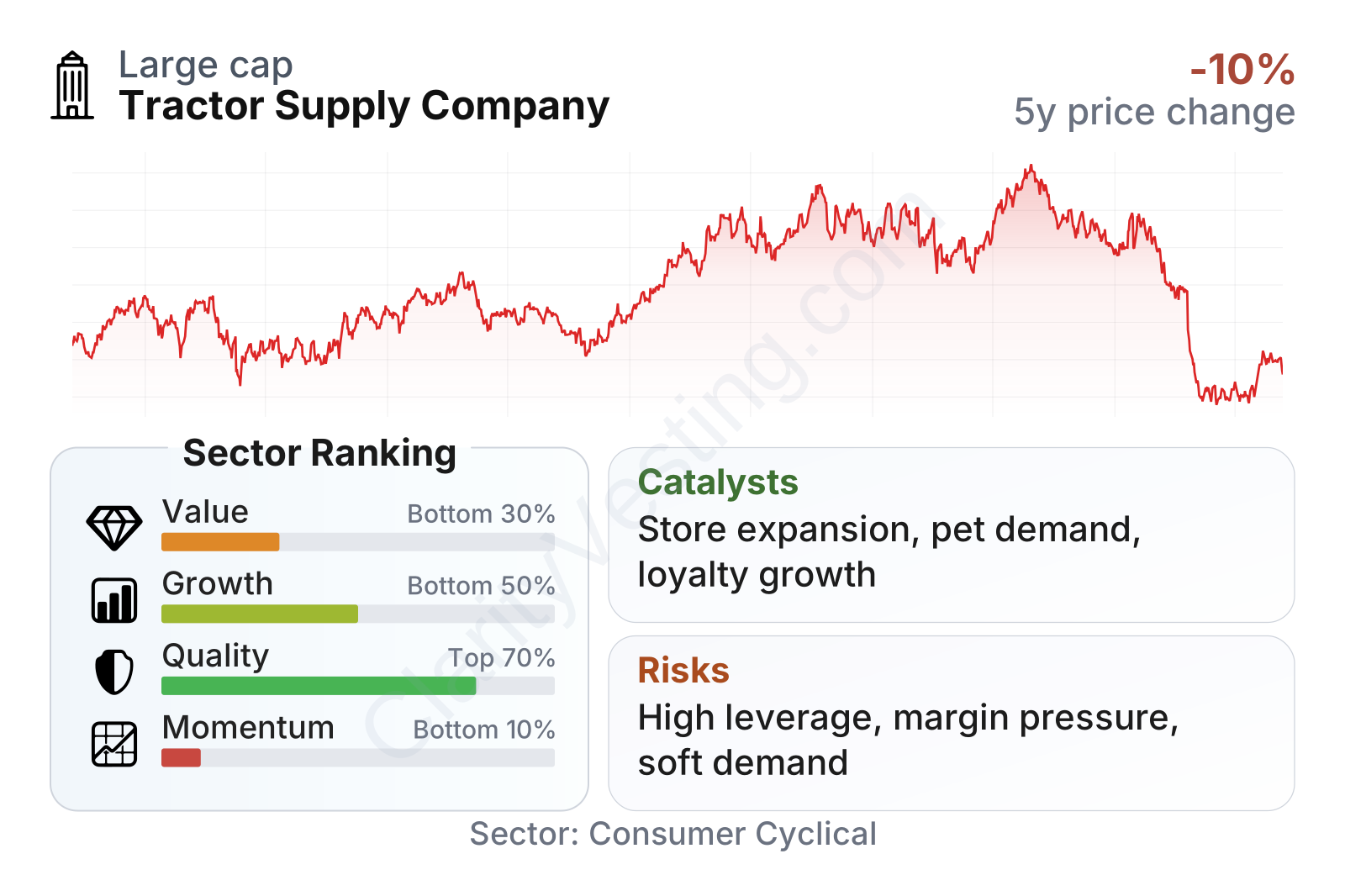
Tractor Supply stands out as a large specialty retailer with unusually strong returns on invested capital, well above the sector median, which suggests it has historically used its store base and inventory efficiently. Profitability remains solid, with net margin still above the sector median, even though operating margin has eased from earlier peaks. Growth is more mixed: recent sales growth is positive but modest, while free cash flow has compounded well over five years. The weakest area is recent share price performance, which has fallen sharply relative to much of the sector and has pushed valuation measures closer to, and in some cases below, sector norms.
Growth
Tractor Supply operates in a part of retail that benefits from several long-term trends: pet ownership, hobby farming, rural residential migration, and ongoing spending on maintenance of land, animals, and outdoor property. These are not fast-changing technology trends, but they can support steady expansion for a well-positioned retailer over a long period. The company’s niche is especially important because rural lifestyle customers often need a broad local assortment, convenient store access, and staff with practical product knowledge.
The company’s strategy appears consistent with that market. Management has continued opening new stores, expanding distribution capacity, strengthening its digital capabilities, and using its loyalty ecosystem to drive repeat purchases. Tractor Supply has also been building out more pet-related offerings and services, which can deepen recurring spending. Petsense remains smaller than the main chain, but it gives the company another way to participate in the pet category, one of its more dependable demand areas.
Sales growth has clearly cooled from the unusually strong post-pandemic period. Recent year-over-year growth has generally moved in the low single digits, far below the double-digit pace seen earlier in the cycle. That does not automatically signal a broken business; it suggests Tractor Supply is now growing from a larger base in a more normal consumer environment. The key question for long-term analysis is whether store expansion, market share gains, and category resilience can keep revenue moving upward even without a broad consumer boom.
Cash generation remains an important support for the growth case. Free cash flow has come down from a particularly strong peak but remains substantial in absolute terms. That gives the company room to fund store openings, supply chain investments, technology upgrades, and shareholder returns without relying entirely on fresh external capital.
A notable recent opportunity is Tractor Supply’s continued push into adjacent rural lifestyle services and customer engagement tools, including loyalty and digital fulfillment. Those initiatives can matter more than they first appear: for a retailer with recurring consumable purchases, even small gains in shopping frequency and basket size can add up over time. The broader pet and animal care categories also remain supportive because they tend to create repeat demand regardless of short-term economic swings.
Risks
This article is for informational purposes only and does not constitute financial advice. Some content is AI-generated. See Disclaimer


