Stock Analysis · Travel + Leisure Co (TNL)
Overview
Travel + Leisure Co is a vacation ownership and travel membership company. In simple terms, it sells timeshare interests, finances many of those purchases, manages resorts, and runs subscription-based travel clubs. The company operates well-known brands tied to vacation ownership and leisure travel, with a business model that combines upfront sales, recurring management fees, financing income, and member-based revenue.
Its largest activity is vacation ownership. This includes selling timeshare interests, providing consumer financing for buyers, and earning fees from resort management and exchange-related services. A smaller but still meaningful business comes from travel clubs and memberships, where customers pay for access to discounts, trip-planning tools, and travel services.
Based on recent company reporting, revenue is primarily concentrated in vacation ownership, with a much smaller contribution from travel memberships.
- Vacation Ownership: approximately 85% to 90% of revenue. This includes sales of vacation ownership interests, consumer financing income, property management, and related resort services.
- Travel and Membership: approximately 10% to 15% of revenue. This includes subscription travel clubs, exchange services, and member travel offerings.
This mix matters because it shows that Travel + Leisure Co is not a broad online travel agency like Booking or Expedia. Its economics are much more tied to the timeshare and vacation ownership market, where customer acquisition, financing, resort operations, and member retention all play a central role.
Over the last several years, revenue and operating income generally moved upward through 2024, showing a business that recovered well after the pandemic period. The picture became less clean more recently, with signs that profit conversion came under pressure even as sales kept advancing, which makes the quality of growth an important issue to watch.
The business has historically converted a large share of revenue into gross profit and solid operating income, but the latest annual flow also points to heavier cost pressure and noticeably lower net income. That suggests the company still has meaningful earning power, yet its margins are more sensitive than they first appear.
Key Figures
| Metric | Value | Sector ⓘ |
|---|---|---|
| Date | Sep 12, 2026 | |
| Context | ||
| Sector | Consumer Cyclical | |
| Industry | Travel Services | |
| Market Cap ⓘ | $4.09B | |
| Beta ⓘ | 1.17 | |
Value (Cheapness) | ||
| P/E Ratio ⓘ | 18.04 | 17.10 |
| FCF Yield ⓘ | 16.67% | 8.53% |
| EBIT / EV ⓘ | 6.08% | 6.46% |
| PEG ⓘ | 0.53 | |
Growth (Business expansion) | ||
| Revenue Growth ⓘ | 4.40% | 5.75% |
| RPS Growth (5Y CAGR) ⓘ | 13.49% | 9.14% |
| EPS Growth (5Y CAGR) ⓘ | -8.48% | -18.21% |
| Margin Growth (5Y Trend) ⓘ | -2.50% | -0.23% |
| FCF Growth (5Y CAGR) ⓘ | 0.58% | 4.91% |
Quality (Business durability) | ||
| ROIC (Latest) ⓘ | 8.70% | 12.61% |
| ROIC (5Y Median) ⓘ | 10.82% | 10.72% |
| Net Debt / EBIT (Latest) ⓘ | 9.46 | 2.10 |
| Net Debt / EBIT (5Y Median) ⓘ | 7.41 | 2.32 |
| Operating Margin (Latest) ⓘ | 14.02% | 9.25% |
| Operating Margin (5Y Median) ⓘ | 19.63% | 9.64% |
| Debt to Equity (Latest) ⓘ | -560.35% | 75.78% |
| Profit Margin (Latest) ⓘ | 5.79% | 5.33% |
| Free Cash Flow (Latest) ⓘ | $682.00M | |
Momentum (Price trend) | ||
| 3Y Return ⓘ | +95.23% | +14.53% |
| 12M Return (excl. last month) ⓘ | +27.66% | +3.08% |
| 6M Return ⓘ | -2.81% | +0.55% |
| Price vs. 200-Day MA ⓘ | -5.82% | -0.54% |
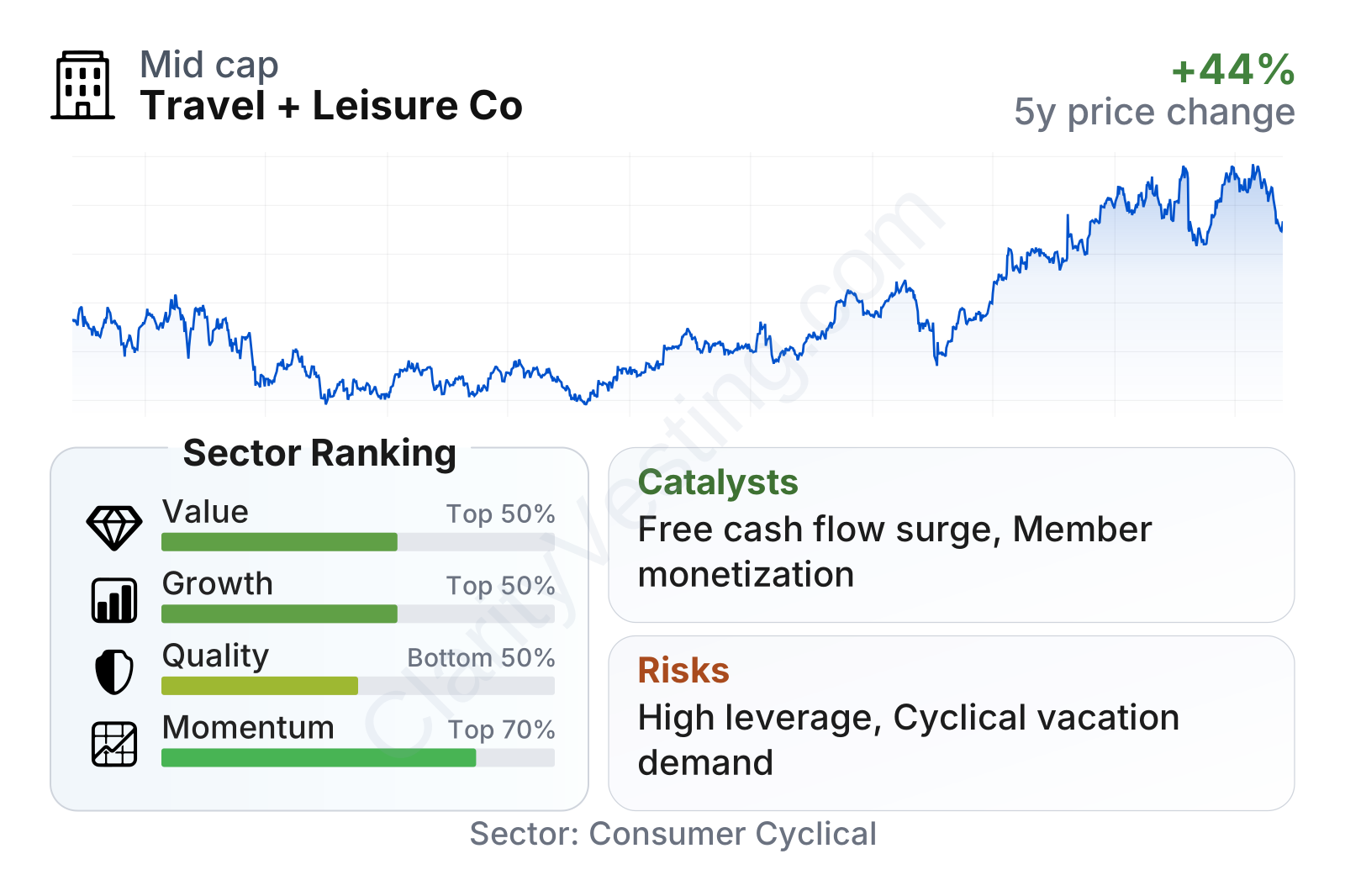
Travel + Leisure Co is a mid-sized public company in consumer cyclical businesses. Recent market performance has been strong relative to much of its sector, with the stock well above where it traded three years ago. On valuation, the earnings multiple is near the sector range rather than deeply discounted, while cash generation looks notably stronger than many peers. Growth is mixed: long-term revenue per share has been good, but recent yearly revenue expansion has been modest and below the sector median. Quality metrics are also mixed, because operating margins are healthy, but leverage remains unusually high.
Growth
Travel + Leisure Co operates in leisure travel, a sector that still benefits from long-term consumer demand for experiences, vacations, and flexible travel options. Within that broader market, the company is positioned in vacation ownership and travel clubs rather than airline or hotel ownership. That gives it exposure to recurring member relationships and resort fee streams, but also ties growth to consumer confidence and willingness to finance large discretionary purchases.
The company’s strategy broadly makes sense for future expansion. Vacation ownership can produce repeat business from an installed member base, while travel subscriptions and exchange platforms can deepen customer engagement beyond the initial sale. This combination is attractive because it blends one-time transactions with recurring revenue sources. It also creates cross-selling opportunities between resort stays, travel benefits, and membership products.
Growth has normalized after the sharp recovery period that followed the pandemic. Recent yearly revenue gains have generally been in the low single digits, with the latest pace around 4%. That is not especially fast for a consumer cyclical company, but it does show that demand has remained positive rather than reversing. Over a five-year view, revenue per share growth has been stronger than the sector median, suggesting that the business has done more than simply recover; it has also improved its revenue base on a per-share basis.
Cash generation is one of the more encouraging parts of the profile. Trailing free cash flow has risen sharply from earlier levels and recently moved into the $700 million+ range. That matters because free cash flow supports debt reduction, share repurchases, dividends, and investment in sales and marketing. Even if accounting earnings fluctuate, strong cash production gives the company more flexibility.
A meaningful catalyst is the ongoing resilience of leisure travel demand, especially in experiences-oriented spending. Another is the company’s ability to monetize its member base through upgrades, financing income, and add-on services rather than relying only on new-customer acquisition. If management can keep volume steady while protecting margins, even moderate revenue growth could translate into solid cash returns.
Recent company updates have also highlighted continued shareholder returns and ongoing brand and membership initiatives, which support the idea that management sees the business as mature but still capable of efficient growth. The opportunity is less about explosive expansion and more about steady monetization of a specialized niche with repeat customers.
Risks
This article is for informational purposes only and does not constitute financial advice. Some content is AI-generated. See Disclaimer


