Stock Analysis · Temenos AG (TMNSF)
Overview
Temenos AG is a banking software company based in Switzerland. Its products help banks run core daily operations such as deposits, payments, lending, account management, compliance, and digital customer services. In simple terms, Temenos sells the software infrastructure that many retail banks, private banks, wealth managers, and other financial institutions use behind the scenes.
The company mainly earns money from software subscriptions, maintenance, services, and licenses tied to its banking platforms. Over time, the business mix has been shifting toward more recurring revenue, especially SaaS and maintenance, which is generally more predictable than one-time software deals. Based on Temenos annual reporting and recent business mix disclosures, the revenue base can be described approximately as follows:
- Subscription and SaaS revenue: about 35% to 45% of revenue. This includes cloud-delivered banking software paid for over time.
- Maintenance and support: about 25% to 35%. This covers ongoing support, updates, and maintenance for installed software.
- Services: about 15% to 25%. This includes implementation, consulting, and related professional services.
- License revenue: about 10% to 20%. This is more transactional and depends on new software sales and upgrades.
That mix matters because recurring revenue streams usually make a software business more resilient. Temenos also has a global footprint, serving financial institutions across Europe, the Middle East, Africa, Asia-Pacific, and the Americas, which reduces dependence on any single country. The company’s financial structure also shows a very high gross margin business, with revenue rising from just under $970 million in 2021 to more than $1.14 billion in 2025, while operating income expanded much faster over that period. That points to improving efficiency as more revenue comes through at attractive margins.
The long-term pattern shows a business with relatively stable costs of delivery, solid gross profit expansion, and a sharp improvement in operating profit in 2025. Research and development remains a major spending area, which is important in banking software where product depth and regulatory updates are essential.
Key Figures
| Metric | Value | Sector ⓘ |
|---|---|---|
| Date | Sep 12, 2026 | |
| Context | ||
| Sector | Technology | |
| Industry | Software - Application | |
| Market Cap ⓘ | $5.76B | |
| Beta ⓘ | 0.59 | |
Value (Cheapness) | ||
| P/E Ratio ⓘ | 29.84 | 29.51 |
| FCF Yield ⓘ | 8.54% | 4.25% |
| EBIT / EV ⓘ | 6.26% | 2.85% |
| PEG ⓘ | 2.66 | |
Growth (Business expansion) | ||
| Revenue Growth ⓘ | -1.40% | 15.40% |
| RPS Growth (5Y CAGR) ⓘ | 5.06% | 8.56% |
| EPS Growth (5Y CAGR) ⓘ | -38.62% | -11.88% |
| Margin Growth (5Y Trend) ⓘ | 19.86% | 0.46% |
| FCF Growth (5Y CAGR) ⓘ | -0.63% | 9.80% |
Quality (Business durability) | ||
| ROIC (Latest) ⓘ | N/A | 9.44% |
| ROIC (5Y Median) ⓘ | 13.81% | 8.30% |
| Net Debt / EBIT (Latest) ⓘ | 1.70 | 0.54 |
| Net Debt / EBIT (5Y Median) ⓘ | 3.06 | 0.44 |
| Operating Margin (Latest) ⓘ | 35.10% | 9.58% |
| Operating Margin (5Y Median) ⓘ | 22.01% | 8.25% |
| Debt to Equity (Latest) ⓘ | 226.40% | 33.33% |
| Profit Margin (Latest) ⓘ | 17.50% | 7.14% |
| Free Cash Flow (Latest) ⓘ | $492.58M | |
Momentum (Price trend) | ||
| 3Y Return ⓘ | +12.38% | +45.48% |
| 12M Return (excl. last month) ⓘ | -14.18% | +23.48% |
| 6M Return ⓘ | -15.07% | +20.93% |
| Price vs. 200-Day MA ⓘ | -2.80% | +7.43% |
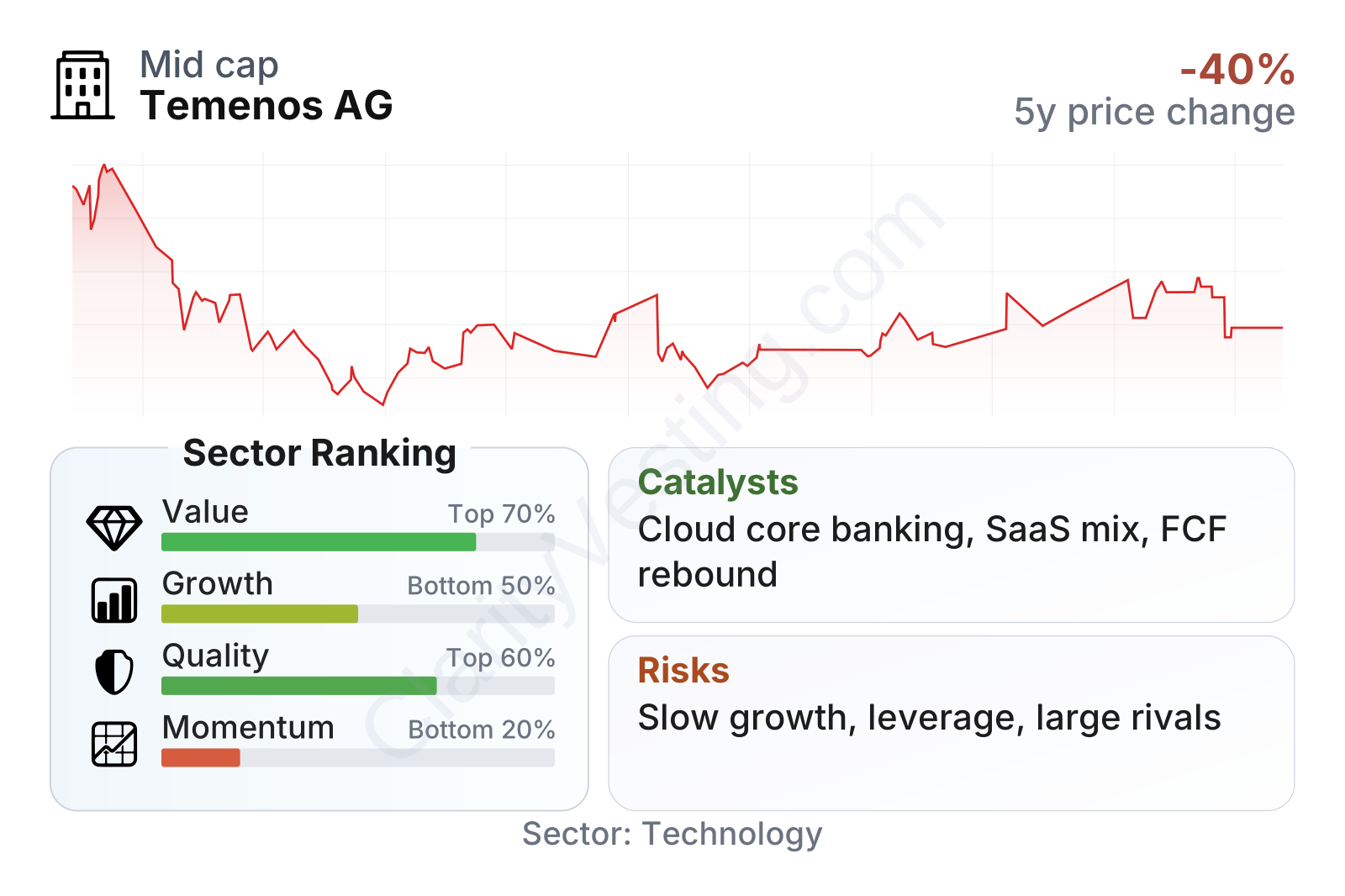
Temenos sits in the mid-cap range and has shown lower share-price volatility than many technology stocks, as reflected in its beta below 1. On valuation and cash generation, the company screens better than a large part of the software sector: its earnings multiple is below the sector median, while free cash flow yield and EBIT relative to enterprise value are notably stronger. Quality is also supported by unusually high operating margins for the industry. The weaker area is growth and share-price momentum, which helps explain why the market is not assigning it a premium software multiple today.
Growth
Temenos operates in a sector with durable long-term demand. Banks still need to modernize old internal systems, improve digital services, comply with changing regulations, and move more workloads to cloud-based platforms. Replacing core banking software is difficult and slow, but once spending starts, contracts can be large and sticky. That creates a favorable backdrop for established vendors with proven products.
The company’s strategy broadly fits that trend. Temenos has been pushing clients toward cloud delivery, modular software, and recurring subscription arrangements. This makes sense because banks increasingly want faster deployment, lower upfront technology spending, and easier upgrades. Temenos is also positioned around core banking modernization, digital banking, payments, and wealth-related software, all areas where financial institutions continue to invest even when budgets are selective.
Revenue growth has not been consistently strong every year, and that is one of the key issues in the investment debate. Growth dipped into negative territory in 2022, then gradually recovered, with the most recent annual pace moving back toward high single digits. That suggests the business has regained some momentum, but it still has not matched the growth profile of faster software peers.
Cash generation looks more encouraging than revenue alone. Free cash flow fell meaningfully between 2022 and 2024, then recovered sharply in 2025 and again in the latest trailing period, reaching roughly $450 million to $500 million. For long-term analysis, that matters because it shows the company is converting a large share of its revenue into actual cash, which can support debt reduction, acquisitions, product investment, or shareholder returns.
A meaningful catalyst is the continued migration of banks from legacy systems to cloud-based core platforms. Temenos is one of the few specialist vendors with global scale focused almost entirely on banking software. Another catalyst is operating leverage: because the company already has high gross margins, even moderate revenue acceleration can have an outsized effect on profit. Recent company updates have also emphasized continued demand for SaaS and strong annual contract value trends, which supports the idea that recurring revenue could keep expanding over time.
Risks
This article is for informational purposes only and does not constitute financial advice. Some content is AI-generated. See Disclaimer


