Stock Analysis · TKO Group Holdings Inc (TKO)
Overview
TKO Group Holdings Inc is a live sports and entertainment company built around two of the best-known combat sports brands in the world: UFC and WWE. The group was formed after Endeavor combined UFC with WWE, creating a business centered on media rights, live events, sponsorship, merchandising, and related licensing. In simple terms, TKO owns sports properties that attract large global audiences and then monetizes that attention across television and streaming deals, arena events, brand partnerships, and consumer products.
Its business model is attractive because much of the value comes from intellectual property, recurring fan engagement, and long-term media relationships rather than heavy physical assets. Fans follow fighters, wrestlers, major events, and storylines over time, which helps support repeat viewing and pricing power for premium events.
Based on company reporting, TKO’s revenue mix is led by media rights and content distribution, followed by live events and sponsorship, with consumer products and licensing representing a smaller share. The exact mix can move from year to year depending on the event calendar, new contracts, and large tentpole shows, but the broad structure is clear.
- Media rights and content: approximately 45% to 55% of revenue. This includes domestic and international broadcasting agreements, streaming rights, and other content distribution fees tied mainly to UFC and WWE programming.
- Live events: approximately 20% to 30% of revenue. This includes ticket sales, site fees, and event-related income from UFC fight cards, WWE premium live events, Raw, SmackDown, and touring events.
- Sponsorship and partnerships: approximately 15% to 25% of revenue. This covers brand integrations, official partners, in-venue advertising, and other commercial agreements.
- Consumer products and licensing: approximately 5% to 10% of revenue. This includes merchandise, videogames, collectibles, and licensing tied to UFC and WWE brands.
Another useful way to look at TKO is by brand exposure. UFC gives the group a global mixed martial arts platform with a premium event model, while WWE provides a high-volume scripted sports entertainment engine with weekly programming and large libraries of content. That combination creates diversification inside the same fan-driven ecosystem.
The business has scaled up sharply in recent years, with revenue rising from a little over $1 billion earlier in the period shown to nearly $4.7 billion in 2025. Profit conversion has been less smooth than revenue growth, however, because operating costs, selling expenses, and interest expense have also grown materially. That makes cash generation important when assessing the company.
Key Figures
| Metric | Value | Sector ⓘ |
|---|---|---|
| Date | Sep 12, 2026 | |
| Context | ||
| Sector | Communication Services | |
| Industry | Entertainment | |
| Market Cap ⓘ | $36.02B | |
| Beta ⓘ | 0.64 | |
Value (Cheapness) | ||
| P/E Ratio ⓘ | 67.01 | 18.61 |
| FCF Yield ⓘ | 4.64% | 13.68% |
| EBIT / EV ⓘ | 5.45% | 4.54% |
| PEG ⓘ | 1.59 | |
Growth (Business expansion) | ||
| Revenue Growth ⓘ | 18.20% | 5.40% |
| RPS Growth (5Y CAGR) ⓘ | 16.68% | 4.62% |
| EPS Growth (5Y CAGR) ⓘ | -5.87% | -18.01% |
| Margin Growth (5Y Trend) ⓘ | -6.00% | 1.10% |
| FCF Growth (5Y CAGR) ⓘ | 28.12% | 5.88% |
Quality (Business durability) | ||
| ROIC (Latest) ⓘ | 11.05% | 8.38% |
| ROIC (5Y Median) ⓘ | 7.45% | 8.32% |
| Net Debt / EBIT (Latest) ⓘ | 3.42 | 1.99 |
| Net Debt / EBIT (5Y Median) ⓘ | 6.25 | 2.94 |
| Operating Margin (Latest) ⓘ | 18.75% | 14.89% |
| Operating Margin (5Y Median) ⓘ | 23.38% | 12.96% |
| Debt to Equity (Latest) ⓘ | 145.87% | 59.59% |
| Profit Margin (Latest) ⓘ | 4.33% | 8.77% |
| Free Cash Flow (Latest) ⓘ | $1.67B | |
Momentum (Price trend) | ||
| 3Y Return ⓘ | +95.70% | +46.64% |
| 12M Return (excl. last month) ⓘ | +6.53% | +2.16% |
| 6M Return ⓘ | -4.69% | +5.05% |
| Price vs. 200-Day MA ⓘ | -3.20% | +2.88% |
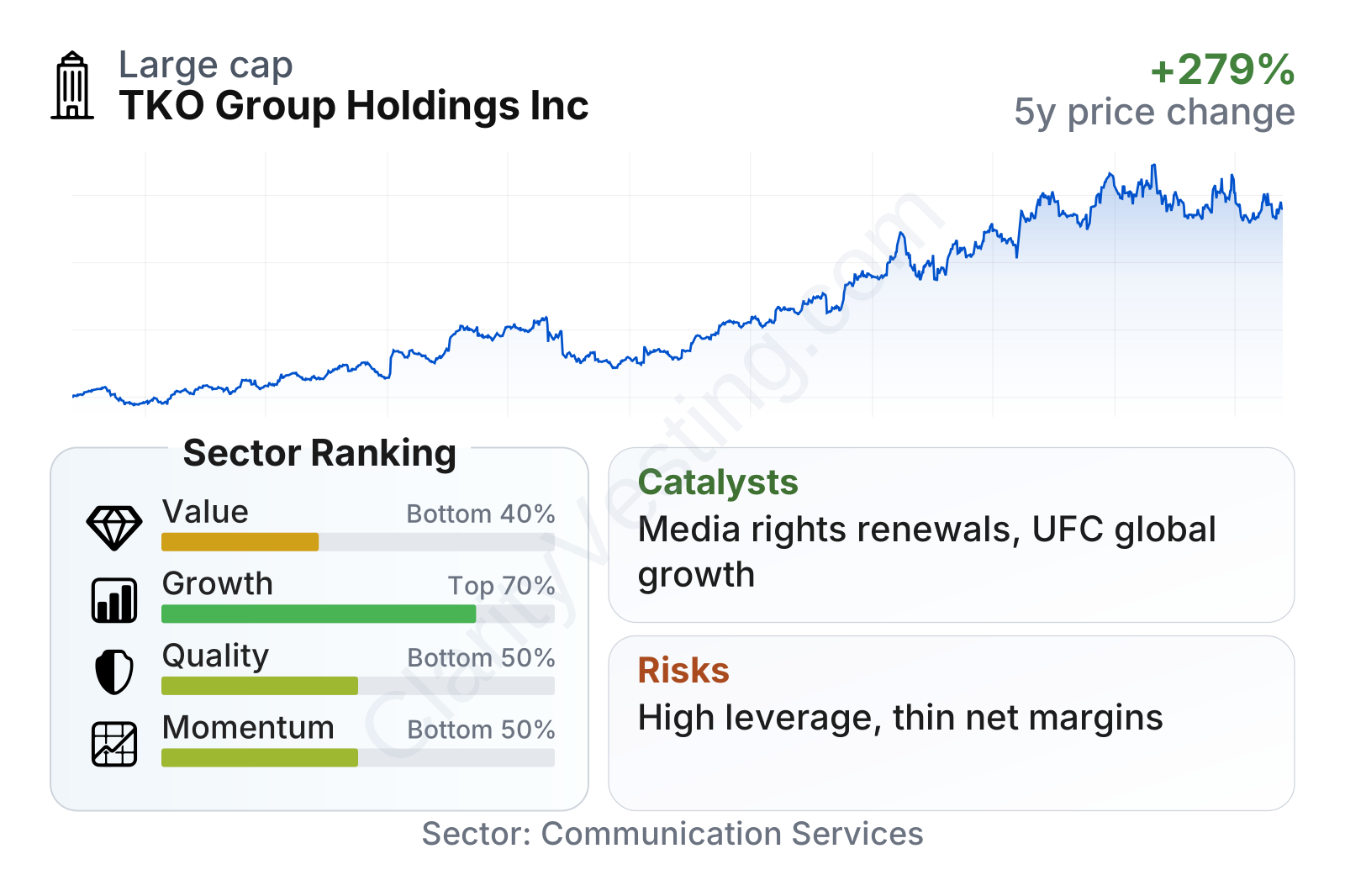
TKO is a large entertainment company with a market value in the tens of billions of dollars and a stock that has been less volatile than the broader market. The factor snapshot is mixed. Growth is better than much of the sector, helped by double-digit revenue growth and very strong multi-year free cash flow expansion. Quality is more uneven: operating margins remain solid, but leverage is elevated and net profit margins are still modest. Value metrics suggest the shares trade at a premium, especially on earnings, even if operating earnings relative to enterprise value look more respectable than the headline P/E ratio.
The stock chart also shows a strong long-term climb since 2021, although recent months have been less linear. That pattern often means expectations have already risen significantly, so future returns may depend more on execution and less on simple re-rating.
Growth
TKO operates in a part of the entertainment market that still has good structural momentum: premium live sports, sports entertainment, and must-watch programming. This is a favorable niche because live events remain one of the few types of content that audiences still watch in real time, which keeps them valuable for broadcasters, streaming platforms, advertisers, and sponsors. In a media world where many shows are consumed on demand, live sports still command premium pricing.
The company’s strategy for future growth is coherent. It owns brands with global recognition, controls a large volume of event programming, and can keep expanding monetization through media renewals, international market development, sponsorship packages, and pricing at major events. UFC and WWE also create opportunities for cross-promotion, shared back-office functions, and better bargaining power with distributors and commercial partners.
Revenue growth has been volatile from quarter to quarter, which is normal for an event-driven business, but the broader trend remains strong. The latest year-over-year pace is still well above the sector median, and the longer-term revenue-per-share growth record is also clearly stronger than most peers. Some of the extreme jumps in the past period reflect business combination effects and changing comparison bases, so the more important takeaway is that TKO has been growing faster than the average communication services company.
Cash generation is one of the clearest positives. Trailing free cash flow has increased dramatically over the period shown, moving from relatively modest levels to well above $1.5 billion. That matters because it gives the company more flexibility to manage debt, invest in growth initiatives, and absorb fluctuations in accounting earnings. For a rights-driven business, strong cash production is often a better sign of economic strength than net income alone.
Recent company announcements and filings have reinforced the growth angle. WWE’s major media rights renewals, including the move of flagship content to larger distribution platforms, improve revenue visibility. UFC continues to benefit from international demand, premium live events, and sponsor appeal. TKO has also expanded beyond its original two core brands through event-related assets and partnerships, signaling an ambition to become a broader live sports and entertainment platform rather than a narrow collection of franchises.
A meaningful catalyst is the continued scarcity value of premium sports rights. Broadcasters and streamers need content that keeps subscribers engaged and supports advertising, and TKO owns properties with loyal global fan bases. If the group continues to secure favorable rights terms and maintain event popularity, that supports further scale.
Risks
This article is for informational purposes only and does not constitute financial advice. Some content is AI-generated. See Disclaimer


