Stock Analysis · The TJX Companies Inc (TJX)
Overview
The TJX Companies is a large off-price retailer. It sells branded and designer apparel, footwear, accessories, home fashions, and some jewelry and beauty products at prices that are usually below those of traditional department stores and specialty retailers. Its best-known banners are T.J. Maxx, Marshalls, HomeGoods, Homesense, Sierra, and TK Maxx in Europe and Australia. The core idea is simple: buy merchandise opportunistically from thousands of vendors, turn inventory quickly, and offer shoppers a “treasure-hunt” experience that changes often.
TJX makes almost all of its money from physical retail sales, with e-commerce playing a much smaller role than at many other retailers. Based on its latest annual reporting structure, revenue is spread across several segments, led by U.S. apparel and home categories.
- Marmaxx: about 51% of revenue. This is the largest business and includes T.J. Maxx and Marshalls in the United States, selling family apparel, footwear, accessories, and some home products.
- HomeGoods: about 15% of revenue. This segment includes HomeGoods and Homesense in the United States, focused on home décor, furniture, kitchen, seasonal, and related home categories.
- TJX Canada: about 10% of revenue. This includes Winners, HomeSense, and Marshalls in Canada.
- TJX International: about 19% of revenue. This covers Europe and Australia, mainly through TK Maxx and Homesense formats.
- Sierra and e-commerce/other: about 5% of revenue. This is the smallest piece and includes outdoor-oriented retail and online activity.
The company’s scale matters because off-price retail depends on buying power, supplier relationships, and logistics. TJX is one of the few players large enough to absorb closeout inventory from many brands while still rotating product across a wide store network. Over the last several years, revenue, operating income, and net income have all moved higher, showing that growth has not come only from opening stores but also from stronger profitability.
A notable trend is that sales have kept rising while profitability has improved even faster. Gross profit and operating income have expanded more quickly than revenue since fiscal 2023, which suggests better merchandise margins and good expense control despite a larger store base.
Key Figures
| Metric | Value | Sector ⓘ |
|---|---|---|
| Date | Sep 12, 2026 | |
| Context | ||
| Sector | Consumer Cyclical | |
| Industry | Apparel Retail | |
| Market Cap ⓘ | $138.62B | |
| Beta ⓘ | 0.59 | |
Value (Cheapness) | ||
| P/E Ratio ⓘ | 23.34 | 17.10 |
| FCF Yield ⓘ | 4.24% | 8.53% |
| EBIT / EV ⓘ | 4.20% | 6.46% |
| PEG ⓘ | 2.47 | |
Growth (Business expansion) | ||
| Revenue Growth ⓘ | 5.40% | 5.75% |
| RPS Growth (5Y CAGR) ⓘ | 7.66% | 9.14% |
| EPS Growth (5Y CAGR) ⓘ | -7.54% | -18.21% |
| Margin Growth (5Y Trend) ⓘ | 2.79% | -0.23% |
| FCF Growth (5Y CAGR) ⓘ | 25.02% | 4.91% |
Quality (Business durability) | ||
| ROIC (Latest) ⓘ | 46.44% | 12.61% |
| ROIC (5Y Median) ⓘ | N/A | 10.72% |
| Net Debt / EBIT (Latest) ⓘ | 1.11 | 2.10 |
| Net Debt / EBIT (5Y Median) ⓘ | 1.15 | 2.32 |
| Operating Margin (Latest) ⓘ | 12.57% | 9.25% |
| Operating Margin (5Y Median) ⓘ | 11.15% | 9.64% |
| Debt to Equity (Latest) ⓘ | 134.42% | 75.78% |
| Profit Margin (Latest) ⓘ | 9.73% | 5.33% |
| Free Cash Flow (Latest) ⓘ | $5.88B | |
Momentum (Price trend) | ||
| 3Y Return ⓘ | +42.14% | +14.53% |
| 12M Return (excl. last month) ⓘ | +15.81% | +3.08% |
| 6M Return ⓘ | -18.59% | +0.55% |
| Price vs. 200-Day MA ⓘ | -17.87% | -0.54% |
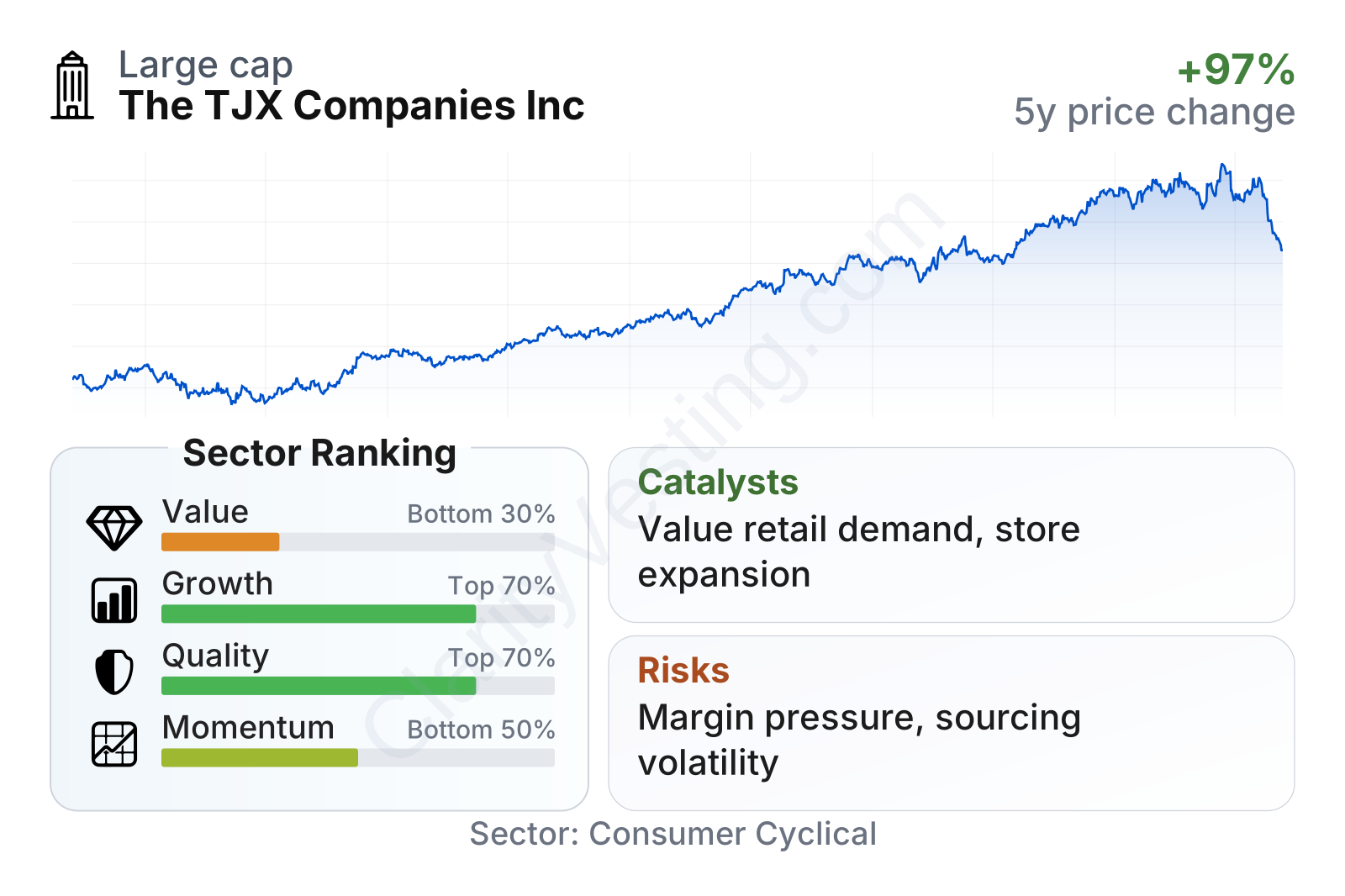
TJX is a very large retailer with lower share-price volatility than many consumer discretionary stocks, reflected in a beta well below 1. In the factor breakdown, its strongest areas are business quality and cash generation. Returns on invested capital are far above the sector median, margins are better than most peers, and net debt relative to earnings remains manageable. Growth is positive rather than explosive, with revenue expansion roughly in line with the broader sector and free cash flow improving strongly over a multi-year period. The weaker area is valuation: the shares trade at a clear premium to sector averages on earnings and cash flow measures, which means the market is already recognizing TJX’s operational consistency.
Growth
TJX operates in retail, which is not a high-growth sector in the same way as software or semiconductors, but off-price retail has attractive structural features. When consumers become more price conscious, value-focused chains can gain traffic. When brands and full-price retailers face excess inventory, off-price buyers can get more favorable deals. That gives TJX a model that can work in both cautious consumer environments and more normal retail cycles.
The company’s strategy for future growth is sensible and easy to understand: open more stores in markets where the format still has room to expand, keep inventory fresh, use its scale to source branded merchandise at appealing prices, and widen category reach in home and international markets. HomeGoods remains important because home furnishings and décor can drive repeat visits, while international operations provide an additional runway outside the United States.
Recent revenue growth has been steady rather than dramatic, generally running in the mid-single-digit range lately after more volatile post-pandemic swings. That pattern fits a mature but still expanding retail platform. For a business of TJX’s size, consistency matters more than very rapid top-line growth, and the company has been showing that it can keep sales moving higher without giving up profitability.
Cash generation is another important growth support. Free cash flow has risen sharply over the last few years and remains in the multi-billion-dollar range. That gives TJX room to invest in new stores, distribution capacity, technology, and shareholder returns without straining the balance sheet. In retail, strong cash flow is especially useful because it provides flexibility when inventory opportunities appear suddenly.
A meaningful catalyst is the ongoing consumer preference for value. Across many income groups, shoppers have become more focused on price and selective on discretionary purchases. TJX’s format is designed for exactly that environment. Another catalyst is supply-chain normalization at brands and wholesalers, which can create a broader pool of attractive merchandise for off-price buyers. In addition, the company has continued to talk about long-term store growth potential across banners, especially in home and international formats, which supports a multi-year expansion path rather than a short one-time boost.
Recent company updates have also pointed to continued customer traffic and comparable sales resilience, reinforcing the idea that the format remains relevant even when the broader apparel and home retail environment is uneven. That does not guarantee fast growth, but it supports the view that TJX is still taking share within value-oriented retail.
Risks
This article is for informational purposes only and does not constitute financial advice. Some content is AI-generated. See Disclaimer


