Stock Analysis · Taboola (TBLA)
Overview
Taboola is a digital advertising technology company best known for the recommendation boxes and sponsored content placements that appear on news sites, apps, and connected devices. Its platform helps publishers make money from their pages and helps advertisers reach users through performance-based campaigns, especially outside the large closed ecosystems run by companies such as Google and Meta.
The business is built around matching advertisers that want traffic, leads, or sales with publishers that want to monetize their audience. Taboola has also expanded beyond traditional article recommendation widgets into a broader performance advertising platform, including more placements across publisher pages and app environments.
Based on company filings, Taboola’s revenue is largely generated from one core activity: advertising spend managed through its platform and shared with publishers. Reported revenue is usually presented as one main line rather than many separate segments, but the business can still be understood through its economic sources.
- Advertising revenue from publisher partnerships: approximately 90%+ of revenue. This includes sponsored article links, native ads, and other performance ads placed on publisher websites and digital properties under long-term commercial agreements.
- Ads on mobile, apps, and newer surfaces: a smaller but growing portion within the core advertising business. This includes placements beyond the classic article recommendation box, such as feed, homepage, and app-based inventory. A precise standalone percentage is not consistently disclosed.
- Other revenue and services: a limited share. This can include related platform services and smaller monetization activities, but filings do not indicate a major separate revenue stream.
For a simple long-term view, the key point is that Taboola is essentially a scaled ad marketplace. It sits between advertisers seeking measurable results and publishers seeking revenue, with its success depending on audience reach, ad performance, and the ability to keep both sides of the marketplace active.
Over the last several years, the company’s financial structure has improved. Revenue has grown overall, gross profit has expanded, and the business moved from operating losses to operating profit in 2025. That matters because it suggests Taboola is no longer relying only on scale ambitions; it is showing better operating discipline as well.
The business mix remains centered on revenue-sharing advertising arrangements, but the more notable trend is improving profitability: gross profit has moved higher over time, operating expenses have grown more slowly than revenue, and net income turned positive in 2025 after several weaker years.
Key Figures
| Metric | Value | Sector ⓘ |
|---|---|---|
| Date | Sep 12, 2026 | |
| Context | ||
| Sector | Communication Services | |
| Industry | Internet Content & Information | |
| Market Cap ⓘ | $1.01B | |
| Beta ⓘ | 1.48 | |
Value (Cheapness) | ||
| P/E Ratio ⓘ | 9.56 | 18.61 |
| FCF Yield ⓘ | 19.93% | 13.68% |
| EBIT / EV ⓘ | 12.25% | 4.54% |
| PEG ⓘ | N/A | |
Growth (Business expansion) | ||
| Revenue Growth ⓘ | 2.40% | 5.40% |
| RPS Growth (5Y CAGR) ⓘ | 3.72% | 4.62% |
| EPS Growth (5Y CAGR) ⓘ | -21.52% | -18.01% |
| Margin Growth (5Y Trend) ⓘ | N/A | 1.10% |
| FCF Growth (5Y CAGR) ⓘ | 60.79% | 5.88% |
Quality (Business durability) | ||
| ROIC (Latest) ⓘ | 12.13% | 8.38% |
| ROIC (5Y Median) ⓘ | -0.33% | 8.32% |
| Net Debt / EBIT (Latest) ⓘ | -0.38 | 1.99 |
| Net Debt / EBIT (5Y Median) ⓘ | N/A | 2.94 |
| Operating Margin (Latest) ⓘ | 6.41% | 14.89% |
| Operating Margin (5Y Median) ⓘ | -0.14% | 12.96% |
| Debt to Equity (Latest) ⓘ | 9.10% | 59.59% |
| Profit Margin (Latest) ⓘ | 6.05% | 8.77% |
| Free Cash Flow (Latest) ⓘ | $200.81M | |
Momentum (Price trend) | ||
| 3Y Return ⓘ | +1.33% | +46.64% |
| 12M Return (excl. last month) ⓘ | +20.12% | +2.16% |
| 6M Return ⓘ | +22.58% | +5.05% |
| Price vs. 200-Day MA ⓘ | -7.94% | +2.88% |
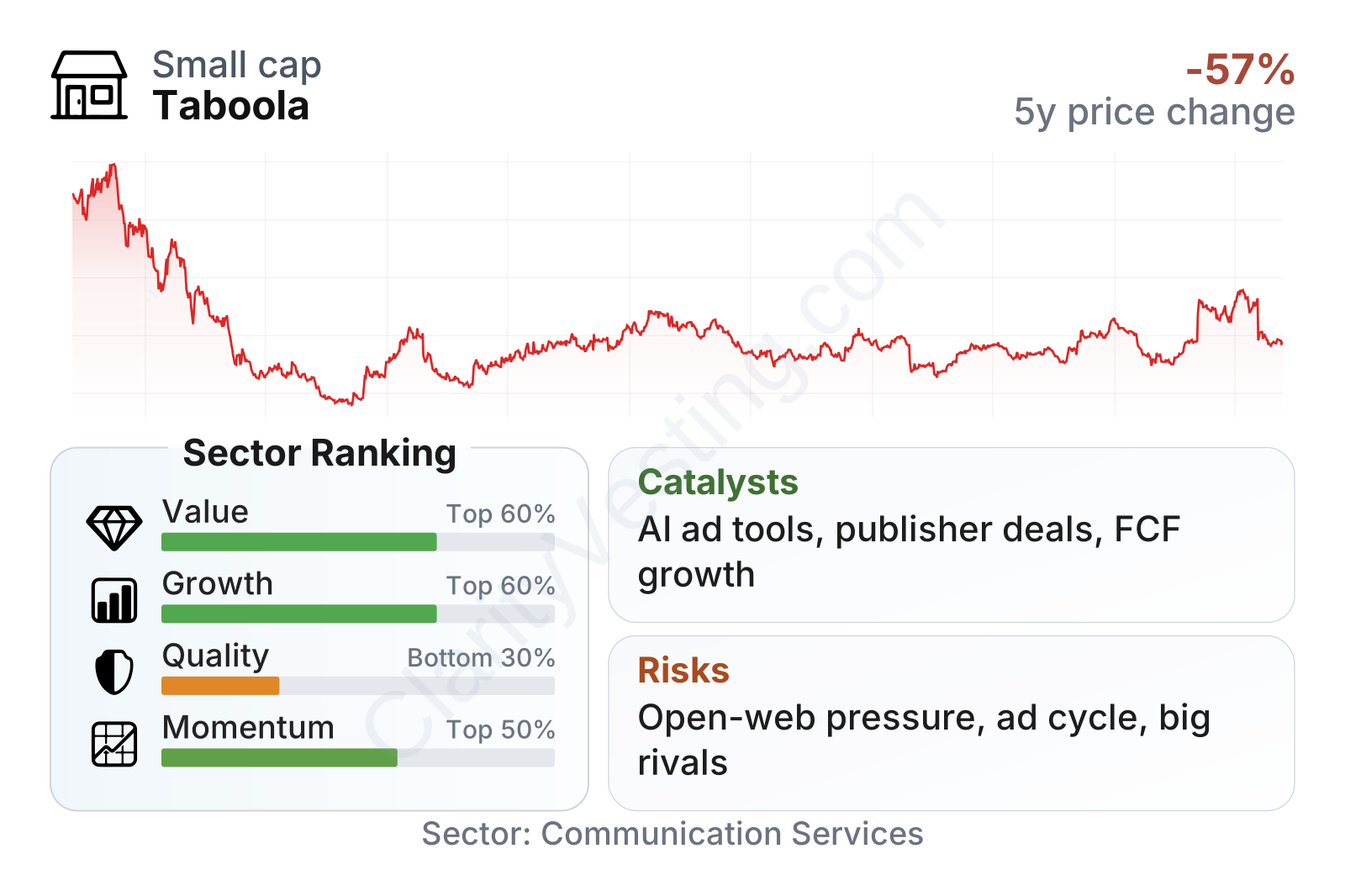
Taboola is a small-cap company in the communication services sector, and its share price history has been volatile since listing. The stock fell sharply after 2021, then partly recovered, which reflects both the swings in digital advertising conditions and the market’s changing view of the company’s path to profitability.
The current metric profile is mixed but understandable. On valuation, the company screens cheaper than the sector median, with a P/E around the low teens and a free cash flow yield above the median. Growth indicators are more modest than many internet peers, but cash generation has improved much faster than the sector norm. Quality is the weaker area overall because margins and long-term profitability history still lag stronger digital platform businesses, even though balance sheet strength now looks much better than the industry median.
Growth
Taboola operates in a part of the advertising market that should remain relevant over the long run: digital performance advertising. Advertisers continue shifting budgets toward channels where spending can be measured more directly, and publishers remain under pressure to find monetization outside the dominant walled gardens. That creates a durable need for independent platforms that can convert audience attention into measurable ad results.
Its strategy for future growth is coherent. Rather than trying to compete head-on in search or social media, Taboola focuses on the open web and on helping publishers monetize traffic they already have. This position can be attractive if the company keeps expanding the number of placements it controls, improves ad targeting, and captures a larger share of advertiser budgets aimed at customer acquisition rather than brand awareness.
Revenue growth has not been smooth. The company went through a weak period in 2022 and part of 2023 when advertising demand softened, then returned to stronger expansion through 2024 and remained positive into 2026, though at a slower pace recently. That pattern suggests the business is tied to the ad cycle, but it also shows that Taboola has been able to recover and resume expansion rather than remain stuck in contraction.
One of the most encouraging developments is cash generation. Free cash flow has risen sharply from relatively modest levels in 2022 and 2023 to more than $200 million on a trailing basis by early 2026. For a company of this size, that is important because it gives management more room to invest in product development, support partnerships, and manage through cyclical slowdowns without leaning heavily on external financing.
A visible catalyst is Taboola’s push to become a broader performance advertising platform rather than only a recommendation widget provider. The company has highlighted deeper publisher integrations, more placements across websites and apps, and AI-based tools designed to improve advertiser returns. If those initiatives increase conversions for advertisers and revenue per page for publishers, they could support both growth and better margins over time.
Another meaningful opportunity comes from large publisher agreements. Taboola’s model benefits from scale: every major publisher relationship adds more inventory, more user data signals, and more reasons for advertisers to spend on the platform. In this kind of business, distribution wins can matter as much as pure technology improvements.
Risks
This article is for informational purposes only and does not constitute financial advice. Some content is AI-generated. See Disclaimer


