Stock Analysis · Sandisk Corp (SNDK)
Overview
Sandisk Corp operates in data storage, with a focus on flash memory products used in consumer devices, personal computing, enterprise systems, and cloud infrastructure. In simple terms, the company makes the storage technology that allows phones, laptops, servers, and connected devices to save and access data quickly. Its business sits at the intersection of two large trends: the steady growth of digital content and the rising need for high-speed memory in artificial intelligence, cloud computing, and modern electronics.
The company’s revenue is mainly tied to NAND flash memory and related storage solutions. Public filings and company disclosures typically describe the business through end markets and product families rather than a fully fixed revenue split, and the mix can move meaningfully from quarter to quarter because memory pricing is cyclical. Based on Sandisk’s reported business structure, the main revenue sources can be summarized as follows:
- Client and consumer storage products: approximately 40% to 50% of revenue in a typical mix. This includes SSDs for PCs, removable cards, USB drives, and branded storage products sold through retail and distribution channels.
- Mobile and embedded flash: approximately 25% to 35%. This covers storage used inside smartphones, tablets, automotive systems, and other devices where memory is built directly into the product.
- Cloud, enterprise, and data center storage: approximately 20% to 30%. This includes higher-performance SSDs and components used by enterprise customers and cloud operators.
- Other and licensing-related activity: generally a small single-source contribution when disclosed separately, including certain intellectual property or non-core items.
What matters most is that Sandisk is not a pure software company with recurring subscriptions. It sells memory and storage hardware into markets where demand can be strong, but pricing can change quickly. That makes revenue and profit more volatile than many other technology businesses.
The longer-term operating pattern has been very cyclical. Revenue fell sharply during the industry downturn in 2023 and remained pressured in 2024 and 2025, while recent results point to a strong rebound. The visual breakdown also shows a large and consistent commitment to research and development, which is important in storage because product transitions and manufacturing efficiency often decide who earns acceptable margins.
Over the last several years, the business moved from a deep downcycle back into a much stronger profit phase. Revenue has recovered substantially, and the gap between gross profit and operating expenses widened sharply in the latest period, showing how powerful earnings can become when pricing and utilization improve.
Key Figures
| Metric | Value | Sector ⓘ |
|---|---|---|
| Date | Sep 12, 2026 | |
| Context | ||
| Sector | Technology | |
| Industry | Computer Hardware | |
| Market Cap ⓘ | $239.15B | |
| Beta ⓘ | N/A | |
Value (Cheapness) | ||
| P/E Ratio ⓘ | 22.94 | 29.51 |
| FCF Yield ⓘ | 4.81% | 4.25% |
| EBIT / EV ⓘ | 5.38% | 2.85% |
| PEG ⓘ | N/A | |
Growth (Business expansion) | ||
| Revenue Growth ⓘ | 371.60% | 15.40% |
| RPS Growth (5Y CAGR) ⓘ | 17.84% | 8.56% |
| EPS Growth (5Y CAGR) ⓘ | 22.42% | -11.88% |
| Margin Growth (5Y Trend) ⓘ | N/A | 0.46% |
| FCF Growth (5Y CAGR) ⓘ | N/A | 9.80% |
Quality (Business durability) | ||
| ROIC (Latest) ⓘ | 90.07% | 9.44% |
| ROIC (5Y Median) ⓘ | N/A | 8.30% |
| Net Debt / EBIT (Latest) ⓘ | -0.33 | 0.54 |
| Net Debt / EBIT (5Y Median) ⓘ | N/A | 0.44 |
| Operating Margin (Latest) ⓘ | 64.65% | 9.58% |
| Operating Margin (5Y Median) ⓘ | -13.10% | 8.25% |
| Debt to Equity (Latest) ⓘ | 2.50% | 33.33% |
| Profit Margin (Latest) ⓘ | 56.47% | 7.14% |
| Free Cash Flow (Latest) ⓘ | $11.49B | |
Momentum (Price trend) | ||
| 3Y Return ⓘ | N/A | +45.48% |
| 12M Return (excl. last month) ⓘ | +2770.57% | +23.48% |
| 6M Return ⓘ | +163.95% | +20.93% |
| Price vs. 200-Day MA ⓘ | +58.01% | +7.43% |
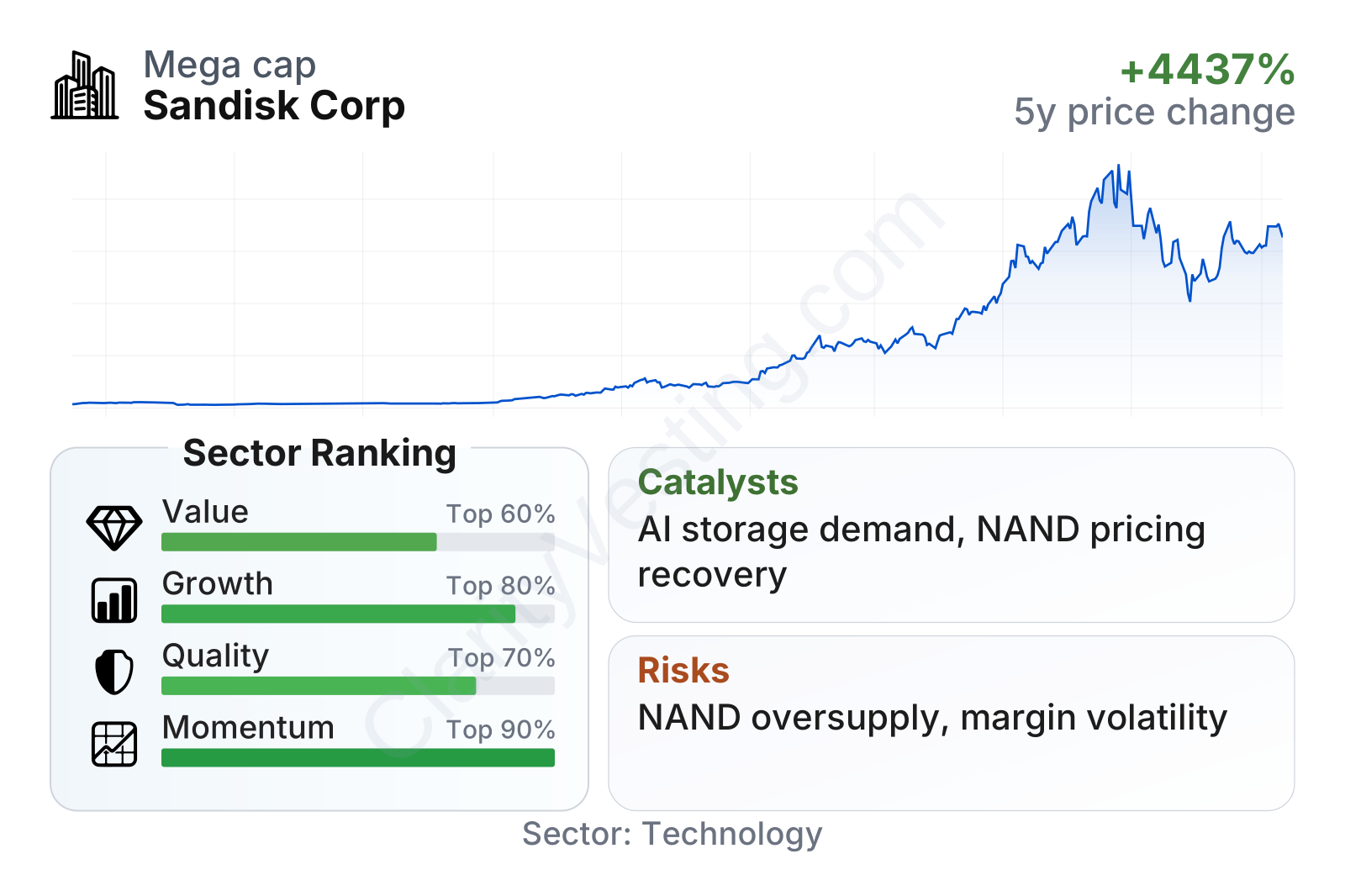
Sandisk currently screens as a large technology company with a mixed but improving fundamental profile. On valuation, it looks cheaper than the sector median on earnings and cash flow measures. On growth, it ranks near the top of the sector, helped by an unusually strong rebound in revenue and earnings over the last year. Quality metrics are also strong, especially profitability and balance sheet strength, although these figures need to be read carefully because memory businesses can swing from losses to very high margins in a short period. Momentum is especially strong, reflecting the sharp rise in the share price over recent months.
Growth
Sandisk operates in a sector with favorable long-term demand drivers. The world keeps creating more data, and that data needs to be stored somewhere. At the same time, AI servers, cloud platforms, edge devices, gaming systems, and more advanced smartphones all require faster and denser storage. NAND flash remains one of the core technologies behind that expansion, so the industry itself has real structural growth even if yearly results can be uneven.
Sandisk’s strategy makes sense if the goal is to benefit from that demand. The company focuses on storage products across consumer, client, mobile, and enterprise markets, which gives it multiple ways to participate in higher memory consumption. It also continues to invest heavily in product development, an important point in an industry where technical progress, cost per bit, and product performance are critical to staying relevant.
The recent acceleration in revenue growth is the clearest sign that the cycle has turned in the company’s favor. Year-over-year growth moved from already solid levels to exceptionally high levels by mid-2026. Part of that reflects recovery from a weak comparison period, but it also shows that pricing, product mix, and demand have improved together rather than in isolation.
Cash generation has also improved dramatically. Free cash flow moved from slightly negative territory in 2025 to strongly positive by 2026, which is a major change for a hardware business coming out of a downturn. That improvement matters because it gives the company more flexibility for capital spending, technology development, debt management, and shareholder returns if management chooses.
One of the strongest catalysts is the memory upcycle itself. When supply and demand tighten, storage manufacturers can see a fast improvement in revenue and margins. Another meaningful catalyst is AI-related infrastructure spending. AI training and inference systems require very large amounts of high-speed storage, and that can support stronger enterprise and cloud demand over time. Recent company-reported results and investor communications also indicate that pricing conditions have improved materially versus the lows of the previous downturn, which creates a more supportive backdrop than the company had one or two years ago.
Risks
This article is for informational purposes only and does not constitute financial advice. Some content is AI-generated. See Disclaimer


