Stock Analysis · Soitec SA (SLOIY)
Overview
Soitec SA is a French semiconductor materials company that specializes in engineered substrates rather than finished chips. Its core products are advanced wafers used by chip manufacturers to improve performance, power efficiency, and radio-frequency capabilities. The company is best known for silicon-on-insulator, or SOI, technology, which places a thin insulating layer inside the wafer structure. That makes Soitec an important upstream supplier to parts of the semiconductor industry tied to smartphones, automotive electronics, industrial devices, and data infrastructure.
The business model is relatively focused: Soitec develops and manufactures specialty substrates, then sells them to semiconductor foundries, integrated device makers, and other chip industry customers. This means its results are closely linked to customer demand cycles, inventory corrections, and the pace of adoption of more advanced chip architectures.
Based on company reporting, revenue is mainly concentrated in a few product families, with the largest contribution coming from communications and power-related substrates. A simple breakdown looks like this:
- Mobile communications and RF applications: the largest revenue source, driven by RF-SOI wafers used in smartphone front-end modules and wireless connectivity chips.
- Automotive and industrial power electronics: a major and growing segment, supported by silicon carbide and other engineered substrates used in electric vehicles and energy applications.
- Edge and cloud computing: smaller but strategic, including FD-SOI and other substrates aimed at low-power processors, sensors, and certain computing uses.
In broad terms, the communications business has historically represented the majority of sales, often around half or more, while automotive and industrial uses have become a larger second pillar. The exact mix can shift meaningfully from year to year because Soitec serves cyclical end markets and a limited number of large customers.
The financial flow over the last several years shows a business that once converted revenue into strong operating profit, but then entered a much weaker phase. Revenue and gross profit rose through 2023, then softened in 2024 and 2025, before a sharp drop in 2026 pushed operating income and net income into the red. That pattern suggests the current challenge is not a lack of technological relevance, but a sudden deterioration in volume, pricing power, or factory utilization.
Key Figures
| Metric | Value | Sector ⓘ |
|---|---|---|
| Date | Sep 12, 2026 | |
| Context | ||
| Sector | Technology | |
| Industry | Semiconductor Equipment & Materials | |
| Market Cap ⓘ | $5.68B | |
| Beta ⓘ | 1.88 | |
Value (Cheapness) | ||
| P/E Ratio ⓘ | N/A | 29.51 |
| FCF Yield ⓘ | 2.02% | 4.25% |
| EBIT / EV ⓘ | N/A | 2.85% |
| PEG ⓘ | 18.29 | |
Growth (Business expansion) | ||
| Revenue Growth ⓘ | -34.60% | 15.40% |
| RPS Growth (5Y CAGR) ⓘ | -8.04% | 8.56% |
| EPS Growth (5Y CAGR) ⓘ | N/A | -11.88% |
| Margin Growth (5Y Trend) ⓘ | -40.36% | 0.46% |
| FCF Growth (5Y CAGR) ⓘ | 12.66% | 9.80% |
Quality (Business durability) | ||
| ROIC (Latest) ⓘ | 2.06% | 9.44% |
| ROIC (5Y Median) ⓘ | 9.25% | 8.30% |
| Net Debt / EBIT (Latest) ⓘ | 1.35 | 0.54 |
| Net Debt / EBIT (5Y Median) ⓘ | -0.68 | 0.44 |
| Operating Margin (Latest) ⓘ | 2.89% | 9.58% |
| Operating Margin (5Y Median) ⓘ | 20.43% | 8.25% |
| Debt to Equity (Latest) ⓘ | 46.73% | 33.33% |
| Profit Margin (Latest) ⓘ | -37.15% | 7.14% |
| Free Cash Flow (Latest) ⓘ | $114.42M | |
Momentum (Price trend) | ||
| 3Y Return ⓘ | +5.47% | +45.48% |
| 12M Return (excl. last month) ⓘ | +174.38% | +23.48% |
| 6M Return ⓘ | +146.17% | +20.93% |
| Price vs. 200-Day MA ⓘ | +72.51% | +7.43% |
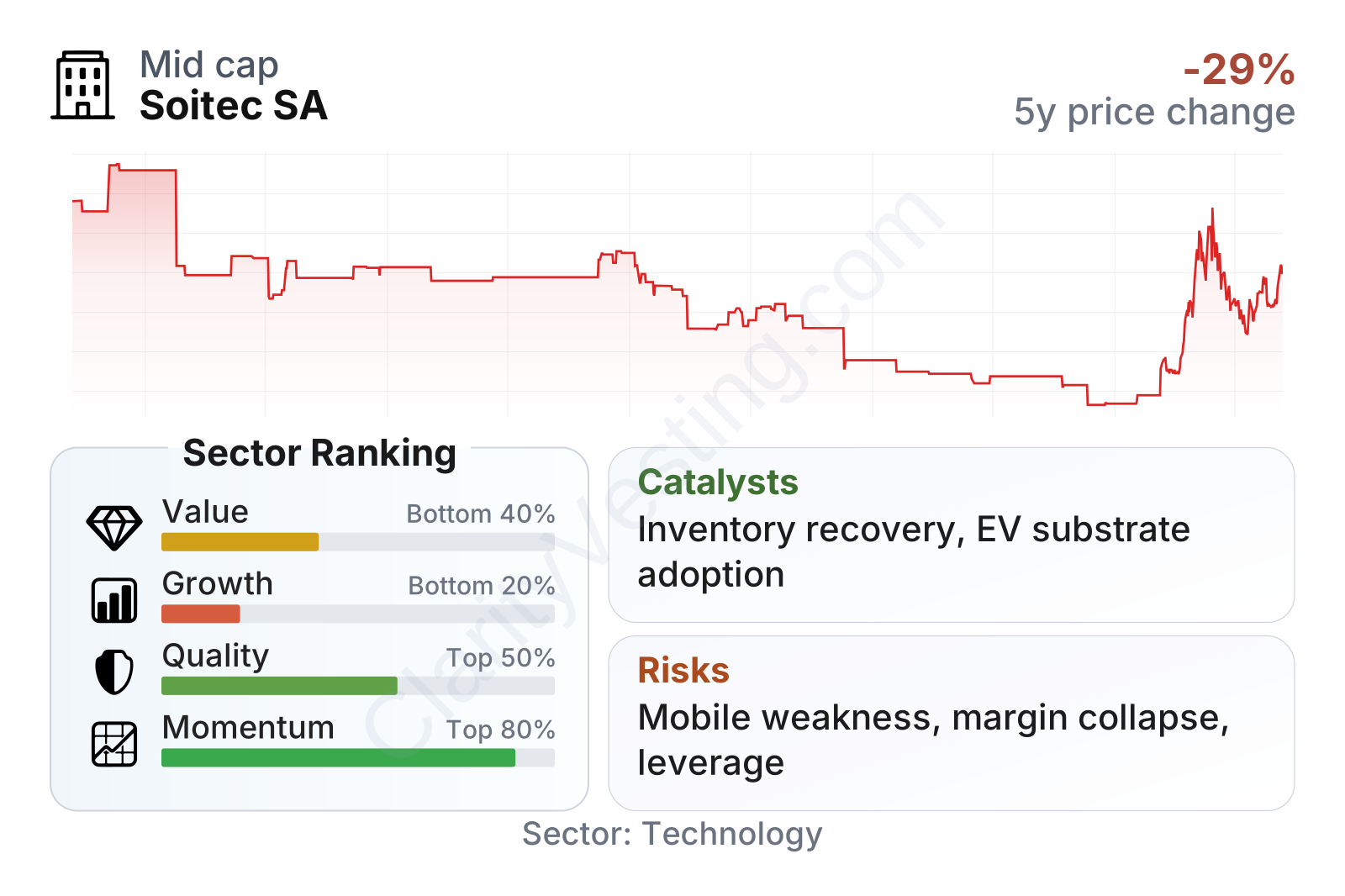
Soitec currently sits in a mixed position. Its market value is in the mid-cap range for the sector, and the stock has been highly volatile, with a beta well above 1. The quality profile still reflects a historically solid business, especially when looking at multi-year returns on invested capital and past operating margins, but recent profitability has weakened sharply. Growth metrics are currently among the weakest in the sector because revenue has contracted materially and margin trends have deteriorated. At the same time, momentum is unusually strong after a very large rebound from prior lows, which signals that the market has recently started to price in some recovery potential.
Growth
Soitec operates in a sector with attractive long-term demand drivers. The broad semiconductor market continues to benefit from 5G connectivity, more chips in vehicles, industrial automation, electrification, and demand for energy-efficient computing. Within that landscape, Soitec is exposed to specialized substrate technologies that can solve real performance and power-consumption problems. That gives the company a place in parts of the market where materials innovation matters, not just manufacturing scale.
The industrial logic of Soitec’s strategy makes sense over the long run. RF-SOI remains relevant for smartphone radio-frequency components, even if handset demand is uneven. FD-SOI has a more selective market opportunity, but it fits applications where low power and integration are important. Silicon carbide and related power-substrate activities also align with electric vehicles and power management, although this opportunity is developing alongside heavy industry investment and competition.
Near-term growth, however, has clearly been under pressure. Revenue moved from strong expansion earlier in the cycle to a sharp year-over-year decline more recently, which is far below the sector’s typical pace. This does not automatically invalidate the long-term theme, but it does show that Soitec is currently in a reset period rather than a smooth expansion phase.
Cash generation sends a similarly mixed signal. Free cash flow has been positive over a longer horizon and its five-year trend is still respectable, but the more recent path has been weak and at times negative. For a capital-intensive materials company, that matters because future growth usually requires sustained spending on production capacity, process development, and customer qualification.
A major catalyst is the eventual normalization of customer inventories in mobile and broader semiconductor channels. If end demand stabilizes and wafer volumes recover, Soitec’s earnings can improve quickly because fixed costs are meaningful. Another catalyst is the longer-term adoption of engineered substrates in automotive power electronics and advanced chip designs. Recent company communications have also emphasized industrial expansion and technology roadmaps, which indicates management is positioning for the next upcycle rather than retreating from investment altogether.
Risks
This article is for informational purposes only and does not constitute financial advice. Some content is AI-generated. See Disclaimer


