Stock Analysis · Sirius XM Holding Inc (SIRI)
Overview
Sirius XM Holding Inc. is a U.S. audio entertainment company built around paid subscription listening. Its core business is SiriusXM, which offers satellite radio and streaming audio across music, sports, talk, news, and podcast content, with a particularly strong presence in cars. The company also owns Pandora, an ad-supported and subscription digital audio platform, and has podcast and creator-related assets through SiriusXM Media and Simplecast-type hosting and advertising activities described in company materials.
For a long-term view, the most important point is that Sirius XM is not a broad social media or video platform competing everywhere at once. It is a more focused audio company with a large installed presence in vehicles, recurring subscription revenue, and meaningful cash generation. That makes the business easier to understand than many media companies, but it also means performance depends heavily on subscriber retention, car sales trends, advertising demand, and the company’s ability to keep audio content relevant in a world dominated by smartphones and on-demand streaming.
The company’s revenue is mainly split between subscription-based audio services and advertising, with a smaller contribution from equipment and other activities. Based on recent annual filings, the mix is approximately:
- Subscriber revenue: about 75% to 77% — Monthly fees from SiriusXM self-pay and paid promotional subscribers, plus paid streaming and subscription products tied to Pandora and related services.
- Advertising revenue: about 18% to 20% — Primarily ad sales on Pandora, podcasts, and selected SiriusXM programming and digital inventory.
- Equipment and other revenue: about 4% to 6% — Radio equipment, connected vehicle services, royalties, and other smaller business lines.
That mix matters because subscription revenue is usually steadier and more predictable than advertising. It also helps explain why Sirius XM has historically produced solid margins and free cash flow even when growth has been modest.
The broader financial flow shows a business that still converts a large share of revenue into gross profit, but with a recent step-down in operating profit compared with earlier years. Revenue has been relatively stable in the high single-digit billions of dollars, while profitability has been more uneven because of slowing growth, content costs, interest expense, and unusual charges that affected 2024 results.
The business remains heavily weighted toward recurring subscription revenue, which supports cash generation. At the same time, recent years show that stable revenue alone is not enough if costs, write-downs, or pressure in advertising reduce operating profit.
Key Figures
| Metric | Value | Sector ⓘ |
|---|---|---|
| Date | Sep 12, 2026 | |
| Context | ||
| Sector | Communication Services | |
| Industry | Entertainment | |
| Market Cap ⓘ | $9.83B | |
| Beta ⓘ | 0.96 | |
Value (Cheapness) | ||
| P/E Ratio ⓘ | 11.71 | 18.61 |
| FCF Yield ⓘ | 15.77% | 13.68% |
| EBIT / EV ⓘ | 8.73% | 4.54% |
| PEG ⓘ | 1.15 | |
Growth (Business expansion) | ||
| Revenue Growth ⓘ | 1.00% | 5.40% |
| RPS Growth (5Y CAGR) ⓘ | 3.38% | 4.62% |
| EPS Growth (5Y CAGR) ⓘ | -19.09% | -18.01% |
| Margin Growth (5Y Trend) ⓘ | -4.62% | 1.10% |
| FCF Growth (5Y CAGR) ⓘ | -6.23% | 5.88% |
Quality (Business durability) | ||
| ROIC (Latest) ⓘ | 5.86% | 8.38% |
| ROIC (5Y Median) ⓘ | 24.89% | 8.32% |
| Net Debt / EBIT (Latest) ⓘ | 5.59 | 1.99 |
| Net Debt / EBIT (5Y Median) ⓘ | 4.81 | 2.94 |
| Operating Margin (Latest) ⓘ | 19.28% | 14.89% |
| Operating Margin (5Y Median) ⓘ | 21.68% | 12.96% |
| Debt to Equity (Latest) ⓘ | 79.40% | 59.59% |
| Profit Margin (Latest) ⓘ | 10.23% | 8.77% |
| Free Cash Flow (Latest) ⓘ | $1.55B | |
Momentum (Price trend) | ||
| 3Y Return ⓘ | -23.31% | +46.64% |
| 12M Return (excl. last month) ⓘ | +41.29% | +2.16% |
| 6M Return ⓘ | +33.66% | +5.05% |
| Price vs. 200-Day MA ⓘ | +17.49% | +2.88% |
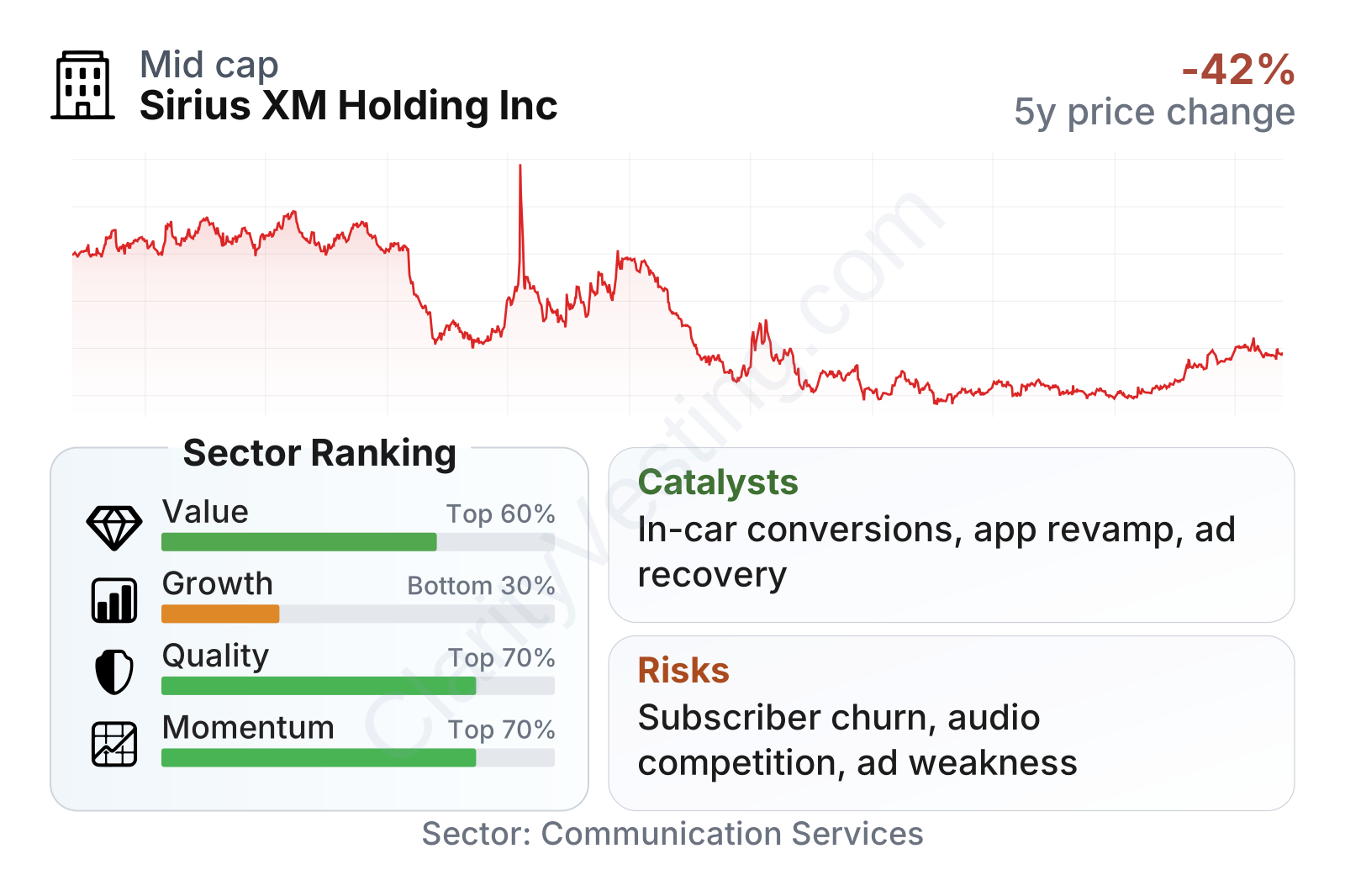
Sirius XM currently looks like a mid-sized communication services company with below-market volatility and a mixed factor profile. Value and quality metrics look relatively solid for the sector, helped by a price-to-earnings ratio around the low teens, free cash flow yield above the sector median, operating margin near 19%, and profit margin around 10%. Growth metrics are much weaker. Revenue growth is only around 1% year over year, well below the sector median, and five-year free cash flow and margin trends have moved in the wrong direction even though the latest cash generation has improved.
The stock chart also shows an important contrast: a weak multi-year performance followed by a much stronger move over the past several months. That can happen when a mature company starts to regain credibility after a difficult period, but it does not by itself change the underlying fact that revenue growth remains limited.
Growth
Sirius XM operates in audio entertainment, a sector that is still relevant but no longer enjoys the easy expansion phase seen in earlier streaming years. Listening continues to shift toward digital and on-demand formats, podcasts remain important for audience attention, and in-car connectivity keeps improving. Those trends create opportunity, but they also raise the standard for execution because consumers now have many low-friction alternatives, including Spotify, Apple, YouTube, and free ad-supported options.
Sirius XM’s strategy still has a logical long-term foundation. Its strongest asset is its presence in vehicles, where SiriusXM has long-standing relationships with automakers and broad distribution in the installed car fleet. This position can support subscriber conversion from trial users to paying users and gives the company a channel that pure app-based competitors do not fully replicate. Management has also emphasized product simplification, a stronger app experience, and using premium live content, exclusive channels, sports, and talk programming to defend pricing and engagement.
Recent revenue trends suggest stabilization rather than rapid expansion. Year-over-year growth turned negative for a stretch, then moved back to low positive territory by 2026. That is an improvement, but it still points to a mature business. In other words, the near-term growth case depends less on explosive top-line gains and more on protecting the subscriber base, improving monetization per user, and recovering better economics from advertising and digital products.
Free cash flow is one of the more constructive parts of the picture. It fell meaningfully from 2022 through 2025, then rebounded sharply in the latest period to roughly the mid-$1 billion range. For a long-term assessment, that rebound matters because it suggests the company still has the ability to produce substantial cash even in a low-growth environment. Strong cash generation can support debt service, content investment, and capital returns, provided the underlying business remains stable.
Potential catalysts are fairly specific. A better conversion rate from the large base of trial users in newly sold vehicles, improved retention among self-pay subscribers, recovery in digital advertising, and successful expansion of bundled app-based listening outside the dashboard could all help results. The company has also highlighted platform improvements and a broader effort to make SiriusXM easier to access across devices, which matters because future growth will likely depend on being more than just a satellite-radio service in cars.
Recent company updates have also centered on cost discipline, product redesign, and efforts to improve the listener experience. None of these changes alone creates a dramatic new market, but together they can improve economics if they reduce churn and support steadier subscriber monetization.
Risks
This article is for informational purposes only and does not constitute financial advice. Some content is AI-generated. See Disclaimer


