Stock Analysis · Steven Madden Ltd (SHOO)
Overview
Steven Madden Ltd is a fashion company best known for footwear sold under the Steve Madden brand, but its business is broader than shoes alone. The company designs, sources, markets, and sells footwear, handbags, accessories, and apparel through a mix of wholesale distribution, company-operated stores, e-commerce, and licensed arrangements. Its brands include Steve Madden, Dolce Vita, Betsey Johnson, Blondo, GREATS, and other owned or licensed labels, giving it exposure to both trend-driven fashion and more everyday categories.
The business is mainly built around wholesale, which means selling products to department stores, specialty retailers, mass merchants, and international partners. Direct-to-consumer sales, through the company’s own stores and websites, are smaller but strategically important because they provide better control over branding, pricing, and customer data. Licensing adds a lighter, higher-margin revenue stream by allowing third parties to use certain brands in specific product categories or regions.
Based on the latest company reporting structure, the main revenue sources are approximately:
- Wholesale footwear: the largest contributor, at roughly 55% to 60% of total revenue. This includes women’s, men’s, and children’s shoes sold to retail partners.
- Direct-to-consumer: around 20% to 25%. This combines company-owned stores and online sales across core brands.
- Wholesale accessories and apparel: about 15% to 20%. This includes handbags, small accessories, and apparel-related categories sold through retail partners.
- Licensing and first-cost / private-label related activities: a smaller share, generally under 10%, depending on the year and reporting mix.
One notable business pattern is that revenue has climbed meaningfully since 2023, but profit conversion has become less efficient. Sales have expanded from just under $2.0 billion in 2023 to above $2.5 billion in 2025, while net income fell sharply during that same period. That suggests a company still capable of growing its top line, but facing pressure from costs, mix shifts, acquisitions, or integration effects that reduced earnings quality.
The income flow makes that pressure easy to see: revenue has risen steadily over the past few years, gross profit has also grown, but operating income and net income have not kept pace. In other words, the company is selling more, yet a larger portion of each sales dollar is being absorbed before it reaches the bottom line.
Key Figures
| Metric | Value | Sector ⓘ |
|---|---|---|
| Date | Sep 12, 2026 | |
| Context | ||
| Sector | Consumer Cyclical | |
| Industry | Footwear & Accessories | |
| Market Cap ⓘ | $3.14B | |
| Beta ⓘ | 1.16 | |
Value (Cheapness) | ||
| P/E Ratio ⓘ | 20.84 | 17.10 |
| FCF Yield ⓘ | 6.94% | 8.53% |
| EBIT / EV ⓘ | 3.99% | 6.46% |
| PEG ⓘ | 2.17 | |
Growth (Business expansion) | ||
| Revenue Growth ⓘ | 19.10% | 5.75% |
| RPS Growth (5Y CAGR) ⓘ | 11.57% | 9.14% |
| EPS Growth (5Y CAGR) ⓘ | -27.65% | -18.21% |
| Margin Growth (5Y Trend) ⓘ | -9.70% | -0.23% |
| FCF Growth (5Y CAGR) ⓘ | -5.96% | 4.91% |
Quality (Business durability) | ||
| ROIC (Latest) ⓘ | 9.51% | 12.61% |
| ROIC (5Y Median) ⓘ | 21.66% | 10.72% |
| Net Debt / EBIT (Latest) ⓘ | 3.28 | 2.10 |
| Net Debt / EBIT (5Y Median) ⓘ | -0.30 | 2.32 |
| Operating Margin (Latest) ⓘ | 5.37% | 9.25% |
| Operating Margin (5Y Median) ⓘ | 11.09% | 9.64% |
| Debt to Equity (Latest) ⓘ | 40.14% | 75.78% |
| Profit Margin (Latest) ⓘ | 5.23% | 5.33% |
| Free Cash Flow (Latest) ⓘ | $218.12M | |
Momentum (Price trend) | ||
| 3Y Return ⓘ | +44.28% | +14.53% |
| 12M Return (excl. last month) ⓘ | +86.89% | +3.08% |
| 6M Return ⓘ | +32.95% | +0.55% |
| Price vs. 200-Day MA ⓘ | +5.23% | -0.54% |
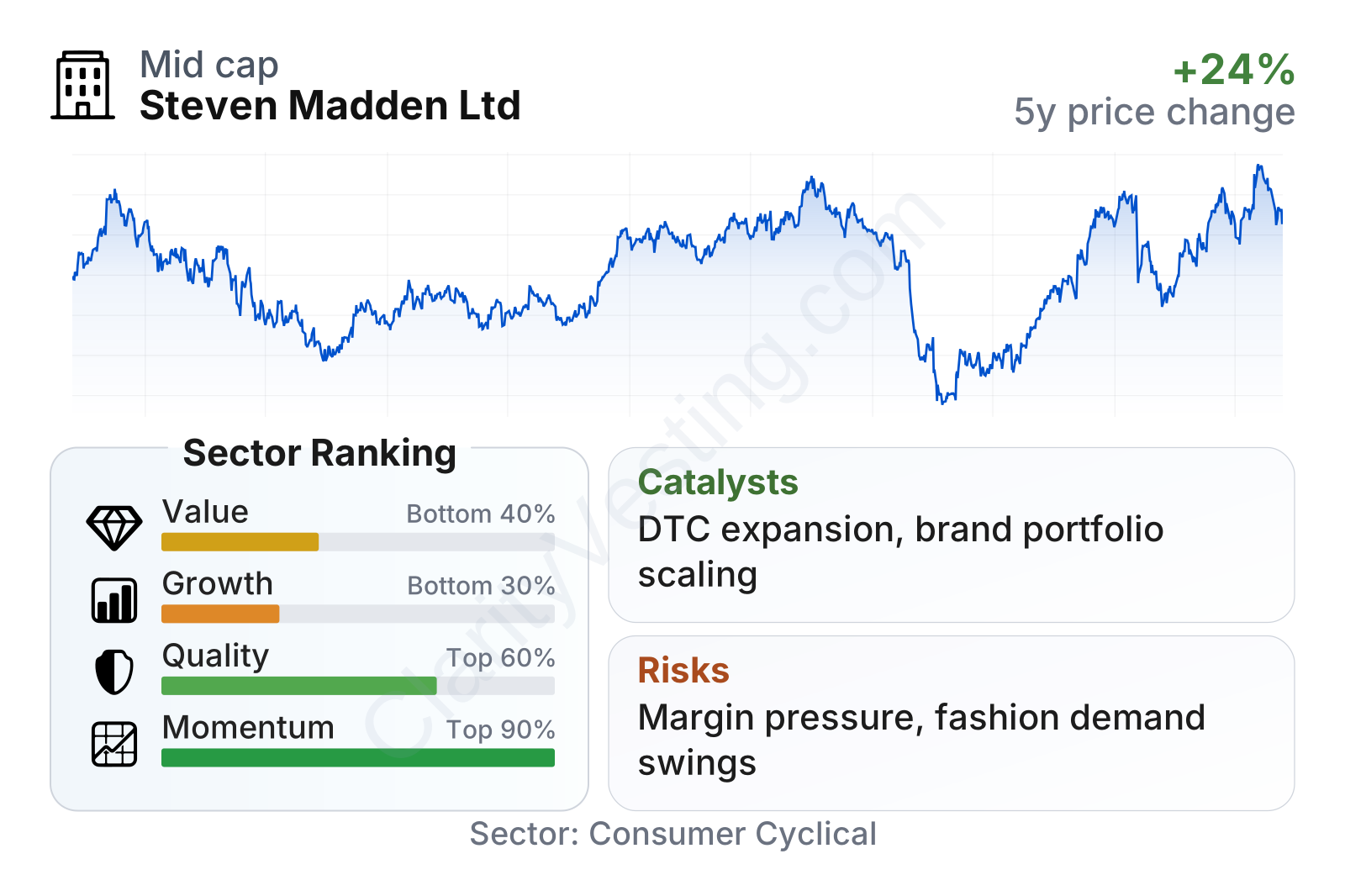
Steven Madden is a mid-sized public company in consumer discretionary retail, with share-price volatility slightly above the market average. The current factor profile is mixed. Growth on recent revenue looks strong versus the sector, and long-term revenue per share growth has also been solid. However, earnings growth and cash flow growth over five years have been weaker, while margins sit below the sector median. Quality is helped by a still-conservative balance sheet and a strong historical return profile, but the valuation screen looks less appealing than much of the sector at current multiples.
The stock’s longer-term price performance has been strong compared with many peers, but the path has not been smooth. After a deep drop in 2025, the shares recovered substantially, which helps explain why valuation multiples now look more elevated than they did during the downturn.
Growth
Steven Madden operates in a large and durable category: fashion footwear and accessories. This is not a structurally fast-growing industry in the way software or digital infrastructure can be, but it does have attractive features for a disciplined brand owner. Consumers replace shoes and accessories regularly, trends refresh seasonally, and successful brands can expand across product categories and geographies. That creates room for steady expansion if product design stays relevant and distribution remains broad.
The company’s strategy for growth is logical. It combines several levers: adding new brands, broadening existing labels into adjacent categories, expanding international distribution, and increasing direct-to-consumer penetration. This matters because relying only on U.S. wholesale footwear would make growth more fragile. A more diversified platform can reduce dependence on any single retailer, category, or fashion cycle.
Recent sales growth has reaccelerated after a weak stretch in 2022 and 2023. Year-over-year revenue growth moved back into positive territory and has recently been running at high-single-digit to high-teen percentages, comfortably above the sector median. That points to a business with real commercial momentum, even if the quality of that growth needs to be watched closely.
Cash generation tells a more cautious growth story. Free cash flow remains positive, which is important, but it has trended down from much stronger levels seen earlier in the period. For a consumer brand company, sustained growth is more convincing when rising revenue is matched by stable or improving cash conversion. Here, the business is still producing cash, but not with the same strength as before.
A meaningful catalyst is the company’s ability to use acquisitions and brand extensions to keep its assortment fresh and broaden its consumer reach. Management has also emphasized international expansion and direct selling, both of which can support growth over time. If newer brands scale well and the direct channel gains share without heavy margin sacrifice, the company could emerge with a more balanced and resilient platform than it had a few years ago.
Another opportunity comes from operating normalization. Since sales have grown faster than earnings recently, even a partial recovery in profitability could have an outsized effect on future results. That is not guaranteed, but it is one of the clearest reasons the company remains interesting from a long-term business perspective.
Risks
This article is for informational purposes only and does not constitute financial advice. Some content is AI-generated. See Disclaimer