Stock Analysis · Shoals Technologies Group Inc (SHLS)
Overview
Shoals Technologies Group designs and sells electrical balance of system, or EBOS, solutions used in large solar energy projects and increasingly in battery energy storage projects. In simple terms, it provides the wiring, connectors, junction boxes, combiners, and related components that help move electricity around a solar site efficiently. Its products are mainly aimed at utility-scale solar farms, where reliability, labor savings, and speed of installation matter a lot.
The company’s business is concentrated around a few major revenue streams. Based on recent annual filings, product sales are the overwhelming source of revenue, while services remain a much smaller contributor. Within products, the utility-scale solar segment is still the core of the business, with battery storage and other adjacent offerings becoming more important.
- System solutions and components for solar projects: approximately 85% to 95% of revenue in recent years. This includes cable assemblies, harnessing solutions, combiners, disconnects, recombiners, and other EBOS hardware used on utility-scale solar sites.
- Battery energy storage system connectivity solutions: still a smaller share, but growing from a low base. This includes electrical components and architectures used to connect storage equipment at project sites.
- Services and other revenue: a limited share of total revenue. This can include engineering support, warranty-related activity, and other customer support items tied to product deployment.
Shoals has built its identity around helping project developers and EPC contractors lower installation time and field labor needs. That positioning matters because labor availability, project complexity, and installation speed are major pain points in utility-scale renewable energy construction.
The business mix also shows a company that is more specialized than diversified. That can be attractive when the niche is valuable and growing, but it also means results can move sharply when solar project timing changes.
Over the last several years, revenue expanded strongly from the low $200 million range to the mid-$400 million range, but profitability has been less steady. Gross profit remained meaningful even during weaker periods, yet operating and net income moved around more sharply as project volume, legal costs, and operating expenses shifted.
Key Figures
| Metric | Value | Sector ⓘ |
|---|---|---|
| Date | Sep 12, 2026 | |
| Context | ||
| Sector | Technology | |
| Industry | Solar | |
| Market Cap ⓘ | $1.20B | |
| Beta ⓘ | 1.89 | |
Value (Cheapness) | ||
| P/E Ratio ⓘ | 37.42 | 29.51 |
| FCF Yield ⓘ | -4.31% | 4.25% |
| EBIT / EV ⓘ | 4.01% | 2.85% |
| PEG ⓘ | 0.49 | |
Growth (Business expansion) | ||
| Revenue Growth ⓘ | 47.40% | 15.40% |
| RPS Growth (5Y CAGR) ⓘ | 10.36% | 8.56% |
| EPS Growth (5Y CAGR) ⓘ | -19.94% | -11.88% |
| Margin Growth (5Y Trend) ⓘ | 3.60% | 0.46% |
| FCF Growth (5Y CAGR) ⓘ | 18.11% | 9.80% |
Quality (Business durability) | ||
| ROIC (Latest) ⓘ | 5.30% | 9.44% |
| ROIC (5Y Median) ⓘ | 5.98% | 8.30% |
| Net Debt / EBIT (Latest) ⓘ | 3.87 | 0.54 |
| Net Debt / EBIT (5Y Median) ⓘ | 2.29 | 0.44 |
| Operating Margin (Latest) ⓘ | 9.58% | 9.58% |
| Operating Margin (5Y Median) ⓘ | 12.95% | 8.25% |
| Debt to Equity (Latest) ⓘ | 37.88% | 33.33% |
| Profit Margin (Latest) ⓘ | 5.42% | 7.14% |
| Free Cash Flow (Latest) ⓘ | -$51.59M | |
Momentum (Price trend) | ||
| 3Y Return ⓘ | -66.95% | +45.48% |
| 12M Return (excl. last month) ⓘ | +80.52% | +23.48% |
| 6M Return ⓘ | +19.28% | +20.93% |
| Price vs. 200-Day MA ⓘ | -15.35% | +7.43% |
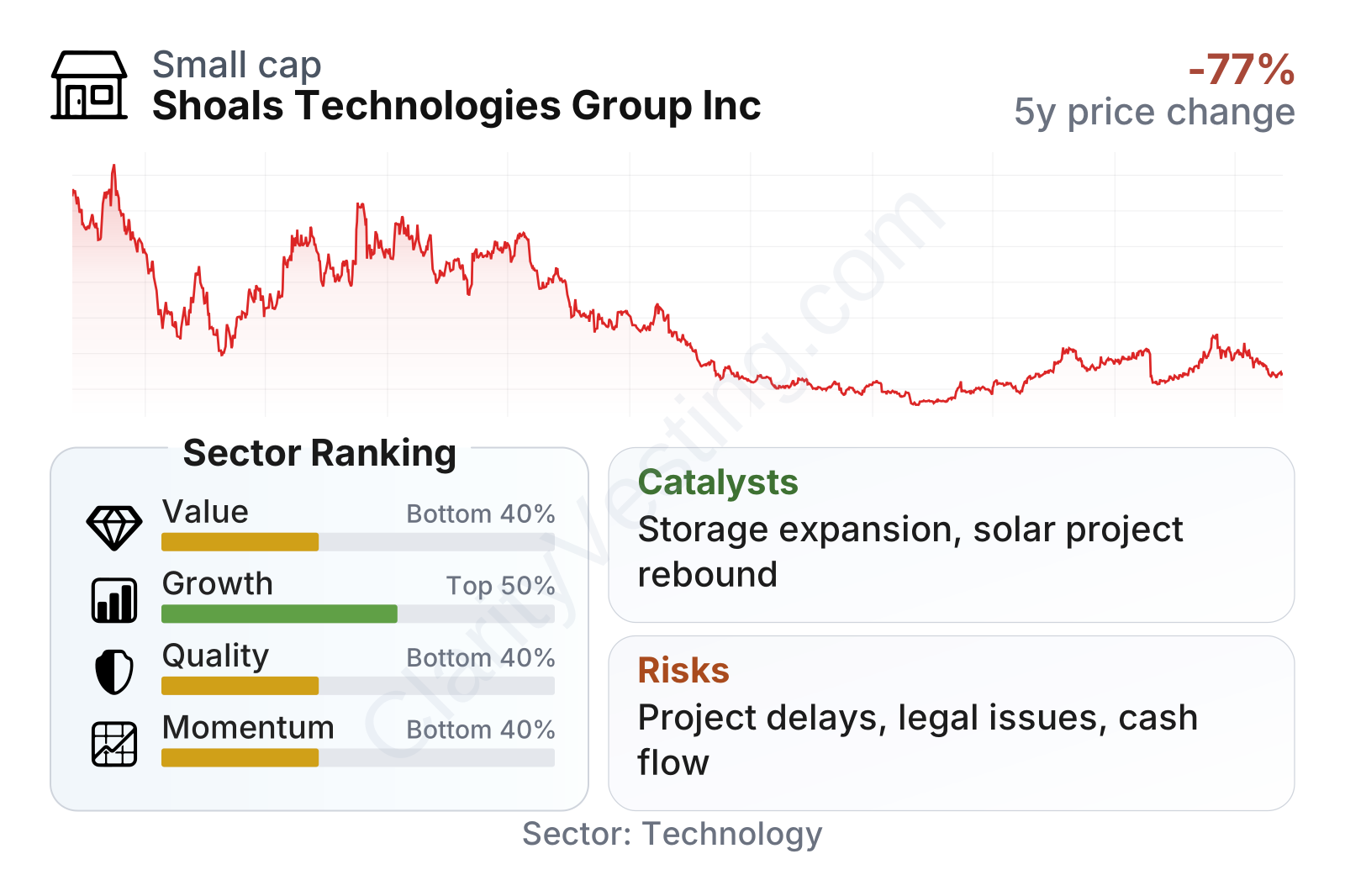
The overall picture is mixed. Growth metrics look solid relative to the broader sector, especially on recent revenue growth and longer-term free cash flow expansion, but quality and value measures are less favorable. Profitability is positive rather than exceptional, leverage is higher than many peers when measured against EBIT, and valuation multiples sit above the sector median despite those limitations. The stock has also been highly volatile, which fits its elevated beta and uneven trading history.
Growth
Shoals operates in a sector with long-term structural support. Utility-scale solar remains one of the lowest-cost sources of new electricity generation in many markets, and grid operators increasingly need battery storage to balance intermittent renewable power. In the United States, supportive policy frameworks, domestic manufacturing incentives, transmission modernization needs, and rising electricity demand from data centers and industrial load all help sustain the broader market backdrop.
The company’s strategy is logical for that environment. Rather than competing as a full solar panel manufacturer or project developer, Shoals focuses on a narrower but essential layer of project infrastructure. That specialization can make the business less exposed to commodity panel pricing and more tied to execution advantages such as labor savings, faster installation, and lower rework risk. Those are practical selling points for customers trying to complete large projects on time and on budget.
Revenue growth has been volatile, which is common in project-driven businesses, but the recent pattern shows a clear rebound after a difficult 2024 period. The latest year-over-year growth rate is well above the sector median, suggesting the business has regained momentum as customer activity improved and project timing normalized.
One of the more important growth levers is battery storage. Shoals has been expanding products beyond traditional solar wiring architecture into storage-related connectivity solutions, and that creates a second runway tied to the same broad electrification trend. If storage attachment rates rise alongside solar deployment, this part of the business could become more material over time.
Another catalyst is the company’s installed base and relationships with large developers and EPCs. Once a component design is specified into a project template, repeat business can follow if customers stay satisfied with cost, reliability, and installation outcomes. This does not make revenue recurring in the software sense, but it can improve commercial continuity.
Recent company communications have also emphasized product innovation, manufacturing and sourcing flexibility, and efforts to broaden the addressable market. These matter because customers increasingly want standardized solutions that reduce labor intensity and simplify field work. In a labor-constrained construction market, that value proposition remains relevant.
Cash generation, however, has not moved in a straight line. Shoals produced healthy free cash flow in earlier periods and then swung negative on a trailing basis more recently. For a long-term case, the key issue is whether that weakness reflects temporary working capital and timing effects or a more persistent pressure on project economics and execution.
Risks
This article is for informational purposes only and does not constitute financial advice. Some content is AI-generated. See Disclaimer


