Stock Analysis · Somnigroup International Inc (SGI)
Overview
Somnigroup International Inc. is a bedding and sleep-products company operating in the consumer discretionary sector. The business sells mattresses, adjustable bases, sleep technology, and related products through a mix of wholesale, direct-to-consumer, and retail channels. The company was previously known as Tempur Sealy and now operates with a broader platform built around well-known mattress brands and an expanded global footprint.
Its revenue base is centered on sleep products, with mattresses and related bedroom products making up the vast majority of sales. Based on recent company disclosures and the structure of the business after the large 2024 combination with Mattress Firm, the main revenue sources can be understood as follows:
- Retail sales through company-operated stores and websites: approximately 40% to 50% of revenue. This includes mattresses, bases, accessories, and in-store services sold directly to consumers, with Mattress Firm now playing a major role.
- Wholesale mattress and bedding sales: approximately 35% to 45% of revenue. This includes products sold to third-party retailers, distributors, hospitality customers, and other commercial partners under brands such as Tempur-Pedic, Sealy, and Stearns & Foster.
- International operations: approximately 10% to 20% of revenue, depending on the quarter and geography mix. These sales come from both company-owned and partner channels outside the United States.
- Accessories and adjacent sleep products: a smaller share, generally embedded across both wholesale and direct channels rather than always broken out separately. This includes pillows, sheets, protectors, and adjustable bases.
The business model is relatively straightforward: design and market premium and mass-market bedding products, manufacture a large share of them, and distribute them through both owned and third-party channels. That mix matters because it gives Somnigroup more control over pricing, product placement, and customer access than a pure manufacturer would have.
The long-term financial picture shows a company that historically held revenue around $4.9 billion for several years and then stepped into a much larger scale in 2025, when annual revenue moved to roughly $7.5 billion. Gross profit also expanded meaningfully, while net income did not rise at the same pace because interest expense and operating costs increased after the larger platform was built.
The business has clearly become larger, with revenue and gross profit stepping up sharply in 2025. The tradeoff is that financing costs and operating expenses also rose, so the main question is not whether Somnigroup is bigger, but whether it can translate that new scale into stronger earnings and cash generation over time.
Key Figures
| Metric | Value | Sector ⓘ |
|---|---|---|
| Date | Sep 12, 2026 | |
| Context | ||
| Sector | Consumer Cyclical | |
| Industry | Furnishings, Fixtures & Appliances | |
| Market Cap ⓘ | $14.04B | |
| Beta ⓘ | 1.19 | |
Value (Cheapness) | ||
| P/E Ratio ⓘ | 26.08 | 17.10 |
| FCF Yield ⓘ | 5.48% | 8.53% |
| EBIT / EV ⓘ | 4.78% | 6.46% |
| PEG ⓘ | 0.83 | |
Growth (Business expansion) | ||
| Revenue Growth ⓘ | -3.00% | 5.75% |
| RPS Growth (5Y CAGR) ⓘ | 10.31% | 9.14% |
| EPS Growth (5Y CAGR) ⓘ | -20.33% | -18.21% |
| Margin Growth (5Y Trend) ⓘ | -8.04% | -0.23% |
| FCF Growth (5Y CAGR) ⓘ | 1.36% | 4.91% |
Quality (Business durability) | ||
| ROIC (Latest) ⓘ | 9.43% | 12.61% |
| ROIC (5Y Median) ⓘ | N/A | 10.72% |
| Net Debt / EBIT (Latest) ⓘ | 6.52 | 2.10 |
| Net Debt / EBIT (5Y Median) ⓘ | 5.28 | 2.32 |
| Operating Margin (Latest) ⓘ | 12.68% | 9.25% |
| Operating Margin (5Y Median) ⓘ | 12.96% | 9.64% |
| Debt to Equity (Latest) ⓘ | 198.55% | 75.78% |
| Profit Margin (Latest) ⓘ | 7.00% | 5.33% |
| Free Cash Flow (Latest) ⓘ | $769.00M | |
Momentum (Price trend) | ||
| 3Y Return ⓘ | +51.24% | +14.53% |
| 12M Return (excl. last month) ⓘ | -17.14% | +3.08% |
| 6M Return ⓘ | -12.43% | +0.55% |
| Price vs. 200-Day MA ⓘ | -14.56% | -0.54% |
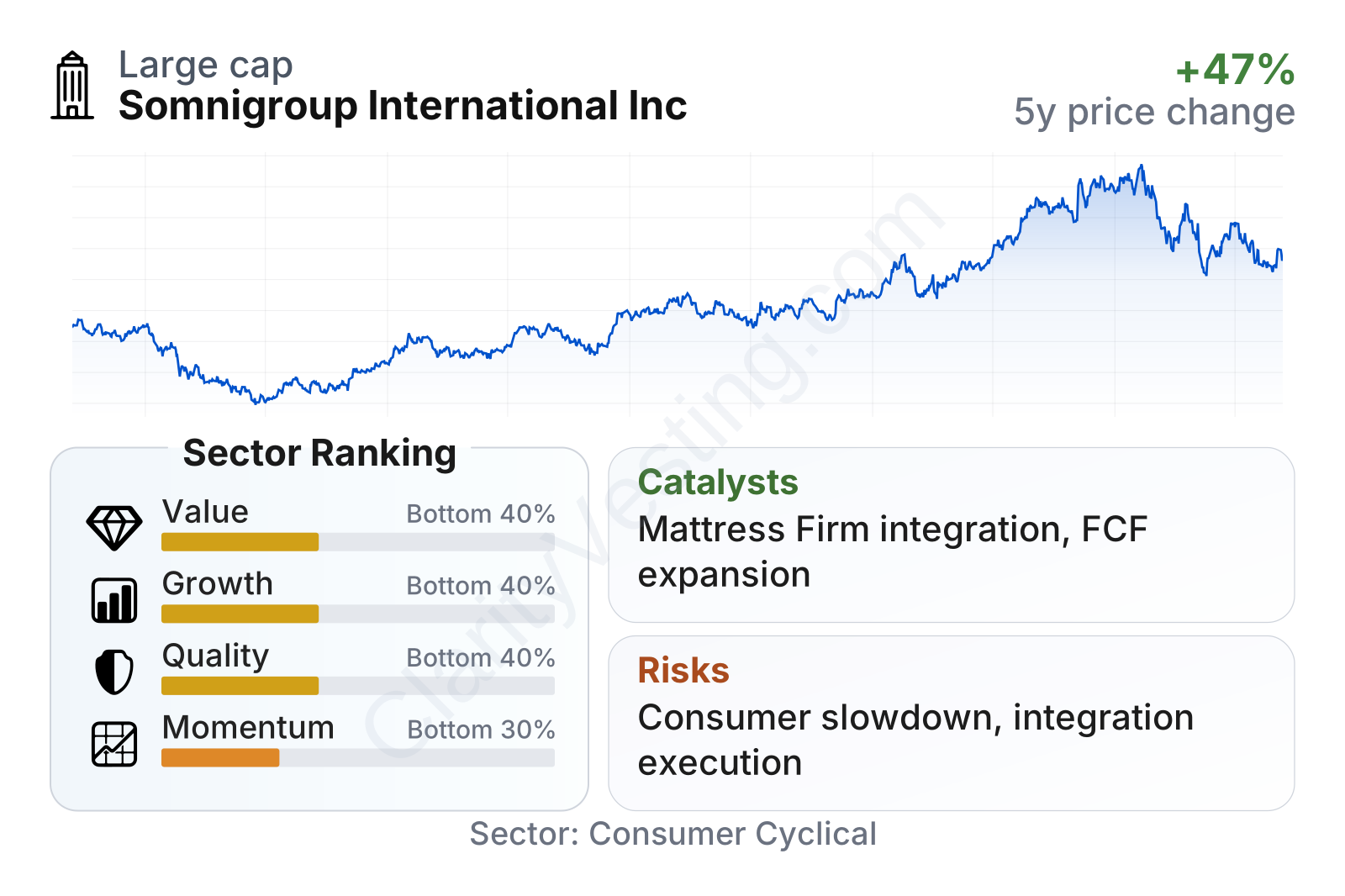
Somnigroup is now a large consumer products company with a market value around the mid-teens in billions of dollars and a stock that has been more volatile than the broader market. The share price performed strongly over the last three years, but the last six months have been much weaker, showing that sentiment has cooled after a strong run.
Across the main fundamental categories, the picture is mixed. Profitability is still respectable, with operating margin around 13% and net margin around 7%, both above sector medians. Free cash flow remains substantial at close to $1 billion on a trailing basis. However, value, growth, quality, and momentum rankings all sit in the lower half of the sector overall, which suggests the market is asking for proof that recent expansion can turn into durable improvement rather than just a one-time scale jump.
Growth
The company operates in the sleep and bedding market, which is mature in basic demand terms but still attractive in premiumization, replacement cycles, and product innovation. People may delay mattress purchases during weaker consumer periods, but sleep remains a durable category over the long run. That means growth usually comes less from explosive market expansion and more from brand strength, distribution reach, pricing power, and share gains.
Somnigroup’s strategy for future growth is logical. It combines recognized brands with direct access to consumers through a large retail network, giving the company more control over merchandising and customer data. That can support cross-selling, better product mix, and improved supply chain efficiency. Owning stronger retail access also reduces reliance on third-party shelf space, which is valuable in a category where in-store presentation still matters.
Recent revenue growth needs to be read carefully. The company posted very strong year-over-year growth through much of 2025, but that was largely influenced by the change in business scale after the Mattress Firm transaction. By mid-2026, year-over-year growth had turned slightly negative, which points to a tougher comparison base and possibly softer underlying demand. For long-term analysis, that makes it important to separate acquisition-driven expansion from organic growth.
Cash generation is one of the more constructive elements in the case. Free cash flow has moved up sharply over the last two years, which suggests the enlarged business is capable of producing meaningful cash even while navigating integration and financing costs. If that trend continues, it could support debt reduction, reinvestment, and greater flexibility in a cyclical consumer environment.
A major catalyst is the integration of Mattress Firm into the broader organization. If management executes well, the combined platform could unlock purchasing efficiencies, improve store economics, strengthen brand placement, and widen margins over time. Another possible tailwind is any recovery in housing turnover and big-ticket consumer spending, since mattresses often benefit when household formation and home-related purchases improve.
Risks
This article is for informational purposes only and does not constitute financial advice. Some content is AI-generated. See Disclaimer


