Stock Analysis · Salvatore Ferragamo SpA (SFRGY)
Overview
Salvatore Ferragamo SpA is an Italian luxury fashion house best known for shoes, leather goods, handbags, silk accessories, ready-to-wear apparel, jewelry, watches, eyewear, and fragrances. The company operates through a mix of directly operated stores, travel retail, department store concessions, e-commerce, and selective wholesale distribution. Its brand is built around craftsmanship, Italian heritage, and a premium positioning that targets affluent consumers rather than mass-market demand.
Revenue is fairly diversified across product categories, although leather goods and footwear remain the economic core of the business. Based on the company’s recent annual reporting structure, the main sources of revenue are approximately:
- Leather goods and handbags: roughly 40% to 45%
- Footwear: roughly 20% to 25%
- Ready-to-wear and other apparel: roughly 10% to 15%
- Silk and other accessories: roughly 10% to 15%
- Fragrances, eyewear, watches, and jewelry through licenses or related channels: smaller remainder
Geographically, Ferragamo is exposed to the global luxury market, with Asia-Pacific, Europe, Japan, and North America all contributing meaningfully. Like many luxury groups, it depends heavily on tourist flows, high-end shopping traffic, and consumer confidence among wealthier households. Over the last few years, the business has stayed premium, but operating performance has become much weaker as sales softened and costs absorbed a larger share of revenue.
A notable pattern in the business mix is that gross profit has remained relatively high for a luxury brand, but the drop in revenue since 2022 has put increasing pressure on operating profit. In other words, the brand still supports premium pricing, yet the company has recently struggled to convert that pricing power into healthy earnings.
Key Figures
| Metric | Value | Sector ⓘ |
|---|---|---|
| Date | Sep 05, 2026 | |
| Context | ||
| Sector | Consumer Cyclical | |
| Industry | Luxury Goods | |
| Market Cap ⓘ | $1.78B | |
| Beta ⓘ | 0.79 | |
Value (Cheapness) | ||
| P/E Ratio ⓘ | 179.67 | 17.51 |
| FCF Yield ⓘ | 8.24% | 8.30% |
| EBIT / EV ⓘ | N/A | 6.34% |
| PEG ⓘ | 1.26 | |
Growth (Business expansion) | ||
| Revenue Growth ⓘ | -1.30% | 5.90% |
| RPS Growth (5Y CAGR) ⓘ | -4.24% | 9.14% |
| EPS Growth (5Y CAGR) ⓘ | -16.16% | -17.43% |
| Margin Growth (5Y Trend) ⓘ | -11.31% | -0.30% |
| FCF Growth (5Y CAGR) ⓘ | -32.96% | 4.91% |
Quality (Business durability) | ||
| ROIC (Latest) ⓘ | N/A | 12.33% |
| ROIC (5Y Median) ⓘ | 5.01% | 10.68% |
| Net Debt / EBIT (Latest) ⓘ | 10.73 | 2.11 |
| Net Debt / EBIT (5Y Median) ⓘ | 4.69 | 2.32 |
| Operating Margin (Latest) ⓘ | 4.35% | 9.12% |
| Operating Margin (5Y Median) ⓘ | 5.96% | 9.56% |
| Debt to Equity (Latest) ⓘ | 111.33% | 75.78% |
| Profit Margin (Latest) ⓘ | 1.00% | 5.31% |
| Free Cash Flow (Latest) ⓘ | $146.96M | |
Momentum (Price trend) | ||
| 3Y Return ⓘ | -27.80% | +15.88% |
| 12M Return (excl. last month) ⓘ | +116.79% | +5.17% |
| 6M Return ⓘ | +56.94% | 0.00% |
| Price vs. 200-Day MA ⓘ | +12.95% | +0.59% |
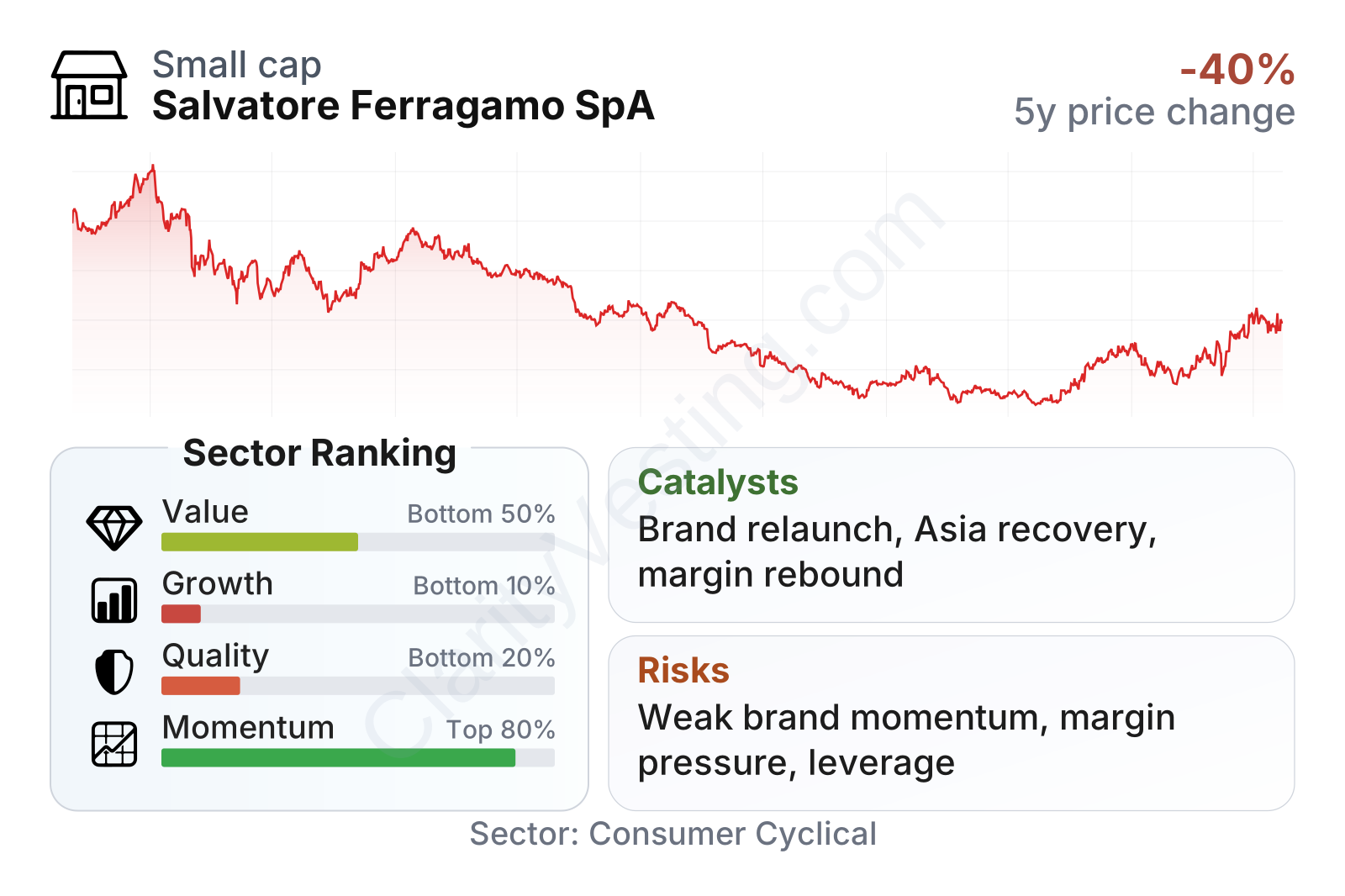
Ferragamo is currently a relatively small listed luxury name, with a market value around $1.8 billion and a stock volatility below the broader market, as suggested by a beta under 1. The table points to a mixed setup: recent share price momentum has improved, but value, quality, and growth indicators remain weak versus the broader consumer discretionary sector. In practical terms, the market appears to be recognizing a possible turnaround before the operating profile has clearly recovered.
Growth
The luxury goods industry is still attractive over the long run because it benefits from global wealth creation, aspirational consumption, and pricing power for strong brands. That said, this is not a uniformly growing space. Demand can weaken sharply when Chinese spending slows, tourism falls, or consumers trade down. Ferragamo sits in that more difficult part of the cycle today: the sector itself has durable long-term appeal, but the company has not recently kept pace with stronger luxury peers.
Ferragamo’s current strategy has centered on brand elevation, tighter distribution control, refreshed product design, and a push to make the label more relevant to younger luxury buyers. In theory, that approach makes sense. Many successful luxury houses have improved desirability by limiting discounting, focusing on iconic products, and sharpening their brand image. The challenge is execution: repositioning a heritage brand often takes several years, and the transition can hurt sales and margins before benefits show up.
The revenue trend shows that the company had a strong rebound period after the pandemic, but that momentum faded and then reversed. More recent growth metrics place Ferragamo near the bottom of its sector, including negative year-over-year sales growth and a declining five-year revenue-per-share trend. That matters because luxury valuations usually rely on confidence in brand heat, store productivity, and sustained pricing power. At the moment, those signals are not yet consistently visible.
Cash generation remains one of the more constructive elements. Free cash flow is still positive, but it has come down substantially from earlier levels. That suggests the company retains some financial flexibility, yet the direction is less favorable than it was a few years ago. For a luxury company in repositioning mode, stable cash generation can buy time; shrinking cash flow, however, reduces the room for strategic mistakes.
The main catalysts are tied to execution rather than industry expansion alone. If new collections gain traction, if comparable store productivity improves, and if Asia-related demand normalizes, Ferragamo could show a stronger operating recovery than recent income figures imply. Public company communications in 2025 and 2026 have continued to emphasize product renewal, store network quality, and tighter control of brand presentation. Those are the right levers for a luxury turnaround, but they still need to translate into more visible sales and margin improvement.
Risks
This article is for informational purposes only and does not constitute financial advice. Some content is AI-generated. See Disclaimer