Stock Analysis · SolarEdge Technologies Inc (SEDG)
Overview
SolarEdge Technologies is an energy technology company best known for equipment used in solar power systems. Its core products include inverters, power optimizers, batteries, software, monitoring tools, and related services that help convert electricity from solar panels and manage energy use. The company serves residential, commercial, and small utility-scale customers, and it also has activities in energy storage, EV charging, and energy management.
For long-term analysis, the main point is that SolarEdge sits in a large and still important market: distributed solar and home or business energy systems. That said, the company has gone through a severe industry downturn after a period of unusually strong demand. Revenue expanded sharply through 2022, stayed high in 2023, then dropped hard in 2024 as installers and distributors worked through excess inventory and demand slowed in several key markets.
Based on recent company filings, SolarEdge’s revenue is still heavily concentrated in solar equipment, with the largest contribution coming from products sold for solar installations rather than from software or services. A simple way to think about the business mix is the following:
- Solar products and related equipment: about 90%+ of revenue. This includes inverters, power optimizers, batteries, and other hardware used in residential and commercial solar systems.
- Services and other energy-related activities: less than 10% of revenue. This includes software, monitoring, support, and smaller adjacent offerings such as EV charging and energy management.
Geographically, the company has historically depended heavily on Europe and the United States, with Europe becoming especially important during the energy-price shock period. That concentration helped during the boom, but it also increased exposure when European residential solar demand cooled and channel inventory rose.
The financial flow over the last several years shows a business that once generated healthy gross profit and operating income, then saw a dramatic collapse in 2024 as revenue fell much faster than costs could be reduced. In 2025 the business improved from the worst point, but profitability remained under pressure.
Key Figures
| Metric | Value | Sector ⓘ |
|---|---|---|
| Date | Sep 12, 2026 | |
| Context | ||
| Sector | Technology | |
| Industry | Solar | |
| Market Cap ⓘ | $2.26B | |
| Beta ⓘ | 1.44 | |
Value (Cheapness) | ||
| P/E Ratio ⓘ | N/A | 29.51 |
| FCF Yield ⓘ | 3.98% | 4.25% |
| EBIT / EV ⓘ | -8.56% | 2.85% |
| PEG ⓘ | 4.61 | |
Growth (Business expansion) | ||
| Revenue Growth ⓘ | 19.60% | 15.40% |
| RPS Growth (5Y CAGR) ⓘ | -13.33% | 8.56% |
| EPS Growth (5Y CAGR) ⓘ | N/A | -11.88% |
| Margin Growth (5Y Trend) ⓘ | -35.96% | 0.46% |
| FCF Growth (5Y CAGR) ⓘ | N/A | 9.80% |
Quality (Business durability) | ||
| ROIC (Latest) ⓘ | -17.71% | 9.44% |
| ROIC (5Y Median) ⓘ | 1.24% | 8.30% |
| Net Debt / EBIT (Latest) ⓘ | N/A | 0.54 |
| Net Debt / EBIT (5Y Median) ⓘ | 0.96 | 0.44 |
| Operating Margin (Latest) ⓘ | -13.02% | 9.58% |
| Operating Margin (5Y Median) ⓘ | 2.87% | 8.25% |
| Debt to Equity (Latest) ⓘ | 95.58% | 33.33% |
| Profit Margin (Latest) ⓘ | -20.29% | 7.14% |
| Free Cash Flow (Latest) ⓘ | $90.00M | |
Momentum (Price trend) | ||
| 3Y Return ⓘ | -77.01% | +45.48% |
| 12M Return (excl. last month) ⓘ | +27.57% | +23.48% |
| 6M Return ⓘ | -1.45% | +20.93% |
| Price vs. 200-Day MA ⓘ | -17.58% | +7.43% |
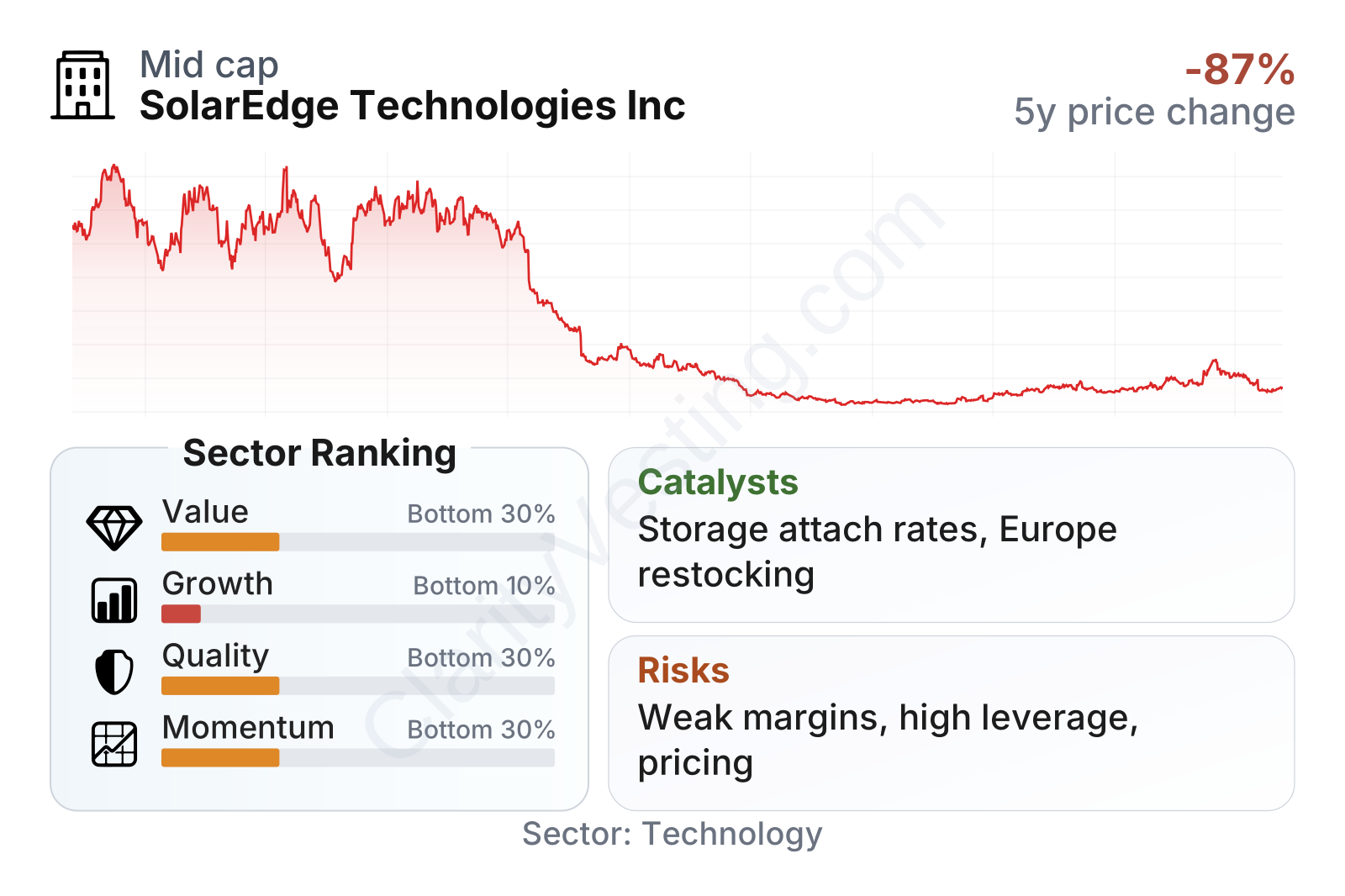
SolarEdge is now a much smaller company by market value than it was during the solar boom, and the share price history reflects that reset very clearly. The stock fell heavily over the last three years even though there was a strong rebound over part of the last 12 months. In the latest factor snapshot, the company ranks weakly versus the broader technology sector on growth and quality, mainly because margins and returns on capital remain negative. Value metrics look mixed: free cash flow yield is slightly better than the sector median, but earnings-based measures are not very useful while profits are still negative.
Growth
SolarEdge operates in a sector that should still have long-term structural demand. Solar adoption, battery attachment rates, grid decentralization, and electrification of homes and transport all support the need for smarter energy systems. In that sense, the company is in the right industry. The real question is not whether solar will matter, but whether SolarEdge can regain a durable position as the market normalizes.
The recent revenue trend suggests that the worst of the contraction may be past, even if the recovery is uneven. After a deep decline in 2024, year-over-year revenue turned positive again in 2025 and stayed positive into 2026, although growth has moderated from the rebound phase.
That pattern matters because it indicates demand is no longer collapsing. However, it does not yet prove that the company has returned to healthy expansion. Over a five-year view, revenue per share is still down, which shows how severe the downturn was relative to the earlier peak.
Another encouraging sign is cash generation. Free cash flow was deeply negative during the downturn, then turned positive again in the trailing twelve months. That does not erase the damage from prior periods, but it suggests inventory correction and cost actions are starting to show up in the cash profile.
SolarEdge’s strategy for future growth still makes industrial sense. It is built around a more complete energy ecosystem rather than a single product: solar generation, storage, monitoring, backup power, and load management. If residential and commercial customers increasingly want integrated systems instead of standalone inverters, that broad platform can become more valuable. Public company updates in 2026 have also emphasized restructuring, cost reduction, and a sharper focus on core solar and storage categories, which is important after the overexpansion of the prior cycle.
A meaningful catalyst is the possibility of demand normalization in Europe and the United States as channel inventory clears. Another is the increasing mix of battery-equipped solar systems, since storage can raise the value of a more integrated offering. If the company can convert those trends into better shipment volumes without sacrificing margins, the operating recovery could become more visible.
Risks
This article is for informational purposes only and does not constitute financial advice. Some content is AI-generated. See Disclaimer


