Stock Analysis · Sea Ltd (SE)
Overview
Sea Ltd is a Singapore-based digital consumer platform focused mainly on Southeast Asia, Taiwan, and increasingly Latin America. The company operates three major businesses: Shopee in e-commerce, Monee in digital financial services, and Garena in digital entertainment. In simple terms, Sea runs an online shopping marketplace, a payments and lending ecosystem, and a gaming division.
Its revenue base is now led by e-commerce, with digital finance becoming a much larger second engine, while gaming has become the smallest of the three. Based on the latest annual mix disclosed by the company, the revenue structure is approximately:
- E-commerce: about 76% of revenue. This mainly includes marketplace commissions, advertising services, logistics-related services, and other merchant solutions generated by Shopee.
- Digital financial services: about 18% of revenue. This includes mobile wallets, payment processing, consumer and merchant credit, and related financial products under Monee.
- Digital entertainment: about 7% of revenue. This comes largely from online game bookings and revenue recognition at Garena, historically driven by Free Fire and related content.
This mix matters because Sea is no longer a company relying mostly on gaming to fund expansion. The center of gravity has shifted toward commerce and financial services, which makes the business larger and more diversified, but also more exposed to competition and execution in lower-margin activities.
The broader financial picture also shows a major transition. Over the past few years, Sea moved from heavy losses to positive operating income and positive net income, while revenue expanded materially. That turnaround is one of the most important facts behind the current long-term debate around the company.
The operating profile has changed sharply since 2021. Revenue has more than doubled over that period, gross profit has expanded strongly, and the company has gone from large operating losses to meaningful operating profitability. At the same time, the cost structure deserves attention: sales and marketing and other operating expenses remain substantial, especially as Sea pushes growth in commerce and financial services.
Key Figures
| Metric | Value | Sector ⓘ |
|---|---|---|
| Date | Sep 12, 2026 | |
| Context | ||
| Sector | Consumer Cyclical | |
| Industry | Internet Retail | |
| Market Cap ⓘ | $65.96B | |
| Beta ⓘ | 1.52 | |
Value (Cheapness) | ||
| P/E Ratio ⓘ | 42.07 | 17.10 |
| FCF Yield ⓘ | 6.16% | 8.53% |
| EBIT / EV ⓘ | 3.98% | 6.46% |
| PEG ⓘ | 1.05 | |
Growth (Business expansion) | ||
| Revenue Growth ⓘ | 48.10% | 5.75% |
| RPS Growth (5Y CAGR) ⓘ | 17.76% | 9.14% |
| EPS Growth (5Y CAGR) ⓘ | N/A | -18.21% |
| Margin Growth (5Y Trend) ⓘ | 25.81% | -0.23% |
| FCF Growth (5Y CAGR) ⓘ | N/A | 4.91% |
Quality (Business durability) | ||
| ROIC (Latest) ⓘ | 11.44% | 12.61% |
| ROIC (5Y Median) ⓘ | 1.37% | 10.72% |
| Net Debt / EBIT (Latest) ⓘ | 0.24 | 2.10 |
| Net Debt / EBIT (5Y Median) ⓘ | 2.13 | 2.32 |
| Operating Margin (Latest) ⓘ | 8.84% | 9.25% |
| Operating Margin (5Y Median) ⓘ | 2.62% | 9.64% |
| Debt to Equity (Latest) ⓘ | 31.96% | 75.78% |
| Profit Margin (Latest) ⓘ | 5.91% | 5.33% |
| Free Cash Flow (Latest) ⓘ | $4.06B | |
Momentum (Price trend) | ||
| 3Y Return ⓘ | +177.24% | +14.53% |
| 12M Return (excl. last month) ⓘ | -26.42% | +3.08% |
| 6M Return ⓘ | +24.75% | +0.55% |
| Price vs. 200-Day MA ⓘ | +0.98% | -0.54% |
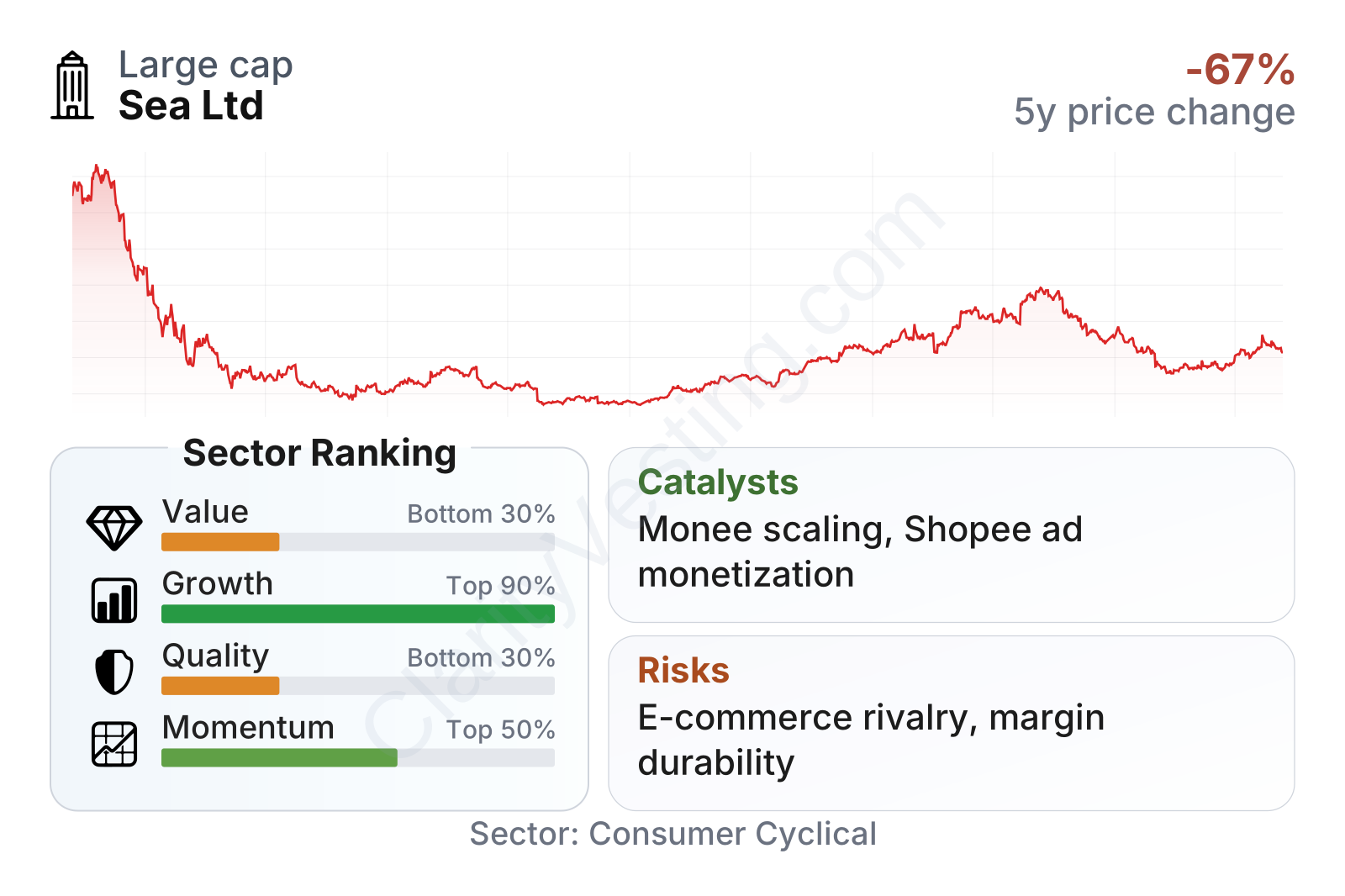
Sea stands out as a large platform company with above-average share price volatility, reflected in a beta around 1.5. The factor breakdown is mixed but revealing. Growth ranks near the top of the sector, supported by very strong revenue expansion, improving margins over time, and a sharp rise in cash generation. Momentum is still decent over a multi-year view, although the stock has cooled significantly from more recent highs. Value and quality rank lower relative to the sector, mainly because the earnings multiple remains elevated and long-term profitability consistency is still catching up with the recent turnaround.
Growth
Sea operates in markets where online consumption is still gaining share. Southeast Asia remains one of the most attractive regions globally for digital commerce, digital payments, and mobile-first consumer internet adoption. That does not automatically guarantee easy growth, but it does mean the company is positioned in sectors with structural expansion rather than mature, low-growth end markets.
The strategy also has a clear industrial logic. Shopee brings users and merchants onto the platform, payments help complete transactions and improve retention, and lending can deepen monetization for both buyers and sellers. This creates an ecosystem effect: the more active commerce becomes, the more room there is for payments, credit, and advertising. Sea has been trying to turn that ecosystem into a more disciplined profit engine after years of prioritizing scale.
Revenue growth has reaccelerated meaningfully. After a major slowdown in 2022 and 2023, growth climbed back into a much stronger range and is now far above the sector median. That is especially notable because the company is no longer in its earliest expansion phase. The recent acceleration suggests that Shopee and Monee are both still gaining traction at scale rather than simply growing from a small base.
Cash generation has improved even more dramatically than reported earnings. Sea went from negative free cash flow in 2022 to more than $4 billion on a trailing twelve-month basis. For a company that was once defined by cash burn, this is a major shift. It gives management more flexibility to invest in logistics, financial products, technology, and market expansion without depending heavily on outside capital.
One of the clearest catalysts is the rapid rise of the financial services segment. Digital payments and lending usually monetize better than marketplace activity alone, and they can strengthen user stickiness across the ecosystem. Another catalyst is advertising and merchant services on Shopee, which can lift revenue without requiring the same level of physical infrastructure growth as logistics.
Recent company updates have also pointed to continued expansion in loan books, payment volume, and e-commerce activity. For long-term analysis, that is significant because it suggests Sea is not relying on a single recovery factor. Instead, multiple business lines are contributing to growth at the same time.
Risks
This article is for informational purposes only and does not constitute financial advice. Some content is AI-generated. See Disclaimer


