Stock Analysis · Sands China Ltd (SCHYF)
Overview
Sands China Ltd is a Macau-based resort and casino operator. It runs large integrated resorts that combine gambling, hotel rooms, shopping malls, convention space, entertainment, restaurants, and ferry or other visitor services. The company is majority-owned by Las Vegas Sands and is one of the biggest operators on the Macau Strip, which remains one of the world’s most important gaming markets.
Its properties include The Venetian Macao, The Londoner Macao, The Parisian Macao, The Plaza Macao and Four Seasons Hotel Macao, and Sands Macao. That portfolio matters because Sands China is not just a casino business: it also captures spending on rooms, retail, food, meetings, and events from the same visitor base.
The company’s revenue is mainly generated in Macau and is typically split across gaming and non-gaming activities. Based on the company’s recent annual reporting structure, the largest sources of revenue are:
- Casino and related gaming revenue: approximately 75% to 85% of total revenue in a normal recovery period. This includes mass market table games, VIP or premium play, slot machines, and other gaming activities.
- Rooms: approximately 5% to 8%. This comes from hotel stays across its integrated resort portfolio.
- Mall and retail-related revenue: approximately 4% to 8%. This includes tenant leases and other retail mall activity inside its resorts.
- Food and beverage: approximately 3% to 5%. This covers restaurants, bars, banquets, and catering.
- Convention, ferry, entertainment, and other revenue: approximately 2% to 5%. This includes meetings, events, tickets, transport-related services, and miscellaneous resort activity.
This mix shows why Sands China is often viewed as a broad tourism and hospitality platform built around gaming rather than a pure casino operator. The business model depends heavily on visitor traffic to Macau, but its scale and property footprint allow it to monetize each visitor in several ways.
The recent financial profile shows a sharp recovery from the pandemic disruption, with revenue and operating income rebounding strongly after 2022. Profitability also improved materially, although the business has not returned to a completely straight upward path, which reflects how sensitive Macau demand remains to travel patterns and consumer confidence.
Key Figures
| Metric | Value | Sector ⓘ |
|---|---|---|
| Date | Sep 12, 2026 | |
| Context | ||
| Sector | Consumer Cyclical | |
| Industry | Resorts & Casinos | |
| Market Cap ⓘ | $16.41B | |
| Beta ⓘ | 0.50 | |
Value (Cheapness) | ||
| P/E Ratio ⓘ | 16.36 | 17.10 |
| FCF Yield ⓘ | 14.57% | 8.53% |
| EBIT / EV ⓘ | 13.28% | 6.46% |
| PEG ⓘ | 0.66 | |
Growth (Business expansion) | ||
| Revenue Growth ⓘ | 11.10% | 5.75% |
| RPS Growth (5Y CAGR) ⓘ | 12.35% | 9.14% |
| EPS Growth (5Y CAGR) ⓘ | N/A | -18.21% |
| Margin Growth (5Y Trend) ⓘ | 52.84% | -0.23% |
| FCF Growth (5Y CAGR) ⓘ | N/A | 4.91% |
Quality (Business durability) | ||
| ROIC (Latest) ⓘ | 29.30% | 12.61% |
| ROIC (5Y Median) ⓘ | 13.28% | 10.72% |
| Net Debt / EBIT (Latest) ⓘ | 2.17 | 2.10 |
| Net Debt / EBIT (5Y Median) ⓘ | 4.45 | 2.32 |
| Operating Margin (Latest) ⓘ | 21.92% | 9.25% |
| Operating Margin (5Y Median) ⓘ | 19.07% | 9.64% |
| Debt to Equity (Latest) ⓘ | 499.84% | 75.78% |
| Profit Margin (Latest) ⓘ | 11.25% | 5.33% |
| Free Cash Flow (Latest) ⓘ | $2.39B | |
Momentum (Price trend) | ||
| 3Y Return ⓘ | -41.06% | +14.53% |
| 12M Return (excl. last month) ⓘ | -24.39% | +3.08% |
| 6M Return ⓘ | -25.50% | +0.55% |
| Price vs. 200-Day MA ⓘ | -17.55% | -0.54% |
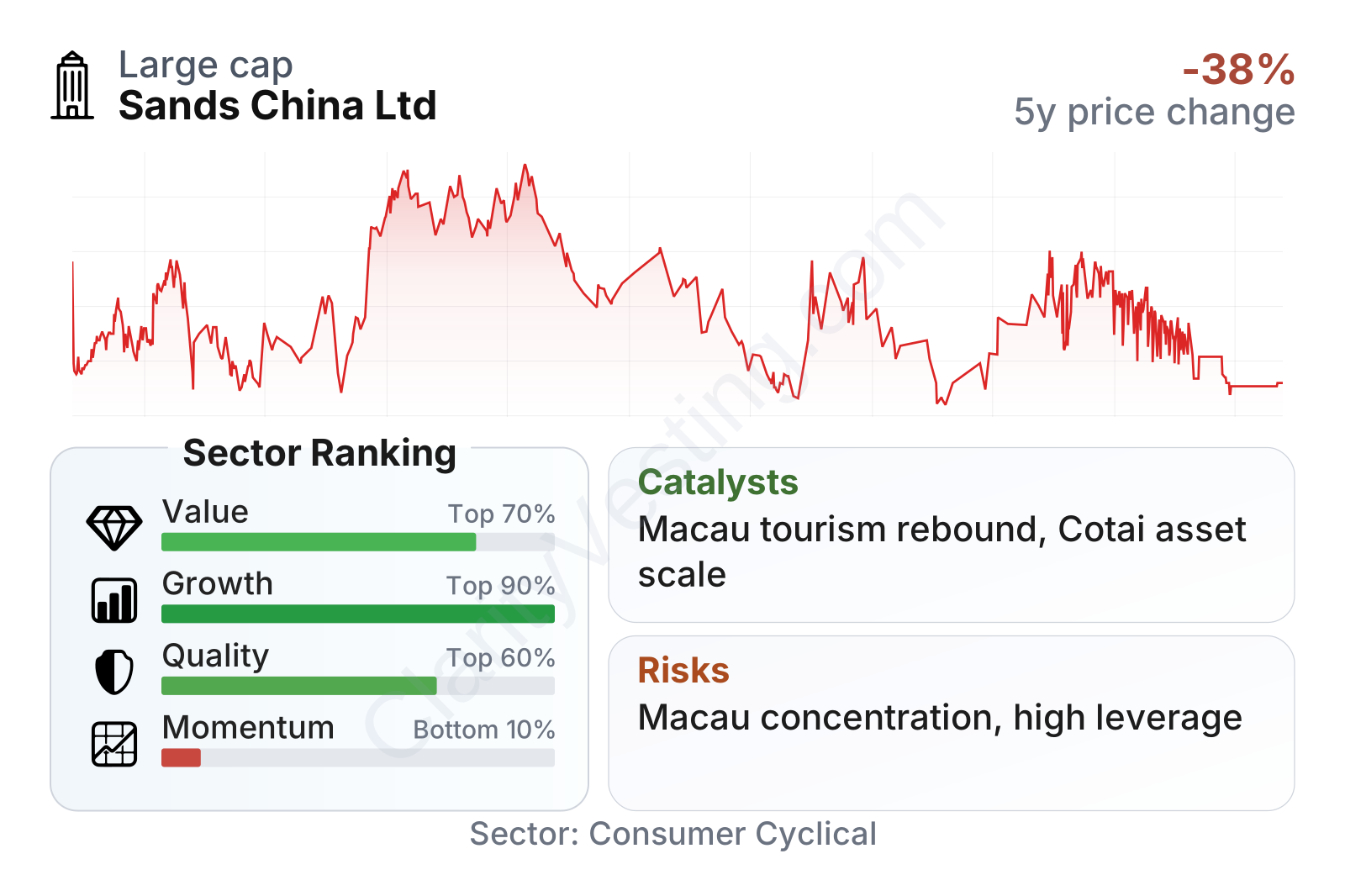
Sands China is a large company within resorts and casinos, and the metrics point to a mixed but interesting picture. Growth ranks near the top of the sector, profitability is clearly above median, and free cash generation is strong. Return on invested capital is also materially better than many peers. On valuation measures, the shares screen cheaper than the sector on earnings and enterprise-value-based metrics. The weak area is market performance: the stock has significantly lagged over the last year and over multiple years, suggesting that the market remains cautious despite the operational recovery.
Growth
The company operates in a sector with long-term support from tourism, rising regional wealth, and Macau’s role as the only place in China where casino gambling is legal. That gives the market structural importance. Over time, growth depends less on simply adding gaming tables and more on attracting broader tourism, premium mass customers, family travel, retail spending, and conventions. Sands China’s strategy fits that direction because its properties are built as integrated resorts rather than stand-alone casinos.
A key part of the growth case is the company’s concentration on premium mass and non-gaming offerings. Macau’s policy direction has encouraged operators to diversify beyond pure gambling, and Sands China is relatively well positioned for that because it already has a very large hotel base, major retail malls, meeting space, and recognizable themed resorts. That setup can support longer visitor stays and higher spending per trip.
The revenue trend has been recovering faster than the typical company in the sector. Recent yearly growth is around the low double digits, ahead of the sector median, and the five-year revenue-per-share trend is also stronger than average. Just as important, margins have improved sharply from the pandemic period, which suggests the rebound is not only about sales returning but also about operating leverage reappearing as resort occupancy and gaming volumes improve.
Cash generation is another encouraging point. Free cash flow has moved back to a strong positive level, giving the company more flexibility to manage debt, maintain properties, and continue capital spending tied to resort upgrades. For a business with large physical assets, that matters a great deal because resort operators need continuous reinvestment to keep their properties attractive.
Recent company updates have also highlighted continued investment in property enhancements and non-gaming attractions in Macau. Those efforts are significant because they align with the Macau government’s concession framework, which places greater emphasis on tourism diversification, entertainment, culture, and international visitor appeal. If visitation broadens further beyond core mainland demand, Sands China could benefit given its scale in hotel rooms, retail, and events.
Risks
This article is for informational purposes only and does not constitute financial advice. Some content is AI-generated. See Disclaimer


