Stock Analysis · SIG Combibloc Group AG (SCBGF)
Overview
SIG Combibloc Group AG is a packaging company focused on aseptic carton packs, bag-in-box systems, and spouted pouches used mainly for food and beverages. In simple terms, it makes the packaging systems that allow products such as milk, juice, plant-based drinks, soups, and sauces to be stored safely for long periods, often without refrigeration before opening. The company also sells the filling machines that customers use in their factories and then supplies the packaging materials that run through those machines.
This business model matters because it creates a mix of one-time equipment sales and recurring sales of cartons, closures, sleeves, pouches, films, and related materials. Once a food or beverage producer installs SIG equipment, changing supplier can be costly and disruptive, which tends to support repeat business.
Based on company reporting, SIG’s revenue is mainly split between its aseptic carton business and its more recently expanded flexible packaging activities. A practical breakdown is:
- Aseptic carton packaging systems and carton packs: approximately 75% to 80% of revenue. This includes filling lines, carton sleeves, closures, and related services for dairy, beverages, and liquid food.
- Bag-in-box and spouted pouch solutions: approximately 20% to 25% of revenue. This covers flexible packaging used in foodservice, beverage syrups, wine, water, dairy, and industrial applications.
- Other services and parts: a small share of revenue, including maintenance, spare parts, and technical support tied to installed machinery.
Geographically, SIG is broadly diversified across Europe, Asia-Pacific, the Americas, India, the Middle East, and Africa, which reduces dependence on any single country. Its customer base is also spread across large food and beverage producers and regional manufacturers.
The financial flow shows a business that scaled revenue materially from 2021 to 2024, with gross profit improving as well. However, net income became negative in 2025 even though operating income remained positive, pointing to pressure below the operating line rather than a collapse in the core business.
Key Figures
| Metric | Value | Sector ⓘ |
|---|---|---|
| Date | Sep 14, 2026 | |
| Context | ||
| Sector | Consumer Cyclical | |
| Industry | Packaging & Containers | |
| Market Cap ⓘ | $6.25B | |
| Beta ⓘ | 0.80 | |
Value (Cheapness) | ||
| P/E Ratio ⓘ | N/A | 17.10 |
| FCF Yield ⓘ | 2.71% | 8.53% |
| EBIT / EV ⓘ | N/A | 6.46% |
| PEG ⓘ | N/A | |
Growth (Business expansion) | ||
| Revenue Growth ⓘ | -1.20% | 5.75% |
| RPS Growth (5Y CAGR) ⓘ | 8.63% | 9.14% |
| EPS Growth (5Y CAGR) ⓘ | N/A | -18.19% |
| Margin Growth (5Y Trend) ⓘ | 0.35% | -0.23% |
| FCF Growth (5Y CAGR) ⓘ | -4.67% | 4.91% |
Quality (Business durability) | ||
| ROIC (Latest) ⓘ | N/A | 12.61% |
| ROIC (5Y Median) ⓘ | 5.40% | 10.72% |
| Net Debt / EBIT (Latest) ⓘ | 5.08 | 2.11 |
| Net Debt / EBIT (5Y Median) ⓘ | 5.45 | 2.32 |
| Operating Margin (Latest) ⓘ | 7.57% | 9.25% |
| Operating Margin (5Y Median) ⓘ | 12.56% | 9.64% |
| Debt to Equity (Latest) ⓘ | 84.08% | 75.99% |
| Profit Margin (Latest) ⓘ | -1.36% | 5.34% |
| Free Cash Flow (Latest) ⓘ | $169.30M | |
Momentum (Price trend) | ||
| 3Y Return ⓘ | -28.78% | +14.39% |
| 12M Return (excl. last month) ⓘ | +1.52% | +3.08% |
| 6M Return ⓘ | +4.47% | +0.55% |
| Price vs. 200-Day MA ⓘ | +7.15% | -0.54% |
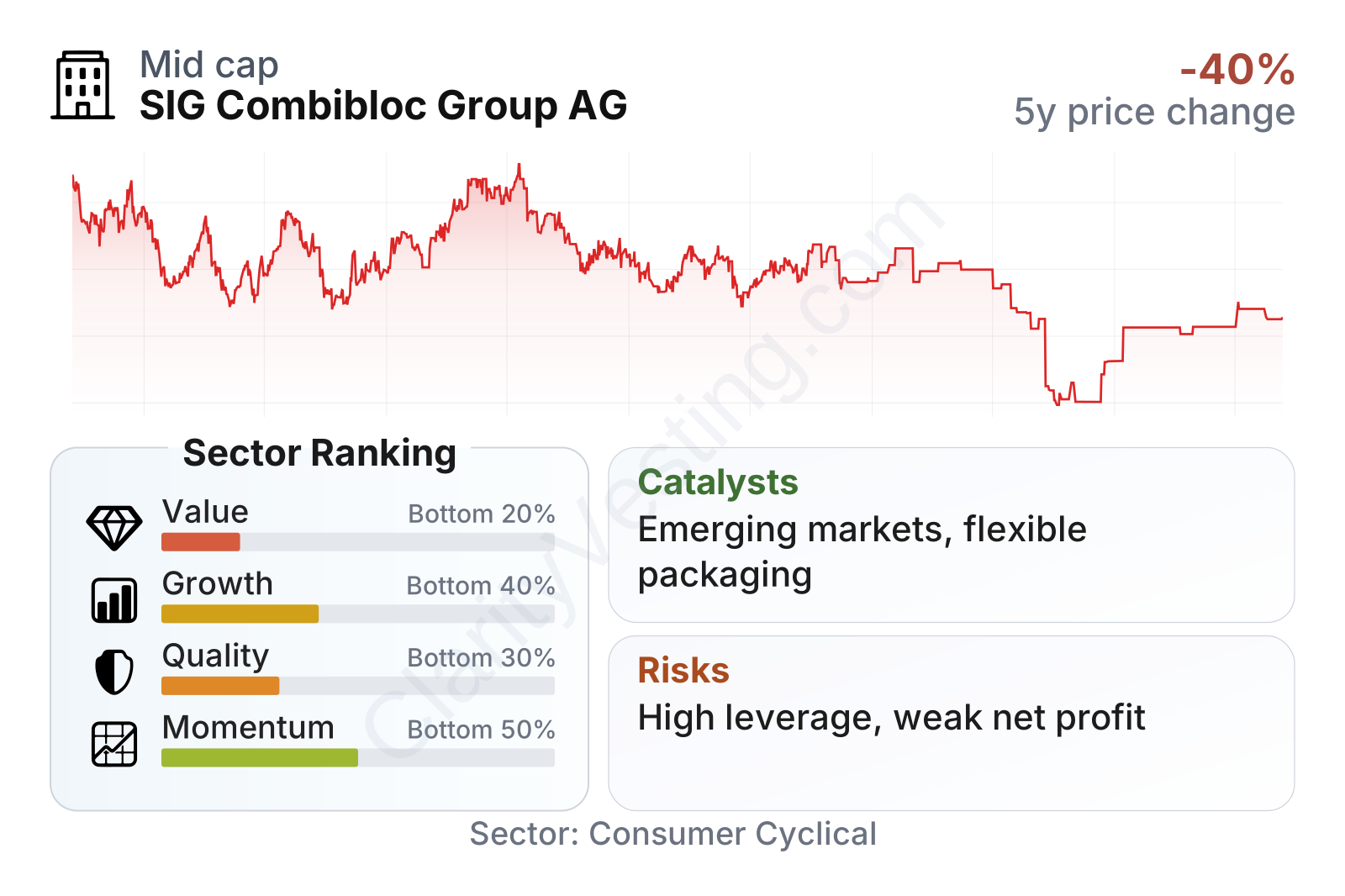
SIG is a mid-sized packaging company with relatively low share-price volatility, as reflected by a beta below 1. The broader picture from the metrics is mixed. Recent value measures look weak versus the sector, growth ranks below average, and balance-sheet quality is held back by elevated leverage. On the positive side, operating margins have held up better over five years than many peers, and recent share-price momentum has improved from a very weak three-year backdrop.
Growth
SIG operates in a part of the packaging industry with durable long-term demand. Food and beverage producers continue to need safe, lightweight, and efficient packaging, and aseptic formats are particularly relevant in regions where cold-chain infrastructure is limited or where shelf life is important. Flexible packaging formats such as bag-in-box and spouted pouches also benefit from trends toward lower transport costs, convenience, and material efficiency.
The company’s strategy is coherent for this market. Its model combines equipment installation with recurring consumables, which can support steady revenue once customer lines are running. SIG has also expanded beyond cartons into bag-in-box and spouted pouch systems, giving it access to additional end markets and broadening its packaging platform. That diversification can help reduce dependence on any single format.
Near-term growth, however, has been uneven. The latest year-over-year revenue change is slightly negative, while the sector median is positive. Over a five-year view, revenue per share has still grown at a high-single-digit annual pace, which suggests the longer-term direction has been better than the most recent snapshot. In other words, SIG looks more like a company going through a slower phase than a business that has lost relevance.
Cash generation remains an important point to watch. Free cash flow is positive, which supports financial flexibility, but the longer-term trend has been softer than many peers. A major catalyst would be a clearer rebound in volumes, especially if it comes with stable input costs and better conversion of operating profit into free cash flow.
Recent company communications have emphasized innovation in packaging formats, expansion in high-growth regions, and sustainability-focused offerings such as material reduction and improved recycling positioning. Those themes fit the needs of global food and beverage customers and could support new contract wins, especially in emerging markets where aseptic distribution has structural advantages.
Risks
This article is for informational purposes only and does not constitute financial advice. Some content is AI-generated. See Disclaimer


